manuals.online logo
Brands
  1. Home
  2. •
  3. Brands
  4. •
  5. Tempstar
  6. •
  7. Furnace
  8. •
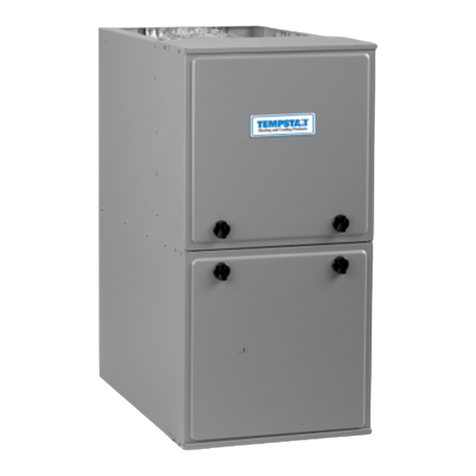
  9. Tempstar G9MXT User manual

Tempstar G9MXT User manual

This manual suits for next models

3

Other Tempstar Furnace manuals

Tempstar F97CMN Guide

Tempstar

Tempstar F97CMN Guide

Tempstar HUH5 Series User manual

Tempstar

Tempstar HUH5 Series User manual

Tempstar A Series Installation manual

Tempstar

Tempstar A Series Installation manual

Tempstar NAHA00101MH User manual

Tempstar

Tempstar NAHA00101MH User manual

Tempstar F8MTL User manual

Tempstar

Tempstar F8MTL User manual

Tempstar B Series Installation instructions

Tempstar

Tempstar B Series Installation instructions

Tempstar F9MAE User manual

Tempstar

Tempstar F9MAE User manual

Tempstar (F/G)9MAC0601714A Installation instructions

Tempstar

Tempstar (F/G)9MAC0601714A Installation instructions

Tempstar FMA4X User manual

Tempstar

Tempstar FMA4X User manual

Tempstar F9MAC User manual

Tempstar

Tempstar F9MAC User manual

Popular Furnace manuals by other brands

Unitary products group AHV8 UH installation manual

Unitary products group

Unitary products group AHV8 UH installation manual

VERDER CARBOLITE GERO RHF 14/8 Installation, operation and maintenance instructions

VERDER

VERDER CARBOLITE GERO RHF 14/8 Installation, operation and maintenance instructions

Carrier Performance 59SP5A Installation, start-up, operating and service and maintenance instructions

Carrier

Carrier Performance 59SP5A Installation, start-up, operating and service and maintenance instructions

Armstrong EG7H SERIES Installation and maintenance instructions

Armstrong

Armstrong EG7H SERIES Installation and maintenance instructions

Payne PG92ESA Installation, start-up, operating and service and maintenance instructions

Payne

Payne PG92ESA Installation, start-up, operating and service and maintenance instructions

NANOE Zetasinter Operation manual

NANOE

NANOE Zetasinter Operation manual

SUPREME FEM10-M2301CM-A Installation instructions and homeowner's manual

SUPREME

SUPREME FEM10-M2301CM-A Installation instructions and homeowner's manual

Johnson Controls TM9T User's information manual

Johnson Controls

Johnson Controls TM9T User's information manual

Fluke 9118A user manual

Fluke

Fluke 9118A user manual

Lennox EL195UHE Elite Series Unit information

Lennox

Lennox EL195UHE Elite Series Unit information

Intertherm M7RL Series user manual

Intertherm

Intertherm M7RL Series user manual

HDG Pelletmaster 15 Operation manual

HDG

HDG Pelletmaster 15 Operation manual

Nortek MG2S Series installation instructions

Nortek

Nortek MG2S Series installation instructions

VERDER CARBOLITE GERO ABF 8/28 Installation, operation and maintenance instructions

VERDER

VERDER CARBOLITE GERO ABF 8/28 Installation, operation and maintenance instructions

Goodman GMV9 Installation & operating instructions

Goodman

Goodman GMV9 Installation & operating instructions

SUPREME SUP10-M2301C Installation instructions and homeowner's manual

SUPREME

SUPREME SUP10-M2301C Installation instructions and homeowner's manual

Dettson AMT400B34-SM1PMA Installation instructions and homeowner's manual

Dettson

Dettson AMT400B34-SM1PMA Installation instructions and homeowner's manual

Evcon DGD 60 MBH installation instructions

Evcon

Evcon DGD 60 MBH installation instructions

manuals.online logo
manuals.online logoBrands
  • About & Mission
  • Contact us
  • Privacy Policy
  • Terms and Conditions

Copyright 2025 Manuals.Online. All Rights Reserved.

J_il;liiil;liiil;ii
_, glri! i_ _ii!i_iYii_i_i!i!_i_ii_!11Hi!i!_i!_ii!ii!i]i!!!_i_i!iHii!!!_i_i!]_i!_!!_]!i_i_!!!_i!_]!i_i_!!!_i!_]!i_i_!!!_i!_]!i_i1]!!!
These instructions must be read and understood completely before attempting installation.
Safety Labeling and Signal Words
DANGER, WARNING, CAUTION, and NOTE
The signal words DANGER, WARNING,
CAUTION, and NOTE are used to identify levels of
hazard seriousness. The signal word DANGER is
only used on product labels to signify an immediate
hazard. The signal words WARNING, CAUTION,
and NOTE will be used on product labels and
throughout this manual and other manual that may
apply to the product.
DANGER - Immediate hazards which will result in
severe personal injury or death.
Signal Words in Manuals
The signal word WARNING is used throughout
this manual in the following manner:
The signal word CAUTION is used throughout
this manual in the following manner:
WARNING - Hazards or unsafe practices which
could result in severe personal injury or death.
CAUTION - Hazards or unsafe practices which
may result in minor personal injury or product or
property damage.
NOTE - Used to highlight suggestions which will
result in enhanced installation, reliability, or
operation.
Signal Words on Product Labeling
Signal words are used in combination with
colors and/or pictures or product labels.
/b, Safety-alert symbol
When you see this symbol on the unit and in
instructions or manuals, be alert to the
potential for personal injury.
TABLE OF CONTENTS
SAFETY CONSIDERATIONS .............................. 3
INTRODUCTION ......................................... 4
CODES AND STANDARDS ................................ 4
ELECTROSTATIC DISCHARGE PRECAUTIONS PROCEDURE 5
DIMENSIONS ........................................... 6
LOCATION .............................................. 7
LOCATION RELATIVE TO COOLING EQUIPMENT ........... 8
AIR FOR COMBUSTION AND VENTILATION ................ 9
CONDENSATE TRAP ..................................... 12
INSTALLATION .......................................... 19
UPFLOW INSTALLATION ................................. 19
DOWNFLOW INSTALLATION .............................. 20
HORIZONTAL INSTALLATION ............................. 21
AIR DUCTS ............................................. 27
GAS PIPING ............................................. 27
ELECTRICAL CONNECTIONS ............................. 29
J-BOX INSTALLATION ................................... 31
VENTING ............................................... 36
SPECIAL VENTING REQUIREMENTS
FOR INSTALLATIONS IN CANADA ........................ 36
DIRECT VENT /2-PIPE SYSTEM .......................... 40
VENTILATED COMBUSTION AIR .......................... 40
TERMINATION REQUIREMENTS FOR THE
PROVINCES OF ALBERTA AND SASKATCHEWAN ......... 40
INSTALLING THE VENT TERMINATION .................... 49
MAXIMUM EQUIVALENT VENT LENGTH ................... 54
MAXIMUM ALLOWABLE EXPOSED VENT LENGTHS ........ 57
IS09001
Use of the AHRI Certified TM Mark indicates a
manufacturer's participation in the program,
For verification of certification for individual
products, go to www,ahridirectory.org .
INSTALLER: Affix these instructions on or adjacent to the
furnace,
CONSUMER: Retain these instructions for future
reference.
Portions of the text and tables are reprinted from NFPA 54/ANSI Z223.1-2012©, with permission of National Fire Protection Association, Quincy, MA 02269 and American Gas Association, Washington, DC
20001. This reprinted material is not the complete and official position of the NFPA or ANSI, on the referenced subject, which is represented only by the standard in its entirety,
PrintedinU.S.A. 440 01 4001 08 12/5/2013
Required Notice for Massachusetts Installations
(a)
Important
The Commonwealth of Massachusetts requires compliance with regulation 248 CMR as follows:
5.08: Modifications to NFPA-54, Chapter 10
2) Revise 10.8.3 by adding the following additional requirements:
For all side wall horizontally vented gas fueled equipment installed in every dwelling, building or structure used in whole or in part for residential
purposes, including those owned or operated by the Commonwealth and where the side wall exhaust vent termination is less than seven (7) feet
above finished grade in the area of the venting, including but not limited to decks and porches, the following requirements shall be satisfied:
1, INSTALLATION OF CARBON MONOXIDE DETECTORS. At the time of installation of the side wall horizontal vented gas fueled equipment, the
installing plumber or gasfitter shall observe that a hard wired carbon monoxide detector with an alarm and battery back-up is installed on the floor
level where the gas equipment is to be installed, in addition, the installing plumber or gasfitter shall observe that a battery operated or hard wired
carbon monoxide detector with an alarm is installed on each additional level of the dwelling, building or structure served by the side wall
horizontal vented gas fueled equipment. It shall be the responsibility of the property owner to secure the services of qualified license professionals
for the installation of hard wired carbon monoxide detectors.
a. In the event that the side wall horizontally vented gas fueled equipment is installed in a crawl space or an attic, the hard wired carbon
monoxide detector with alarm and battery back-up may be installed on the next adjacent floor level.
b. In the event that the requirements of this subdivision can not be met at the time of completion of installation, the owner shall have a period of
thirty (30) days to comply with the above requirement; provided, however, that during said thirty (30) day period, a battery operated carbon
monoxide detector with an alarm shall be installed.
2. APPROVED CARBON MONOXIDE DETECTORS. Each carbon monoxide detector as required in accordance with the above provisions shall
comply with NFPA 720 and be ANSI/UL 2034 listed and IAS certified.
3. SIGNAGE. A metal or plastic identification plate shall be permanently mounted to the exterior of the building at a minimum height of eight (8) feet
above grade directly in line with the exhaust vent terminal for the horizontally vented gas fueled heating appliance or equipment. The sign shall
read, in print size no less than one-half (1/2) inch in size, "GAS VENT DIRECTLY BELOW. KEEP CLEAR OF ALL OBSTRUCTIONS".
4. INSPECTION. The state of local gas inspector of the side wall horizontally vented gas fueled equipment shall not approve the installation unless,
upon inspection, the inspector observes carbon monoxide detectors and signage installed in accordance with the provisions of 248 CMR
5.08(2)(a) 1 through 4.
(b) EXEMPTIONS: The following equipment is exempt from 248 CMR 5.08(2)(a) 1 through 4:
(c)
(d)
(e)
1. The equipment listed in Chapter 10 entitled "Equipment Not Required To Be Vented" in the most current edition of NFPA 54 as adopted by the
Board; and
2. Product Approved side wall horizontally vented gas fueled equipment installed in a room or structure separate from the dwelling, building or
structure used in whole or in part for residential purposes.
MANUFACTURER REQUIREMENTS - GAS EQUIPMENT VENTING SYSTEM PROVIDED. When the manufacturer of Product Approved side wall
horizontally vented gas equipment provides a venting system design or venting system components with the equipment, the instructions provided by
the manufacturer for installation of the equipment and the venting system shall include:
1. Detailed instructions for the installation of the venting system design or the venting system components; and
2. A complete parts list for the venting system design or venting system.
MANUFACTURER REQUIREMENTS - GAS EQUIPMENT VENTING SYSTEM NOT PROVIDED. When the manufacturer of a Product Approved side
wall horizontally vented gas fueled equipment does not provide the parts for venting the flue gases, but identifies "special venting systems", the
following requirements shall be satisfied by the manufacturer:
1. The referenced "special venting system" instructions shall be included with the appliance or equipment installation instructions; and
2. The "special venting systems" shall be Product Approved by the Board, and the instructions for that system shall include a parts list and detailed
installation instructions.
A copy of all installation instructions for all Product Approved side wall horizontally vented gas fueled equipment, all venting instructions, all parts lists
for venting instructions, and/or all venting design instructions shall remain with the appliance or equipment at the completion of the installation.
For questions regarding these requirements, please contact the Commonwealth of Massachusetts Board of State Examiners of Plumbers and Gas
Fitters, 239 Causeway Street, Boston, MA 02114. 617-727-9952
2Specifications are subject to change without notice. 440 01 4001 08
Safety Considerations
FIRE, EXPLOSION, ELECTRICAL SHOCK, AND
CARBON MONOXIDE POISONING HAZARD
Failure to follow this warning could result in dangerous
operation, personal injury, death, or property damage.
Improper installation, adjustment, alteration, service,
maintenance, or use can cause carbon monoxide
poisoning, explosion, fire, electrical shock, or other
conditions which may cause personal injury or property
damage. Consult a qualified service agency, local gas
supplier, or your distributor or branch for information or
assistance. The qualified service agency must use
only factory-authorized and listed kits or accessories
when modifying this product.
FIRE HAZARD
Failure to follow this warning could result in personal
injury, death, or property damage.
Solvents, cements, and primers are combustible. Keep
away from heat, sparks and open flame. Use only in
well-ventilated areas. Avoid breathing in vapor or
allowing contact with skin or eyes.
FURNACE RELIABILITY HAZARD
Failure to follow this caution may result in unit
component damage.
Application of this furnace should be indoors with
special attention given to vent sizing and material, gas
input rate, air temperature rise, unit leveling, and unit
sizing.
Improper installation, adjustment, alteration, service,
maintenance, or use can cause explosion, fire, electrical shock,
or other conditions which may cause personal injury or property
damage. Consult a qualified service agency, local gas supplier,
or your distributor or branch for information or assistance. The
qualified installer or agency must use only factory-authorized
and listed kits or accessories when modifying this product.
Refer to the individual instructions packaged with the kits or
accessories when installing.
Installing and servicing heating equipment can be hazardous
due to gas and electrical components. Only trained and
qualified personnel should install, repair, or service
heating equipment. Untrained personnel can perform basic
maintenance functions such as cleaning and replacing air
filters. All other operations must be performed by trained
service personnel. When working on heating equipment,
observe precautions in literature, on tags, and on labels
attached to or shipped with furnace and other safety
precautions that may apply.
These instructions cover minimum requirements and conform
to existing national standards and safety codes. In some
instances, these instructions exceed certain local codes and
ordinances, especially those that may not have kept up with
changing residential construction practices. We require these
instructions as a minimum for a safe installation.
Follow all safety codes. Wear safety glasses, protective
clothing, and work gloves. Have a fire extinguisher available.
Read these instructions thoroughly and follow all warnings or
cautions included in literature and attached to the unit.
CUT HAZARD
Failure to follow this caution may result in personal
injury.
Sheet metal parts may have sharp edges or burrs. Use
care and wear appropriate protective clothing, safety
glasses and gloves when handling parts, and servicing
furnaces.
This is the safety-alert symbol Z_. When you see this symbol
on the furnace and in instructions or manuals, be alert to the
potential for personal injury.
Understand the signal words DANGER, WARNING, and
CAUTION. These words are used with the safety-alert symbol.
DANGER identifies the most serious hazards which will result
in severe personal injury or death. WARNING signifies a
hazard which could result in personal injury or death.
CAUTION is used to identify hazards which may result in minor
personal injury or product and property damage. NOTE and
NOTICE are used to highlight suggestions which wilt result in
enhanced installation, reliability, or operation.
1. Use only with type of gas approved for this furnace.
Refer to the furnace rating plate.
2. Install this furnace only in a location and position as
specified in the "Location" section of these instructions.
3. Provide adequate combustion and ventilation air to the
furnace space as specified in "Air for Combustion and
Ventilation" section.
4. Combustion products must be discharged outdoors.
Connect this furnace to an approved vent system only,
as specified in the "Venting" section of these
instructions.
5. Never test for gas leaks with an open flame. Use a
commercially available soap solution made specifically
for the detection of leaks to check all connections, as
specified in the "Gas Piping" section.
6. Always install furnace to operate within the furnace's
intended temperature-rise range with a duct system
which has an external static pressure within the
allowable range, as specified in the "Start-Up,
Adjustments, and Safety Check" section. See furnace
rating plate.
7. When a furnace is installed so that supply ducts carry air
circulated by the furnace to areas outside the space
containing the furnace, the return air shall also be
handled by duct(s) sealed to the furnace casing and
terminating outside the space containing the furnace.
See "Air Ducts" section.
8. A gas-fired furnace for installation in a residential
garage must be installed as specified in the warning box
in the "Location" section. (See Figure 4)
9. The furnace may be used for construction heat provided
that the furnace installation and operation complies with
the first CAUTION in the LOCATION section on page 7
of these instructions.
10. These Multipoise Gas-Fired Furnaces are CSA
design-certified for use with natural and propane gases
(see furnace rating plate) and for installation in alcoves,
attics, basements, closets, utility rooms, crawlspaces,
and garages. The furnace is factory-shipped for use
with natural gas. A CSA (A.G.A. and C.G.A.) listed
440 01 4001 08 Specifications subject to change without notice. 3

11.
12.
accessory gas conversion kit is required to convert
furnace for use with propane gas.
See Table 1 for required clearances to combustible
construction.
Maintain a 1-in. (25 mm) clearance from combustible
materials to supply air ductwork for a distance of 36-in.
(914 mm) horizontally from the furnace. See NFPA 90B
or local code for further requirements.
Minimum Clearances to
Table 1 Combustible Materials for All Units
CLEARANCE
POSITION In(mm)
0
1(25)
*24 (610)
.1 (25)
0
0
1(25)
REAR
FRONT (Combustion air openings in
furnace and in structure)
Required for service
All Sides of Supply Plenum
Sides
Vent
Top of Furnace
* Consult local building codes
13. These furnaces SHALL NOT be installed directly on
carpeting, combustible tile, or any other combustible
material other than wood flooring. In downfiow
installations, factory accessory floor base MUST be
used when installed on combustible materials and wood
flooring. Special base is not required when this furnace
is installed on manufacturer's Coil Assembly or when
Coil Box is used. See Table 1 for clearance to
combustible construction information.
IMPORTANT INSTALLATION
PROCEDURES AND START-UP
Failure to follow this procedure may result in a nuisance smoke
or odor complaint.
The manifold pressure, gas rate by meter clocking, temperature
rise and operation must be checked after installation. Minor
smoke and odor may be present temporarily after start-up from
the manufacturing process. Some occupants are more
sensitive to this minor smoke and odor. It is recommended that
doors and windows be open during the first heat cycle.
Introduction
The 4-way multipoise Category IV condensing furnace is CSA
design-certified as a direct vent (2-pipe) or non-direct vent
(1-pipe) furnace. (See Figure 3) The furnace is
factory-shipped for use with natural gas. The furnace can be
converted in the field for use with propane gas when a
factory-supplied conversion kit is used. Refer to the furnace
rating plate for conversion kit information.
These furnaces are not approved for installation in recreational
vehicles or outdoors. Single-stage furnaces (40k through
120k) are approved for installation in manufactured
housing/mobile homes with manufacturer approved accessory.
Single Stage furnace is approved for installation in a mobile
home when a factory-supplied accessory mobile home
conversion kit is used. The conversion kit is required for use
with both natural and propane gas. The furnace must also be
installed on a factory-supplied accessory combustible floor
base or evaporator coil casing.
This furnace is designed for minimum continuous return-air
temperature of 60°F (15°C) db or intermittent operation down to
55°F (15°C) db such as when used with a night setback
thermostat. Return-air temperature must not exceed 80°F
(27°C) db. Failure to follow these return-air temperature limits
may affect reliability of heat exchangers, motors, and controls
(See Figure 1)
The furnace should be sized to provide 100 percent of the
design heating load requirement plus any margin that occurs
because of furnace model size capacity increments. Heating
load estimates can be made using approved methods available
from Air Conditioning Contractors of America (Manual J);
American Society of Heating, Refrigerating, and
Air-Conditioning Engineers; or other approved engineering
methods. Excessive oversizing of the furnace could cause the
furnace and/or vent to fail prematurely.
For accessory installation details, refer to the applicable
instruction literature.
NOTE: Remove all shipping materials, parts assemblies and
literature before operating the furnace.
I Freeze Protection and Return Air
Figure 1 _Temperature'
_" SUPPLY AIR
FRONT
32° F/0° C MINIMUM INSTALLED
AMBIENT OR FREEZE
PROTECTION REQUIRED
MAX 80°F/27°C
MIN 60°F/16°C
A10490
Codes and Standards
J
Follow all national and local codes and standards in
addition to these instructions. The installation must comply
with regulations of the serving gas supplier, local building,
heating, plumbing, and other codes. In absence of local codes,
the installation must comply with the national codes listed
below and all authorities having jurisdiction.
In the United States and Canada, follow all codes and
standards for the following:
Safety
• US: National Fuel Gas Code (NFGC) NFPA
54-2012/ANSI Z223.1-2012 and the Installation
Standards, Warm Air Heating and Air Conditioning
Systems ANSI/NFPA 90B
• A manufactured (Mobile) home installation must
conform with the Manufactured Home Construction
and Safety Standard, Title 24 CFR, Part 3280, or
when this standard is not applicable, the Standard for
Manufactured Home Installation (Manufactured Home
Sites, Communities, and Set-Ups),ANSI/NCS A225.1,
and/or CAN/CSA-Z240, MH Series Mobile Homes
• CANADA: National Standard of Canada, Natural Gas
and Propane Installation Code (NSCNGPIC)
CAN/CSA B149.1-2010
General Installation
• US: NFGC and the NFPA 90B. For copies, contact the
National Fire Protection Association Inc.,
4Specifications subject to change without notice. 440 01 4001 08
Batterymarch Park, Quincy, MA 02269; or for only the
NFGC contact the American Gas Association, 400 N.
Capitol, N.W., Washington DO 20001.
•CANADA: NSCNGPIC. For a copy, contact Standard
Sales, CSA International, 178 Rexdale Boulevard,
Etobicoke (Toronto), Ontario, M9W 1R3, Canada.
Combustion and Ventilation Air
• US: Section 9.3 ofthe NFPA54/ANSl Z223.1-2012,
Air for Combustion and Ventilation
• CANADA: Part 8 of the CAN/CSA B149.1-2010,
Venting Systems and Air Supply for Appliances
Duct Systems
• US and CANADA: Air Conditioning Contractors
Association (ACCA) Manual D, Sheet Metal and Air
Conditioning Contractors National Association
(SMACNA), or American Society of Heating,
Refrigeration, and Air Conditioning Engineers (ASHRAE)
2005 Fundamentals Handbook Chapter 35.
Acoustical Lining and Fibrous Glass
Duct
• US and CANADA: current edition of SMACNA, NFPA
90B as tested by UL Standard 181 for Class I Rigid Air
Ducts
Gas Piping and Gas Pipe Pressure
Testing
• U.S.A.: NFPA 54/ANSI Z223.1-2012, NFGC; Chapters
5, 6, 7, and 8 and national plumbing codes.
• CANADA: CAN/CSA-B149.1-2010, Parts 4, 5, 6 and
9.
In the state of Massachusetts:
• This product must be installed by a licensed plumber or
gas fitter.
• When flexible connectors are used, the maximum
length shall not exceed 36-in. (914 mm).
• When lever type gas shutoffs are used they shall be
T-handle type.
• The use of copper tubing for gas piping is not
approved by the state of Massachusetts.
Electrical Connections
• U.S.A.: National Electrical Code (NEC) NFPA 70-2011
• CANADA: Canadian Electrical Code CSA O22.1
Condensate Drain Connection
• US: National Standard Plumbing Code 2009, Section 8.7.
• Canada: National Plumbing Code of Canada 2010 in
Canada.
Electrostatic Discharge (ESD)
Precautions Procedure
FURNACE RELIABILITY HAZARD
Failure to follow this caution may result in unit com-
oonent damage.
Electrostatic discharge can affect electronic compon-
ents. Take precautions during furnace installation and
servicing to protect the furnace electronic control. Pre-
cautions will prevent electrostatic discharges from per-
sonnel and hand tools which are held during the pro-
cedure. These precautions will help to avoid exposing
the control to electrostatic discharge by putting the
furnace, the control, and the person at the same elec-
trostatic potential.
1. Disconnect all power to the furnace. Multiple
disconnects may be required. DO NOT TOUCH THE
CONTROL OR ANY WIRE CONNECTED TO THE
CONTROL PRIOR TO DISCHARGING YOUR BODY'S
ELECTROSTATIC CHARGE TO GROUND.
2. Firmly touch the clean, unpainted, metal surface of the
furnace chassis which is close to the control. Tools held
in a person's hand during grounding will be satisfactorily
discharged.
3. After touching the chassis, you may proceed to service
the control or connecting wires as long as you do nothing
to recharge your body with static electricity (for example;
DO NOT move or shuffle your feet, do not touch
ungrounded objects, etc.).
4. If you touch ungrounded objects (and recharge your
body with static electricity), firmly touch a clean,
unpainted metal surface of the furnace again before
touching control or wires.
5. Use this procedure for installed and uninstatled
(ungrounded) furnaces.
6. Before removing a new control from its container,
discharge your body's electrostatic charge to ground to
protect the control from damage. If the control is to be
installed in a furnace, follow items 1 through 4 before
bringing the control or yourself in contact with the
furnace. Put all used and new controls into containers
before touching ungrounded objects.
7. An ESD service kit (available from commercial sources)
may also be used to prevent ESD damage.
Accessories
See Specification Sheets for a list of accessories for this
product.
Loose Parts Bag Contents
Table 2 (shipped in blower compartment)
DESCRIPTION
QUANTITY (Provided in Loose Parts Bag)
Outlet Choke Plate -see NOTE
1(used with 40k BTUH furnaces, only)
1 Air Intake Pipe Flange
1 Vent Pipe Flange
2 Pipe Flange Gaskets
10 Sharp Tip Screws (Vent and Inlet Flanges)
1 Vent Pipe Coupling
2 Vent Pipe Coupling Clamps
1 Pressure Switch Tube
1 Rubber Drain Elbow
4 Drain Elbow Clamps
1 1/2"CPVC to 3/4" PVC Pipe Adapter
1 Gas Line Grommet
1 Gas Line Knockout Plug
1 Junction Box Cover
1 Junction Box Base
1 Green Ground Screw
3 Blunt Tip Screws (Junction Box)
1 Thermostat Wire Grommet
Provided separately in furnace
1 Drain Extension Tube - "Z" Pipe
NOTE: Only used on 40K BTUH furnaces from 0 to 2000 ft. (0
to 610m) above sea level for total equivalent vent lengths under
10ft.
440 01 4001 08 Specifications subject to change without notice. 5
Figure 2 Dimensions
2Sfl0
TOP_IEW _ S11/16
[+70.1]
16"/8.11
[6/O,O]
,, 251/8_
NOTES:
1. Doors may vary by model.
2. Minimum return-air openings at furnace, based on metal duct. If flex duct is used,
see flex duct manufacturer's recommendations for equivalent diameters.
a. For 800 CFM-16-in. (406 mm) roundor 14 112x 12-in. (368 x 305 mm) rectangle.
b. For 1200 CFM-20-in. (508 mm) round or 14 112x 19 1/2-in. (368 x 495 mm) rectangle.
c, For 1600 CFM-22-in. (559 mm) round or 14 112x 22 1/16-in. (368 x 560mm) rectangle.
d. Return air above 1800 CFM at 0.5 in+w,c+ESP on 24,5" casing, requires one of the following
configurations: 2 sides, 1 side and abottom or bottom only. See Air Delivery table in this
document for specific use to allow for sufficient airflow to the furnace.
3. Vent and Combustion air pipes through blower compartment must
use accessory "Vent Kit-Through the Cabinet". See accessory list for
current part number.
;,4]
OUTL='_W_DTH
_IR FLOW
[17.5] BOTTOM RETURN [17.5]
WIDTH
NOTE: ALL DIMEN_ONS IN INCH [MM]
'[i_77/_ i
114 , _6_
_.o]1$1/ls
IZ_.Sl
pso.5]
I_ve.ll
_26s_e _
[_,_
_7,4]
15sS.Sl
NR_OW
S[4_a]
_S_N
¢laS
_" [1o1111 I.O_:IN
¢711
r_ER_rAT ENTRy
_rrOM rNt_
SD5060-4 Rev F
(F/G)9MXT
FURNACE SIZE
0401410
0401714
0601412
0601714
0801716
0802120
1002120
1202422
(F/G)9MXE
FURNACE SIZE
0401410
0401714
0601412
0601714
0801716
0802120
1002120
1202422
A
CABINET WIDTH
B
OUTLET WIDTH AIR INTAKE
14-3/16 (361) 12-1/2 (319) 7-1/8 (181)
17-1/2 (445) 15-7/8 (403) 8-3/4 (222)
14-3/16 (361) 12-1/2 (319) 7-1/8 (181)
17-1/2 (445) 15-7/8 (403) 8-3/4 (222)
17-1/2 (445) 15-7/8 (403) 8-3/4 (222)
21 (533) 19-3/8 (492) 10-1/2 (267)
21 (533) 19-3/8 (492) 10-1/2 (267)
24-1/2 (622) 22-7/8 (581) 12-1/4 (311)
A B D
OUTLET WIDTHCABINET WIDTH
C
BOTTOM
IN LET WIDTH
12-9/16 (322)
16 (406)
12-9/16 (322)
16 (406)
16 (406)
19-1/2 (495)
19-1/2 (495)
23 (584)
C
BOTTOM
IN LET WIDTH
12-9/16 (322)
16 (406)
12-9/16 (322)
16 (406)
16 (406)
19-1/2 (495)
19-1/2 (495)
23 (584)
AIR INTAKE
14-3/16 (361) 12-1/2 (319) 7-1/8 (181)
17-1/2 (445) 15-7/8 (403) 8-3/4 (222)
14-3/16 (361) 12-1/2 (319) 7-1/8 (181)
17-1/2 (445) 15-7/8 (403) 8-3/4 (222)
17-1/2 (445) 15-7/8 (403) 8-3/4 (222)
21 (533) 19-3/8 (492) 10-1/2 (267)
21 (533) 19-3/8 (492) 10-1/2 (267)
24-1/2 (622) 22-7/8 (581) 12-1/4 (311)
SHIP WT.
LB (KG)
125 (56)
135 (61)
136 (62)
146 (66)
156 (70)
161 (73)
171 (77)
195 (88)
SHIP WT.
LB (KG)
120 (54)
131 (59)
131 (59)
141 (63)
151 (68)
156 (71)
166 (75)
190 (85)
6Specifications subject to change without notice. 440 01 4001 08
Location
PERSONAL INJURY AND/OR PROPERTY DAMAGE
HAZARD
Improper use or installation of this furnace may result in
3remature furnace component failure. This gas furnace
may be used for heating buildings under construction
3rovided that:
-The furnace is permanently installed with all electrical
wiring, piping, venting and ducting installed according to
these installation instructions. A return air duct is
3rovided, sealed to the furnace casing, and terminated
outside the space containing the furnace. This prevents
a negative pressure condition as created by the
circulating air blower, causing a flame rollout and/or
drawing combustion products into the structure.
-The furnace is controlled by a thermostat. It may not be
"hot wired" to provide heat continuously to the structure
without thermostatic control.
-Clean outside air is provided for combustion. This is to
minimize the corrosive effects of adhesives, sealers and
other construction materials. It also prevents the
entrainment of drywall dust into combustion air, which
can cause fouling and plugging of furnace components.
-The temperature of the return air to the furnace is
maintained between 55°F (13°C) and 80°F (27°C), with
no evening setback or shutdown. The use of the furnace
while the structure is under construction is deemed to be
intermittent operation per our installation instructions.
-The air temperature rise is within the rated rise range on
the furnace rating plate, and the gas input rate has been
set to the nameplate value.
-The filters used to clean the circulating air during the
construction process must be either changed or
thoroughly cleaned prior to occupancy.
-The furnace, ductwork and filters are cleaned as
necessary to remove drywall dust and construction
debris from all HVAC system components after
construction is completed.
-Verify proper furnace operating conditions including
ignition, gas input rate, air temperature rise, and venting
according to these installation instructions.
General
These furnaces are shipped with materials to assist in proper
furnace installation. These materials are shipped in the main
blower compartment.
See Table 2 for loose parts bag contents.
This furnace must:
• be installed so the electrical components are protected
from water.
• not be installed directly on any combustible material other
than wood flooring (refer to SAFETY
CONSIDERATIONS).
be located close to the chimney or vent and attached to an
air distribution system. Refer to Air Ducts section.
be provided ample space for servicing and cleaning.
Always comply with minimum fire protection clearances
shown in Table 1 or on the furnace clearance to
combustible construction label.
CARBON MONOXIDE POISONING /COMPONENT
DAMAGE HAZARD
Failure to follow this warning could result in personal in-
jury or death and unit component damage.
Corrosive or contaminated air may cause failure of parts
containing flue gas, which could leak into the living
space. Air for combustion must not be contaminated by
halogen compounds, which include fluoride, chloride,
bromide, and iodide. These elements can corrode heat
exchangers and shorten furnace life. Air contaminants
are found in aerosol sprays, detergents, bleaches, clean-
ing solvents, salts, air fresheners, and other household
products. Do not install furnace in a corrosive or contam-
inated atmosphere. Make sure all combustion and circu-
lating air requirements are met, in addition to all local
codes and ordinances.
The following types of furnace installations may require
OUTDOOR AIR for combustion due to chemical exposures:
• Commercial buildings
• Buildings with indoor pools
• Laundry rooms
• Hobby or craft rooms, and
• Chemical storage areas
If air is exposed to the following substances, it should not be
used for combustion air, and outdoor air may be required for
combustion:
• Permanent wave solutions
• Chlorinated waxes and cleaners
• Chlorine based swimming pool chemicals
• Water softening chemicals
• De-icing salts or chemicals
• Carbon tetrachloride
• Halogen type refrigerants
• Cleaning solvents (such as perchloroethylene)
• Printing inks, paint removers, varnishes, etc.
• Hydrochloric acid
• Cements and glues
• Antistatic fabric softeners for clothes dryers
• Masonry acid washing materials
All fuel-burning equipment must be supplied with air for fuel
combustion. Sufficient air must be provided to avoid negative
pressure in the equipment room or space. A positive seal must
be made between the furnace cabinet and the return-air duct
to prevent pulling air from the burner area.
440 01 4001 08 Specifications subject to change without notice. 7
Figure 3 1Multipoise Orientations
THE BLOWER IS LOCATED
TO THE RIGHT OF THE
AIRFLOW
0
BURNER SECTION, AND
CONDITIONED AIR IS
DISCHARGED TO THE LEFT.
THE BLOWER IS
LOCATED ABOVE THE
BURNER SECTION, AND
CONDITIONED AIR IS
DISCHARGED DOWNWARD. AIRFLOW
THE BLOWER IS
LOCATED BELOW THE
BURNER SECTION, AND
CONDITIONED AIR IS
DISCHARGED UPWARD.
I HORIZONTAL RIGHT1AIF F_LC w
THE BLOWER IS
LOCATED TO THE LEFT
OF THE BURNER SECTION,
AND CONDITIONED AIR IS
DISCHARGED TO THE RIGHT.
L12F010
FIRE, INJURY OR DEATH HAZARD
Failure to follow this warning could result in personal in-
jury, death and/or property damage.
When the furnace is installed in a residential garage, the
burners and ignition sources must be located at least
18-in. (457 mm) above the floor. The furnace must be
located or protected to avoid damage by vehicles. When
the furnace is installed in a public garage, airplane
hangar, or other building having a hazardous atmo-
sphere, the furnace must be installed in accordance with
the NFPA 54/ANSI Z223.1-2012 or CAN/CSA
B149.1-2010. (See Figure 4)
Figure 4 1Installation in a Garage
18-1N. (457.2 mm)
MINIMUM TO BURNERS A93044
Figure 5 _Prohibit Installations
BACK POSITIONED
DOWNWARD
BACK POSITIONED
UPWARD ,d IR
RETURN
CUT IN
BACK
L12F011
Location Relative to Cooling
Equipment
The cooling coil must be installed parallel with, or on the
downstream side of the unit to avoid condensation in the heat
exchangers. When installed parallel with the furnace, dampers
or other flow control must prevent chilled air from entering the
furnace. If the dampers are manually operated, they must be
equipped with means to prevent operation of either unit unless
the damper is in the full-heat or full-cool position.
FIRE HAZARD
Failure to follow this warning could result in personal in-
jury, death and/or property damage.
Do not install the furnace on its back or hang furnace with
control compartment facing downward. Safety control
operation will be adversely affected. Never connect re-
turn-air ducts to the back of the furnace. (See Figure 5)
8Specifications subject to change without notice. 440 01 4001 08
Air for Combustion and
Ventilation
Introduction
Direct Vent (2-pipe) Applications
When the furnace is installed as a direct vent (2-pipe) furnace,
no special provisions for air for combustion are required.
However, other gas appliances installed in the space with the
furnace may require outside air for combustion. Follow the
guidelines below to insure that other gas appliances have
sufficient air for combustion.
Non-Direct Vent (1-pipe) Applications
When the furnace is installed as a non-direct vent (1-pipe)
furnace, it wilt be necessary to insure there is adequate air for
combustion. Other gas appliances installed with the furnace
may also require air for combustion and ventilation in addition
to the amount of combustion air and ventilation air required for
the furnace. Follow the guidelines below to insure that the
furnace and other gas appliances have sufficient air for
combustion.
Ventilated Combustion Air Applications
When the furnace is installed using the ventilated combustion
air option, the attic or crawlspace must freely communicate with
the outdoor to provide sufficient air for combustion. The
combustion air pipe cannot be terminated in attics or
crawlspaces that use ventilation fans designed to operate
during the heating season. If ventilation fans are present in
these areas, the combustion air pipe must terminate outdoors
as a Direct Vent/2-Pipe system.
All air for combustion is piped directly to the furnace from a
space that is well ventilated with outdoor air (such as an attic,
crawlspace, or equipment closet) and the space iswell isolated
from the living space or garage. In addition, other gas
appliances installed in the space with the furnace may require
outside air for combustion. Follow the guidelines below to
insure that the roof or crawlspace walls have sufficient free
area to provide sufficient air for combustion and ventilation for
the furnaces. The guidelines below can be used to insure that
other gas appliances have sufficient air for combustion.
Provisions for adequate combustion, ventilation, and dilution air
must be provided in accordance with:
• U,S, Installations: Section 9.3 of the NFPA 54/ANSI
Z223.1-2012 , Air for Combustion and Ventilation and
applicable provisions of the local building codes.
• Canadian Installations: Part 8 of
CAN/CSA-B149.1-2010, Venting Systems and Air
Supply for Appliances and all authorities having
jurisdiction.
FURNACE CORROSION HAZARD
Failure to follow this caution may result in furnace
damage.
Air for combustion must not be contaminated by halogen
compounds, which include fluoride, chloride, bromide,
and iodide. These elements can corrode heat
exchangers and shorten furnace life. Air contaminants
are found in aerosol sprays, detergents, bleaches,
cleaning solvents, salts, air fresheners, and other
household products.
CARBON MONOXIDE POISONING HAZARD
Failure to follow this warning could result in personal
injury or death.
The operation of exhaust fans, kitchen ventilation fans,
clothes dryers, attic exhaust fans or fireplaces could
create a NEGATIVE PRESSURE CONDITION at the
furnace. Make-up air MUST be provided for the
ventilation devices, in addition to that required by the
furnace. Refer to the Carbon Monoxide Poisoning
Hazard warning in the venting section of these
instructions to determine if an adequate amount of
make-up air is available.
The requirements for combustion and ventilation air depend
upon whether or not the furnace is located in a space having a
volume of at least 50 cubic feet per 1,000 Btuh (4.8 cubic
meters per kW) input rating for all gas appliances installed in
the space.
• Spaces having less than 50 cubic feet per 1,000 Btuh (4.8
cubic meters per kW) require the OUTDOOR
COMBUSTION AIR METHOD.
• Spaces having at least 50 cubic feet per 1,000 Btuh (4.8
cubic meters per kW) may use the INDOOR
COMBUSTION AIR, STANDARD or KNOWN AIR
INFILTRATION METHOD.
Outdoor Combustion Air Method
1. Provide the space with sufficient air for proper
combustion, ventilation, and dilution of flue gases using
permanent horizontal or vertical duct(s) or opening(s)
directly communicating with the outdoors or spaces that
freely communicate with the outdoors.
2. Figure 6 illustrates how to provide TWO OUTDOOR
OPENINGS, one inlet and one outlet combustion and
ventilation air openings to the outdoors.
a. One opening MUST commence within 12-in.
(300 mm) of the ceiling and the second opening
MUST commence within 12-in. (300 mm) of the floor.
b. Size openings and ducts per Figure 6 and Table 3.
c. TWO HORIZONTAL DUCTS require 1 square inch
(25.4 square mm) of free area per 2,000 Btuh (1,100
mm2/kW) of combined input for all gas appliances in
the space per Figure 6 and Table 3.
d. TWO OPENINGS OR VERTICAL DUCTS require 1
square inch (25.4 square mm)of free area per 4,000
Btuh (550 mm2/kW) for combined input of all gas
appliances in the space per Figure 6 and Table 3.
3. ONE OUTDOOR OPENING requires:
a. 1 sq. in. (25.4 square mm)of free area per 3,000 Btuh
(734 mm2/kW) for combined input of all gas
appliances in the space per Table 3 and
b. Not less than the sum of the areas of all vent
connectors in the space.
The opening shall commence within 12-in. (300 mm) of the
ceiling. Appliances in the space shall have clearances of at
least 1-in. (25 mm) from the sides and back and 6-in. (150 mm)
from the front. The opening shall directly communicate with the
outdoors or shall communicate through a vertical or horizontal
duct to the outdoors or spaces (crawl or attic) that freely
communicate with the outdoors.
440 01 4001 08 Specifications subject to change without notice. 9
Indoor Combustion Air NFPA & AGA
Standard and Known-Air-Infiltration Rate
Methods
Indoor combustion air is permitted for combustion, ventilation,
and dilution, if the Standard or Known-Air-Infiltration Rate
Method is used.
CARBON MONOXIDE POISONING HAZARD
Failure to follow this warning could result in personal
injury or death.
Many homes require air to be supplied from outdoors
for furnace combustion, ventilation, and dilution of flue
gases.
The furnace combustion air supply must be provided in
accordance with this instruction manual.
Figure 6 Air for Combustion, Ventilation,
and Dilution for Outdoors
A'_ 1 SQ IN.
DUCTS ,
TO _ /_PER4000
OUTDOORS ._kll_ ......... ........ 1
, V
(305r_n_)12"MAX]j
I SQIN. _,1ii
PER2000 IIB
BTUH* J
so i .
PER 2000 A
BTOH*
(305mm) 12"MAXJ | [, I
l12" MAX
(305ram)
12_X (305mrn)
1 SO IN.
PER
4000
BTUH*
n-
O
O
£
o
SO IN,
PER
4000
BTUH*
_2j_X (305ram)
t
CIRCULATING AIR DUCTS I SQ IN,
TO PER 4000
OUTDOORS BTUH*
*Minimum dimensions of 3-in. (76mm)
NOTE: Use any of the following combinations of openings:
A&B, C&D, D&E, F&G Lt2F012
The Standard Method:
1. The space has no less volume than 50 cubic feet per
1,000 Btuh (4.8 cubic meters per kW) of the maximum
input ratings for all gas appliances installed in the space
and
2. The air infiltrationrate is not known to be less than 0.40
air changes per hour (ACH).
The Known Air Infiltration Rate Method shall be used, if the
infiltration rate is known to be:
1. Less than 0.40 ACH and
2. Equal to or greater than 0.10 ACH
Infiltration rates greater than 0.60 ACH shall not be used. The
minimum required volume of the space varies with the number
of ACH and shall be determined per Table 4 or Equations 1
and 2. Determine the minimum required volume for each
appliance in the space and add the volumes together to get the
total minimum required volume for the space.
Table 4 - Minimum Space Volumes were determined by
using the following equations from the National Fuel Gas Code
ANSI Z223.1/N FPA 54-2012, 9.3.2.2:
1. For other than fan-assisted appliances, such as a
draft hood-equipped water heater
Volume _ 21ft 3 (" I other "_ A04002
Other ACH _.000 Btu/hr]
2. For fan-assisted appliances such as this furnace:
( ) o40o
_ 15ft3 I fan
VolumeFan ACH 000 Btu/hr
If:
Iother=combined input of all other than fan-assisted
appliances in Btuh/hr
Ifan=combined input of all fan-assisted appliances in Btuh/hr
ACH = air changes per hour (ACH shall not exceed 0.60.)
The following requirements apply to the Standard Method and
to the Known Air Infiltration Rate Method.
1. Adjoining rooms can be considered part of a space if:
a. There are no closable doors between rooms.
b. Combining spaces on same floor level. Each opening
shall have free area of at least 1-in.2/1,000 Btuh
(2,000 mm2/kW) of the total input rating of all gas
appliances in the space, but not less than 100-in. 2
(0.06 m2). One opening shall commence within 12-in.
(300 mm) of the ceiling and the second opening shall
commence within 12-in. (300 mm) of the floor. The
minimum dimension of air openings shall be at least
3-in. (80 mm). (See Figure 7)
c. Combining space on different floor levels. The
volumes of spaces on different floor levels shall be
considered as communicating spaces if connected by
one or more permanent openings in doors or floors
having free area of at least 2-in.2/1,000 Btuh
(4,400 mm2/kW) of total input rating of all
gas appliances.
2. An attic or crawlspace may be considered a space that
freely communicates with the outdoors provided there
are adequate permanent ventilation openings directly to
outdoors having free area of at least 1-in.2/4,000 Btuh of
total input rating for all gas appliances in the space.
3. In spaces that use the Indoor Combustion Air Method,
infiltration should be adequate to provide air for
combustion, permanent ventilation and dilution of flue
gases. However, in buildings with unusually tight
construction, additional air MUST be provided using
the methods described in the Outdoor Combustion Air
Method section.
4. Unusually tight construction is defined as Construction
with:
a. Walls and ceilings exposed to the outdoors have a
continuous, sealed vapor barrier. Openings are
gasketed or sealed and
b. Doors and openable windows are weatherstripped
and
c. Other openings are caulked or sealed. These include
joints around window and door frames, between sole
plates and floors, between walt-ceiling joints, between
wall panels, at penetrations for plumbing, electrical
and gas lines, etc.
10 Specificationssubjectto change without notice. 440 01 4001 08