manuals.online logo
Brands
  1. Home
  2. •
  3. Brands
  4. •
  5. MTD
  6. •
  7. Lawn Mower
  8. •
  9. MTD 130-400A User manual

MTD 130-400A User manual

This manual suits for next models

1

Other MTD Lawn Mower manuals

MTD 119-415R000 User manual

MTD

MTD 119-415R000 User manual

MTD 128-290A User manual

MTD

MTD 128-290A User manual

MTD 12A-263F800 User manual

MTD

MTD 12A-263F800 User manual

MTD 08M9 User manual

MTD

MTD 08M9 User manual

MTD 111-010R000 User manual

MTD

MTD 111-010R000 User manual

MTD 840 Series User manual

MTD

MTD 840 Series User manual

MTD YARD-MAN 999 User manual

MTD

MTD YARD-MAN 999 User manual

MTD 520 Series User manual

MTD

MTD 520 Series User manual

MTD 115-062A Manual

MTD

MTD 115-062A Manual

MTD 12A-569Q795 User manual

MTD

MTD 12A-569Q795 User manual

MTD 123-332A User manual

MTD

MTD 123-332A User manual

MTD 114-112A Manual

MTD

MTD 114-112A Manual

MTD 446 User manual

MTD

MTD 446 User manual

MTD 113-890-033 User manual

MTD

MTD 113-890-033 User manual

MTD 12A-559Q795 User manual

MTD

MTD 12A-559Q795 User manual

MTD 120-848B000 User manual

MTD

MTD 120-848B000 User manual

MTD 123-260A User manual

MTD

MTD 123-260A User manual

MTD 11B-439Q755 User manual

MTD

MTD 11B-439Q755 User manual

MTD 113-120A User manual

MTD

MTD 113-120A User manual

MTD 121-290 User manual

MTD

MTD 121-290 User manual

MTD Series 521 User manual

MTD

MTD Series 521 User manual

MTD PR600N21RH User manual

MTD

MTD PR600N21RH User manual

MTD 135-395-000 User manual

MTD

MTD 135-395-000 User manual

MTD 120-848R000 User manual

MTD

MTD 120-848R000 User manual

Popular Lawn Mower manuals by other brands
Stiga Garden Scoop null

Stiga

Stiga Garden Scoop null

RHINO 1958 parts manual

RHINO

RHINO 1958 parts manual

Wolf Garten Compact plus 40 B instruction manual

Wolf Garten

Wolf Garten Compact plus 40 B instruction manual

Cub Cadet LTX 1045 brochure

Cub Cadet

Cub Cadet LTX 1045 brochure

GGP ITALY SPA CR/CS 434 SERIES Operator's manual

GGP ITALY SPA

GGP ITALY SPA CR/CS 434 SERIES Operator's manual

Challenge CH18V2 Original manual

Challenge

Challenge CH18V2 Original manual

TALEN TOOLS AVR HGM30 manual

TALEN TOOLS

TALEN TOOLS AVR HGM30 manual

DEWEZE ATM-725 Operation and service manual

DEWEZE

DEWEZE ATM-725 Operation and service manual

Weed Eater 180083 owner's manual

Weed Eater

Weed Eater 180083 owner's manual

Husqvarna Poulan Pro PP185A42 Operator's manual
Husqvarna

Husqvarna Poulan Pro PP185A42 Operator's manual

Better Outdoor Products Quick Series Operator's manual
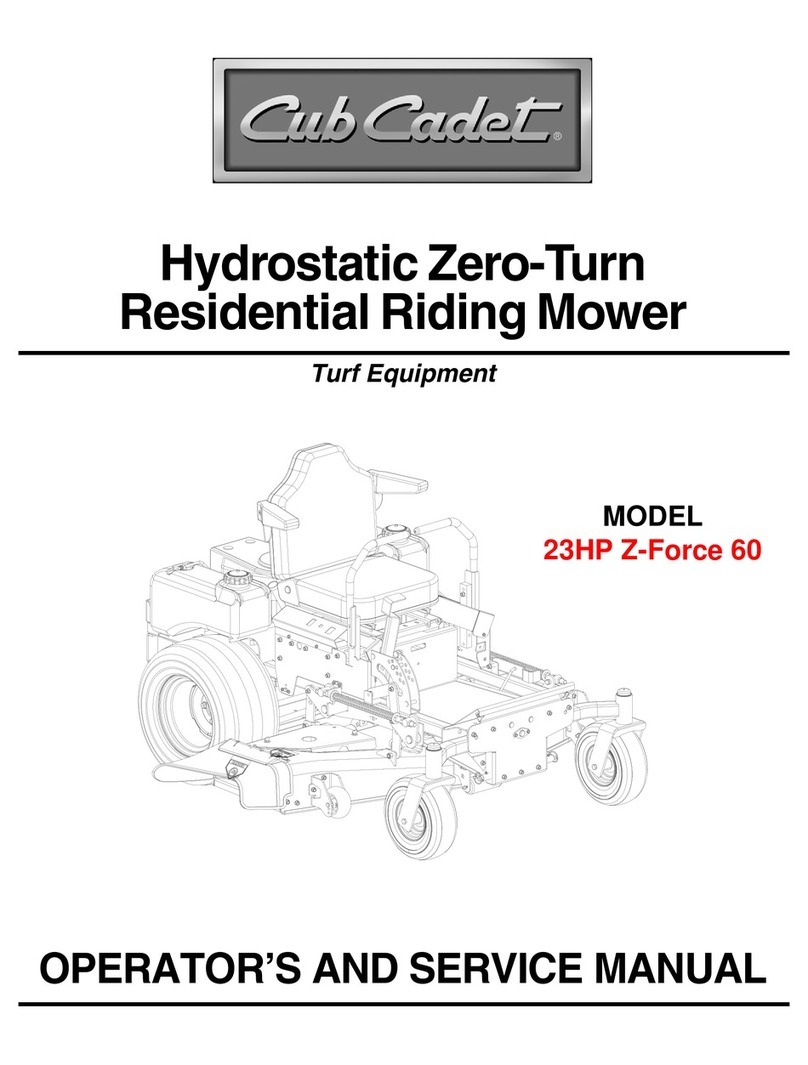
Better Outdoor Products

Better Outdoor Products Quick Series Operator's manual

Cub Cadet 23HP Z-Force 60 Operator's and service manual

Cub Cadet

Cub Cadet 23HP Z-Force 60 Operator's and service manual

Toro Groundsmaster 3505-D Service manual

Toro

Toro Groundsmaster 3505-D Service manual
Dennis FT 610 instruction manual

Dennis

Dennis FT 610 instruction manual

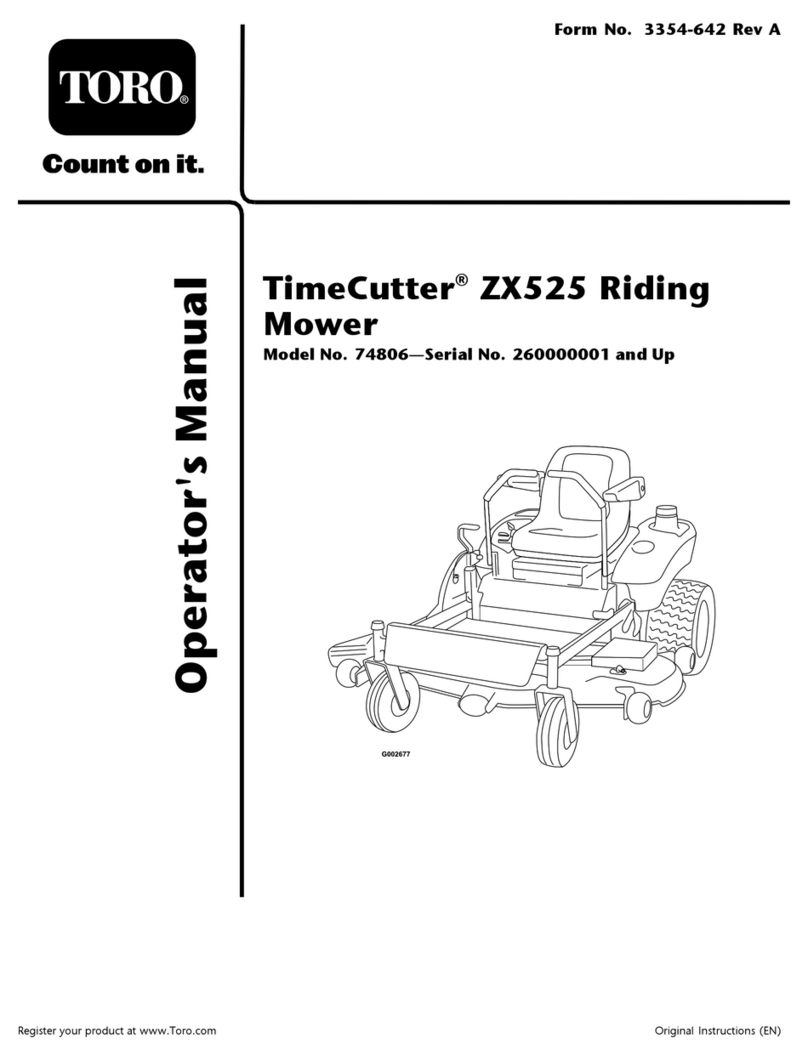
Toro 74806 Operator's manual

Toro

Toro 74806 Operator's manual

Stihl RMA 443 PV instruction manual

Stihl

Stihl RMA 443 PV instruction manual

Yard-Man 3700-0 Operating manual and parts list

Yard-Man

Yard-Man 3700-0 Operating manual and parts list

AIRFORCE F-15 Gen 3 owner's manual

AIRFORCE

AIRFORCE F-15 Gen 3 owner's manual

manuals.online logo
manuals.online logoBrands
  • About & Mission
  • Contact us
  • Privacy Policy
  • Terms and Conditions

Copyright 2025 Manuals.Online. All Rights Reserved.

ASSEMBLY
OPERATION
MAINTENANCE
PARTS
LIST
IMPORTANT:
Read
Safety
Rules
and
Instructions
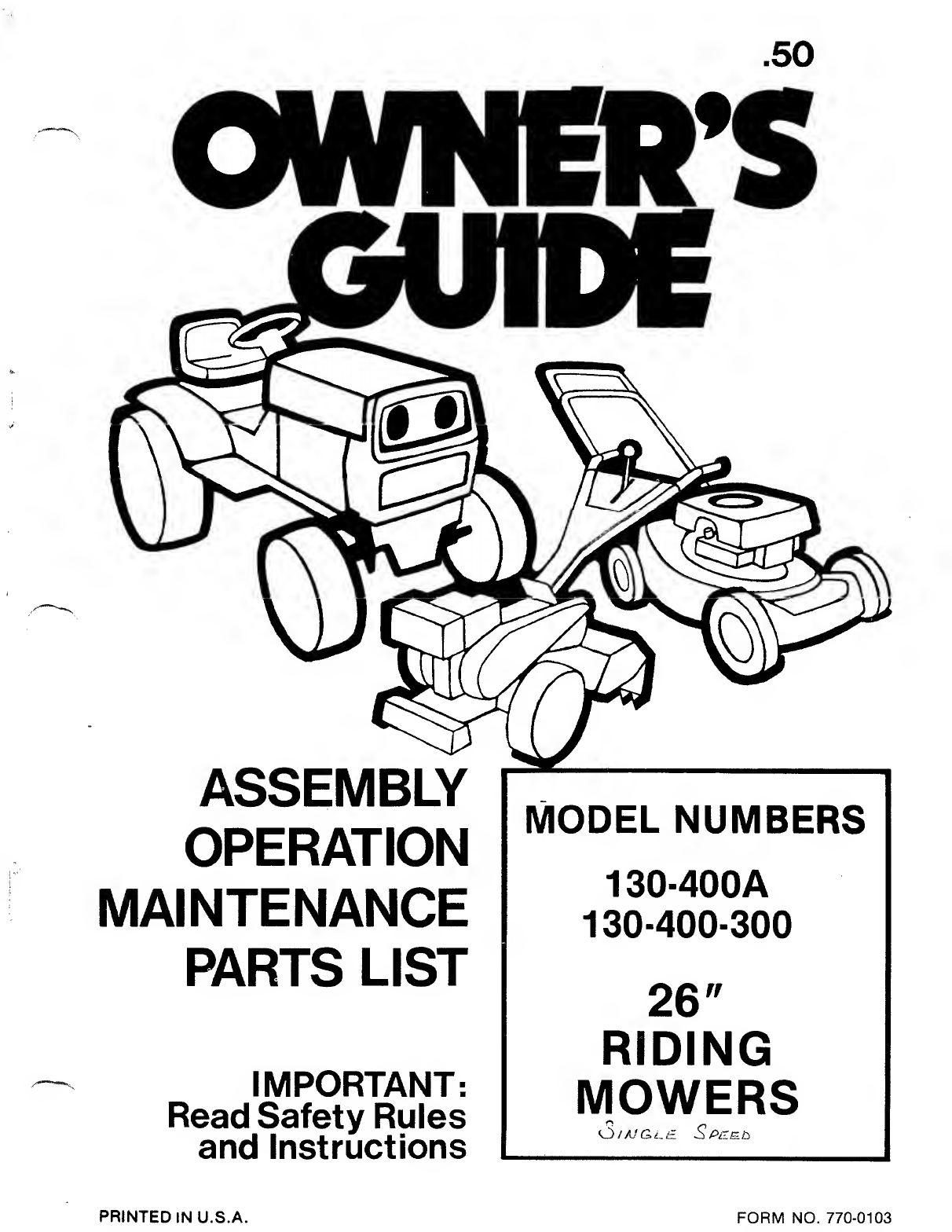
MODEL
NUMBERS
130-400A
130-400-300
26
"
RIDING
MOWERS
PRINTED
IN
U.S.A.
FORM
NO.
770-0103
I
t
♦
♦
♦
♦
♦
♦
♦
♦
♦
♦
♦
♦
♦
♦
♦
♦
LIMITED
WARRANTY
For
one
year
from
the
date
of
original
retail
purchase,
MTD
PRODUCTS
INC
will
either
repair
or
replace,
at
its
option,
free
of
charge,
F.O.B.
factory
or
authorized
service
firm,
any
part
or
parts
found
to
be
defective
in
material
or
workmanship.
Transportation
charges
for
any
parts
submitted
for
replacement
under
this
warranty
must
be
paid
by
the
purchaser
unless
such
return
is
requested
by
MTD
PRODUCTS
INC.
This
warranty
will
not
apply
to
any
part
which
has
become
inoperative
due
to
misuse,
excessive
use,
accident,
neglect,
improper
maintenance,
alterations,
or
unless
the
unit
has
been
operated
and
maintained
in
accordance
with
the
instructions
furnished.
This
warranty
does
not
apply
to
the
engine,
motor,
battery,
battery
charger
or
component
parts
thereof.
Please
refer
to
the
applicable
manufacturer’s
warranty
on
these
items.
This
warranty
will
not
apply
where
the
unit
has
been
used
commercially.
Warranty
service
is
available
through
your
local
authorized
service
dealer
or
distributor.
If
you
do
not
know
the
dealer
or
distributor
in
your
area,
please
write
to
the
Customer
Service
Department
of
MTD.
The
return
of
a
complete
unit
will
not
be
accepted
by
the
factory
unless
prior
written
permission
has
been
extended
by
MTD.
This
warrany
gives
you
specific
legal
rights.
You
may
also
have
other
rights
which
vary
from
state
to
state.
♦
♦
♦
♦
♦
♦
♦
♦
♦
♦
♦
♦
♦
♦
♦
♦
♦
I
WARNING
^
TO
PURCHASERS
OF
INTERNAL
COMBUSTION
ENGINE
EQUIPPED
MACHINERY
OR
DEVICES
IN
THE
STATE
OF
CALIFORNIA
The
equipment
which
you
have
just
purchased
does
not
have
a
spark
arrester.
If
this
equipment
is
used
on
any
forest
covered
land,
brush
covered
land,
or
grass
covered
unimproved
land
in
the
State
of
California,
before
using
on
such
land,
the
California
law
requires
that
a
spark
arrester
be
provided.
In
addition,
spark
arrester
is
required
by
law
to
be
in
effective
working
order.
The
spark
arrester
must
be
attached
to
the
exhaust
system
and
comply
with
Section
4442
of
the
California
Public
Resources
Code.
2
■
^IMPORTANT
It
is
suggested
that
this
manual
be
read
in
its
entirety
before
attempting
to
assemble
or
operate.
Keep
this
manual
in
a
safe
place
for
future
reference
and
for
ordering
replacement
parts.
This
unit
is
shipped
WITHOUT
GASOLINE
or
OIL.
After
assembly,
see
operating
section
of
this
manual
for
proper
fuel
and
amount.
This
unit
is
a
precision
piece
of
power
equipment,
not
a
plaything.
Therefore
exercise
extreme
caution
at
all
times.
SAFE
OPERATION
PRACTICES
FOR
RIDING
VEHICLES
1.
Know
the
controls
and
how
to
stop
quickly—
READ
THE
OWNER’S
MANUAL.
2.
Do
not
allow
children
to
operate
vehicle.
Do
not
allow
adults
to
operate
it
without
proper
instruction.
Only
persons
well
acquainted
with
these
rules
of
safe
operation
should
be
allowed
to
use
your
mower.
3.
Do
not
carry
passengers
4.
Keep
the
area
of
operation
clear
of
all
per¬
sons,
particularly
small
children
and
pets.
Stop
engine
when
they
are
in
the
vicinity
of
your
mower.
Although
the
area
of
operation
should
be
completely
cleared
of
foreign
ob¬
jects,
a
small
object
may
have
been
over¬
looked
and
could
be
accidently
thrown
by
the
mower
in
any
direction.
5.
Clear
work
area
of
objects
which
might
be
picked
up
and
thrown
by
the
mower
in
any
direction.
6.
Disengage
all
attachment
clutches
and
shift
into
neutral
before
attempting
to
start
engine.
7.
Disengage
power
to
attachment(s)
and
stop
engine
before
leaving
operating
position.
8.
Disengage
power
to
attachment(s)
and
stop
engine
before
making
any
repairs
or
ad¬
justments.
Disconnect
the
spark
plug
wire
and
keep
the
wire
away
from
the
plug
to
pre¬
vent
accidental
starting.
9.
Before
attempting
to
unclog
the
mower
or
discharge
chute,
stop
the
engine
and
be
sure
the
blade(s)
have
stopped
completely.
Discon¬
nect
the
spark
plug
wire
and
keep
the
wire
away
from
the
plug
to
prevent
accidental
start¬
ing.
10.
Disengage
power
to
attachment(s)
when
transporting
or
not
in
use.
11.
Take
all
possible
precautions
when
leaving
vehicle
unattended
such
as
disengaging
power-take-off,
lowering
attachments,
shift¬
ing
into
neutral,
setting
parking
brake,
stop¬
ping
engine
and
removing
key.
12.
Do
not
stop
or
start
suddenly
when
going
uphill
or
downhill.
Mow
up
and
down
face
of
steep
slopes;
never
across
the
face.
13.
Reduce
speed
on
slopes
and
in
sharp
turns
to
prevent
tipping
or
loss
of
control.
Exercise
ex¬
treme
caution
when
changing
direction
on
slopes.
14.
Stay
alert
for
holes
in
terrain
and
other
hidden
hazards.
15.
Use
care
when
pulling
loads
or
using
heavy
equipment.
A.
Use
only
approved
drawbar
hitch
points.
B.
Limit
loads
to
those
you
can
safely
control.
C.
Do
not
turn
sharply.
Use
care
when
back-
g
ing.
D.
U
se
counterweight(s)
or
wheel
weights
when
suggested
in
owner’s
manual.
16.
Watch
out
for
traffic
when
crossing
or
near
roadways.
17.
When
using
any
attachments,
neverdirect
dis¬
charge
of
material
toward
bystanders
nor
allow
anyone
near
vehicle
while
in
operation.
18.
Handle
gasoline
with
care.
It
is
highly
flam¬
mable.
A.
Use
approved
gasoline
container.
B.
Never
remove
cap
or
add
gasoline
to
a
run¬
ning
or
hot
engine
or
fill
fuel
tank
indoors.
Wipe
up
spilled
gasoline.
C.
Open
doors
if
engine
is
run
in
garage.
Ex¬
haust
fumes
are
dangerous.
Do
not
run
engine
indoors.
19.
Keep
the
vehicle
and
attachments
in
good
operating
condition,
and
keep
safety
devices
in
place.
Use
guards
as
instructed
in
owner’s
manual.
20.
Keep
all
nuts,
bolts,
and
screws
tight
to
be
sure
the
equipment
is
in
safe
working
condi¬
tion.
21.
Never
store
the
equipment
with
gasoline
in
the
tank
inside
a
building
where
fumes
may
reach
an
open
flame
or
spark.
Allow
engine
to
cool
before
storing
in
any
enclosure.
22.
To
reduce
fire
hazard,
keep
engine
free
of
grass,
leaves
or
excessive
grease.
23.
The
vehicle
and
attachments
should
be
stop¬
ped
and
inspected
for
damage
after
striking
a
foreign
object.
The
damage
should
be
repaired
before
restarting
and
operating
the
equipment.
24.
Do
not
change
the
engine
governor
settings
or
overspeed
the
sngine.
25.
When
using
the
vehicle
with
mower,
proceed
as
follows:
(1)
Mow
only
in
daylight
or
in
good
artificial
light.
(2)
Never
make
a
cutting
height
adjustment
while
engine
is
running
if
operator
must
dismount
to
do
so.
(3)
Shut
the
engine
off
and
wait
until
the
blade
comes
to
a
complete
stop
before
removing
the
grass
catcher.
(4)
Check
blade
mounting
bolts
for
proper
tightness
at
frequent
intervals.
26.
Check
grass
catcher
bags
frequently
for
wear
or
deterioration.
For
safety
protection,
replace
only
with
new
bag
meeting
original
equipment
specifications.
27.
Look
behind
to
make
sure
the
area
is
clear
before
placing
the
transmission
in
reverse
and
backing
up.
1
INDEX
Limited
Warranty.
2
Safe
Operation
Practices.3
Assembly
Instructions.5
Controls.
^
Operating
Instructions.9
Maintenance
and
Adjustments.10
Beit
Removal.12
Lubrication.
1
4
Storage.14
Trouble
Shooting
Chart.15
Electrical
Diagram.16
Exploded
View
of
Transmission..17
Repair
Parts
for
Mower.
1
8
-23
Exploded
View
of
Differential.24
Parts
Information.Back
Cover
GRASS
CATCHER
Model
No.
190-015A
is
avail¬
able
as
optional
equipment
for
the
mowers
shown
in
this
manual.
I
WARNING
{
The
mower
should
not
be
operated
without
the
entire
grass
catcher
or
chute
deflector
in
place.
Under
normal
usage
bag
material
is
subject
to
wear,
and
should
be
checked
periodically.
Be
sure
any
replacement
bag
complies
with
the
mower
manufacturer’s
recommen¬
dations.
For
replacement
bags,
use
only
fac¬
tory
authorized
replacement
bag
No.
764-0121.
IMPORTANT
After
striking
a
foreign
object,
stop
the
engine.
Remove
wire
from
spark
plug,
thoroughly
inspect
the
mower
for
any
damage,
and
repair
the
dam¬
age
before
restarting
and
operating
the
mower.
4
steering
Wheel
Cover
Steering
Wheel
Cap
'Hex
Nut
'Belleville
Washer
Steering
Tube
Assembly
Hex
Screw
Hex
Nut
Steering
Shaft
Assembly
Speed
Nut
Flat
Washer
Upper
Hex
Bearing
Lower
Hex
Bearing
FIGURE
1.
STEERING
ASSEMBLY
ASSEMBLY
INSTRUCTIONS
Reference
to
right-hand
or
left-hand
side
of
machine
is
from
the
driver’s
seat
facing
forward.
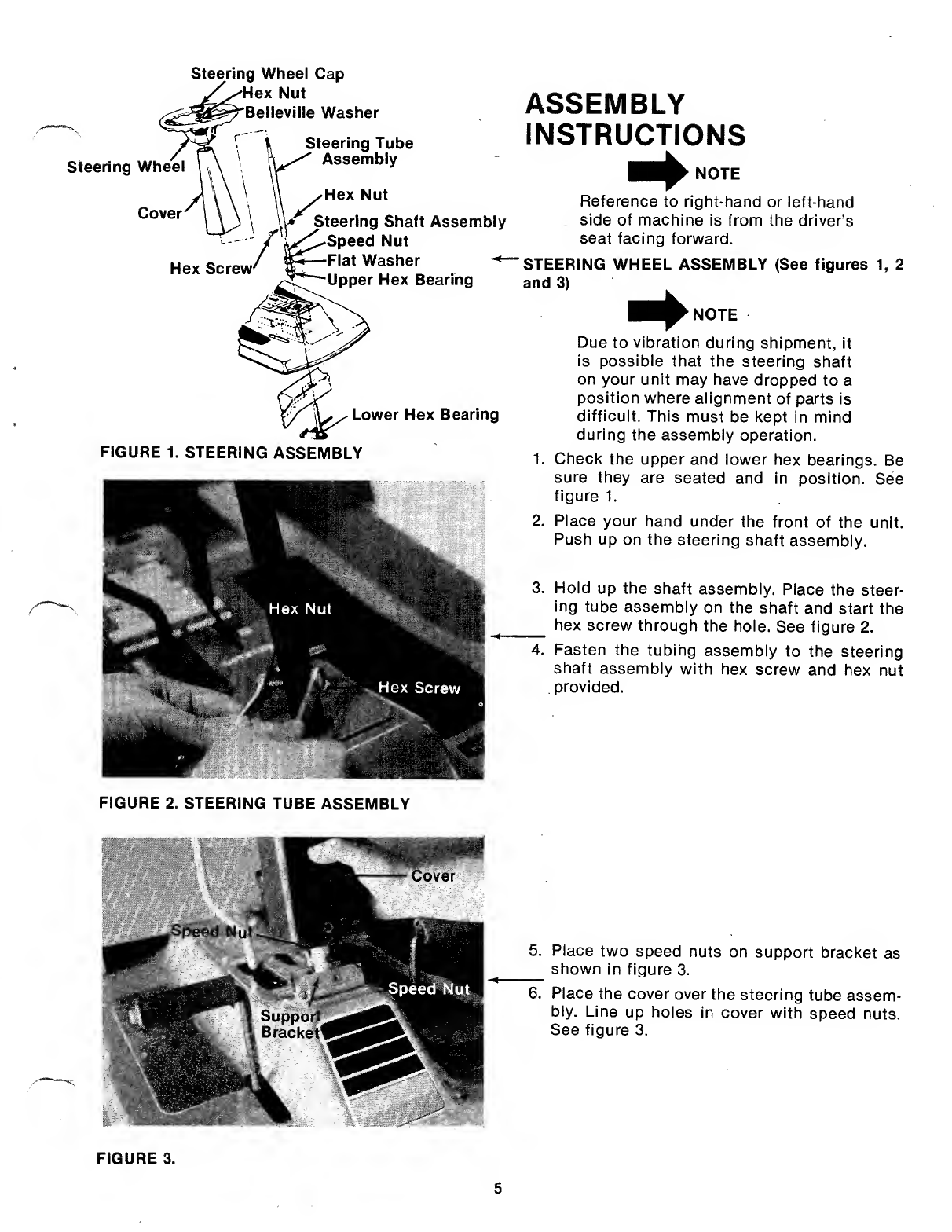
STEERING
WHEEL
ASSEMBLY
(See
figures
1,
2
and
3)
NOTE
Due
to
vibration
during
shipment,
it
is
possible
that
the
steering
shaft
on
your
unit
may
have
dropped
to
a
position
where
alignment
of
parts
is
difficult.
This
must
be
kept
in
mind
during
the
assembly
operation.
1.
C
heck
the
upper
and
lower
hex
bearings.
Be
sure
they
are
seated
and
in
position.
See
figure
1.
2.
P
lace
your
hand
under
the
front
of
the
unit.
Push
up
on
the
steering
shaft
assembly.
3.
Hold
up
the
shaft
assembly.
Place
the
steer¬
ing
tube
assembly
on
the
shaft
and
start
the
_
hex
screw
through
the
hole.
See
figure
2.
4.
Fasten
the
tubihg
assembly
to
the
steering
shaft
assembly
with
hex
screw
and
hex
nut
provided.
FIGURE
2.
STEERING
TUBE
ASSEMBLY
5.
Place
two
speed
nuts
on
support
bracket
as
shown
in
figure
3.
6.
Place
the
cover
over
the
steering
tube
assem¬
bly.
Line
up
holes
in
cover
with
speed
nuts.
See
figure
3.
FIGURE
3.
5
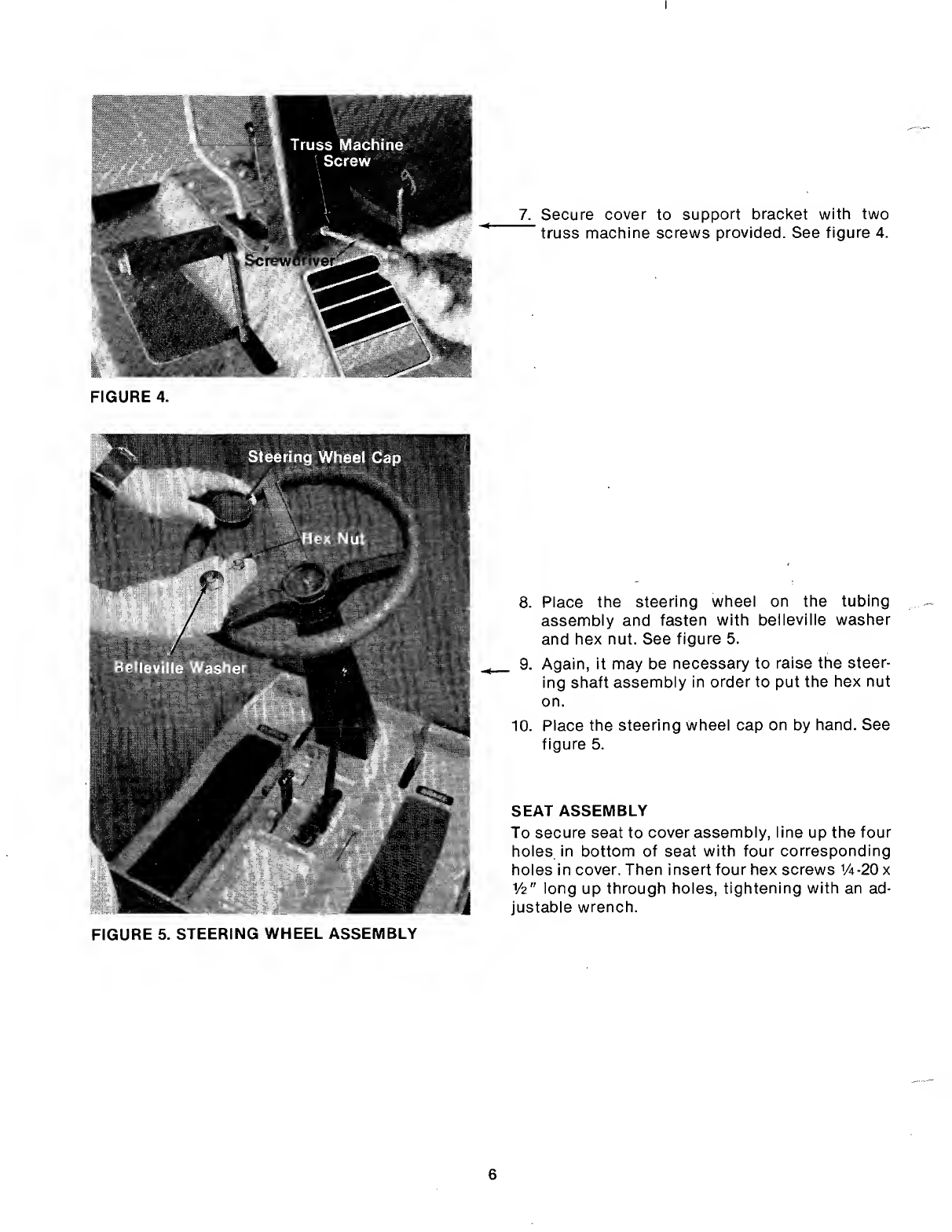
7.
Secure
cover
to
support
bracket
with
two
truss
machine
screws
provided.
See
figure
4.
FIGURE
4.
Belleyllle
FIGURE
5.
STEERING
WHEEL
ASSEMBLY
8.
Piace
the
steering
wheel
on
the
tubing
assembly
and
fasten
with
belleville
washer
and
hex
nut.
See
figure
5.
_
9.
Again,
it
may
be
necessary
to
raise
the
steer¬
ing
shaft
assembly
in
order
to
put
the
hex
nut
on.
10.
Place
the
steering
wheel
cap
on
by
hand.
See
figure
5.
SEAT
ASSEMBLY
To
secure
seat
to
cover
assembly,
line
up
the
four
holes
in
bottom
of
seat
with
four
corresponding
holes
in
cover.
Then
insert
four
hex
screws
V4-20
x
V
2
'
'
long
up
through
holes,
tightening
with
an
ad¬
justable
wrench.
TIRE
PRESSURE
FOR
SHIPPING
PURPOSES,
THE
TIRES
ON
YOUR
UNIT
MAY
BE
OVER-INFLATED.
TIRE
PRESSURE
SHOULD
BE
REDUCED
BEFORE
UNIT
IS
PUT
IN¬
TO
OPERATION.
PRESSURE
SHOULD
BE
AP¬
PROXIMATELY
15
P.S.I.
EQUAL
TIRE
PRESSURE
SHOULD
BE
MAINTAINED
ON
ALL
TIRES.
MAX¬
IMUM
TIRE
PRESSURE
IS
30
P.S.I.
A
CAUTION
Installation
of
tire
to
rim:
1.
Lubricate
tire
beads
and
rim
flanges.
2.
Do
not
exceed
30
P.S.I.
when
seating
beads.
3.
Adjust
to
recommended
pres¬
sure
after
beads
are
sealed.
FIGURE
6.
CONTROLS
CONTROLS
(See
figures
6
and
9)
This
manual
should
be
read
in
its
entirety
before
you
operate
your
riding
mower.
The
more
you
know
and
understand
about
the
machine
and
its
operation,
the
better
job
it
will
do
for
you.
While
reading
the
manual,
compare
the
illustrations
with
your
mower
to
familiarize
yourself
with
the
loca¬
tions
of
various
controls,
lubrication
points,
at¬
tachments
and
adjustment
features.
Study
the
operating
instructions
and
safety
precautions
thoroughly
to
insure
proper
function¬
ing
of
your
mower
and
to
prevent
injury
to
yourself
and
others.
Be
sure
to
save
this
manual
for
future
reference.
THROTTLE
CONTROL
The
throttle
control
is
used
to
regulate
the
engine
speed
and
to
activate
the
choke
on
the
engine.
To
get
the
maximum
efficiency
on
cutting,
the
throt¬
tle
should
be
in
the
“FAST”
position
when
operat¬
ing
the
mower.
Pushing
the
throttle
all
the
way
for¬
ward,
past
“FAST”,
will
choke
the
engine.
IGNITION
KEY
Recoil
Model.
The
key
must
be
turned
to
the
“ON”
position
before
the
recoil
handle
is
pulled
to
start
the
engine.
Turn
the
key
to
the
left
(to
the
“OFF”
position)
to
stop
the
engine.
Remove
the
key
when
the
mower
is
not
in
use.
LIFT
AND
DISENGAGEMENT
LEVER
The
lift
and
disengagement
lever
is
used
to
raise
and
lower
the
cutting
deck,
set
the
cutting
height,
and
disengage
the
cutting
blades.
Move
the
lever
to
the
right
and
move
the
lever
all
the
way
back
and
lock
it
to
disengage
the
blades.
The
lever
may
be
set
in
any
one
of
the
five
cutting
height
positions.
INTERLOCKS
(Not
Shown)
An
interlock
safety
switch
is
located
on
the
clutch
pedal
and
the
lift
and
disengagement
lever.
The
clutch
pedal
must
be
depressed
and
locked.
The
lift
and
disengagement
lever
must
be
in
the
“STOP”
position
(all
the
way
back)
before
the
engine
can
be
started.
Failure
to
follow
these
in¬
structions
will
prevent
starting.
7
Ignition
GEAR
SHIFT
LEVER
The
gear
shift
lever
has
three
positions,
“FOR¬
WARD”,
“NEUTRAL”
and
“REVERSE.”
The
clutch
pedal
must
be
depressed
and
the
riding
mower
must
not
be
moving
when
shifting
gears.
Do
not
force
the
shift
lever.
Release
the
clutch
pedal
slightly
to
line
up
the
shifting
collar
in
the
transmission.
Then
try
to
shift
gears.
BRAKE
To
operate
the
brake,
depress
the
right
pedal
all
the
way.
To
lock
the
brake
in
park
position,
depress
the
right
pedal
all
the
way
and
lift
the
brake
lock.
Pedal
will
stay
in
the
depressed
posi¬
tion.
To
release
the
parking
brake,
depress
the
pedal.
Hood
Release
The
clutch
pedal
is
located
on
the
left
side.
When
pggoji
start
depressed,
it
disengages
the
engine
from
the
„
transmission.
It
can
be
held
in
the
disengaged
Brake
Lock
position
by
lifting
the
clutch
lock.
To
stop
the
Brake
Pedal
FIGURE
8.
CLUTCH
PEDAL
LOCK
Lift
Disengagement
Lever
/
Gear
Shift
Lever
Steering
Wheel
FIGURE
7.
BRAKE
PEDAL
LOCK
CLUTCH
PEDAL
Jhrottle
Control
Clutch
Lock
X,^CIutch
il
mower,
depress
the
clutch
and
brake
pedals.
See
figure
8.
FIGURE
9.
CONTROLS
8
OPERATING
INSTRUCTIONS
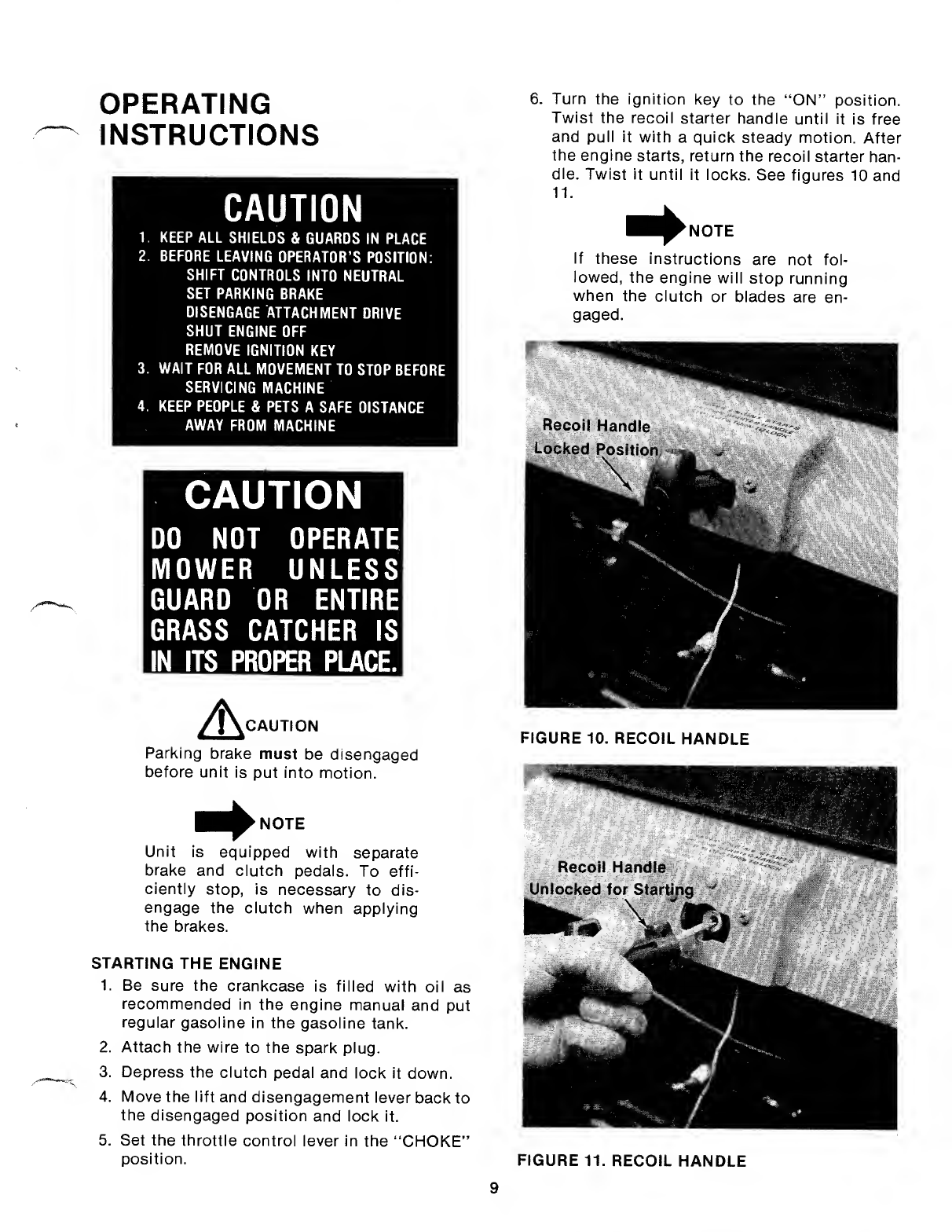
CAUTION
1.
KEEP
ALL
SHIELDS
&
GUARDS
IN
PLACE
2.
BEFORE
LEAVING
OPERATOR’S
POSITION:
SHIFT
CONTROLS
INTO
NEUTRAL
SET
PARKING
BRAKE
DISENGAGE
ATTACHMENT
DRIVE
SHUT
ENGINE
OFF
REMOVE
IGNITION
KEY
3.
WAIT
FOR
ALL
MOVEMENT
TO
STOP
BEFORE
SERVICING
MACHINE
4.
KEEP
PEOPLE
&
PETS
A
SAFE
DISTANCE
AWAY
FROM
MACHINE
CAUTION
DO
NOT
OPERATE
MOWER
UNLESS
GUARD
OR
ENTIRE
GRASS
CATCHER
IS
IN
ITS
PROPER
PLACE.
CAUTION
Parking
brake
must
be
disengaged
before
unit
is
put
into
motion.
Unit
is
equipped
with
separate
brake
and
clutch
pedals.
To
effi¬
ciently
stop,
is
necessary
to
dis¬
engage
the
clutch
when
applying
the
brakes.
STARTING
THE
ENGINE
1.
Be
sure
the
crankcase
is
filled
with
oil
as
recommended
in
the
engine
manual
and
put
regular
gasoline
in
the
gasoline
tank.
2.
Attach
the
wire
to
the
spark
plug.
3.
Depress
the
clutch
pedal
and
lock
it
down.
4.
Move
the
lift
and
disengagement
lever
back
to
the
disengaged
position
and
lock
it.
5.
Set
the
throttle
control
lever
in
the
“CHOKE”
position.
6.
T
urn
the
ignition
key
to
the
“ON”
position.
Twist
the
recoil
starter
handle
until
it
is
free
and
pull
it
with
a
quick
steady
motion.
After
the
engine
starts,
return
the
recoil
starter
han¬
dle.
Twist
it
until
it
locks.
See
figures
10
and
11
.
NOTE
If
these
instructions
are
not
fol¬
lowed,
the
engine
will
stop
running
when
the
clutch
or
blades
are
en¬
gaged.
Recoil
Handle
Bosition
FIGURE
10.
RECOIL
HANDLE
FIGURE
11.
RECOIL
HANDLE
9
I
Slowly
return
the
throttle
to
the
running
position
as
soon
as
the
engine
starts.
7.
To
stop,
turn
the
ignition
key
to
the
“OFF”
position.
Remove
the
key
when
the
rider
is
not
in
use.
PUTTING
THE
RIDING
MOWER
IN
MOTION
1.
Advance
the
throttle
control
from
%
to
full
throttle
to
prevent
strain
on
the
engine
and
to
operate
the
cutting
blades.
2.
Place
the
gear
shift
lever
in
either
the
“FOR¬
WARD”
or
“REVERSE”
position.
3.
Slowly
release
the
clutch
pedal.
4.
To
stop,
depress
the
clutch
and
the
brake
pedals.
5.
The
blades
can
be
engaged
either
while
mov¬
ing
or
while
standing
still.
Move
the
lift
and
disengagement
lever
forward
slowly
until
the
blades
are
running.
FIGURE
12.
THROTTLE
CONTROL
ADJUSTMENT
^
WARNING
{
If
any
adjustments
are
made
to
the
engine
while
the
engine
is
running
(e.g.
carburetor),
disengage
all
clutches
and
blades.
Keep
clear
of
all
moving
parts.
Be
careful
of
heat¬
ed
surfaces
and
muffler.
STOPPING
Engine—
Turn
the
ignition
key
to
the
left
to
the
“OFF”
position.
Rider—
D
epress
the
clutch
and
brake
pedals.
Blades—
P
ull
the
lift
and
disengagement
lever
all
the
way
back
and
lock
it.
MAINTENANCE
AND
ADJUSTMENTS
THROTTLE
CONTROL
To
Check
Operation:
1.
R
emove
air
cleaner.
2.
M
o
ve
throttle
control
lever
to
“CHOKE”
posi¬
tion.
The
carburetor
choke
should
be
closed.
3.
M
o
ve
throttle
control
lever
to
“STOP”
position.
Lever
should
make
good
contact
with
stop
switch.
To
Adjust:
See
figure
12.
Place
remote
control
lever
on
equipment
in
“FAST”
(high
speed)
position.
Lever
0
on
carburetor
should
be
just
touching
choke
arm
at
D.
To
adjust,
ioosen
casing
clamp
screw
A
on
blower
housing.
Move
control
casing
B
forward
or
backward
until
correct
position
is
ob¬
tained.
Tighten
screw
A.
Recheck
operation
of
controls
after
adjustment.
Replace
air
cleaner.
CARBURETOR
ADJUSTMENTS
See
figure
13.
Minor
carburetor
adjustment
may
be
required
to
compensate
for
differences
in
fuel,
temperature,
altitude
and
load.
Initial
Adjustment:
Turn
needle
valve
clockwise
to
close
it.
Then
open
2
turns.
This
initial
adjustment
will
permit
the
engine
to
be
started
and
warmed
up
before
mak¬
ing
final
adjustment.
Final
Adjustment:
With
engine
running
at
normal
operating
speed
(approximately
3000
RPM
without
load),
turn
nee¬
dle
valve
clockwise
until
engine
starts
to
lose
speed
(lean
mixture).
Then
slowly
turn
needle
valve
counterclockwise
past
the
point
of
smooth¬
est
operation,
until
engine
just
begins
to
run
unevenly.
This
mixture
will
give
best
performance
under
load.
10