HOWTOUSE
THE
GLOSE.UP
TABLES
ry & #r.ffro
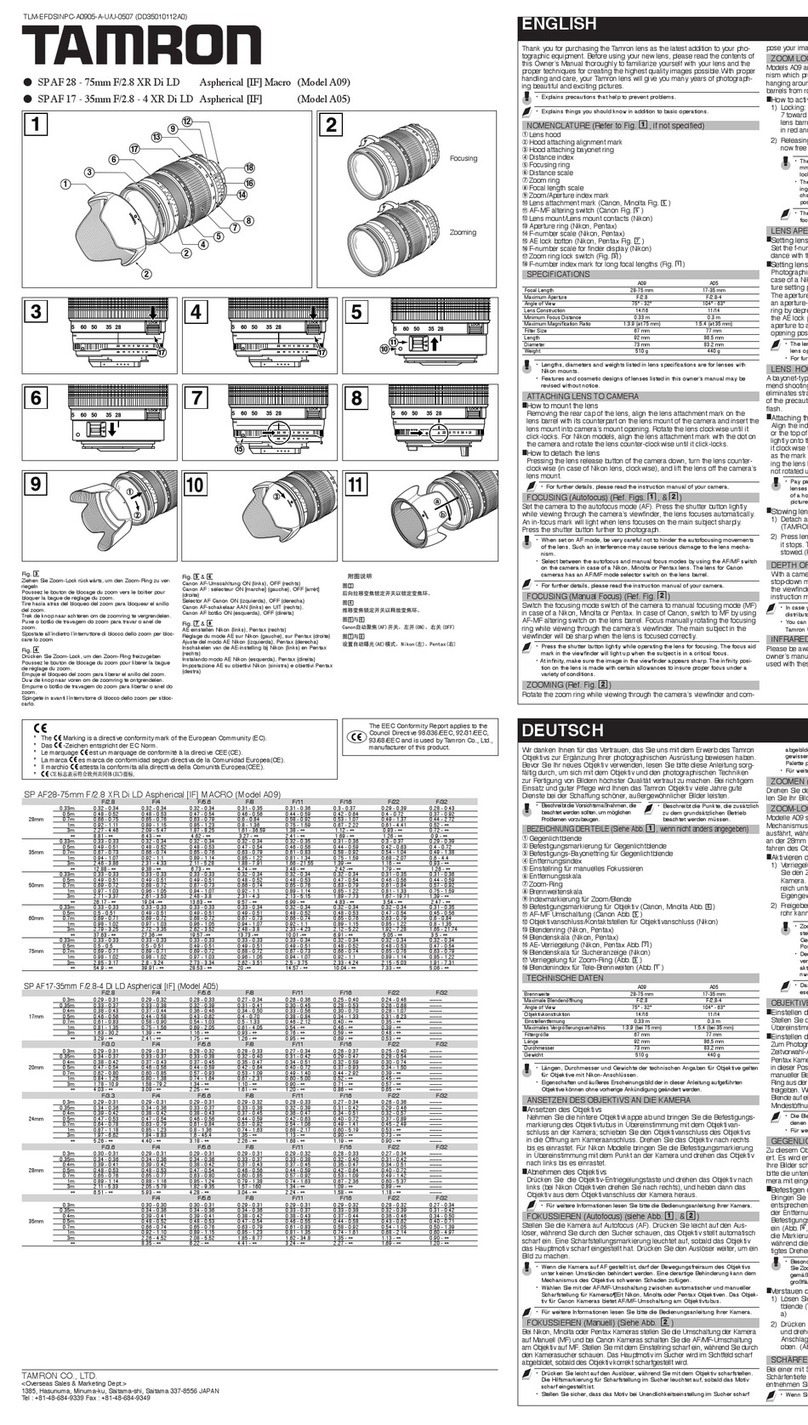
Depending on your particular close-up situation, determine first 1) the picture area, 2) the
film-to-subject distance, or 3) the magnification. Then select the most suitable Extension
Tube combination according to the data in the tables.
Determine the magnification first t
When you want to magnify or reduce a subject to a specific image size, determine the
magnification first. For example, if the image size is half the size of the subject, the
magnification is 0.5. If the image is twice as large as the actual subject, the magnifica- ,
tion is 2. The close-up table will show which Extension Tube combination to use. ',;
.:
Determine
the picture area first
When the subject area to photograph is determined, measure its length and width. Then
refer to the picture area column in the close-up table and select the most suitable lens
plus Extension Tube combination.
Determine
the film-to-subject
distance
first
When it is difficult to get closer to your subject, determine the desired film-to-subject dis-
tance first. As the picture area varies with the focal length of each lens, select the most
suitable lens plus Extension Tube combination by referring to the data in the close-up table. l
Exposure
Factor
In close-up photography, you must adjust the exposure according to the length of the Exten- cj
sion Tube, as the amount of light decreasesasit passes
through a greater distance. Exposure
varies according to the combination of lens and Extension Tubes. Refer to the data in the
close-up table for the exposure factor that shows how much to compensate for correct
exposure. No exposure factor compensation is needed when the exposure reading is made
with the 6X7 TTL Pentaprism which will be available in the near future. ,&
untr" id*b-