9 V3.3.16
Outside the Cellar
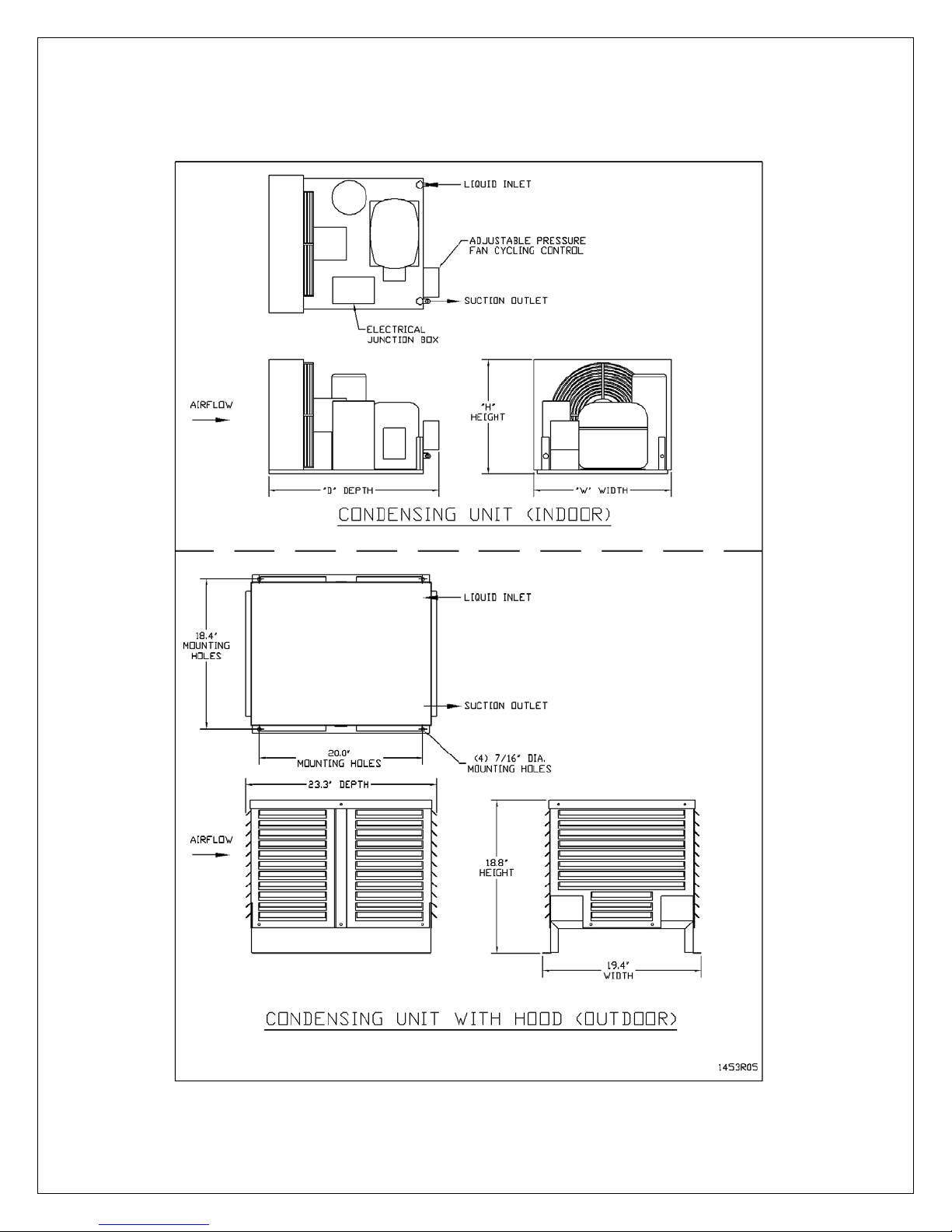
Condensing unit Air Exhaust. Condensing units create significant hot air which
must be exhausted into an appropriately-sized space in order for the heat to
dissipate. If the space is constrained and/or too small, the heat will not dissipate. In
this event, the cooling unit will be forced to re-circulate its hot air exhaust and/or the
static pressure will back up the cooling unit. If this happens, the cooling unit’s ability
to create cold air inside the cellar will be compromised.
Condenser Air Intake. The condenser coils require access to cool air in order for
the cooling unit to produce cold air. In addition, the cooling unit must be installed so
that, after its installation, the condenser coils are accessible for periodic cleaning.
The Condensing unit cannot be ducted.
Inside the Cellar
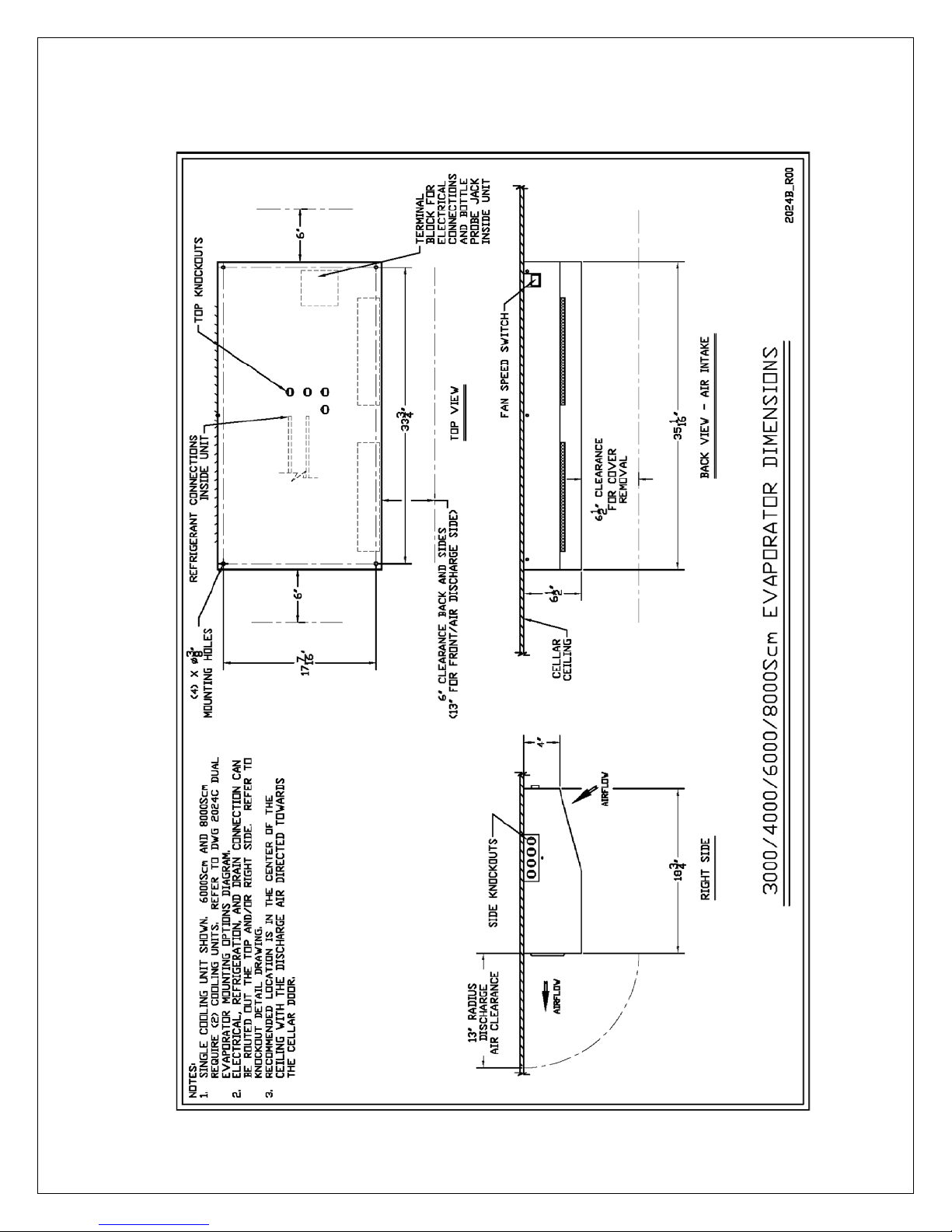
Evaporator Air Intake
.
When the warm air passes across the evaporator coils, heat
is removed fromthe air, and the resulting cold air is exhausted into the cellar. To ensure
proper airflow, minimum clearance of 6” is required at the air intake of the cooling unit
(refer to Evaporator Cut Sheet).
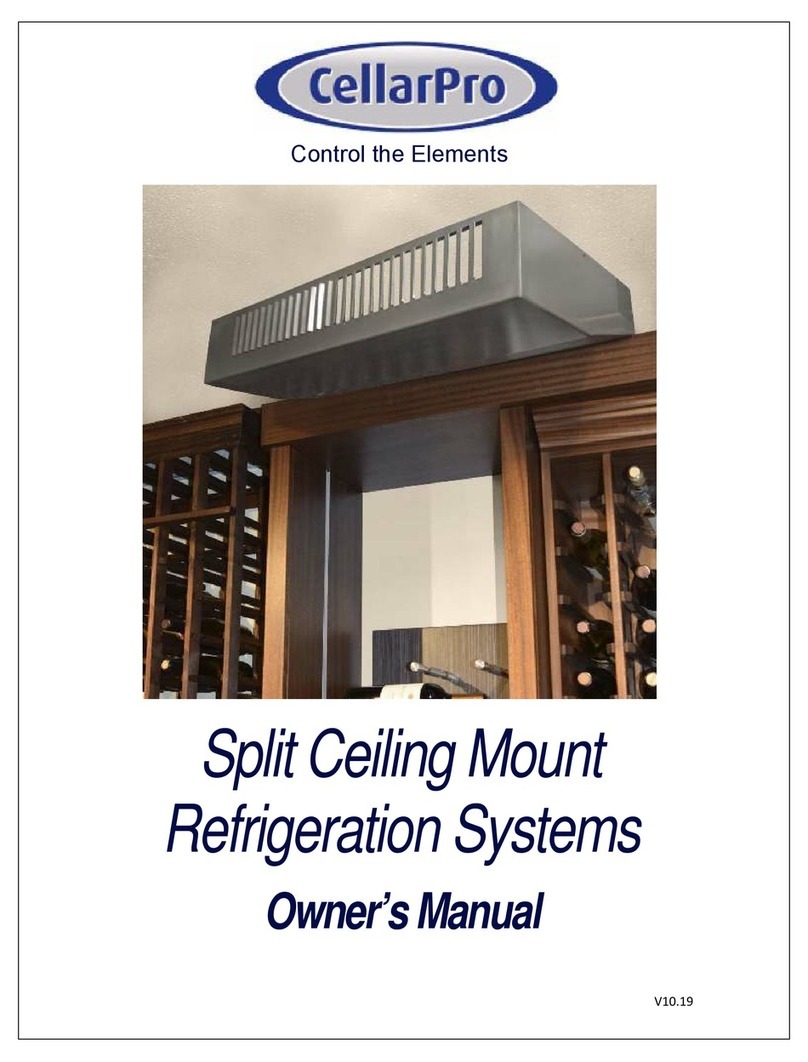
Evaporator Air Exhaust.
Cold air is exhausted at the front of the cooling unit. Because
CellarPro cooling units are located at the highest point inside wine cellars, the cold air
exhaust eventually will drop to the bottom of the cellar. To ensure proper airflow and
reduce temperature stratification inside the cellar, the space in front of the cold air
discharge should be clear of any obstructions, including wine bottles, wine racks, etc. A
minimum clearance of 13” is required at the air exhaust (refer to Evaporator Cut Sheet).
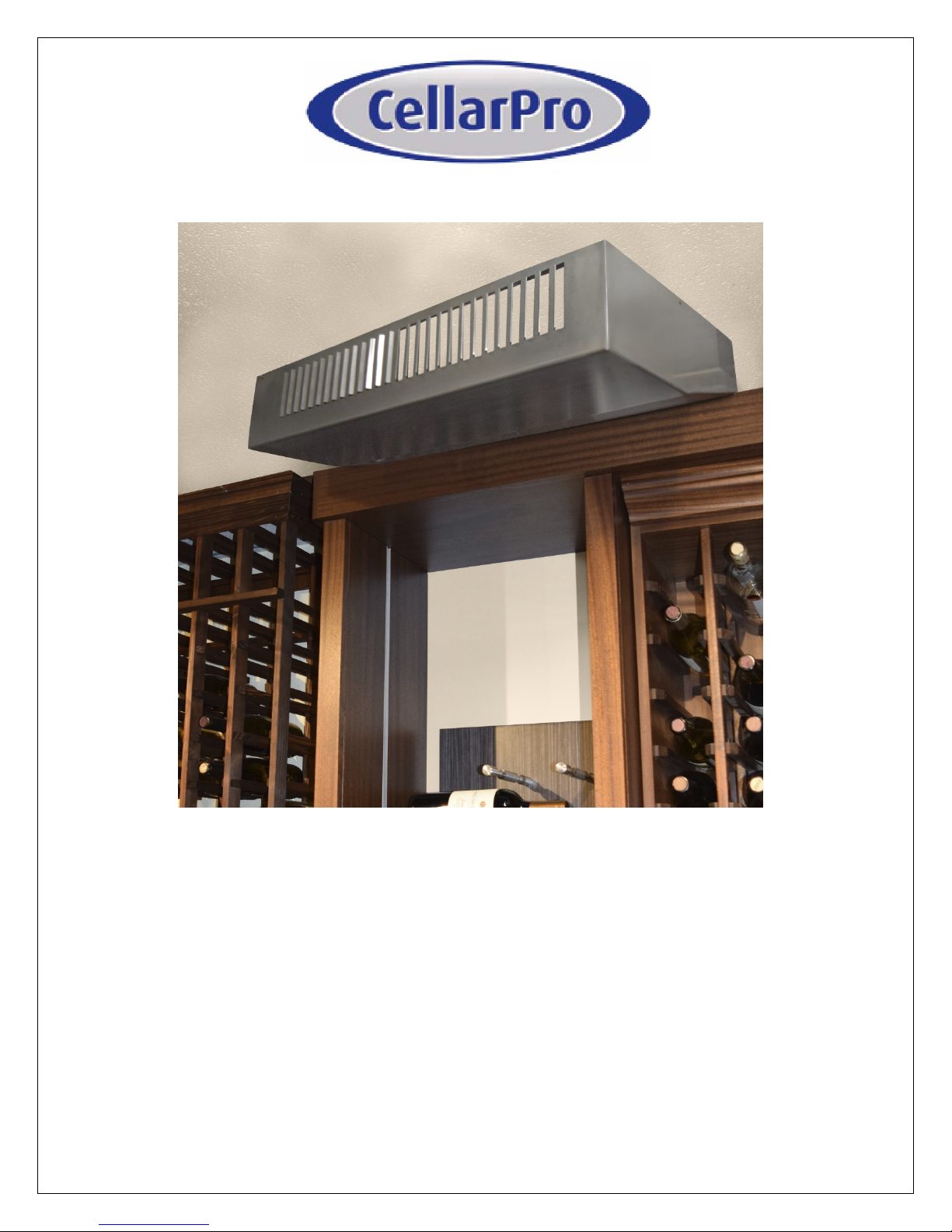
We also offer a bottle probe (10 foot cord) that can be plugged into the cooling unit,
as well as 25’ and 50’ extension cords. The probe jack is located inside the ceiling
mounted housing.