5
If your service provider or system installer has already set up the SAT>IP Server Set-Top-Box and
connected it to this receiver, then you may want to skip this section. However, if you are setting up the
system by yourself, please read below "Connecting to Audio & Video Devices" section, and make sure
you follow all the precautions listed under “Safety Instruction”.
Connecting to Audio & Video Devices
There are many ways to connect the cable receiver to your home entertainment system, depending on
the equipment and connection types you have.
l Connecting to the SAT>IP Server Set-Top-Box
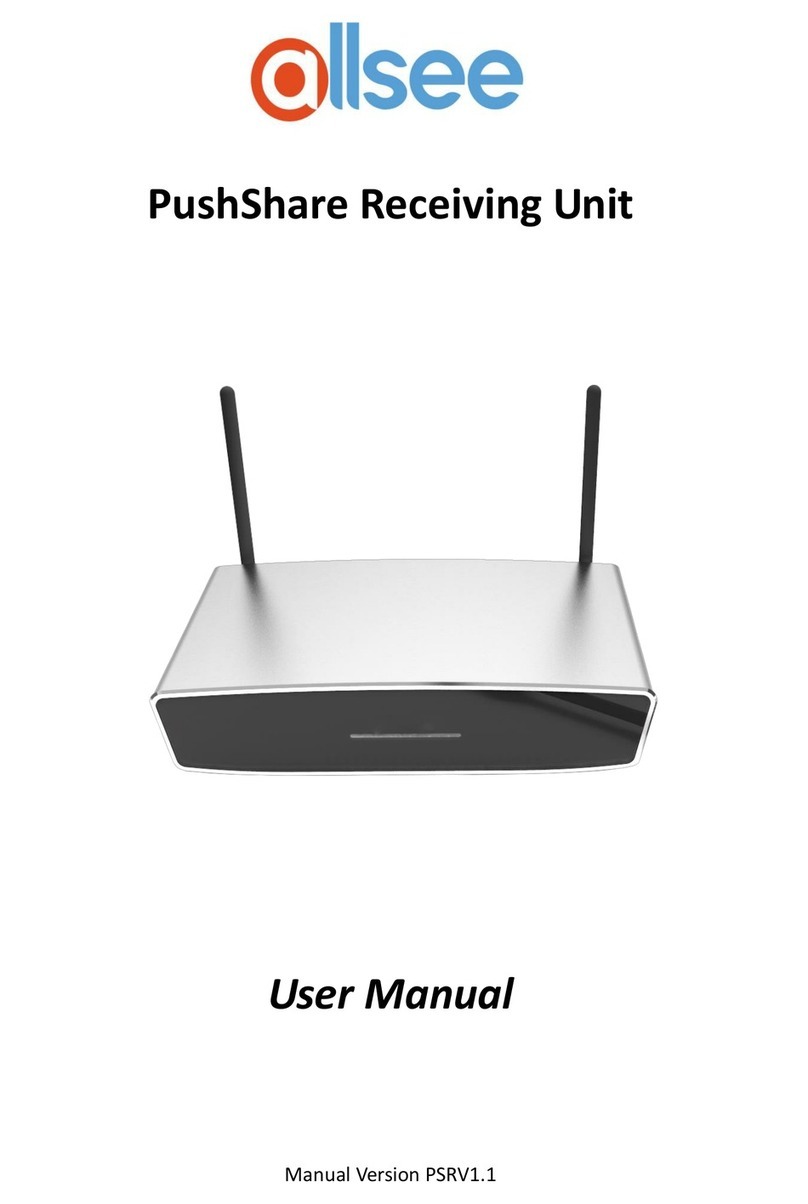
Connect the SAT>IP Server Set-Top-Box to the SAT>IP receiver’s Ethernet connector.
l Connecting to the TV
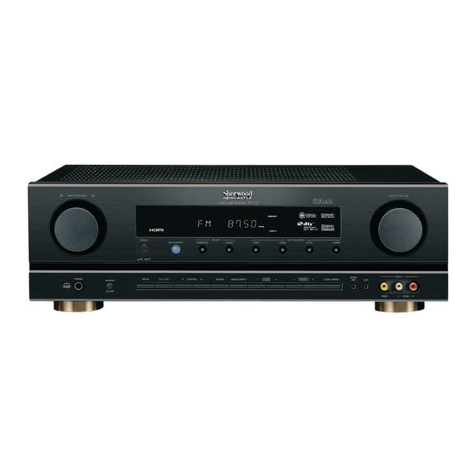
Connect the SAT>IP receiver to the monitor by HDMI cable.
l Connecting to the USB
Connect the USB 2.0 memory storage device to the SAT>IP receiver’s USB connector.
n Display Options
Digital TV broadcasts carry a mixture of widescreen (16:9) and standard (4:3) format programs. At the
receiving end, both set-top boxes and television sets allow viewers to choose between several
different display conditions. Broadcasters transmit codes embedded in the digital transmission which
describe picture shape. All transmissions flag either 16:9 or 4:3 raster.
Set-top boxes use this information to create the appropriate raster, and also pass information about
the preferred display mode to the TV set. But to be effective, the set-top box and TV set must be
set-up correctly, and even then the viewer preference selected on the TV set may override the
signaling. With all these variables, broadcasters often do not know how their programs are being
watched, and viewers may unwittingly be viewing a less than perfect picture shape.
New Guidelines address these issues; all TV sets have an ex-factory default setting which makes the
set follow the broadcasters' transmitted picture format codes. This will allow some view preferences
to operate automatically, but only those which the broadcaster has catered for in making the program.
For example, it will allow a viewer to fill the screen of a 4:3 TV set with the centre portion of a
widescreen picture, but only for programs 'shot and protected' to allow for this, so that cutting off the
edges won't lose important action in the scene.
n Recommended Settings
Recognizing that viewers may not always be satisfied with the broadcaster's recommended display
format or choice of formats, TV sets may also have a 'viewer preference' setting, in which the viewer's
wishes override that of the broadcaster, the viewer will have to select these other modes deliberately.