EnglishDeutsch
 logo
Brands
  1. Home
  2. •
  3. Brands
  4. •
  5. Hotpoint
  6. •
  7. Freezer
  8. •
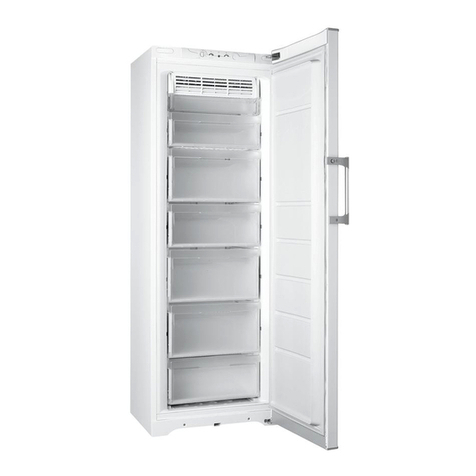
  9. Hotpoint OFNAA305 User manual

Hotpoint OFNAA305 User manual

Other Hotpoint Freezer manuals

Hotpoint RZA30 User manual

Hotpoint

Hotpoint RZA30 User manual

Hotpoint BZ71 Parts list manual

Hotpoint

Hotpoint BZ71 Parts list manual

Hotpoint 8326 User manual

Hotpoint

Hotpoint 8326 User manual

Hotpoint CS1A400HFMFAUK User manual

Hotpoint

Hotpoint CS1A400HFMFAUK User manual

Hotpoint FZS 175 User manual

Hotpoint

Hotpoint FZS 175 User manual

Hotpoint RFA52P User manual

Hotpoint

Hotpoint RFA52P User manual

Hotpoint SXBD922FWDUK User manual

Hotpoint

Hotpoint SXBD922FWDUK User manual

Hotpoint CF1A 100 H UK Setup guide

Hotpoint

Hotpoint CF1A 100 H UK Setup guide

Hotpoint RZA 21 User manual

Hotpoint

Hotpoint RZA 21 User manual

Hotpoint 6950 User manual

Hotpoint

Hotpoint 6950 User manual

Hotpoint RZAV21P User manual

Hotpoint

Hotpoint RZAV21P User manual

Hotpoint UPS 1721 F/HA User manual

Hotpoint

Hotpoint UPS 1721 F/HA User manual

Hotpoint FZA30 User manual

Hotpoint

Hotpoint FZA30 User manual

Hotpoint FZ92P User manual

Hotpoint

Hotpoint FZ92P User manual

Hotpoint HUZ121 User manual

Hotpoint

Hotpoint HUZ121 User manual

Hotpoint FZ175X User manual

Hotpoint

Hotpoint FZ175X User manual

Hotpoint KSZ1422 User manual

Hotpoint

Hotpoint KSZ1422 User manual

Hotpoint HZ201 User manual

Hotpoint

Hotpoint HZ201 User manual

Hotpoint UPS 1721 F J/HA User manual

Hotpoint

Hotpoint UPS 1721 F J/HA User manual

Hotpoint RFR51V User manual

Hotpoint

Hotpoint RFR51V User manual

Hotpoint HCM9STWW Operating instructions

Hotpoint

Hotpoint HCM9STWW Operating instructions

Hotpoint RZA36G.1-RZA36P.1 User manual

Hotpoint

Hotpoint RZA36G.1-RZA36P.1 User manual

Hotpoint 8709 User manual

Hotpoint

Hotpoint 8709 User manual

Hotpoint CF1A 100 H UK User manual

Hotpoint

Hotpoint CF1A 100 H UK User manual

Popular Freezer manuals by other brands

Siemens GU..D SERIES Instructions for use

Siemens

Siemens GU..D SERIES Instructions for use

Omcan FR-CN-0155 instruction manual

Omcan

Omcan FR-CN-0155 instruction manual

Beko FNE290E24W user manual

Beko

Beko FNE290E24W user manual

Electrolux ARCTIS G 8 60 50-6I user manual

Electrolux

Electrolux ARCTIS G 8 60 50-6I user manual

Electrolux EUF2042AOX user manual

Electrolux

Electrolux EUF2042AOX user manual

Dometic CoolFreeze CFX95DZ operating manual

Dometic

Dometic CoolFreeze CFX95DZ operating manual

Electrolux EUF7000W1 user manual

Electrolux

Electrolux EUF7000W1 user manual

Polar Electro CT330 instruction manual

Polar Electro

Polar Electro CT330 instruction manual

MPM MPM-145-SK Series manual

MPM

MPM MPM-145-SK Series manual

SAF PRESTOTIG 200AC/DC Installation and instruction manual

SAF

SAF PRESTOTIG 200AC/DC Installation and instruction manual

Zanussi ZFT11407WA user manual

Zanussi

Zanussi ZFT11407WA user manual

AEG A63190GT user manual

AEG

AEG A63190GT user manual

AEG A81000TNW0 user manual

AEG

AEG A81000TNW0 user manual

Matsui MUC50S15E instruction manual

Matsui

Matsui MUC50S15E instruction manual

NEFF G4344X8 Instructions for use

NEFF

NEFF G4344X8 Instructions for use

Frigidaire FV 1246 H Instruction book

Frigidaire

Frigidaire FV 1246 H Instruction book

Frigidaire FFC13K1AW Factory parts catalog

Frigidaire

Frigidaire FFC13K1AW Factory parts catalog

Electrolux EU 2400C Instructions for use

Electrolux

Electrolux EU 2400C Instructions for use

https://manuals.online logo
https://manuals.online logoBrands
  • About & Mission
  • Contact us
  • Privacy Policy
  • Terms and Conditions

Copyright 2026 Manuals.Online. All Rights Reserved.

GB
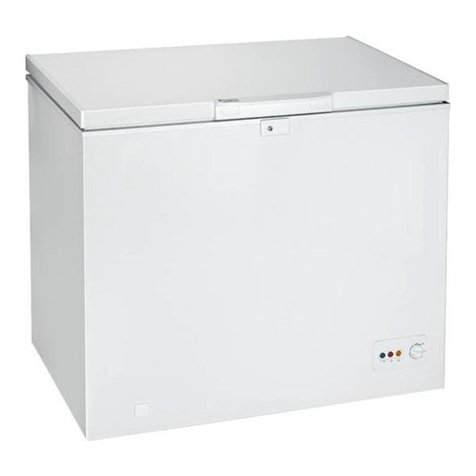
CHEST FREEZER
FZ 102 P.1/HA
FZ 102 P.1 IX/HA
FZ 1022 P.1/HA
FZ 1022 P.1 IX/HA
FZ 1022 P.1 F/HA
FZ 1022 P.1 IX F/HA
FZ 102 P.1 F/HA
FZ 102 P.1 IX F/HA
Contents
Before using the ppli nce, 2
Product description, 3
Inst ll tion, 4
Freezing Food, 5
Food stor ge, 6
Prec utions nd gener l
recommend tions, 7
Defrosting the ppli nce, 8
C re nd M inten nce, 9
Troubleshooting guide, 10
S fegu rding the environment, 11
Assist nce, 12
English,1
GB
Instrucions for use
2
GB
Your new appliance is designed exclusively for
domestic use and for storing frozen food, freezing
fresh food and making ice cubes.
Regulations require that the appliance is earthed.
The manufacturer declines all liability for in ury to
persons or animals and for damage to property
resulting from failure to observe the above
procedures and reminders.
1. After unpacking, make sure that the appliance is
undamaged and that the lid closes perfectly tight.
Any damage must be reported to your dealer
within 24 hours after delivery of the appliance.
2. Wait at least two hours before switching the
appliance on in order to ensure the refrigerant
circuit is fully efficient.
3. Installation of the appliance and electrical
connections must be carried out by a qualified
electrician, in accordance with the manufacturer's
instructions and local safety regulations.
4. Clean the inside of the appliance before using it.
•Before connecting the appliance to the mains
supply, ensure that the voltage corresponds to
that given on the rating plate located on the
rear of the appliance.
•Electric l connections must be m de in
ccord nce with loc l regul tions.
Before using
the ppli nce
GB
3
1. Lid handle.
2. Lock (if provided).
3. Seal.
4. Defrost water drain plug (depending on model).
5. Control panel.
6. Basket (depending on model).
7. Condenser (located at the rear).
1. Thermost t: Temperature ad ustment.
2. Red LED (if provided): indicates that the
appliance temperature is not sufficiently low.
3. Green LED (if provided): indicates that the
appliance is on.
4. Yellow LED (if provided): indicates that the fast
freeze function is active.
5. F st freeze button (if provided): press to
activate the fast freeze function.
Climatic Classe Amb. T. (°C) Amb. T. (°F)
SN From 10 to 32 From 50 to 90
N From 16 to 32 From 61 to 90
ST From 16 to 38 From 61 to 100
T From 16 to 43 From 61 to 110
Product description
4
GB
Inst ll tion
•Refer to chapter "Before using the appliance".
•Unpack the appliance.
•Remove the 4 protection pieces inserted between
lid and appliance.
•W rning: two of the four protection pieces must
be fitted in the seat of the condenser plastic
supports, located at the rear of the product. This
is necessary to ensure the correct distance from
the wall.
•Ensure that the defrosting water drainage plug (if
provided) is correctly positioned (4).
•For best operation of the appliance and in order to
avoid damage when the lid is opened, leave a
space of at least 7 cm from the rear wall and 7 cm
at the sides.
•Fit the accessories (if provided).
Switching on the ppli nce
•The appliance is factory set for optimum operation
at a temperature of -18°C.
•Plug in the appliance.
•The green LED lights up (if provided).
•Also the red LED (if provided) will switch on
because the temperature inside the appliance is
not yet sufficiently low for food storage. The red
LED will normally switch off within the first six
hours after the appliance is switched on.
•After connecting the ppli nce to the m ins
supply nd when the optim l temper ture h s
been re ched (this ph se t kes bout 1 hour
during which the lid will not open), ensure th t
the f st freeze button is not pressed (the yellow
LED, if provided, is off).
•Place food inside the product only when the red
LED (if provided) has switched off.
•Thanks to the efficient lid seal, the appliance lid
will not re-open easily immediately after closing.
Wait a few minutes before re-opening the lid of
the appliance.
Temper ture Adjustment
Use the thermostat to select the ideal storage
temperature.
To ad ust the internal temperature, proceed as
follows:
•Turn the thermostat knob to 1 for a storage
temperature that is less cold.
•Turn the thermostat knob to 6 / for a colder
storage temperature.
•When the appliance is only partially full, it is
advisable to set the thermostat to lower positions
(towards "E", if indicated on the thermostat scale).
GB
5
Prep r tion of fresh food for freezing
•Before freezing, wrap and seal fresh food in:
aluminium foil, cling film, air and water-tight
plastic bags, polyethylene containers with lids,
provided they are suitable for freezing foods.
•Food must be fresh, mature and of prime quality
in order to obtain high quality frozen food.
•Fresh vegetables and fruit should preferably be
frozen as soon as they are picked to maintain the
full original nutritional value, consistency, colour
and flavour.
•Always leave hot food to cool before placing in
the appliance.
Freezing fresh food
•Place foods to be frozen in direct contact with the
walls of appliance:
A) - foods to be frozen,
B) - foods already frozen.
•Avoid placing foods to be frozen in direct contact
with food already frozen.
•For best and fastest freezing, foods should be
split into small portions; this will also be useful
when the frozen items are to be used.
1. At least 24 hours before storing fresh food in the
appliance, press the fast freeze button. For
appliances without this button, turn the thermostat
to .
2. Place the food to be frozen and keep the lid of the
appliance closed for 24 hours. At the end of this
period, switch off the fast freeze button (if
provided).
Freezing Food
6
GB
 Refer to the table on the appliance (if provided).
Cl ssific tion of frozen foods
Put the frozen products into the appliance and
classify them; The storage date should be indicated
on the packs, to allow use within expiry dates.
Advice for storing frozen food
When purchasing frozen food products:
•Ensure that the packaging is not damaged (frozen
food in damaged packaging may have
deteriorated). If the package is swollen or has
damp patches, it may not have been stored under
optimal conditions and defrosting may have
already begun.
MONTHS FOOD
Food stor ge
•When shopping, leave frozen food purchases until
last and transport the products in a thermally
insulated cool bag.
•Once at home, place the frozen foods
immediately in the appliance.
•Avoid, or reduce temperature variations to the
minimum.
•Respect the best-before date on the package.
•Always observe the storage information on the
package.
Note:
Eat fully or partially defrosted foods immediately.
Do not refreeze unless the food is cooked after it
has thawed. Once cooked, the thawed food can be
refrozen. If there is a long power failure:
•Do not open the appliance lid except to place ice
packs (if provided) over the frozen foods on the
right and left of the appliance. This will slow down
the rise in temperature.
GB
7
Prec utions nd gener l
recommend tions
•After installation, make sure that the appliance is
not standing on the power supply cable.
•Do not store glass containers with liquids in the
appliance since they may burst.
•Do not eat ice cubes or ice lollies immediately
after taking them out of the appliance since they
may cause cold burns.
•Before servicing or cleaning the appliance, unplug
it from the mains or disconnect the electrical
power supply.
•Do not install the appliance in places exposed to
direct sunlight or near heat sources in order to
avoid increasing power consumption.
•Do not store or use gasoline or other flammable
vapours and liquids in the vicinity of this or any
other appliance. The fumes can create a fire
hazard or explosion.
•Install the appliance in a perfectly horizontal
position, on a floor strong enough to take its
weight and in an area suitable for its size and
use.
•Install the appliance in a dry and well-ventilated
place. The appliance is set for operation at
specific ambient temperature ranges, according
to the climatic class indicated on the data plate
located at the rear of the product. The appliance
may not work properly if it is left for a long period
at a temperature above or below the indicated
range.
•If the appliance is left empty for short periods, it
is preferable not to switch it off.
•Be careful not to damage the floors when you
move the appliance (e.g. parquet flooring).
•Do not use mechanical devices or any means
other than those recommended by the
manufacturer to speed up the defrosting process.
•Do not use electrical appliances inside the
product, unless such appliances are specifically
recommended by the manufacturer.
•The appliance should not be operated by people
(including children) with reduced physical,
sensory or mental capacities, by inexperienced
individuals or by anyone who is not familiar with
the product. These individuals should, at the very
least, be supervised by someone who assumes
responsibility for their safety or receive
preliminary instructions relating to the operation of
the appliance.
•To avoid the risk of children being trapped and
therefore suffocating, do not allow them to play or
hide inside the appliance.
•The power cable may only be replaced by an
authorized person.
•Do not use extension leads or adapters.
•Electrical disconnection must be possible either
by unplugging the appliance or by means of a
double-pole switch located upline from the
socket.
•Ensure that the voltage indicated on the appliance
data plate corresponds to the domestic supply
voltage.
•Do not ingest the contents (non-toxic) of the ice
packs (if provided).
•Restrict the number of times you open the lid.

8
GB
Defrosting the ppli nce
The appliance should be defrosted when the
thickness of ice on the walls reaches 5-6 mm.
•Disconnect the appliance from the mains power
supply.
•Remove the packs of food from the appliance and
wrap them close together in newspaper and store
in a very cool place or thermally insulated bag.
•Leave the appliance lid open.
•Remove the internal defrost water drain plug
(depending on model).
•Remove the external
defrost water drain plug
(depending on model)
and reposition it as
shown in the figure.
•Place a bowl
beneath the drainage
channel to collect the
residual water. If
available, use the
divider.
•Speed up defrosting by using a spatula to detach
the ice from the appliance walls.
•Remove the ice from the bottom of the appliance.
•In order to avoid permanent damage to the
appliance interior, do not use pointed or sharp
metal instruments for removing the ice.
•Do not use abrasive products or heat up the
interior artificially.
•Dry the interior of the appliance thoroughly.
•On completion of the defrosting, refit the plug.
GB
9
C re nd
M inten nce
•Remove the ice from the upper edge (see the
Troubleshooting Guide).
•Clean the inside after defrosting, using a sponge
dampened with warm water and/or mild detergent.
•Clean the side motor cooling grille (depending on
model).
•Remove dust from the condenser on the rear of
the appliance.
Before carrying out maintenance, unplug the
appliance.
Do not use abrasive products, scourers or stain-
removers (e.g. acetone, trichloroethylene) to clean
the appliance.
To obtain the best results from your appliance, carry
out cleaning and maintenance at least once a year.
CHANGING THE LID LIGHT BULB (IF PROVIDED)
•Disconnect the appliance from the mains power
supply.
•Remove the diffuser
by following the
sequence of steps
shown in the figure.
•Unscrew the light bulb and replace it with an
identical bulb of the same wattage and voltage.
•Refit the diffuser and plug in the appliance.
10
GB
Troubleshooting guide
The red LED (if provided)
rem ins light.
The ppli nce is too noisy.
The green LED (if provided) is
off nd the ppli nce is not
working.
The green LED (if provided) is
off nd the ppli nce is
working.
The compressor runs
continuously.
Too much ice on the upper
edge.
Form tion of condens te on
the extern l w lls of the
ppli nce.
The l yer of ice on the
intern l w lls of the ppli nce
is not uniform.
•Is there a power failure?
•Is a defrosting operation in progress?
•Is the appliance lid properly closed?
•Is the appliance placed near a heat source?
•Is the thermostat setting correct?
•Are the ventilation grille and condenser clean?
•Is the appliance perfectly horizontal?
•Is the appliance in contact with other furniture or ob ects that may
cause vibrations?
•Has the packaging been removed from under the appliance?
Note: Gurgling noises from the refrigerating circuit after the compressor
cuts out are perfectly normal.
•Is there a power failure?
•Is the plug properly inserted in the socket?
•Is the electric cable intact?
•The green LED is not working. Contact the After Sales Service for a
replacement.
•Have hot foods been put in the appliance?
•Has the appliance lid been left open for a long time?
•Is the appliance placed in a very warm room or near heat sources?
•Is the thermostat setting correct?
•Has the fast freeze function (depending on model) been pressed by
mistake?
•Are the defrost water drainage plugs correctly positioned?
•Is the appliance lid properly closed?
•Is the appliance lid seal damaged or deformed? (See chapter
"Installation")
•Have the 4 protection pieces been removed? (See chapter
"Installation")
•It is normal for condensation to form under certain atmospheric
conditions (humidity above 85%) or if the appliance is located in a
damp or poorly ventilated room. The performance of the appliance is in
no way affected.
•This phenomenon is quite normal.