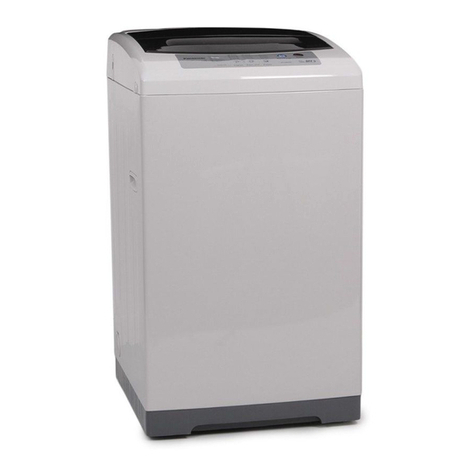
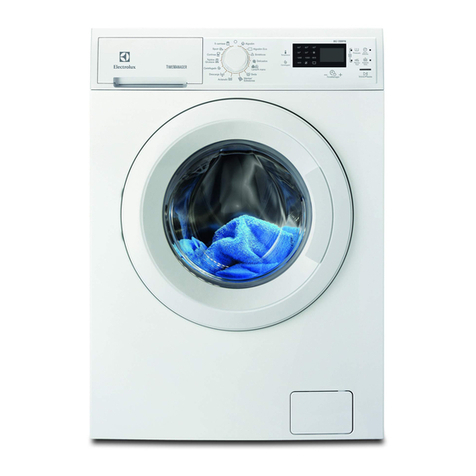
1.Control Panel 2.Filter 3.Adjustable Feet 4.Thermostat reset button
5. Vent Outlet
4
5
•This appliance is designed for domestic use. It must not be used for purpose other than those for which it was
designed.
•CLOTHES WHICH ARE DRIPPING WET SHOULD NOT BE PLACED IN THE DRYER, ENSURE THAT THESE ARE SPUN
BY WASHING MACHINE SPIN CYCLE OR HAND WRUNG TO REMOVE ANY EXCESS WATER PRIOR TO PLACING IN
DRYER.
•THE LINT MUST NOT BE ALLOWED TO ACCUMULATE AROUND THE TUMBLE DRYER OR BUILT UP IN THE LINT
FILTER, REGULARLY CHECK AND CLEAN TO AVOID ANY FIRE HAZARD.
•Only wash fabrics, which are designed to be machine dried. Follow the instructions on each garment label.
•Any electrical work required to install this appliance should be carried out by a qualified electrician.
•If the machine os situated on a carpeted floor, please adjust feet in order to allow air to circulate under the
appliance.
•Do not climb onto the dry or rest heavy objects/heating devices or items with water or liquid leakage on the
dryer, lest deformation of the face panel and the plastic component occur.
•Any objects such as coins, safety pins, nails, screws, stones or any hard, sharp material can cause extensive
damage and must not be placed into the machine.
•After having installed the appliance, check that it is not pressing or standing on its electrical supply cable, or
vent hose.
•Items such as form rubber (latex foam), shower caps, waterproof textiles, rubber backed article and clothes or
pillows fitted with foam rubber pads should not be dried in the tumbler dryer.
•Always unplug the appliance after use, clean and maintenance.
•DO NOT overload the appliance; see the relevant section in the user manual.
•Garments which have been in contact with volatile petroleum products should not be machine dried. If volatile
cleaning fluids are used, care should be taken to ensure that the fluid is removed from garment before placing
into the machine.
•Never use the tumble dryer if the power supply cable , the control panel, the work surface or the base are
damaged so that the inside of the tumble drier is accessible.
•The tumbler dryer is NOT to be used if industrial chemicals have been used for cleaning.
•Do not dry unwashed items in the tumble dryer.
•Fabric softeners or similar products should be used as specified by the fabric softener instructions.
•The final part of the tumble dryer cycle occurs without heat (cool down cycle) to ensure the items are left at a
temperature that ensures the items will not be damaged.
•That exhaust air must not be discharged into a flue which is used for exhausting fumes from appliances burning
gas or other fuels.
•That the appliance must not be installed behind a lockable door, a sliding door or a door with a hinge on the
opposite side to hat of the tumble dryer, in such a way that a full opening of the tumble dryer door is restricted.
•That adequate ventilation has to be provided to avoid the back flow of gases into the room from the appliances
burning other fuels, including open fires.
•The exhaust air must not be discharged into a fuel which is used for exhausting fumes from appliances burning
gas or other fuels.
•Oil-affected items can ignite spontaneously, especially when exposed to heat sources such as in a tumble dryer.
The items become warm, causing an oxidation reaction in the oil. Oxidation creates heat. If the heat cannot
escape, the item can become hot enough to catch fire. Piling stacking or storing oil-affected items can prevent
heat from escaping and so create a fire hazard.
•If it is unavoidable that fabrics that contain vegetable or cooking oil or have been contaminated by hair care
products be placed in tumble dryer the should first be washed in hot water with extra detergent – this will
reduce, but not eliminate, the hazard.