manuals.online logo
Brands
  1. Home
  2. •
  3. Brands
  4. •
  5. Wegmatt
  6. •
  7. Receiver
  8. •
  9. Wegmatt dAISy HAT User manual

Wegmatt dAISy HAT User manual

Other manuals for dAISy HAT

2

Other Wegmatt Receiver manuals

Wegmatt dAISy 2+ User manual

Wegmatt

Wegmatt dAISy 2+ User manual

Wegmatt dAISy 2+ User manual

Wegmatt

Wegmatt dAISy 2+ User manual

Wegmatt dAISy User manual

Wegmatt

Wegmatt dAISy User manual

Wegmatt dAISy HAT User manual

Wegmatt

Wegmatt dAISy HAT User manual

Wegmatt dAISy HAT AIS User manual

Wegmatt

Wegmatt dAISy HAT AIS User manual

Wegmatt dAISy HAT User manual

Wegmatt

Wegmatt dAISy HAT User manual

Popular Receiver manuals by other brands

Televes ZAS HD SAT user manual

Televes

Televes ZAS HD SAT user manual

Realistic DX-75 Operating and service instructions

Realistic

Realistic DX-75 Operating and service instructions

Saris 4620 Assembly instructions

Saris

Saris 4620 Assembly instructions

Mini DTR 206C PVR user manual

Mini

Mini DTR 206C PVR user manual

RF Elements TwistPort manual

RF Elements

RF Elements TwistPort manual

Denon DN-200WS user guide

Denon

Denon DN-200WS user guide

Yamaha RX-V467 owner's manual

Yamaha

Yamaha RX-V467 owner's manual

Russound SaphIR 858 instruction manual

Russound

Russound SaphIR 858 instruction manual

Quasonix RDMS Firmware update procedure

Quasonix

Quasonix RDMS Firmware update procedure

Pioneer XV-HTD1 Service manual

Pioneer

Pioneer XV-HTD1 Service manual

ATZ HDMI-V2-44HE150 manual

ATZ

ATZ HDMI-V2-44HE150 manual

Sony XNV-770BT MyTomTom Specifications

Sony

Sony XNV-770BT MyTomTom Specifications

Grundig STR 7122 TWIN Service manual

Grundig

Grundig STR 7122 TWIN Service manual

Creative Blaster Modem user guide

Creative

Creative Blaster Modem user guide

Panduit ATLONA AT-OME-RX11 installation guide

Panduit

Panduit ATLONA AT-OME-RX11 installation guide

VOLTCRAFT UTPS-40 operating instructions

VOLTCRAFT

VOLTCRAFT UTPS-40 operating instructions

JVC KW-ADV794 instructions

JVC

JVC KW-ADV794 instructions

Litelink VT-1001 operating instructions

Litelink

Litelink VT-1001 operating instructions

manuals.online logo
manuals.online logoBrands
  • About & Mission
  • Contact us
  • Privacy Policy
  • Terms and Conditions

Copyright 2025 Manuals.Online. All Rights Reserved.

WEGMATTLLC dAISy HAT AIS Receiver
Quick Start Guide
Thank you for purchasing the dAISy HAT AIS Receiver for Raspberry Pi.
Disclaimer: dAISy HAT is a reliable, dual-channel AIS Receiver. However, under no circumstances it
should be solely relied on for collision avoidance or navigation. It’s the user’s responsibility to use the
product prudently. Neither Wegmatt LLC nor its dealers accept responsibility or liability to the product
user or their estate for any accident, loss, injury or damage whatsoever arising out of the use of this
product.
Installation
The dAISy HAT communicates with the Raspberry Pi through the serial port pins (8, 10) on the Raspberry
Pi’s expansion header. By default, the serial port of the Raspberry Pi is used for other purposes and
needs to be reconfigured.
If you are running a recent version of Raspian, the uart_control shell script by Ilker Temir is the easiest
way to configure the serial port. Open a terminal window on your Raspberry Pi and execute the
following commands:
wget https://github.com/itemir/rpi_boat_utils/raw/master/uart_control/uart_control
chmod +x ./uart_control
sudo ./uart_control gpio
sudo reboot now
After completing the reboot, AIS data is available using the following parameters:
Serial port
/dev/serial0
Baud rate
38400
Data bits
8
Parity
None
Stop bits
1
Flow control
None
Use this information to configure OpenCPN or other programs. Keep in mind, that only one application
at a time can consume serial data. dAISy immediately starts receiving AIS messages when powered up.
When connecting to dAISy with a serial terminal (e.g. screen), you can press ESC to enter a debug and
configuration menu. In this menu you can control the function of the 2nd serial port.
For older versions of Raspian (pre-2016), follow this tutorial by Adafruit to configure the serial port:
https://learn.adafruit.com/adafruit-ultimate-gps-hat-for-raspberry-pi/pi-setup
Please refer to the manual on our website: http://www.wegmatt.com for more detailed instructions.

LED status indicator
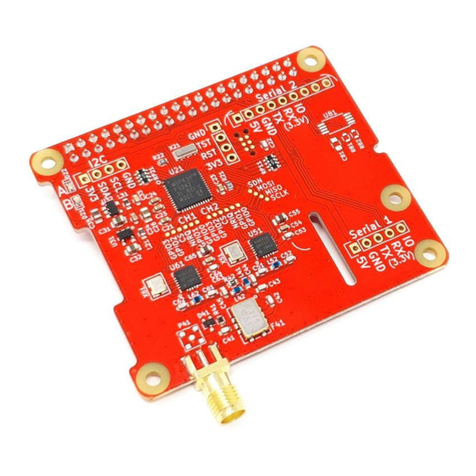
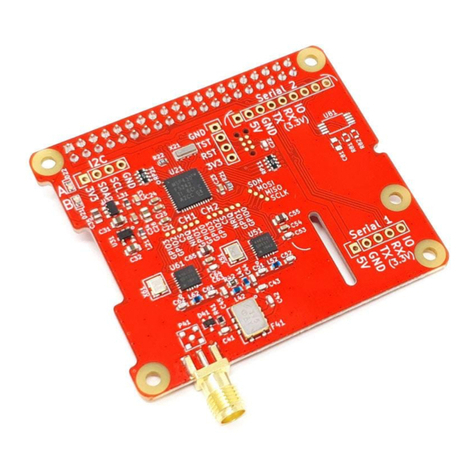
dAISy HAT features two red/green LEDs to indicate its status of each AIS channel.
Indicator
Description
Green, short flash every 5 seconds
Channel is in reception mode
Green, ¼ second flash
Channel received a valid AIS message
Red, ¼ second flash
Channel received an invalid message
Red, permanently on or fast continuous blinking
Device error
No LED activity
Device is not in reception mode
Troubleshooting
Problem
Solution
No activity of the status LEDs
Verify that the device is not in the configuration
menu.
Device in reception mode, but not valid AIS
messages received (no ¼ second green flashes)
Verify the antenna connection and location.
Good AIS reception requires line-of-sight, verify
your setup from a location that is certain to have
traffic, e.g. near a harbor.
Device indicates valid AIS messages (¼ second
green flashes), but no messages received on the
Raspberry Pi.
Verify that the serial port shows up, if not verify
the hardware configuration. Verify the serial
configuration of your software. Verify the serial
communication with a program like screen.
Software receives positions, but fewer than
expected and/or with worse range than
expected.
Verify the antenna connection and location.
Good AIS reception requires line-of-sight. Move
the antenna away from sources of RF noise.
After some time, dAISy indicates a device error
(fast blinking red LED)
This should not occur with the dAISy HAT. Power
cycle the Raspberry Pi to resolve the issue.
If a problem persists or frequently reoccurs, please contact Wegmatt LLC at daisy@wegmatt.com.
Contact
[email protected]m
http://www.wegmatt.com
Wegmatt LLC
6356 138th Ave NE #212
Redmond, WA
United States of America
Designed and assembled in the USA