5
Electrical Requirements
Observe all governing codes and ordinances. Ensure that the
electrical installation is adequate and in conformance with
National Electrical Code, ANSI/NFPA 70 (latest edition), or
CSA Standards C22.1-94, Canadian Electrical Code, Part 1
and C22.2 No. 0-M91 (latest edition) and all local codes and
ordinances.
If codes permit and a separate ground wire is used, it is
recommended that a qualified electrician determine that the
ground path is adequate.
A 110 volt, 60 Hz, 15-amp, fused electrical circuit is required.
IMPORTANT:Before connecting the model to the electricity network:
Control the data plate (positioned inside the appliance) to
ascertain that the voltage and power correspond to the network
and the socket is suitable. If in doubt ask a qualified electrician
■If the house has aluminum wiring, follow the procedure
below:
1. Connect a section of solid copper wire to the pigtail
leads.
2. Connect the aluminum wiring to the added section of
copper wire using special connectors and/or tools
designed and UL listed for joining copper to aluminum.
The appliance has been manufactured as a class I,
therefore earth cable is necessary.
The connection to the mains is carried out as follows:
If not provided, connect a plug for the electrical load indicated
on the description label. Where a plug is provided, the cooker
hood mustbe installedinorderthat the plug is easilyaccessible.
An omnipolar switch with a minimum opening of 3mm between
contacts, in line with the electrical local and local standards,
must be placed between the appliance and the network in the
case of direct connection to the electrical network.
INSTALLATION INSTRUCTIONS
Prepare Location
■Lay out the vent duct system before installing the range hood
to determine the best routing for the vent duct.
■It is recommended that the vent system be installed before
the range hood is installed.
■Before making cutouts, make sure there is proper clearance
within the ceiling for exhaust vent.
■Check your ceiling height and the range hood height
maximum before you install your hood.
1. Disconnect power.
2. Determine which venting method to use: roof or wall.
3. Select a flat surface for assembling the range hood.
4. Place covering over that surface.
Using 2 or more people, lift range hood onto covered spacers
Range Hood Installation-Inspect your range hood to make sure there is no
damage during the shipping.
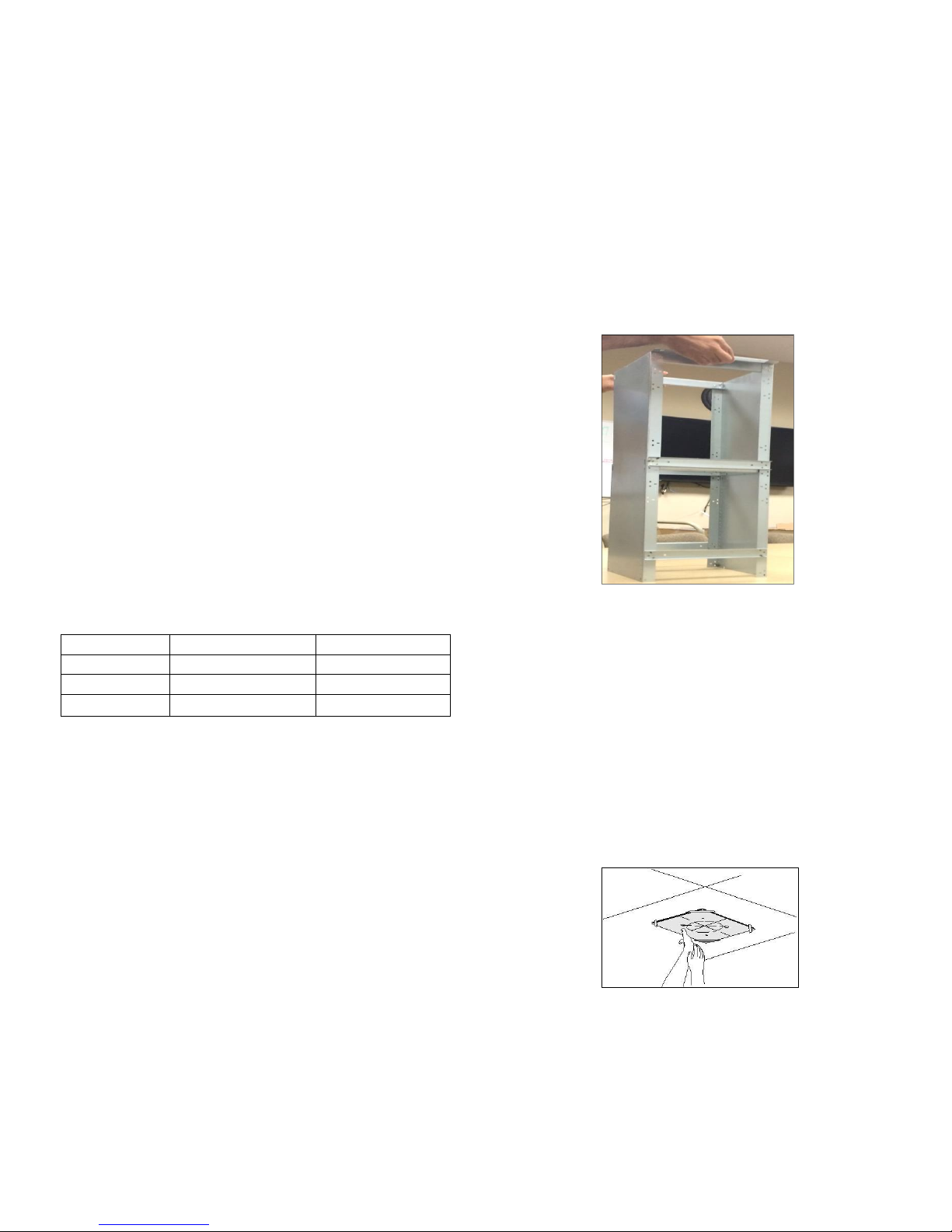
-Remove the telescopic structure from the packaging
and separate the upper part from the lower one.( Figure
4)
Figure 4
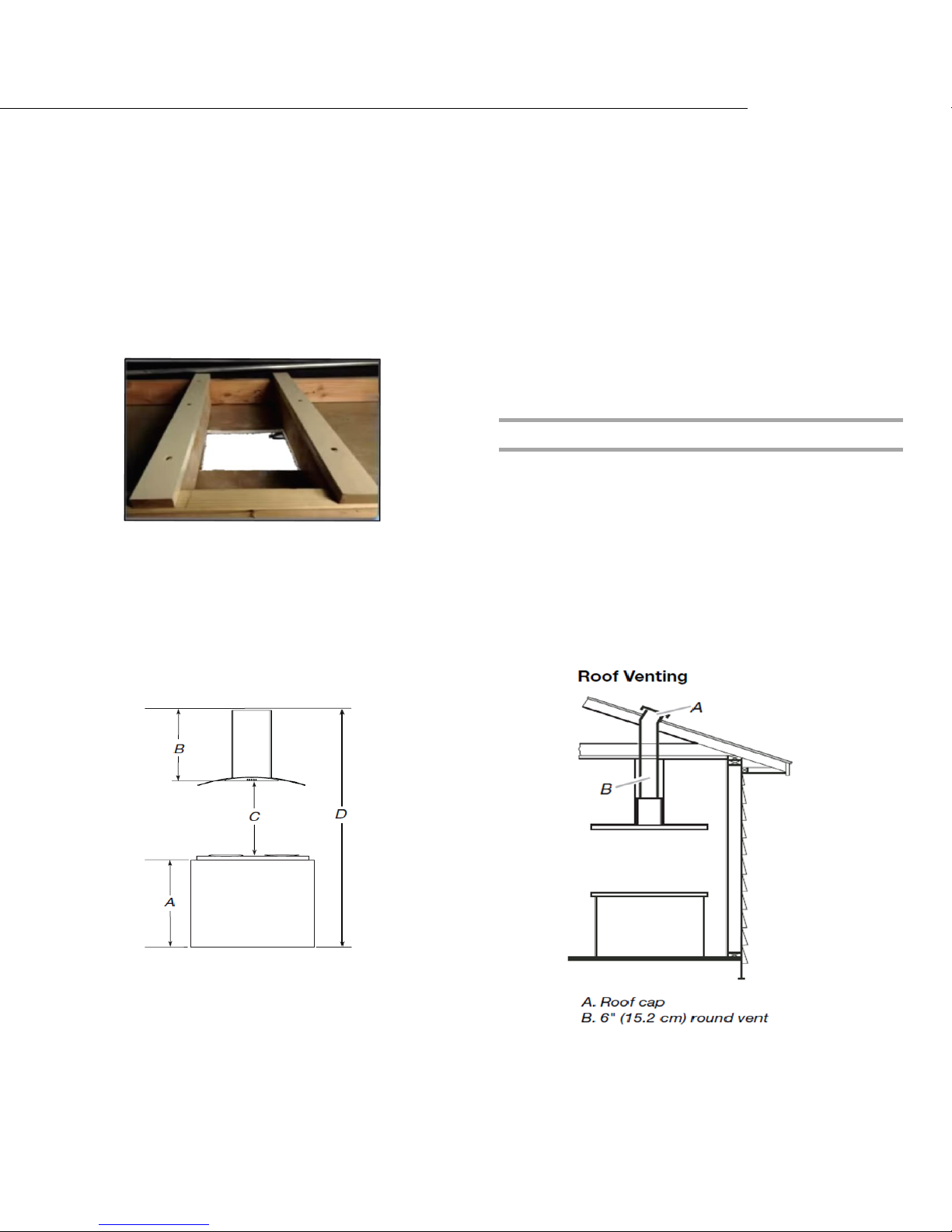
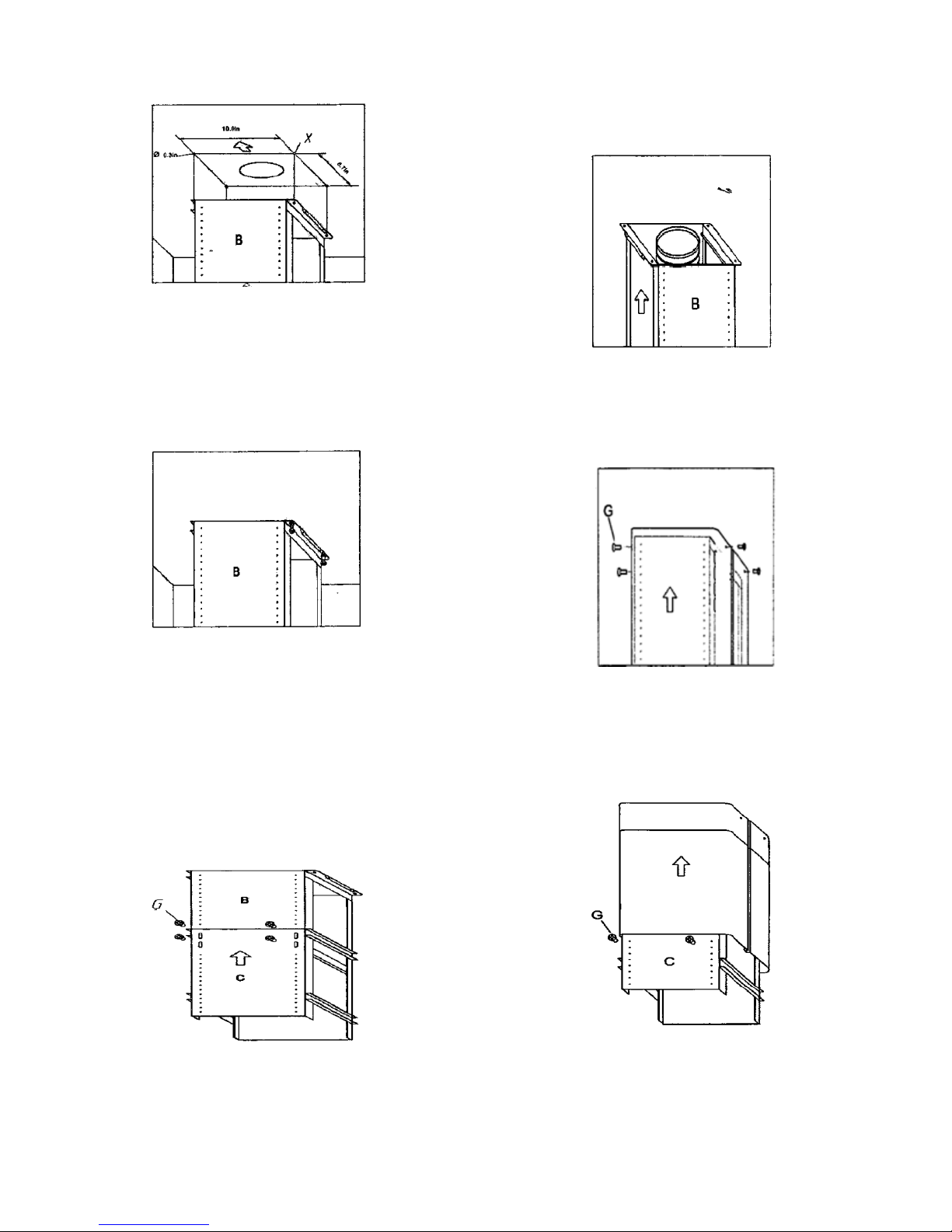
-Make the center point directly above your cooktop where
the range hood will be installed.
-Place the upper part on the ceiling around the center
point. Make sure it is square with your cooktop.
-Trace the outline of the upper part on the ceiling and
also use a pencil to mark the mounting screws.
-Remove the upper part and trace a circle where the
ducting will go and then cut out the center part of the
circle on the ceiling. (Figure 5)
-
Figure 5
-Make 4, Ø8 holes in the ceiling (marked points) and drive
in 3 screws without completely tightening them (Figure
6).
Pay attention not to insert the screw into the hole
marked with an X on the hole template (the screws and