What are the possible symptoms of
carbon
monoxide poisoning?
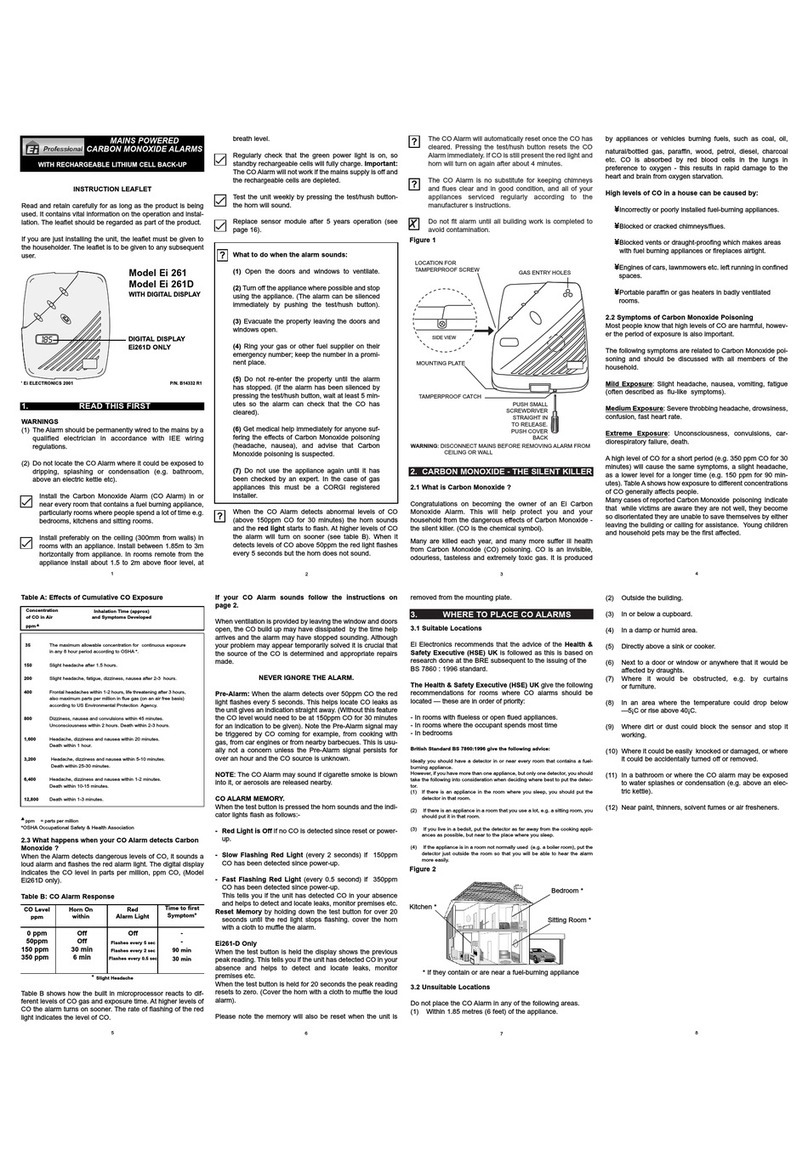
Carbon monoxide (CO) is odorless, colorless, tasteless
and very toxic. When inhaled, it produces an effect
known as chemical asphyxiation. Injury is due to the
combining of CO with the available hemoglobin in the
blood, which lowers the oxygen-carrying capacity of
the blood. In the presence of carbon monoxide, the
body is quickly &cted by oxygen starvation.
The following symptoms are related to carbon
monoxide poisoning and should be discussed with all
members of the household so that you know what to
look for:
Extreme Exposure (A-C)
Unconsciousness, convulsions, cardiorespiratory
failure, death
Medium Exposure (D-G)
Severe throbbing headache, drowsiness, confusion,
vomiting, fast heart rate
MIild Exposure (H-J)
Slight headache, nausea, fatigue
(often described as “flu-like” symptoms)
Young children and household pets may be the first
affected. Exposure during sleep is particularly danger-
ous because the victim usually does not awaken.
The amount of carbon monoxide in the air is measured
as ppm (parts per million). The graph on the next page
shows the important relationship between carbon
monoxide in the air, exposure time and health effects.
8
SMARTHOME.COM(TM) 1-800-SMART-HOME 949-221-9200 http://www.smarthome.com