EnglishDeutsch
 logo
Brands
  1. Home
  2. •
  3. Brands
  4. •
  5. Ariston
  6. •
  7. Dishwasher
  8. •
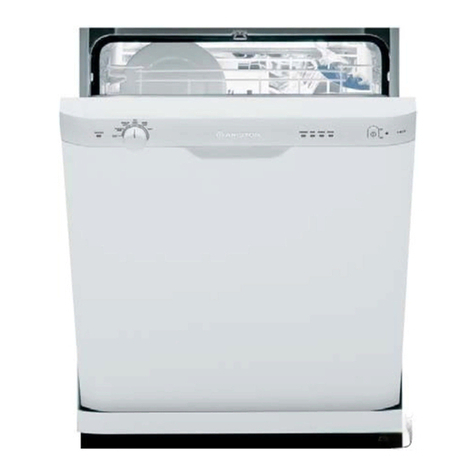
  9. Ariston L 64 User manual

Ariston L 64 User manual

Other manuals for L 64

2

Other Ariston Dishwasher manuals

Ariston LS 630 Instruction manual

Ariston

Ariston LS 630 Instruction manual

Ariston LSFE 1B19 S Installation and operation manual

Ariston

Ariston LSFE 1B19 S Installation and operation manual

Ariston LD 87 Quick start guide

Ariston

Ariston LD 87 Quick start guide

Ariston LFZ 328 User manual

Ariston

Ariston LFZ 328 User manual

Ariston LTB 6M019 User manual

Ariston

Ariston LTB 6M019 User manual

Ariston L63 B-S-W User manual

Ariston

Ariston L63 B-S-W User manual

Ariston LFT M16 User manual

Ariston

Ariston LFT M16 User manual

Ariston LFZ 3284 User manual

Ariston

Ariston LFZ 3284 User manual

Ariston LIQ 700 DUO User manual

Ariston

Ariston LIQ 700 DUO User manual

Ariston LFZ 338 User manual

Ariston

Ariston LFZ 338 User manual

Ariston LI 645 A User manual

Ariston

Ariston LI 645 A User manual

Ariston LFD 11S123 User manual

Ariston

Ariston LFD 11S123 User manual

Ariston LTB 6M116 User manual

Ariston

Ariston LTB 6M116 User manual

Ariston LFC 3C26 W X Installation and operation manual

Ariston

Ariston LFC 3C26 W X Installation and operation manual

Ariston LL 63 User manual

Ariston

Ariston LL 63 User manual

Ariston LBC 3C26 WF Installation and operation manual

Ariston

Ariston LBC 3C26 WF Installation and operation manual

Ariston LL 64 B-S-W Guide

Ariston

Ariston LL 64 B-S-W Guide

Ariston LI45 User manual

Ariston

Ariston LI45 User manual

Ariston LFF 825 User manual

Ariston

Ariston LFF 825 User manual

Ariston LFS 215 User manual

Ariston

Ariston LFS 215 User manual

Ariston LL 64 B - S - W User manual

Ariston

Ariston LL 64 B - S - W User manual

Ariston LFB 5M019 User manual

Ariston

Ariston LFB 5M019 User manual

Ariston LI 661 A User manual

Ariston

Ariston LI 661 A User manual

Ariston LFT 321 User manual

Ariston

Ariston LFT 321 User manual

Popular Dishwasher manuals by other brands

Electrolux ESI5211LOX user manual

Electrolux

Electrolux ESI5211LOX user manual

KitchenAid KUDB230B Use and care guide

KitchenAid

KitchenAid KUDB230B Use and care guide

Brandt BDJ424DB instruction manual

Brandt

Brandt BDJ424DB instruction manual

Asko DSD767UXXL.AU user manual

Asko

Asko DSD767UXXL.AU user manual

Beko DFN26210W instruction manual

Beko

Beko DFN26210W instruction manual

NEFF S153ITX00E INFORMATION FOR USE

NEFF

NEFF S153ITX00E INFORMATION FOR USE

Midea SV 4.45 wi manual

Midea

Midea SV 4.45 wi manual

LG LDF7932 Specifications

LG

LG LDF7932 Specifications

Gorenje GV63214 instruction manual

Gorenje

Gorenje GV63214 instruction manual

Hotpoint HDA1100ZWH Installation information

Hotpoint

Hotpoint HDA1100ZWH Installation information

Blomberg LDFN2240W instruction manual

Blomberg

Blomberg LDFN2240W instruction manual

AEG FFB83836PM user manual

AEG

AEG FFB83836PM user manual

Cylinda DM3220RFD user manual

Cylinda

Cylinda DM3220RFD user manual

Atag DW8214MB manual

Atag

Atag DW8214MB manual

GE GLD8000 Series owner's manual

GE

GE GLD8000 Series owner's manual

Siemens SN23HI02KE INFORMATION FOR USE

Siemens

Siemens SN23HI02KE INFORMATION FOR USE

Omega ODW717X instruction manual

Omega

Omega ODW717X instruction manual

BORETTI BVW-683 operating instructions

BORETTI

BORETTI BVW-683 operating instructions

https://manuals.online logo
https://manuals.online logoBrands
  • About & Mission
  • Contact us
  • Privacy Policy
  • Terms and Conditions

Copyright 2026 Manuals.Online. All Rights Reserved.

GB
Dishwasher
Instructionsforinstallationanduse
L 64
L 64
All manuals and user guides at all-guides.com
all-guides.com
All manuals and user guides at all-guides.com
ARISTON DISHWASHER - Instructions for installation and use
1
DISHWASHER
This manual explains pleasantly all your new elec-
tric household appliance has to offer. In addition, you
will discover a world of useful hints and handy tips to
help you get a better wash from your dishwasher and
to make it last longer.
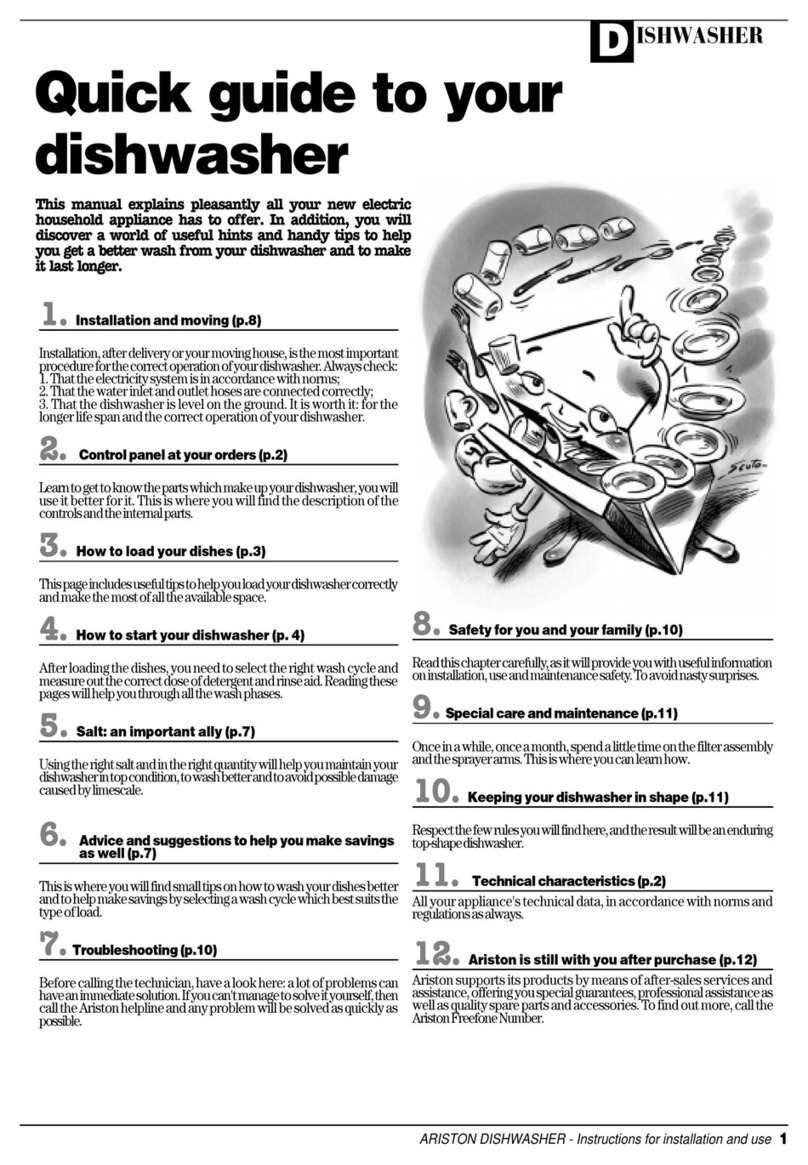
Quick guide to your
dishwasher
1. Installation and moving (p.8)
Installation, after delivery or your moving house, is the most important
procedure for the correct operation of your dishwasher. Always check:
1. That the electricity system complies with the applicable norms;
2. That the water inlet and outlet hoses are connected correctly;
3. That the dishwasher is level on the ground. It is worth it: for the longer
life span and the correct operation of your dishwasher.
2. Control panel at your orders (p.2)
Learn to get to know the parts which make up your dishwasher, you will
use it better for it. This is where you will find the description of the
controls and the internal parts.
3. How to load your dishes (p.3)
This page includes useful tips to help you load your dishwasher correctly
and make the most of all the available space.
4. How to start your dishwasher (p.4)
After loading the dishes, you need to select the right wash cycle and
measure out the correct dose of detergent and rinse aid. Reading these
pages will help you through all the wash phases.
5. Salt: an important ally (p.7)
Using the right salt and in the right quantity will help you keep your
dishwasherintopcondition,towashbetterandtoavoidpossibledamage
caused by limescale.
6. Advice and suggestions to help you
make savings as well (p.7)
This is where you will find handy tips on how to wash your dishes better
and to help make savings by selecting a wash cycle which best suits the
type of load.
7. Troubleshooting (p.9)
Before calling for a technician, have a look here: a lot of problems can
have an immediate solution. If you cant manage to solve it yourself,
then call the Ariston helpline and any problem will be solved as quickly as
possible.
8. Safety for you and your family (p.9)
Read this chapter carefully, as it will provide you with useful information
on the safe installation, maintenance and use of your new appliance. To
avoid nasty surprises.
9. Special care and maintenance (p.10)
Once in a while, once a month, spend a little time on the filter assembly
and the sprayer arms. This is where you can learn how.
10. Keeping your dishwasher in shape (p.10)
Respect the few rules you will find here, and the result will be an enduring
top-shapedishwasher.
11. Technical characteristics (p.2)
All your appliances technical data, in accordance with norms and regu-
lations as always.
12. Ariston is still with you after purchase
(p.11)
Ariston supports its products by means of after-sales services and assist-
ance, offering you special guarantees, professional assistance as well as
quality spare parts and accessories. To find out more, call the Ariston
FreefoneNumber.
All manuals and user guides at all-guides.com
2
ARISTONDISHWASHER-Instructionsforinstallationanduse
DISHWASHER
Control panel at your service
A. ON-OFF Button
Press this button to
turn the appliance on.
B. ON-OFF Indicator light
Indicates that the
appliance is turned on
C. Door opening handle
Use this handle to open
the dishwasher door.
D. Delayed start select
button
This button delays the
start of the wash cycle
you selected by 12, 9, 6
or 3 hours.
E. Cycle selection knob
Use this knob to select a
wash cycle.
E. Upper rack
F. Top sprayer arm
G. Rack height adjuster
H. Lower rack
I. Bottom sprayer arm
J. Salt container cap
K. Washing filter
L. Detergent and rinse aid
dispenser
Technical Characteristics
How is it made?
Learn to get to know the parts which make up your
dishwasher, you will use it better for it.
G. Cycle phase and
delayed start indicator
lights
(pre-wash, wash, rinse,
drying)
and if you have set a
delayed start, these
indicate the hours left
before the cycle starts.
S. Low salt indicator light
This light warns you that
it is time to add more salt.
C
SGA
B
D
E
G
J
I
L
K
H
F
E
Lets open up your dishwasher together
7HFKQLFDOFKDUDFWH ULVWLFV
Width cm. 60
Depth cm. 60
Height cm. 85
Capacity 12 standard place settings
Mains water pressure 4,3 psi - 145 psi (30 KPa÷ 1MPa) (0,3 ÷10 bar)
Power voltage See data plate
Total absorber power See data plate
Fuse See data plate
This dishwasher
conforms to the
following European
Community
Directives:
 73/23/EC
(Low Voltage Directive)
and subsequent
amendments;
 89/336/EEC
(Electromagnetic
compatibility)
and subsequent
amendments.
 97/17/CE
(Labelling)
All manuals and user guides at all-guides.com
ARISTON DISHWASHER - Instructions for installation and use
3
DISHWASHER
How to load your dishes
First of all.
Before placing the dishes in the
racks, remove the largest scraps
of food left over on your plates,
you will thus avoid blocking the
filter, which would reduce the
efficacy of the wash.
If the saucepans and frying pans
are very dirty, allow them to soak
before being washed. To make it
easier to load your dishes, pull the
racks out.
Multisystem racks
This dishwasher model is fitted with
newer and more modern upper and
lower racks and a cutlery basket.
They are made to provide greater
flexibility in loading dishes, making
them more suitable to meet your
specific needs.
What goes into the
lower rack?
We recommend you place the most
difficult dishes to wash into the
lower rack: saucepans, lids, soup
dishes and plates, but also: mugs,
cups and glasses (see photos for
load examples).
 Serving dishes and large
lids: place them on the sides
of the rack.
 Saucepans, salad bowls:
must always be placed upside
down
 Very deep dishes: place
them obliquely, thus allowing
water to run down them and
cleaning them better
Glasses and cups: position
them as indicated in the figure.
When you only have little cutlery
to wash, you can use just half the
basket; save space for other
crockery or place the other half of
the basket in the upper rack instead
(see figures A and B).
This basket is equipped with two
removable grids: insert the cutlery
one by one into the slots; knives
and utensils with sharp blades or
tips should be positioned with the
sharp parts at the bottom.
Position all cutlery items so that
they don't touch.
What goes into the
upper rack?
Place delicate and lightweight
dishes in the upper rack: glasses,
tea cups and coffee cups, saucers
- but plates too - shallow salad
bowls, slightly dirty frying pans and
shallow pans.
Position light weight dishes in such
a way as to avoid their being moved
by the spray of water.
The appliance can also be equipped
with one or two tip-up
compartments onto which you can
place mugs and cups, as well as
long sharp knives and serving
cutlery.
After loading the dishes, remember
to check that the blades on the
sprayer arms can turn freely
without hitting against any dishes.
How to adjust the top
rack.
The upper rack can be set in high
or low position to enable you to
organise your dishes effortlessly.
Before washing, a few small steps can help you get a better wash and keep your dishwasher for longer.
Remove the largest scraps of food left over on your plates, soak saucepans and frying pans with tough
incrustations. After loading your dishes, make sure the blades on the sprayer arm turn well.Do not
place glasses and cups on top of one another, and make sure the dishes are not touching.
lower rack upper rack
Load examples
Open the rail stop flaps and pull the
rack out completely. Now place it in
high or low position, then slide it
along the guide rails until the front
wheels also go in. Now close the rail
stop flaps. Follow the sequence of
actions illustrated in figure "F".
A
B
12
3
4
Fig.F
All manuals and user guides at all-guides.com
all-guides.com
4
ARISTONDISHWASHER-Instructionsforinstallationanduse
DISHWASHER
2) on and not flashing be-
neath the cycle phase sym-
bol:
meaning the cycle has started and
is in the phase indicated by the
symbol.
Have you changed your
mind?
If you change your mind, you can
set a shorter time delay: press but-
ton D to select it. You need not
reset the wash cycle.
If on the other hand you want to
cancel the delay set and you want
the cycle to start immediately,
press button D repeatedly until
the cycle starts and indicator light
G corresponding to the cycle
start phase comes on.
You have loaded your dishes and you now have
to set the wash cycle. You only need a few
minutes to learn how
Starting the dishwasher
Ready, steady, go!
Make sure the
wash cycle has
ended before
removing the
dishes!
First of all.
Turn on the water tap completely
and press ON-OFF button A:you
willhearashortbeepandindicator
light B lights up. Now the appli-
anceison andawaitinginstructions.
Selecting the wash
cycle.
To select the wash cycle, turn knob
E clockwise until the reference
notchontheknobcorrespondswith
the number or symbol for the cycle
you wish to set (have a look at the
wash cycle table on page 6).
After a few seconds, you will hear
a short beep: the wash cycle has
begun and we do not recommend
you change it.
The dishwasher keeps
you informed.
Your dishwasher is fitted with indi-
cator lights (G) which light up to
indicatethecyclephaseunder way.
Here are the symbols correspond-
ing to each cycle phase:
pre-wash, wash, rinses, drying.
At all times, your dishwasher tells
you which cycle phase is under
way.
Modifying a wash cycle
in progress.
But if you have chosen the wrong
cycle,nottoworry!You can modify
the wash cycle in progress, if it has
only just started. Turn the knob
anti-clockwise until it reaches the
Reset position and, after a few
seconds, you will hear 4 beeps and
indicator light G will turn off.
This is to inform you that all the
settings have been cancelled. You
are now free to re-set the correct
wash cycle.
Youve left out a dish?
Well, it happens to everyone. Inter-
ruptthewashcyclebypressingthe
ON-OFFbutton,insertthedishyou
had forgotten and press the ON-
OFF button again. The cycle will
startupfrom whereyouinterrupted
it.
Finished?
The end of the wash cycle is indi-
cated by two short beeps and the
flashing of the drying phase indica-
tor light.
Turn the knob to Reset in order to
reset all the settings.
Turn the appliance off to cut off
the electricity supply.
Turn off the water tap.
Wait a few minutes before unload-
ing the dishes: they are very hot! If
you wait a little while, they dry
better thanks to the steam.
Empty the lower rack first.
Theres been a power
failure? Have you
opened the dishwasher
door?
The wash cycle stops and then re-
starts when the electricity comes
backonorwhenyoushut the door.
Everything is under control!
When you open
the dishwasher
door after the
wash cycle has
just ended or is
under way, take
care not to scald
yourself with the
hot steam!
You can cancel
the wash cycle
in progress, if it
has only just
started.
You decide when it
starts.
When you have loaded the dishes,
you can choose when to start your
dishwasherbeforesettingthe wash
cycle desired.
Press button D to delay the start
of the wash cycle by 12, 9, 6 or 3
hours. Each time you press it, you
will hear a short beep and the indi-
catorlightG correspondingtothe
selected delay will light up.
Now you can select the desired
wash cycle and, after you hear the
beep, the countdown to the de-
layed start will begin.
If you have set a 12 hour delay, for
example, once you have selected
the wash cycle, the 12 hour indica-
tor light will flash followed by the
othersinsequenceuntil the set time
delay is up. A quick look at the indi-
cator lights will keep you informed
of the countdown progress at all
times.
Dual function of
indicator lights G
1) flashing to indicate a de-
layed start: to remind you that
you have set a delayed start;

All manuals and user guides at all-guides.com
ARISTON DISHWASHER - Instructions for installation and use
5
DISHWASHER
Detergent and rinse aid
The rinse aid.
Thisproductmakesdishessparkle
more as it improves their drying.
The rinse aid container is situated
on the inside of the appliance door;
you should refill it
when you see
the container is empty by means
of indicator light D.
In models fitted with the low rinse
aid indicator light, fill it up when
the latter comes on or flashes.
If you pour too much rinse aid into
container and it overflows, clean
off all excess using a sponge.
Loading the rinse aid.
To open the dispenser, turn cap C
anticlockwise.Take care when you
pourintherinseaidtoavoiditover-
flowing. You can adapt the amount
ofrinseaidusedbythe dishwasher:
use a screwdriver or a coin to ad-
just the dosage adjuster F situated
underneath the lid C.
The detergent
Loading the detergent
To open lid A, press button B. The
detergentshouldbe poured intothe
two containers up to the rim.
Now you can close the lid: press it
down until you hear it click.
If you prefer to use the detergent
in tablet form, then place one in-
sidethecontainerDandclose the
lid.
It wont close!
Check whether there is any deter-
gent residue on the edges of the
dispenser. It is due to this residue
that the lid wont close. Get rid of it
and youll see that it closes.
Only use specific dishwasher detergents. Pour the detergent into the dispenser
on the inside of the door. Before the wash cycle starts!
Useful tips
You can choose from six different positions. It is normally
set to 4.
Proper dosage of
the rinse aid
improves drying.
If drops of water
remain on the
dishes or spotting
occurs, turn the
dosage adjuster to
a higher setting.
If, on the other
hand, the dishes
have white
streaks, then turn
the dosage
adjuster down to
a lower setting.
Warning
Special dishwasher tablets are now available on the market, and combine the detergent, salt and rinse aid all in
one.
(3 in 1 tabs). If the water in your area is hard or very hard, we still recommend you pour extra salt into the
relevant dispenser to prevent the formation of white streaks on your dishes or on the appliance interior.
Add rinse aid to the corresponding container only if you are dissatisfied with the results on your dishes.
In any case, please read the manufacturers instructions provided on the packet.
If you use only these products, it is normal for the salt and rinse aid indicator lights to flash permanently after
a certain number of cycles.
F
D
C
 Use the right
amount of
detergent: if you
use too much, you
will not get cleaner
dishes, but just
more
environmental
pollution.
 Keep your
dishwasher
detergent and
rinse aid in a cool,
dry place and
away from
children.
The detergent
Loading the detergent
To open lid A, press button B. The
detergentshouldbe poured intothe
two containers up to the rim.
Now you can close the lid: press it
down until you hear it click.
If you prefer to use the detergent
in tablet form, then place one in-
sidethecontainerDandclose the
lid.
It wont close!
Check whether there is any deter-
gent residue on the edges of the
dispenser. It is due to this residue
that the lid wont close. Get rid of it
and youll see that it closes.
C
D
25 gr.5 gr.
A
B
All manuals and user guides at all-guides.com
6
ARISTONDISHWASHER-Instructionsforinstallationanduse
DISHWASHER
A wash cycle for every
degree of soil
Select the right wash cycle
Salt, rinse aid, the right amount of detergent and the correct wash
cycle: this is the formula to get the best results and to keep your
dishwasher in shape
Select the right
wash cycle for your
dishes.
Selecting the most
suitable wash cycle
for the load ensures
clean dishes and a
more convenient
use of water and
electricity
Dishwasher washing guarantees your dishes will be
cleaned in a hygienic setting for safer, cleaner results.
&\FOH &\FOHVHOHFWLRQ
LQV WUXFWLRQV &\ FOH GH V FULSWLRQ
'HWHUJHQW
IRU SUH 
ZDV K 
ZDV K
5LQVH
$LG
:DV KF\FOH
GXUDWLRQ
WROHUDQFH
 
6XSHU:DVK
Very dirty dishes and pans
(not to be used for delicate
items)
Pre-wash with hot water at 40°C
Wash at 65°C
2 cold rinses
Hot rinse at 65°C
Drying
J 
' DLO\ :DV K
Cycle for normally dirty
pans and dishes. Standard
daily cycle.
Wash at 50°
Cold rinse
Hot rinse at 70°C
Drying
J 
Environmentally-friendly
cycle, with low energy
consumption levels, suitable
for normally dirty pans and
dishes.
2 Cold pre-washes
Wash at 50°C
Hot rinse at 65°C
Drying
J 
5DSLG


Economic and fast cycle to
be used for slightly dirty
dishes. Run cycle
immediately after use. No
drying.
Short wash at 50°C
Hot rinse at 62°C J 
6RDNLQJ
Preliminary wash cycle for
dishes while awaiting
completion of the load with
the dishes from the next
meal.
Short cold wash to prevent food
from drying onto the dishes 
&U\VWDO
Special cycle to be used
for more delicate items
which are sensitive to high
temperatures. Run cycle
immediately after use.
Wash at 52°C
Rinse at 45°C
Hot rinse at 65°C
Drying
J 
All manuals and user guides at all-guides.com
ARISTON DISHWASHER - Instructions for installation and use
7
DISHWASHER
Using your electric household appliances
wisely helps you make savings and is good
for the environment.
Savings are easy
How to look after and protect
the dishes you hold dear
■For particularly delicate dishes,
werecommendyou use thespe-
cific wash cycle offered by your
dishwasher.
Suggestions and advice for you.
Apart from
making you save
time and energy,
your dishwasher
disinfects your
dishes, washing
them at a high
temperature.
■Silver plates and serving dishes
should be washed immediately
after use, especially if they have
contained salt, eggs, olives,
mustard, vinegar, fruit juices
and cooked vegetables.
■Almost all silverware can be
cleaned in a dishwasher. There
are two exceptions: old silver-
ware and silverware decorated
with an oxidising agent. Hot
water can loosen the handles
on old silverware and wear off
the decorations on the other.
Never let silverware come into
contact with other metals: you
will thus avoid stains and black-
ening.
Never without salt
Loading the salt.
Always use salt which is intended
for dishwasher use.
The salt container is situated un-
derneath the lower rack, fill it up
as follows:
1. Pull out the lower rack com-
pletely, unscrew and remove
the container cap.
2. Is it the first time you load the
salt? First fill the container up
with water (you wont have to
do this again next time).
3. Put the dishwasher funnel on
the hole and pour in approxi-
mately two kilos of salt. It is
normal that some water comes
out of the container.
4. Screw the cap back in place
carefully.
When should I load the
salt?
The salt container should be filled
up when the low salt indicator light
S flashes. Once you have loaded
the salt for the first time, it is nor-
mal that the low salt indicator light
flashes for 5 consecutive cycles.
Salt adjustment
Your dishwasher can adjust its salt
consumption according to the hard-
ness of the water in your home.
This way, you can optimise and
customise your dishwashers salt
consumption (not too much, nor too
little).
To adjust salt consumption, do as
follows:
1. Unscrew the salt container cap
2. There is an arrow on the neck
of the container (see figure on
the right): if necessary, turn the
arrow anti-clockwise from the
- setting to the + setting.
Select the arrow position depend-
ing on the water hardness, refer-
ring to the table provided.
Water hardness varies according to where you live. If the water in
your home is hard, without water softening, incrustations would
form on your dishes. Your dishwasher is fitted with a water softener
which uses special salt to get rid of limescale in the water.
To prevent rust
from forming, load
the salt just before
beginning a wash
cycle.
You dont know
how hard the
water in your
home is? Ask the
company that
supplies water in
your area.
Maximum load.
To optimise consumption levels, try to use
the dishwasher with a full load only. If it
takes quite some time to fill up your
dishwasher, use the soaking cycle to avoid
the formation of bad odours and caked-on
food.
The right wash cycle.
Select the most suitable wash cycle for the
type of load you have placed in the
dishwasher. The choice of wash cycle
depends on the type of dishes to wash and
on how dirty they are. To select the right
wash cycle, please consult the wash cycle
table on page 6.
Water hardness
°dH °fH mmol/l Selector
knob
position
Salt
consumption
(grams/cycle)
Autonomy
(cycles/2kg)
0÷ 10 0 ÷17 0 ÷ 1,7 / 0 /
10 ÷25 18 ÷44 1,8 ÷4,4 -20 60
25 ÷ 50 45 ÷ 89 4,5 ÷8,9 MED 40 40
> 50 > 89 > 8,9 +60 25
All manuals and user guides at all-guides.com