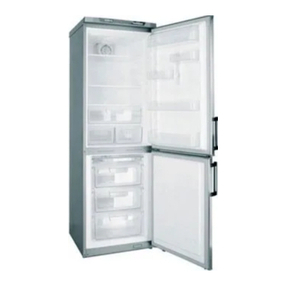
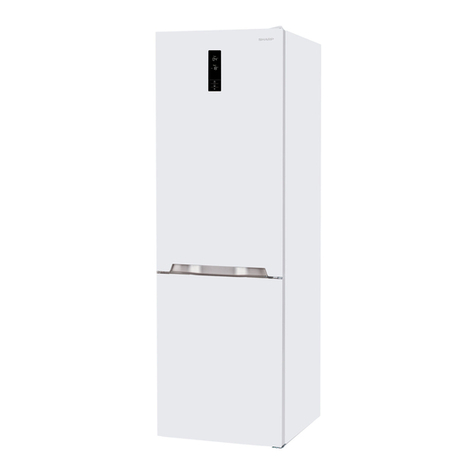
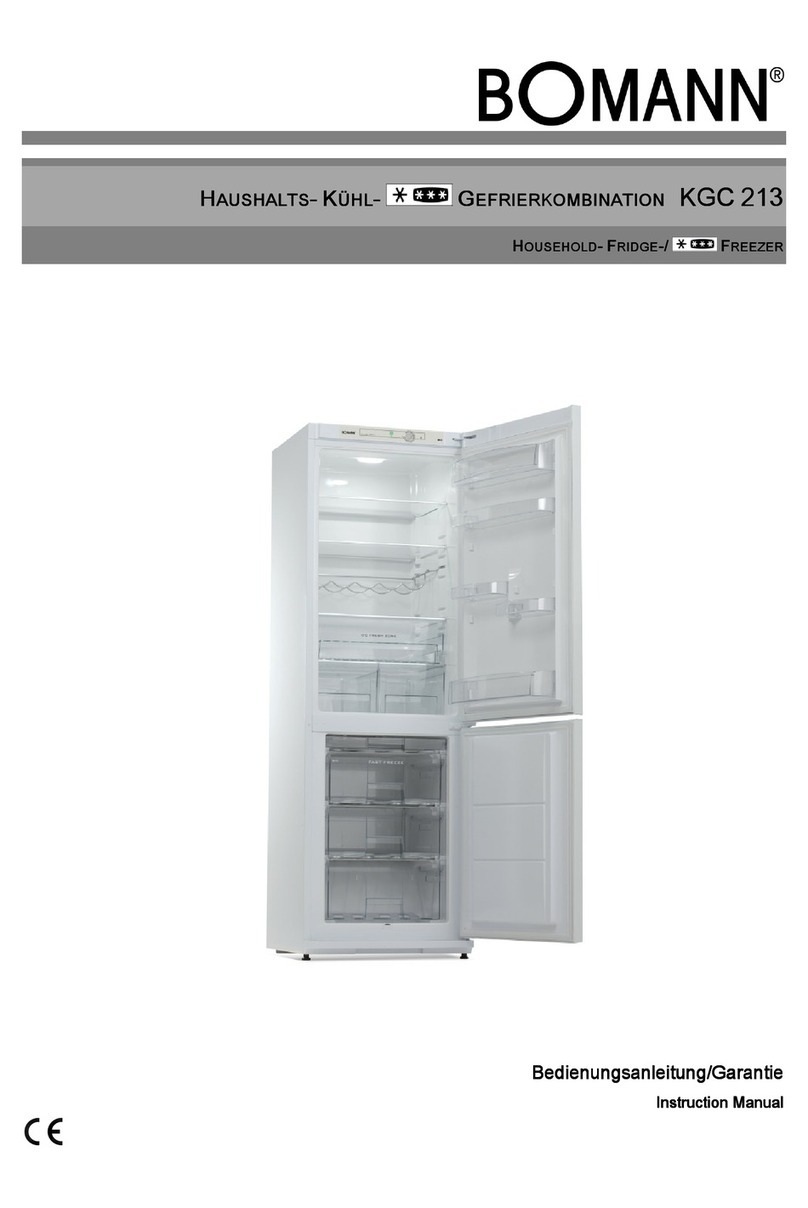
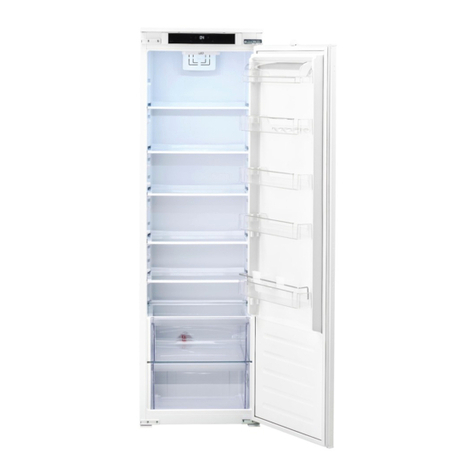
NOTICE After the appliance has been delivered,stand it in the upright position and wait approximately 3 hours before connecting it to the electrical outlet to guar-antee that it operates prorerly. Before placing foodstuffs in the refrigerator or freezer, clean the interior well with warm water and baking soda. After having plugged the appliance in, make sure that pilot lamp “A” is light. Set knob ‘B’ onto a medium position and can place food in the fridge after only a few hours. When the freezer has reached the o ptimum temperature, you can place frozen food in the freezer.
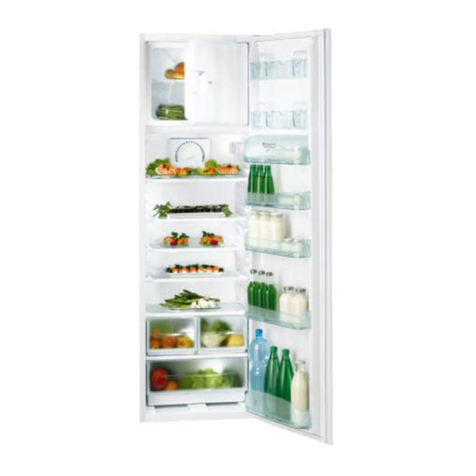
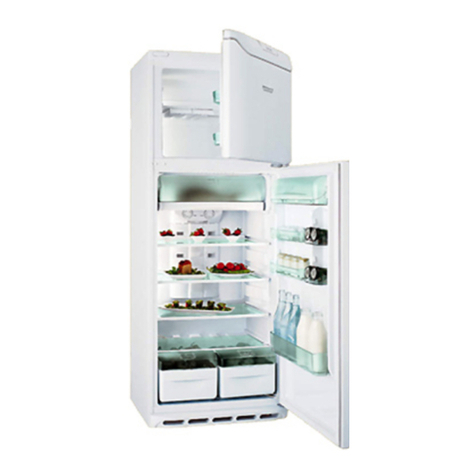
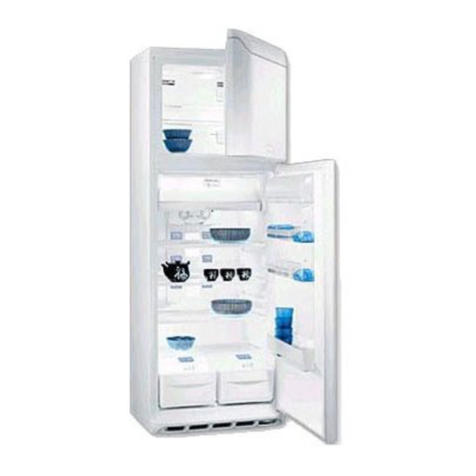
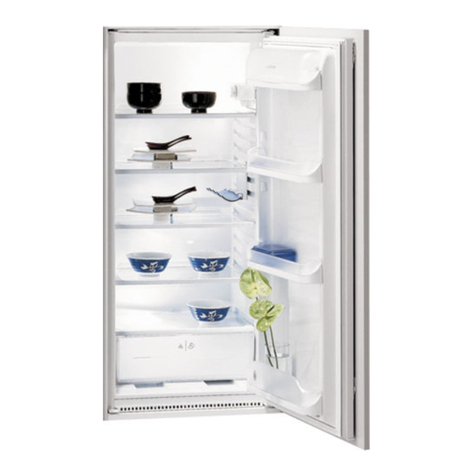
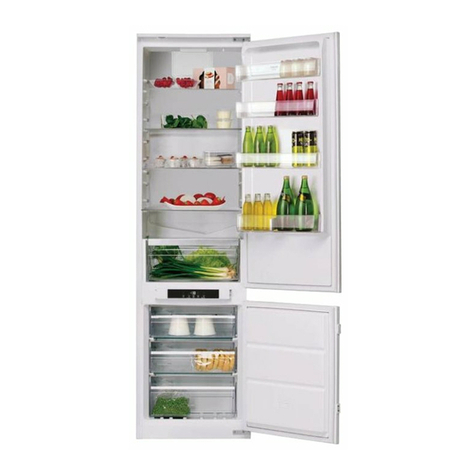
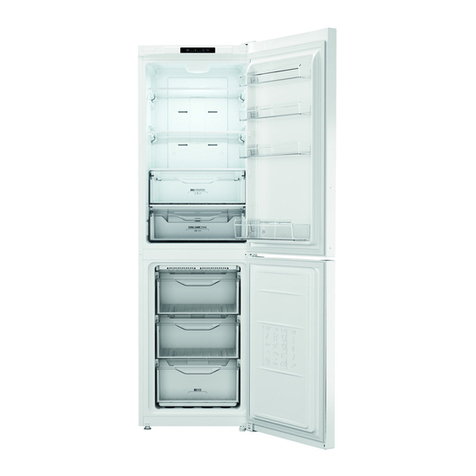
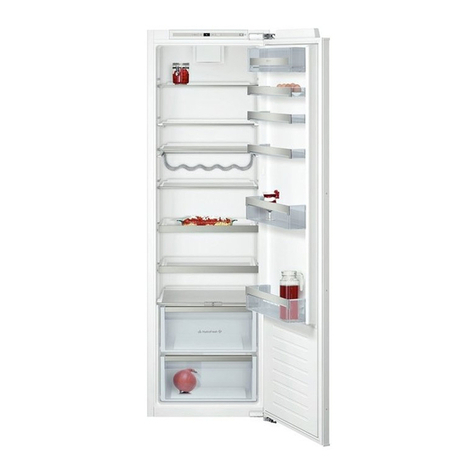
The thermostat automatically regulates the temperature inside the appliance 1 = less cold 5 = colder It is recommended that a medium setting be used. To increase the amount of space, optimize arrangement and improve appearance, this appliance has a “cooling area” located within the back panel of the refrigerator compartment. When the appliance is operating, this panel may be covered with frost or droplets of water depending on whether the compressor is operating or not at a set time. Do not be concerned about this! The refrigerato r is operating normally. If the thermostat knob is positioned on higher settings while the refrigerator is heavily filled and the ambient tem-perature is high, the appliance may run continuously, re-sulting in the formation of frost on the back cooling area. This will lead to an increase in energy consumption. To avoid this situation, just turn the thermostat knob to a lower setting so that the appliance defrosts auto-matically. Storing food in the Refrigerator Compartment Food Storage time Location in the Refrigerator Fresh meat and cleaned fish (use plastic wrap or pack in plastic bags) 2 or 3 days “Fresh box” Fresh cheese 3 or 4 days “Fresh box” Eggs 1 month In special egg tray on any shelf Butter, margarine 1 week On any shelf Cooked or precooked food (placer in air-tight contain-ers and when cool store in refrigerator) 3 or 4 days On any shelf Sausages, salami, sandwich meats in general, fresh pasta, custards, puddings, chocolates, cream pastries, bread, dry pastries, red tomatoes 3 or 4 days On any shelf Bottled products, milk, drinks, yoghurt On special door shelves Fruit and vegetable - In vegetable crisper What Should Not be Stored in the Refrigerator Garlic (transmits odour), onions and leeks. Bananas (they will turn black). Citrus fruits. Potatoes and root vegetables (store in dark, dry places). - Within the refrigerator compartment, the air circulates naturally, with the colder air falling down because it is heavier. This is the reason why meat and cheeses should be placed above the vegetable container. - Please follow our instructions carefully on maximum stor-age time: any food, even the freshest, will not remain edi-ble for any extended amount of time. - Do not place liquids in containers without covering them because this will lead to an increase in the level of mois-ture within the refrigerator, cau sing the formation of frost. - Remember to cool hot food before storing otherwise the temperature inside the appliance will increase, causing the compressor to work harder and use more energy. - Contrary to popular belief, cooked foods are not stored any longer than raw food. - The refrigerator compartment is equipped with conven-ient, removable shelves, which can be adjusted for height using the shelf guides. This allows you to place even large containers and foodstuffs in the refrigerator. - Be careful not to place containers (plastic or glass), food or other objects in direct contact with the cooling area of the back wall of the refrigerator. This could harm the food, in-crease energy consumption and facilitate the formation of condensate (on food, containers, etc.). “Fresh box” (Important! Inset till it touches rear wall) with the temperature range from -2C till +3C is made for the products which should be kept under the temperature which is bellow the temperature in the refrigerator cham-ber (e.g. ham, sausage). This compartment was designed to allow for longer preservation times for fresh meat and fish (for as long as a two or thre e days). Moreover, the “Fresh box” compartment can also be used to cool dishes that are normally eaten “cold”, such as melon and Parma ham, figs and ham, mozzarella and tomatoes. Besides this compartment can be moved at the desir-able height in the low part of the refrigerator chamber.