Congratulations!
BSR is proud
to
provide the ultimatevalue in design and
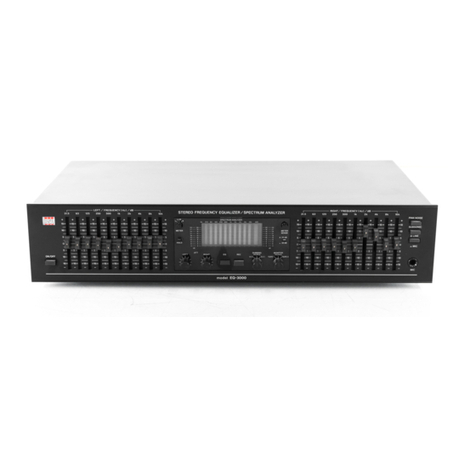
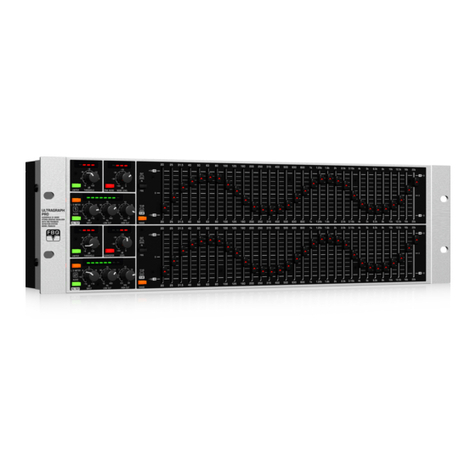
development of a 10 band graphic equalizer with a real
time frequency spectrum analyzer, the EQ-3000, for your
superior sound analysis. The EQ-3000 uses a fluores-
cent indicator tube which has 100 separate segments
plus 10segments average response indicator for display
to analyze sound source frequencies and room acous-
tics.
Audio fans and music enthusiasts like yourself look for-
ward to be able to enjoy the highest possible degrees of
sound qualitywhen listeningtotheir favorite music.
Simply using high-cost, high-quality components, how-
ever, does not in itself guarantee that the listener will be
able to obtain this soundquality.
A
wide variety of factors, including the nature of the lis-
tening environment as well as the placement of
speakers, playa major role in the acoustic quality of any
music system. To further enhance the effectiveness of
the audio equalizer,
BSR
has developed the ultimate
component in audio measuring equipment: the new
EQ-3000, the graphic equalizerwith arealtime frequency
spectrum analyzer.
The €0-3000 offers the listener positive visual contirma-
tion ot all sound compensation made, having combined
both a graphic equalizer and spectrum analyzer into one
unit.
.
The fluorescent indicator tube's display, which allows vis-
ual monitoring of all frequencies, plus average re-
sponse, adds a further dimension of pleasure to the use
of this superior component.
A high quality electret condenser microphone has been
developed exclusively for pink npise measurement and
is included with your EO-3000. In addition to the excel-
lent styling, your EQ-3000has been caretully engineered
to give you trouble-free performance and many years of
listening enjoyment.
RISK
OF
ELECTRIC
SHOCK
,AFA
CAUTION:
TO REDUCE THE
RISK
OF
ELEC-
TRIC SHOCK.
DO
NOT
REMOVE
COVER
(OR
BACK).
NO USER-SERVICEABLE
PARTS
INSIDE.
REFER
SERVICING
TO
QUALIFIED SER-
VICE
PERSONNEL.
A
This symbol i3 lnranded
ID
ale0
you
01
Ihe
presence
al uninsvlaled dan-
gerous volrngo wlthn
the
unll's
on-
slo~urelhel
may
be DI suliiclenl
msgnNde la canstiluts
a
risk
of
alsclric shock lo
parsons.
Th'is 6ymbol Is
Inlend4
10 alerI
you
of
;he
orelenco
01
lrneorlanl opersl.
'
ing
and
rnainlenen~eInGlrudO~sIn
Lha
Ihlecarure eccompanyirg
ihe
un.
Safety Instructions
1
Read Instructions.
All the safety -and operating
instructionsshould be read before the appliance is oper-
ated.
2
Retain Instructions.
The safety and operating in-
structions should
be
retainedfor future reference.
3
Heed Warnings.
All warnings on the appliance
and inthe operating instructions should be adhered to.
4
Follow Instructions.
All operating and use in-
structions should befollowed.
5
Water and Moisture.
The appliance should not be
used near water
-
for example, near a bathtub, wash-
bowl, kitchen sink, laundry tub. in a wet basement, or
near
a
swimming pool, etc.
6
Carts and Stands.
The appliance should be used
only with a cart or stand that is recommended by the
manufacturer.
7
Wall or Ceiling ~ounting..
The appliance should
be mountedto awall or ceiling only as recommended by
the manufacturer.
8
Ventilation.
The appliance should be situated so
that its location or position does not interfere with its
proper ventilation. For example, the appliance should
not be situated on
a
bed, sofa, rug, or similar surtacethat
may block the ventilation openings; or, placed in a built-
in installation, such as a bookcase or cabinet that may
impede theflow ot air through the ventilation opening.
9
Heat.
The appliance should be situated away
from heat sources, such as radiators, heat registers,
stoves, or other appliances (including amplifiers) that
produce heat.
10
Power Sources.
The appliance should
be
con-
nected to
a
power supply only of the type described in
the operating instructions or as marked on the appiiance.
11
Grounding or Polarization.
The precautions that
should be taken so that the grounding or polarization
meansof an appliance is not defeated.
12
Power-Cord Protection.
Power-supply cords
should be routed so that they are not likely to be walked
on or pinched by items placed upon or against them,
paying particular attention to cords at plugs, conven-
ience receptacles, and the poinlwhere they exit from the
appliance.
13
Cleaning.
The appliance should be cleaned only
as recommended by the manufacturer.
14
Power Lines.
An outdoor antenna should be lo-
cated awayfrom power lines.
15
Outdoor Antenna Grounding.
Ifan outside anten-
na is connected to Ihe receiver, be sure the antenna sys-
tem is grounded so as to provide some protection
against voltage surges and built up static charges. Arti-
cle 810 of the National Electrical Code, ANSI/NFPA No.
70
-
1984, provides information with respect to proper
grounding of the mast and supporting structure, ground-
ing of the lead-in wire to an antenna discharge unit, size
of grounding conductors, location of antenna-discharge
.unit, connection to grounding electrodes, and require-
ments for the gounding electrode. See figure on next
page-
16
Nonuse Periods.
The power cord-ofthe appliance
should beunplugged from the outlet when left unusedfor
a
long periodof time.
17
Object and
Liquid
Entry.
Care should be taken
so that objects do not fall and liquids are not spilled into
the enclosure through openings.