Designer’s Notes
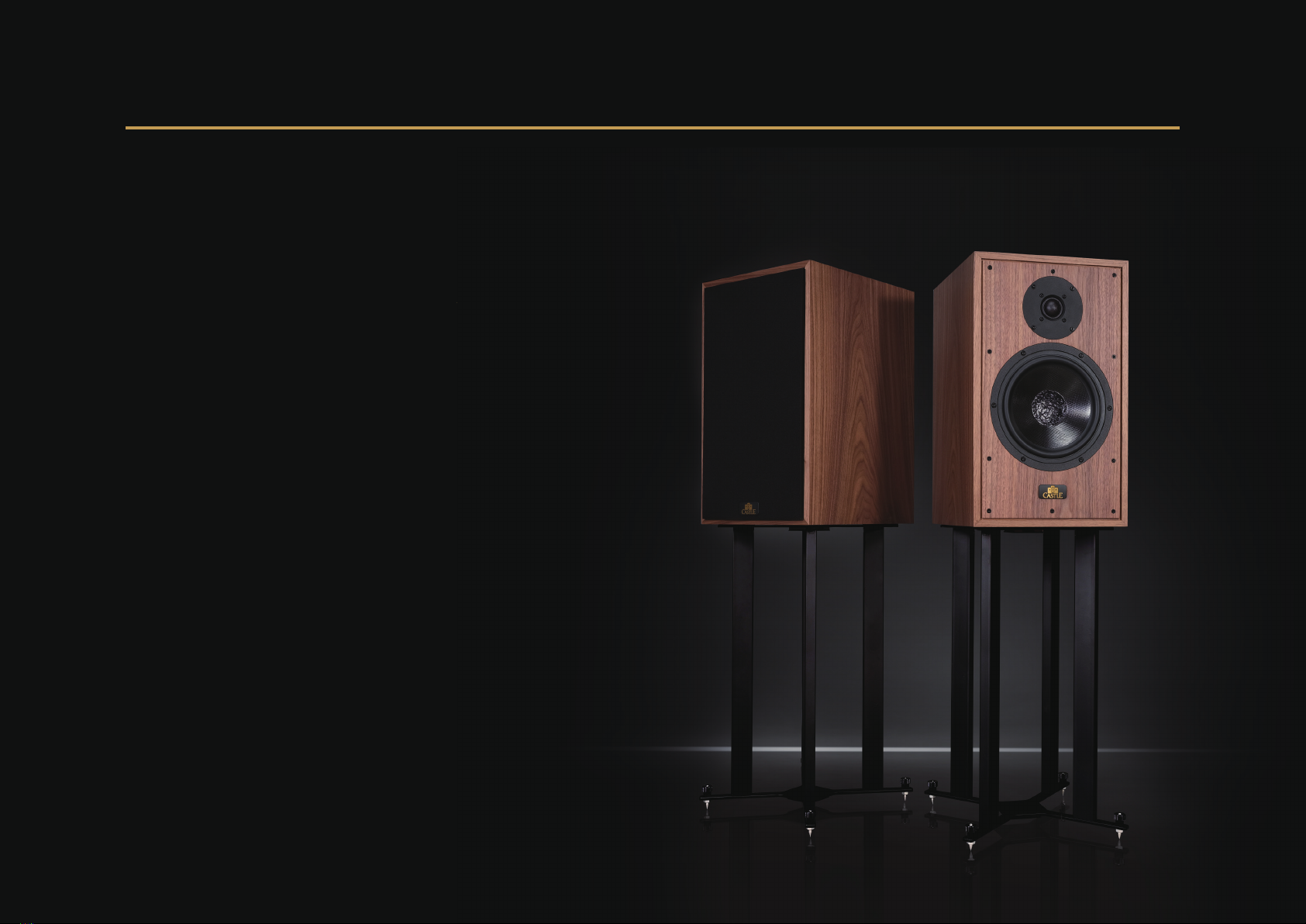
Built like a Castle
Such is the progress in driver development in recent times, it is
relatively easy to design really good drive units with a solid
performance. But the process of a matching cabinet design for the
said driver is a lot more complicated.
The most important research for low colouration cabinets was made
by the BBC, for their classic monitors. Cabinets are still
manufactured under these findings, to this very day.
After many hours of analysis, development and consideration of
these principles, a new methodology was chosen for the optimisation
of the Castle Windsor series cabinets.
The main cabinet structure uses dual-layer MDF panels separated by
a flexible, but thin layer of a specially engineered, acoustic glue.
This glue is purpose developed to dampen resonance in the critical
midrange of the dual-layer panels.
To achieve the optimum rigidity at lower frequencies, point-to-point
bracing was used. This joins two opposite panels without feeding the
problem of resonance and noise into other parts of the cabinet.
The result is a quiet cabinet without prominent peaks and controlled
output, simple in theory but intricate in design and engineering.
A trait of the Castle brand philosophy.
ABOVE: Laser vibrometre
measurement of a cabinet at
400Hz before optimisation
ABOVE: Laser vibrometre
measurement of a cabinet at around
730Hz/630Hz before optimisation
ABOVE: Laser vibrometre measurement
of a cabinet at around 730Hz/630Hz
after optimisation
-40
-50
-60
-70
-80
-90
-100
-110
-120
-130
-40
-50
-60
-70
-80
-90
-100
-110
-120
-130
-50
-55
-60
-65
-70
-75
-80
-85
-90
-95
-100
ABOVE: Laser vibrometre measurement
of a cabinet at 400Hz after optimisation
-50
-55
-60
-65
-70
-75
-80
-85
-90
-95
-100
09