manuals.online logo
Brands
  1. Home
  2. •
  3. Brands
  4. •
  5. Circuitmess
  6. •
  7. Science Education Product
  8. •
  9. Circuitmess CircuitPet User manual

Circuitmess CircuitPet User manual

Other Circuitmess Science Education Product manuals

Circuitmess Wacky Robot User manual

Circuitmess

Circuitmess Wacky Robot User manual

Circuitmess Batmobile User manual

Circuitmess

Circuitmess Batmobile User manual

Popular Science Education Product manuals by other brands

Alga Science SOLAREXPLORER quick start guide

Alga Science

Alga Science SOLAREXPLORER quick start guide

PASCO ES-9080B instruction manual

PASCO

PASCO ES-9080B instruction manual

ARBOR SCIENTIFIC 93-3501 Assembly instructions

ARBOR SCIENTIFIC

ARBOR SCIENTIFIC 93-3501 Assembly instructions

HAKUBUN magnet SA manual

HAKUBUN

HAKUBUN magnet SA manual

Aurora Plasma Globe owner's guide

Aurora

Aurora Plasma Globe owner's guide

Dentsply Sirona Sim Multi Bench installation instructions

Dentsply Sirona

Dentsply Sirona Sim Multi Bench installation instructions

KOKEN LM-026M instruction manual

KOKEN

KOKEN LM-026M instruction manual

PASCO ME-7018 instruction manual

PASCO

PASCO ME-7018 instruction manual

Tektronix P6217 instruction manual

Tektronix

Tektronix P6217 instruction manual

PASCO Node Cart manual

PASCO

PASCO Node Cart manual

DEWESOFT E-Mobility DEMO user manual

DEWESOFT

DEWESOFT E-Mobility DEMO user manual

GSC WVDEM02 Demonstration Guide

GSC

GSC WVDEM02 Demonstration Guide

SPECTRO FES 27 Original operating instructions

SPECTRO

SPECTRO FES 27 Original operating instructions

PLASTOLIGHT LiteScout HBW Series User instructions

PLASTOLIGHT

PLASTOLIGHT LiteScout HBW Series User instructions

GSC LSOPT7 quick start guide

GSC

GSC LSOPT7 quick start guide

Gaumard Clinical Chloe S222 user guide

Gaumard

Gaumard Clinical Chloe S222 user guide

Logictech LTG-2100T manual

Logictech

Logictech LTG-2100T manual

Seakeeper 6 Operation manuals

Seakeeper

Seakeeper 6 Operation manuals

manuals.online logo
manuals.online logoBrands
  • About & Mission
  • Contact us
  • Privacy Policy
  • Terms and Conditions

Copyright 2025 Manuals.Online. All Rights Reserved.

Find your way around...
Turn it on!
Hardware test
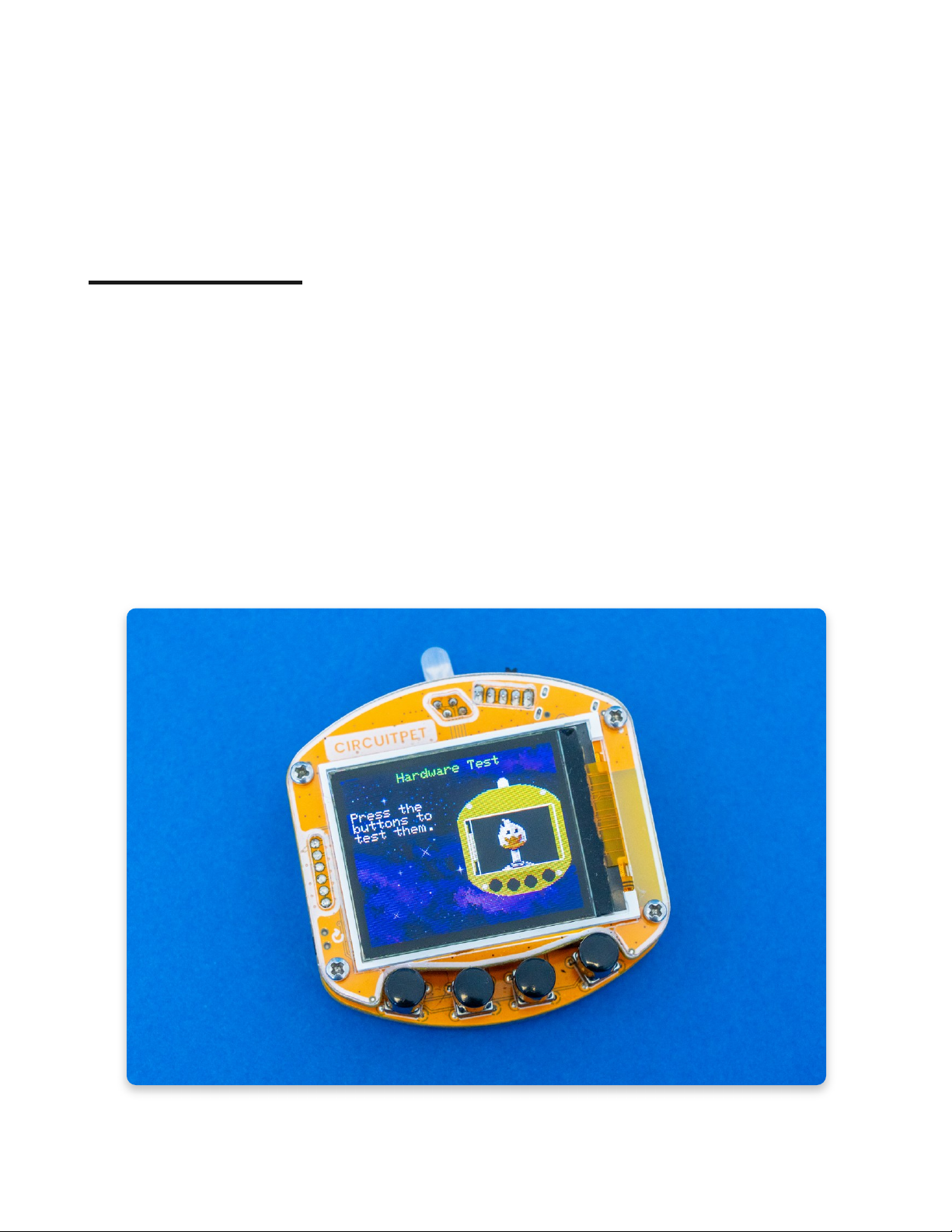
If this is your first time turning on the CircuitPet, you should see the hardware test
pop up. This is a cool piece of software that will allow you to go through and make
sure that you've assembled your CircuitPet correctly! Follow the on-screen
instructions at each stage, and if you have any problems, double-check your
soldering!
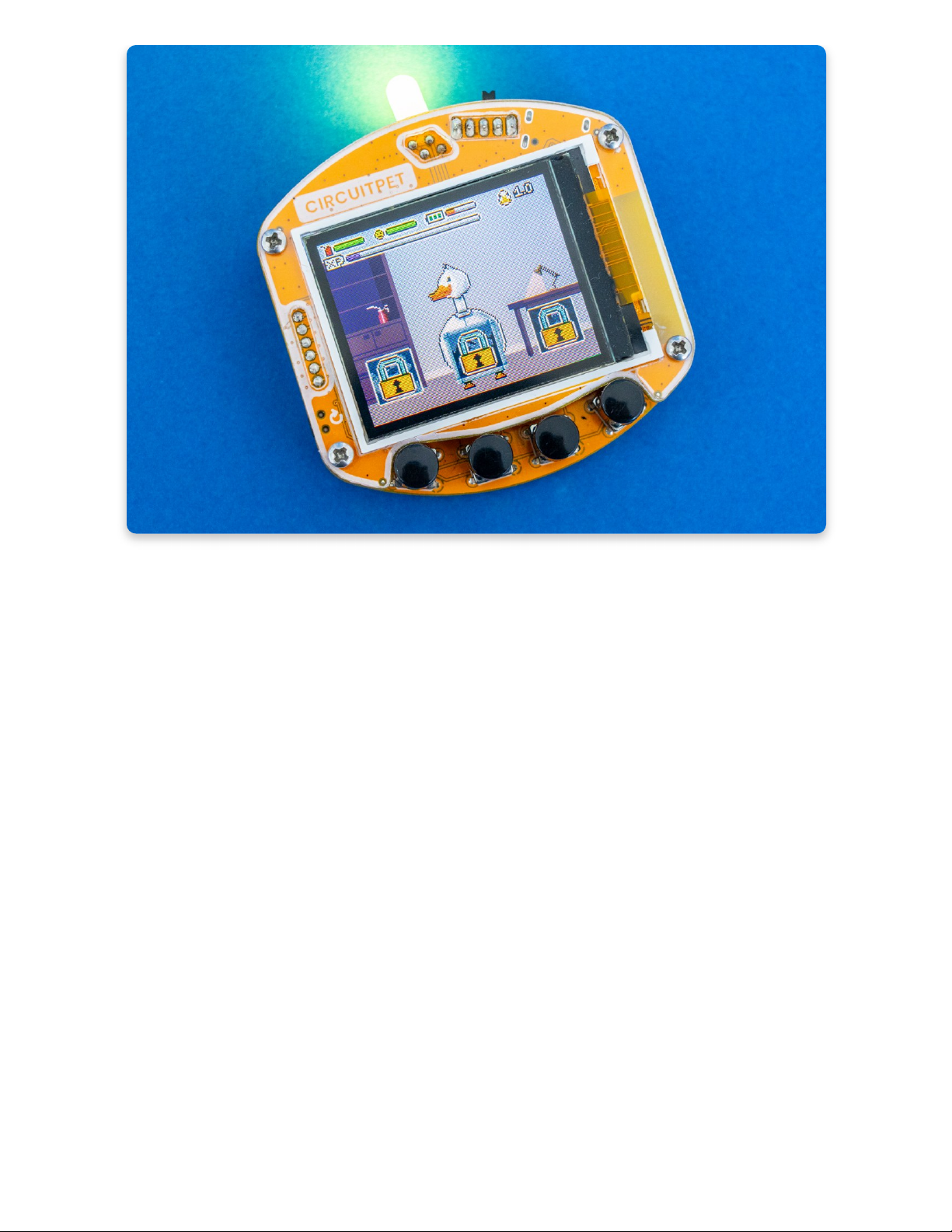
When you turn on the CircuitPet, this is the first thing you'll see. This particular test is
here to ensure all of your buttons are properly soldered.
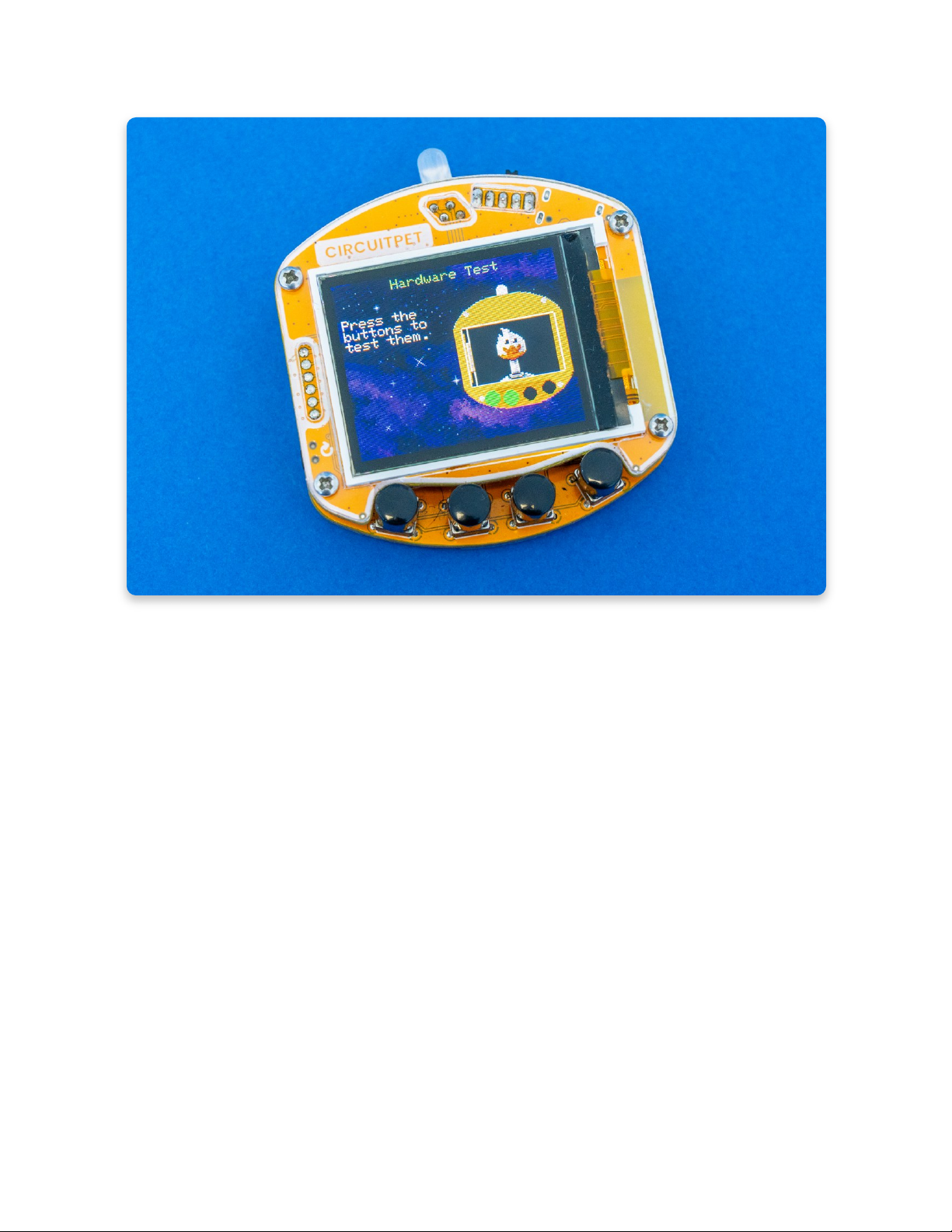
You should press all four of the CircuitPet's buttons you just soldered. If the
button is working properly, the circle representing it should turn green. If one of
CircuitPet usage guide
the circles does not turn green, one of the buttons is malfunctioning. In that case,
you should check your button's soldering joints.
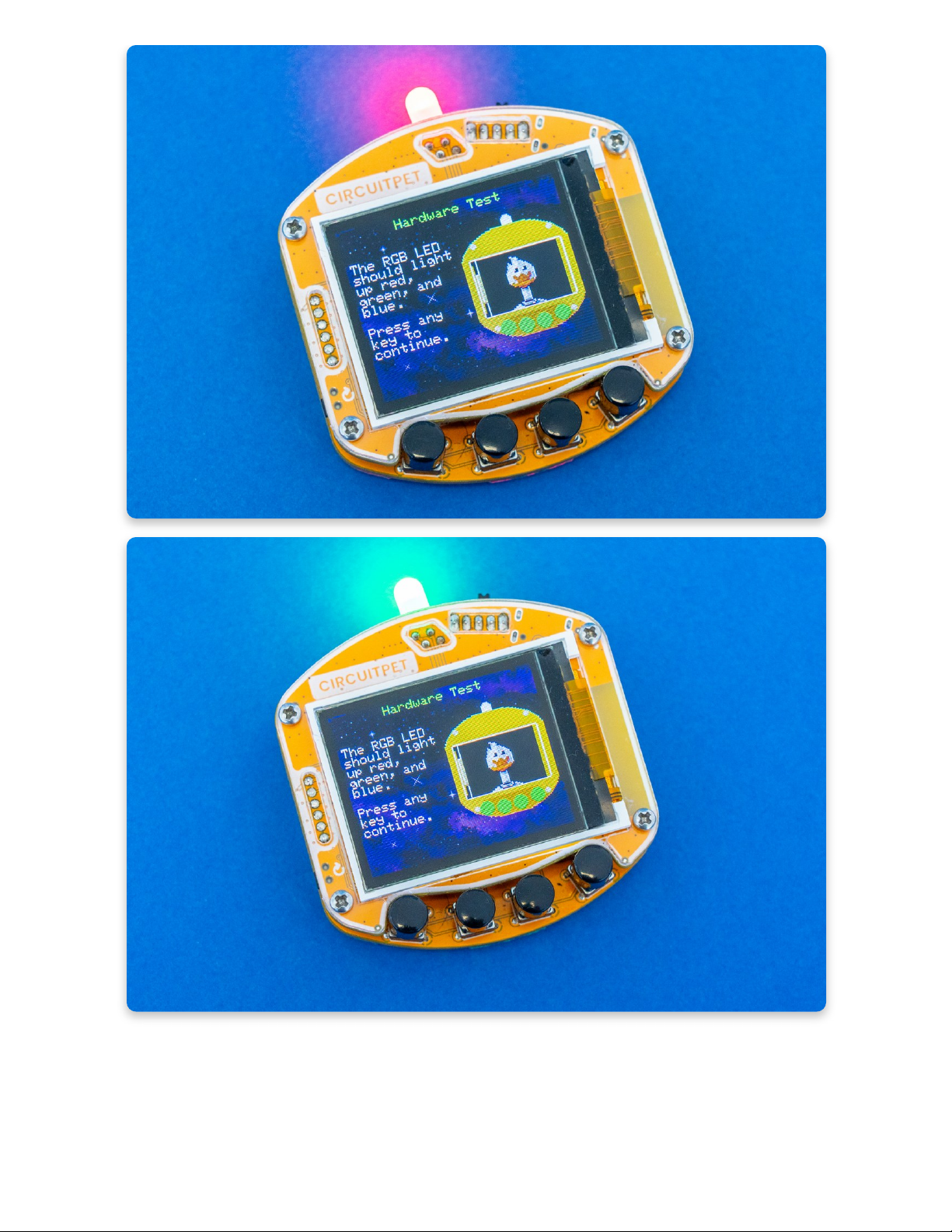
The RGB LED will light up red, blue, and green after all of the circles on the screen
have turned green.
On the right side of the screen, there is a message that explains what you need to
see and what you should do next.
If you see all three colors coming from the RGB LED, click any of the buttons to
proceed.
And the final step in the hardware test is the sound test. You should hear a beeping
sound coming out of your CircuitPet.
If you hear the sound, click any of the buttons to proceed.
Everything appears to have been soldered correctly, so you can continue playing
with your virtual pet.
Setup
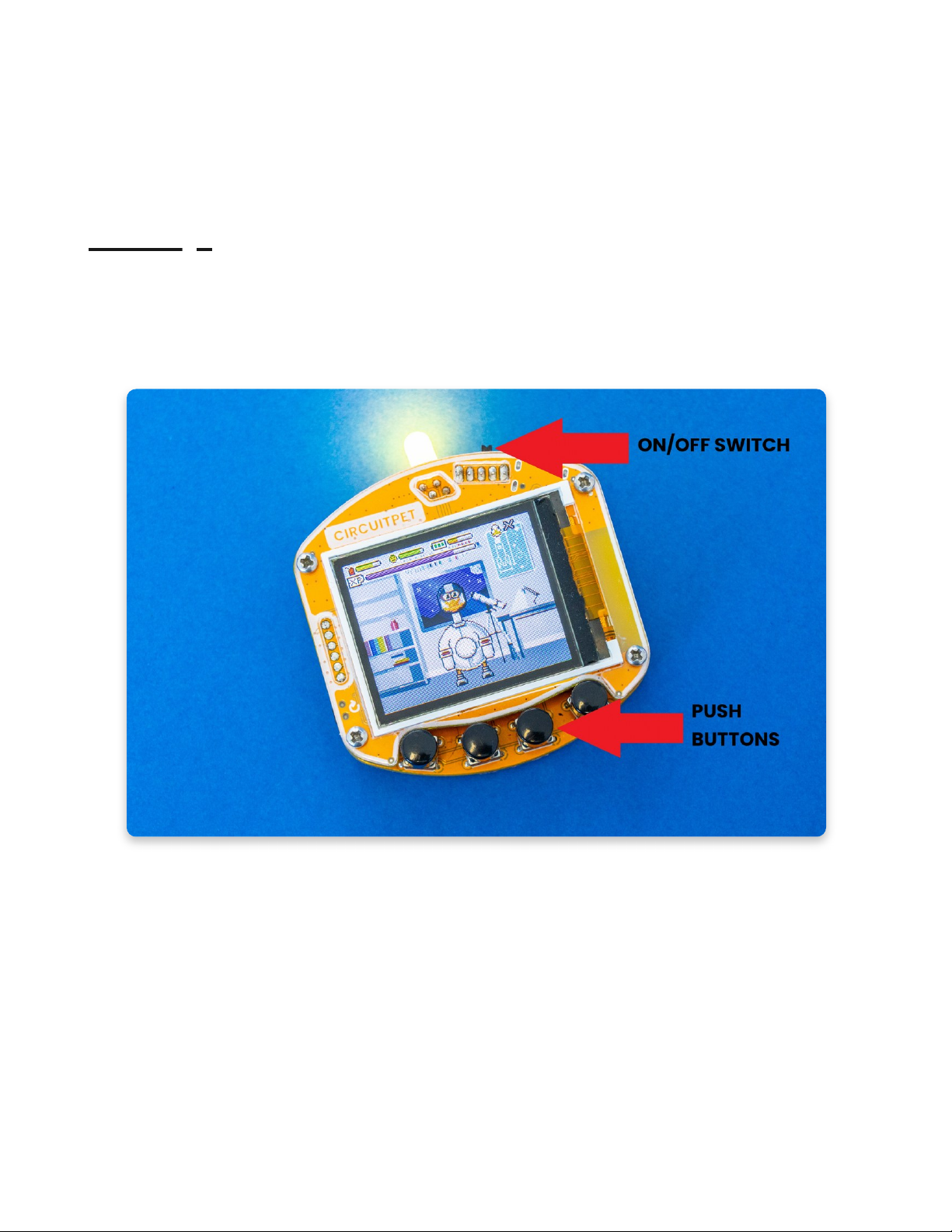
Using the switch located on the upper right side of CircuitPet, turn it on by pushing
the switch up.
Here is the photo that'll explain to you what each button and switch means.
Low battery? Let's charge your CircuitPet!
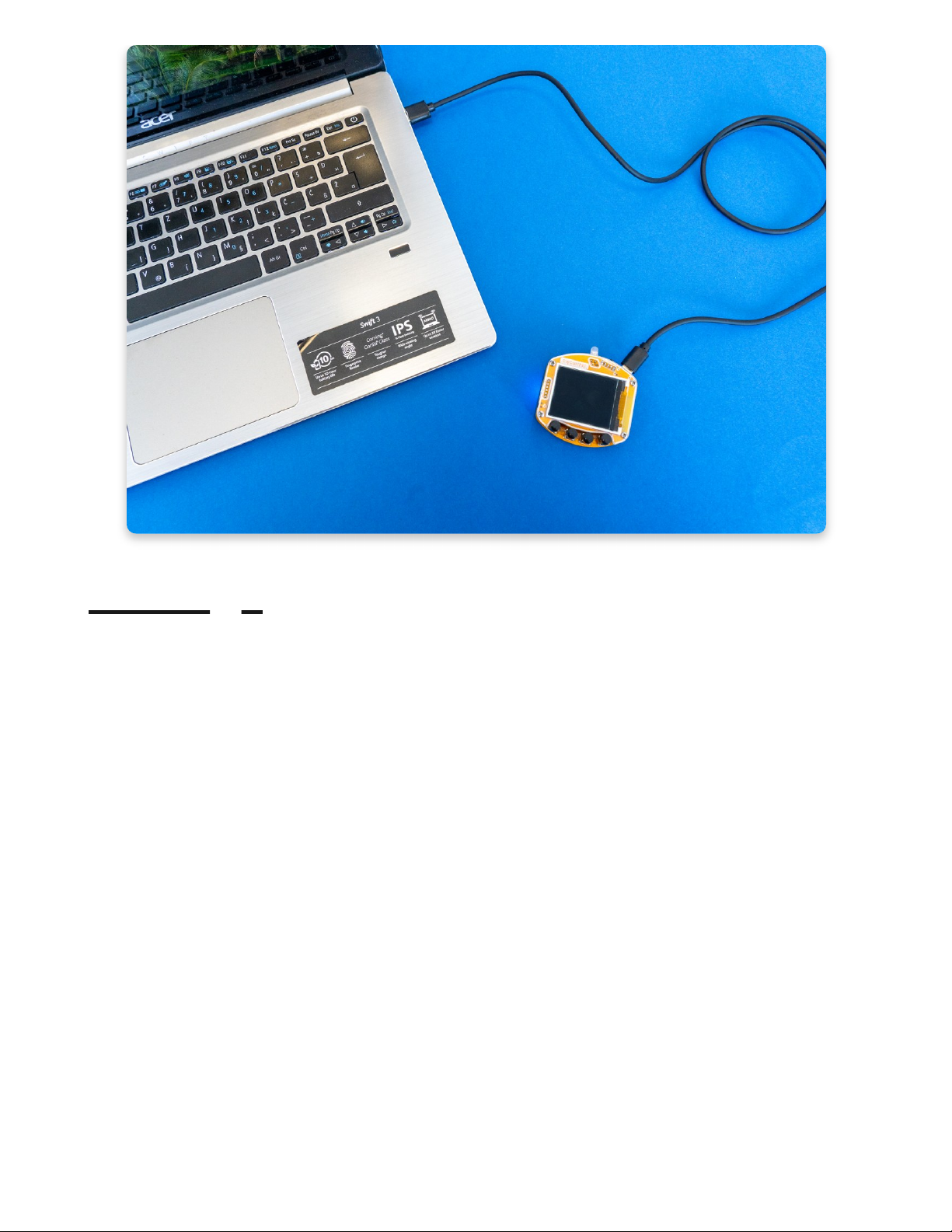
The USB-C cable is used for charging and programming your device. Insert the
other end of the cable into the power adapter!
After that, connect the power adapter to a power outlet to turn on your CircuitPet.
Settings
Settings
When you enter the Settings mode on your CircuitPet's menu, you'll be able to
change the volume and brightness of the LED and run the hardware test that you
should have done at the start of this guide.
If you later suspect that something is wrong with any of the components you
soldered to the board, you can check if everything works properly by enabling the
hardware test.
Click on this icon to access the Settings menu.
The settings menu looks like this:
1. Sleep time -After what time will your screen turn off; it saves energy. You can
adjust the sleep time or turn it off. If your screen goes dark, press any button to
bring it back to life.
2. Brightness -To adjust the brightness of the screen.
3. Sound -You can turn sound on and off.
4. RGB brightness -To adjust the brightness of the LED.
5. Hardware test -Perform this test if you suspect that any component is not
working properly. If you are unable to complete the test, you should check your
soldering joints. If you need assistance with making your CircuitPet work, please
contact us at [email protected].
6. Factory reset -Like on your phone, use this setting to delete everything from the
device.
7. Save - To save the changes.
Let the games begin!
Take care of CircuitPet!
CircuitPet, like any other pet, needs to be fed, oiled to keep it rust-free, and played
with.
On your CircuitPet, you'll find six pre-loaded minigames that will help you earn
much-needed XP. XP will help keep your CircuitPet happy and fed. You'll also be
able to level up your character and unlock new games.
When you first turn on your CircuitPet, all of the games will be locked, and you will
see the following:

First, you must oil your duck several times until you have enough XP to unlock the
first game.
This is a preview of what you'll see once you enter the oiling game:
You'll also receive instructions on how to oil the duck on display right away.