10
DMX BASICS
DMX is short for digital mulplexer, which is a universal protocol designed for the lighng industry, al-
lowing control of intelligent fixtures like scanners, moving heads, LED par cans, dimmer packs, fog machines
etc.
DMX allows you to control many fixture channels, normally up to 512 with varying channels from 0-255 (0-
100%).
Usually DMX will give control of channels like gobo selecon, up and down movements, colour output and
dimming etc.
DMX is a very good system as all this informaon can be sent down one cable. Used in conjuncon with a
DMX controller with memory, all of your channel sengs can be saved and recalled easily.
DMX was designed so that all manufacturers can use the same protocol/language to control their fixtures.
Thus allowing the end user to use any make of fixture on their DMX controller as long as both are DMX com-
pable and the controller has enough channels to control the fixture that is aached.
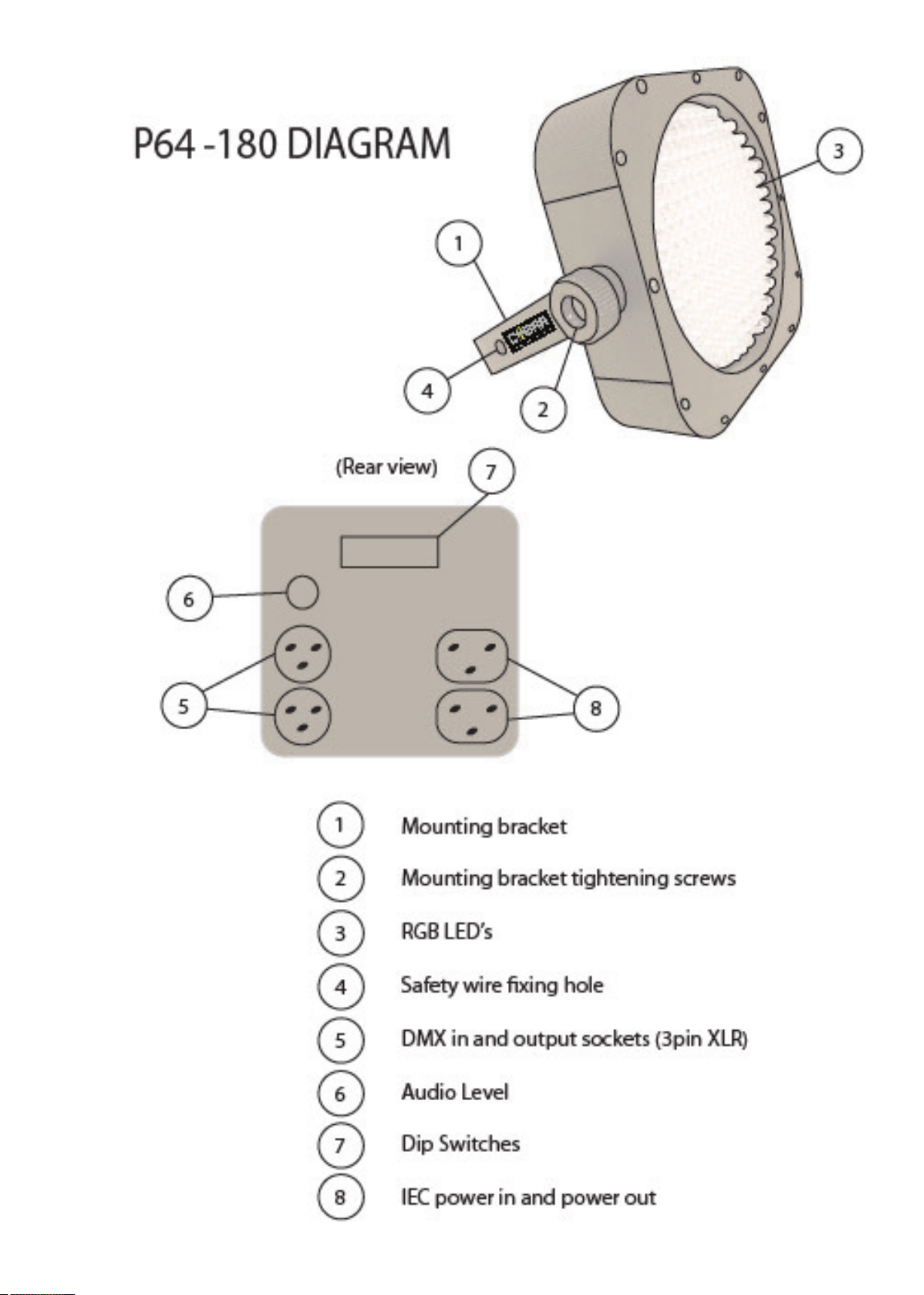
Fixtures have an input and output DMX socket, allowing you to connect from the controller to the first fix-
ture then from that fixture to the next (this is called daisy chaining).
Sockets are normally 3 pin XLR but can be 5 pin XLR.
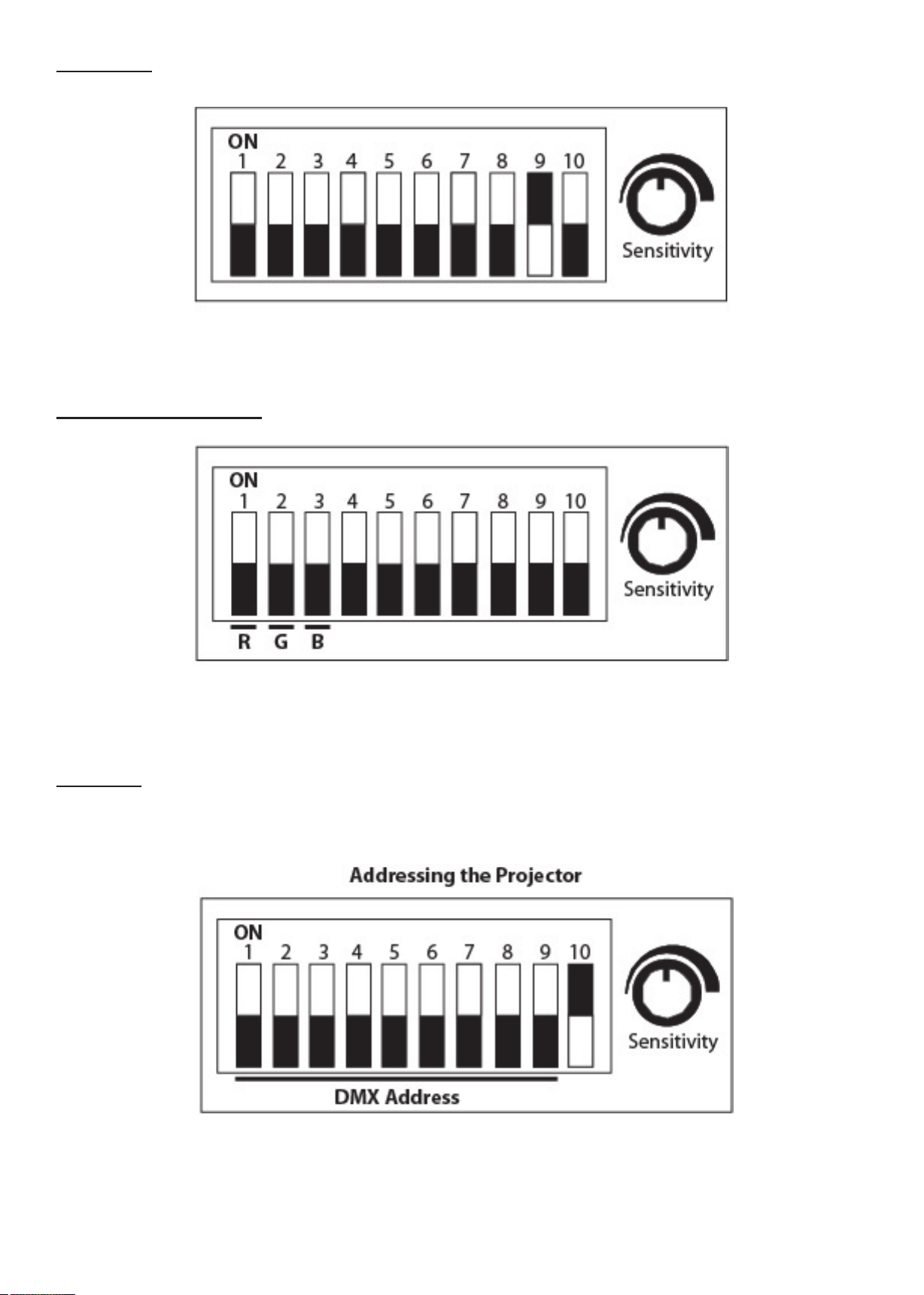
DMX fixtures need to have a DMX address set, this is so they can then decode the correct informaon from
the controller. This is normally done by a digital display panel where the address can be changed by simple up
and down buons. The addresses range from 1-512. In addion to this they can be controlled by a row of
small switches, called dip switches; there the required address is converted to a binary number.
To work out your dip switch sengs you can simply download a DMX calculator from the internet or see our
table further on.
The order in which fixtures are connected in a DMX line does not in uence the DMX address, a fixture set to
DMX address 1 can be put in a DMX line from beginning, middle or end, as it is set to address 1 it knows to
take informaon from that point onwards.