3
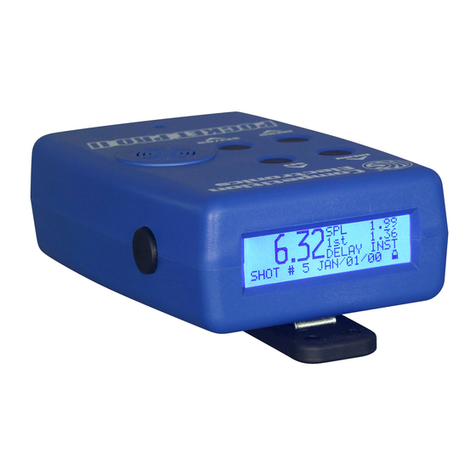
PROCHRONO LTD
USER MANUAL / OPERATING INSTRUCTIONS
How It Works
The ProChrono LTD operates on the principle of measuring the time it takes for an
object to travel from the rst projectile sensor to the second projectile sensor. The
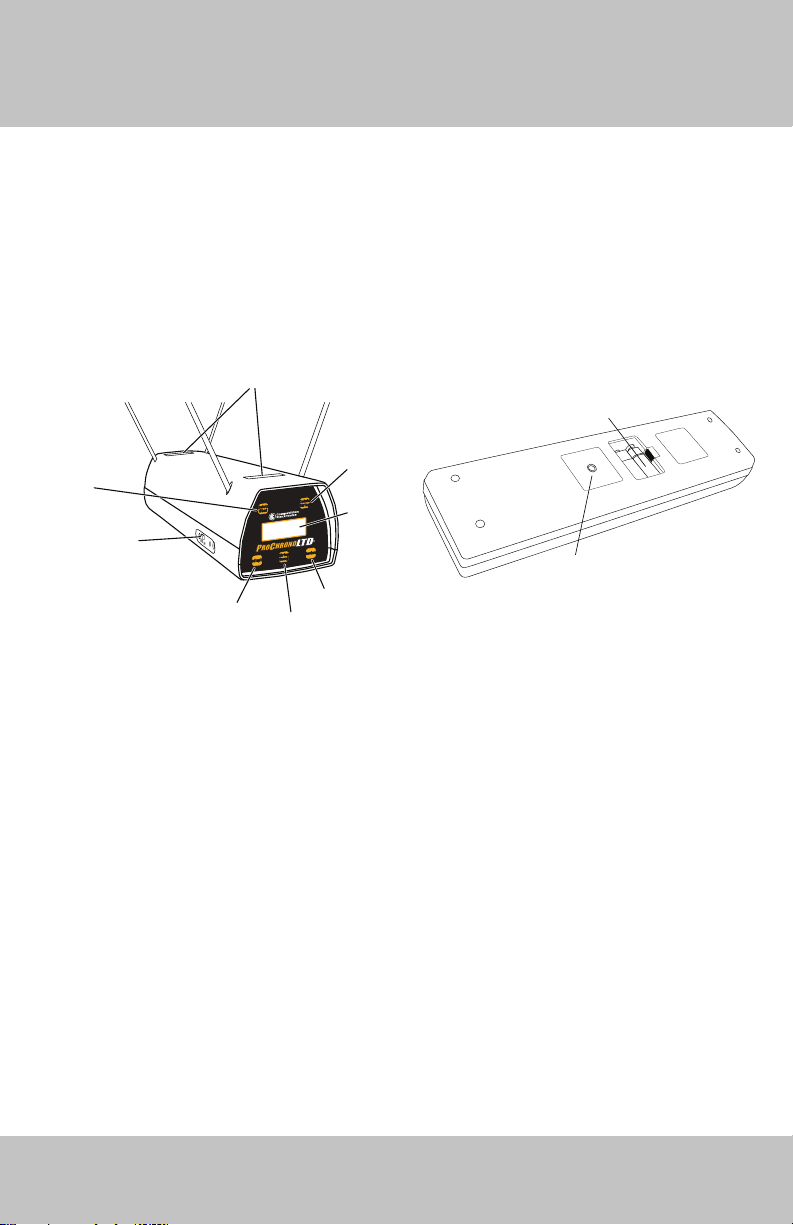
sensors, mounted internally in the case, monitor light through the two rectangular
openings in the top of the case. These sensors are specially designed electrome-
chanical devices that can detect the small changes in light intensity that occur
when a projectile interrupts light rays shining into the sensor opening.
If you can imagine looking up at the sky through a tube, you will gain an under-
standing of what the sensors see. The only light they see is what is directly above
them. Any change in light caused by an object passing over them is converted to a
signal that is detected by the chronograph circuitry. It then measures the elapsed
time between the light interruptions, converts this time into velocity, and displays
it on its LCD screen.
Lighting Considerations
Lighting Conditions
As mentioned above, the ProChrono LTD is a light sensing device. In the course
of use it must cope with a multitude of dierent lighting conditions… sunny
clear skies, overcast days, low light situations, reections, dierent colors and
shapes of projectiles, etc. Although the ProChrono LTD works awlessly over a
very wide range of conditions, there are times when the environment can aect
chronograph performance.
Diuser Use
It may be counterintuitive, but the best natural conditions for using the ProChrono
LTD are overcast, or cloudy days. This is because the ProChrono LTD works best
with a diused light source.
For this reason, white plastic diuser hoods are provided with the unit for use
on clear, sunny days. This will insure that the light that the chronograph sensors
see from above is homogenous and scattered and will greatly reduce errors in
velocities and missed detection.
On an overcast day, it is generally better to remove the diusers. This is because
the clouds act as diusers, so no further diusion is needed and is advantageous
to allow more light into the chronograph.