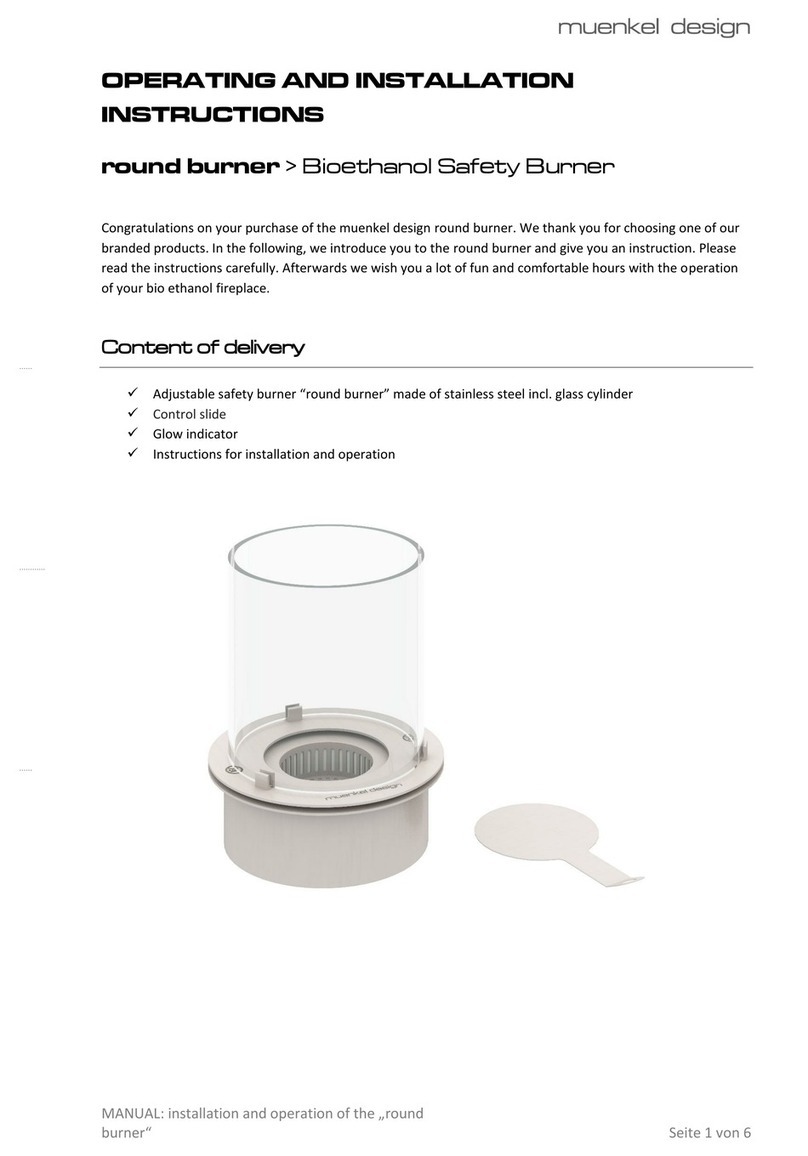
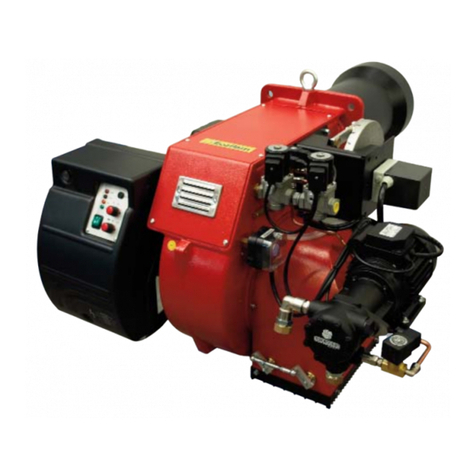
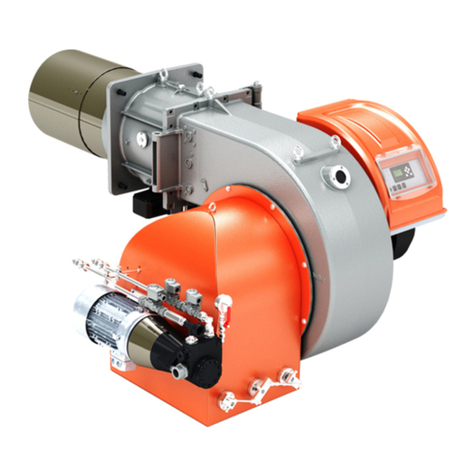
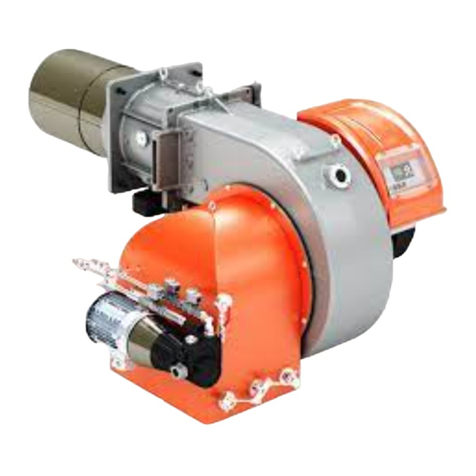
Dabos Prity User guide

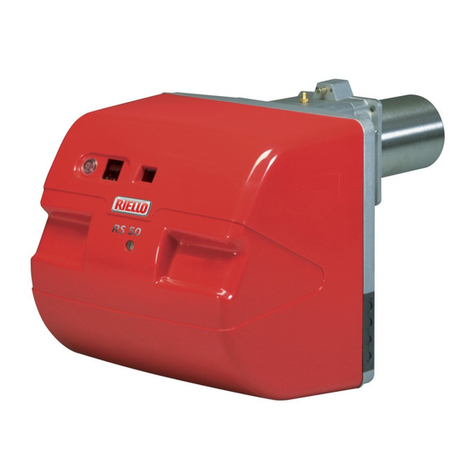
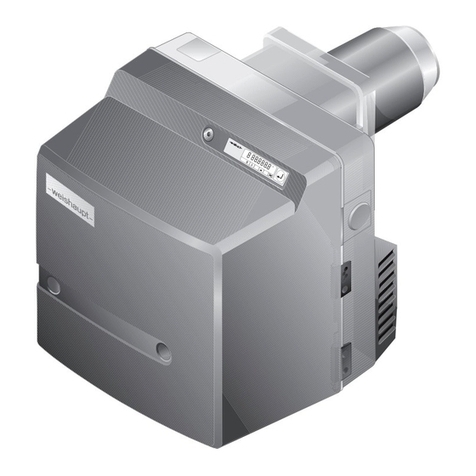
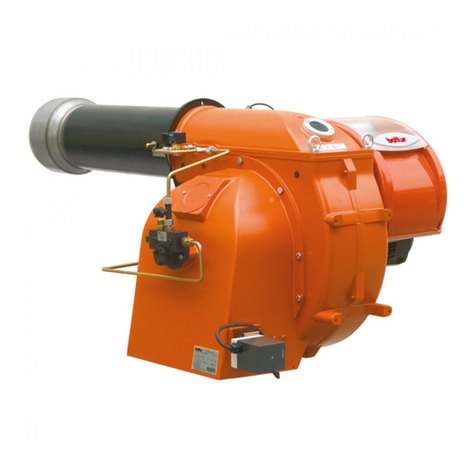
Pellet Burner
PRITY
Instructions for installation, adjustment
and operation

28
Pellet Burner
Type Prity
Instructions for installation, adjustment and operation
Technical data:
Thermal power from 10 to 35 KW
- Automatic ignition
- Automatic pellet feeder
- Automatic monitoring of the combustion process
- Modulation of thermal output according water temperature
- Input for room thermostat
- Input for tele-control GSM)
- Real time clock with two on/off timers
- Automatic restart
- Automatic cleaning
- Combustion chamber – made of 5mm heat resistant stainless steel
- Power consumption during combustion-100W
- Power Consumption during ignition- 1000W
Fuel Consumption:
- At minimal power - 2kg per hour

28
- At maximal power - 7kgs per hour
- At rated power - 4.5kgs per hour
Table of contents:
1.Principle diagram
2.Safety rules
3. Instructions for installation, commissioning and safe operation.
4. Service technician guide
The Pellet Burner PRITY is produced, in full
compliance with the European and the Bulgarian
standards.

28
1.Principle diagram
1.Control panel
2.Pellet inlet
3.Flange connector
4.Combustion
chamber
5.Feeder cable
6.Auger plug
7.Temperature
controller
8.On/Off
9.Fuse
10.Auger
transporter
11.Gear screw
12. Feeder cable
13.Stand
14.Heat resistant
tube

28
2.Safety rules
Installation should be executed by qualified and authorized skilled people in heating and
electrical systems.
The site and correct burner installation must be chosen carefully, following the directions for
safety.
Install away from flammable objects!
Never attempt to make changes to the burner! Never use flammable liquids to ignite!
Operation and servicing of the burner must be carried by an adult familiar with the operating
conditions.
Introduction of flammable and volatile liquids in the room with a working burner is strictly
prohibited! Children should not remain unattended in the room of the combustion plant.
Safe distances:
In the burner assembly safe distance of at least 200 mm must be respected, if not place rock
wool insulation of the wall and the cladding. This distance applies to fireplaces and flue
located near material with a B and C degree of combustibility. The safety distance is doubled
if the camera is located near material with a C3 degree of combustion.
Degree of flammability
Degrees of flammability Building materials with levels of
flammability
A- non-combustible Granite, sand, concrete, ceramics and
other
B- very difficult to ignite Acuminata, izomin, wallboard, Basalt
tile, fiberglass, novodur.
C1-difficult to ignite Hardwood lumber, plywood, verazalit
and other.
C2-Normal combustibility Coniferous wood, cork tiles, rubber
flooring.
C3-Easily ignited MAP, cellulose materials, polyurethane,
polystyrene and others.
Do not overfill the fuel chamber! Fuel material used must be of a very good
quality.

28
The burner is designed FOR BURNING WOOD PELLETS ONLY!
Constructive safety rules
The burner is controlled by a microprocessor. The process of ignition is being
monitored by illuminance sensor and if it does not ignite the first time,
microprocessor files a second dose of pellets and starts the ignition again. If
there is no ignition, after the second cycle, the burner goes into "ALARM"
mode. If during operation the pellets are completely consumed of the feeding
hopper, the burner goes into Stop mode and shows "ALARM".
The flexible tube for transporting the pellets is made of a special heat- resistant
material and is transparent. The customer’s access to the microprocessor
logistical module’s program is secured by a password. Only the necessary for
the normal work of the burner parameters can be accessed by the customer.
A sensor for temperature higher than 90-95ºC is placed on the feeding
tube of the burner. If during operation the temperature sensor detects a
temperature higher than 90–95ºC, the auger stops and the burner turns off.
At this time the display starts to blink – indicating ALARM. Even if the
temperature falls below 90–95ºC, the burner won’t start working again. It is
necessary the intervention of the operative staff. After fixing the error
in the normal operation, the burner starts by pressing the [STOP] and then
pressing [START] button.
3. Instructions for installation, commissioning and safe operation
The pellets are stored in a pellet hopper, where the auger tube is placed at an
angle of 45 degrees. The auger gets pellets from the hopper, dosing them and
passing them to the combustion chamber, where as a result of the combustion
process the water is heated. Combustion gases are discharged to the chimney
with the help of a blower. The work of the pellet burner is controlled by
multifunctional electronic controller.

28
Connecting to the boiler
The device should be placed in a way, so there will be enough space for
cleaning, removing the soot from the burner, the boiler and the draught pipes.
The burner must be installed in the boiler outlet with the relevant isolation,
joined up with nuts or puller. The contact between the burner and the boiler
should be well tight in order to prevent gas leaks in the service room. When
installing the system, it should be in optimal horizontal position. The pipe
should be straight and the connections should be tight.
The boiler’s exhaust system chimney) should be able to supply enough draft, so
positive pressure in combustion chamber will never occur.
Connecting to the electrical network
After connecting the burner to the boiler, the technician should connect it to the
control panel and then to the electrical network.
Attention! The connection must be done by a qualified electrical technician
and there must be paid high attention to the safety grounding of the device.
Auger transporter is connected by a special plug and a switch, and it is
controlled by a special logics.
Pellet feeding
The auger transporter must be placed in a way, so that it can easily get pellets
from the pellet hopper.
The auger transporter’s cable should be plugged in the primary auger loading
provided for this purpose. For the initial filling, the auger needs to be plugged
into external power outlet 220V, until pellets begin to fall from the outlet and
then plug it back in the automatic mode plug. If the burner is connected to a
room thermostat, you must verify that the set temperature is less than that of the
environment.

28
Start the burner
Check if the pump is connected to the electrical network and, if it is controlled
by a thermostat, check the thermostat, too.
You should make the necessary adjustments in temperature maximal - “switch
off” temperature and minimal – “switch on” temperature) according to customer
needs, and to check or change some parameters recommended by the
manufacturer accessed ones). All these setting should be done only by an
authorized service technician! The burner should start only if it is connected to
the boiler by a chimney, providing enough draught, electric power is present and
auger is able to supply pellets.
The burner is ready to run.
Place the ON / OFF switch to ON.
Press the [START] button.
Blowing mode is on, in which the fan is operating at 100%
The auger gets pellets from the bottom inlet and starts to transport them to the
top output .After the preset from the manufacturer) time elapses, providing
feeding with a dose of pellets for the primary ignition, the auger transport turns
off, the ignite heater turns on together with the fan - the IGNITION mode
starts.
Once the illuminance sensor in the burner detects light, the ignition heater is
stopped. That is the point when the Burning process starts.
After the preset time elapses the burner goes into BURNING mode. Upon
reaching the preset maximum temperature, the burner stops and remains in
STANDBY mode, after reaching the preset minimum temperature is
reactivated.
If during operation, the set temperature is being decreased, the burner will turn
off.
If during rest when a set temperature is being increased, the burner will turn on
and the ignite algorithm will start again. It is possible also to re-ignite by
pressing the [START] button.

28
If the pellets don’t ignite, a new attempt for their burning will start
automatically.
If the sensor does not detect any flame during operation, the burner will stop and
a mode ALARM will start.
If more than few attempts for ignition appear unsuccessful, for example,
if the fuel ends, then the device turns off the normal algorithm and a mode
ALARM will start – the display light will start to blink - which is a signal for
the user that assistance is needed.
When the electrical supply stops and then restores, if burner was “on”, then it
starts automatically.
If the burner is not connected to a room thermostat, then the burner will turn on
and off upon reaching the preset minimum and maximum temperatures set by
the customer.
If the burner is connected to a room thermostat, then the burner will turn on after
room thermostat enable is received and minimal temperature in boiler is
reached.
After room thermostats disable command is given during operation the burner
will either stop or continue at low power for certain time – according parameter
settings.
GSM Tele control. The burner is supplied with tele-control input for connection
of external GSM tele-control module. The commands given can start or stop
operation of burner. The command is edge sensitive.
ADJUSTING THE BURNER
If the device does not work properly:
- check the pellets quality they must have no dust). If the burner works
correctly, the pellets on the fire-grate should be as many as the holes on the grate
will be covered.
- check the flue gases temperature 175-240ºC). If it is too high, decrease the
pellets feeding. If the temperature is too low, increase the quantity of the air
supply.
Criterion for the proper burner operation is the flame color - IT SHOULD BE
YELLOW.
If the color is dark yellow, mixed with smoke, probably the quantity of the
supplied pellets is bigger than the necessary and it should be reduced.
Opening of the air valve affects on the combusting process, the purpose is calm,
stable combustion, without a residue normally the valve is not tightly closed).
If the initial feeding dose for ignition is too big, it is possible burner “choke”,
i.e. it can not be started through activation of the thermostat once again.

28
That is as a result of the fact that the initial dose of pellets is bigger than the
necessary and pellets are accumulated at the ignitable heater area.
If there are charcoals from the previous combustion, they start the burner, a
flame is registered and the burner gets in operating mode before the pellets start
burning by the ignition heater and the flame subsides from the big quantity of
fuel. The time for initial dose feeding should be reduced . Probable cause is a
change in the quality of pellets. It is recommended to use the same fuel after
setting the burner.
IMPORTANT: when adjusting the burner you will need a gauge instrument
for flue gases analysis.
BURNER MAINTENANCE
IMPORTANT! BEFORE STARTING SERVICE AND MAINTENANCE,
UNPLUG TO SHUT DOWN THE ELECTRICITY SUPPLYING !
The device for pellets burning is designed in a way that it requires minimal
maintenance.
The maintenance work directly depends on the quality and the size of the used
pellets.
Removing the ash:
During the process of wooden pellets burning, there remains about 0.5% - 1.5 %
of ash, depending on the quality of the used pellets. By experience you will
precisely notice how often you should clean the burner, depending on the size of
the combustion chamber and the type of the used fuel. The ash should be
removed from the burner and from the boiler and should be stored in a closed
box.
We recommend to clean the burner every 24 hours or depending on the
accumulation of ash, but not going over 48 hours .
-Allow the burner to cool down.
If it is necessary:
- unscrew the bolts and remove the burner from the boiler;
- remove and clean the burner’s throat;
- remove the ash under the fire-grate;
- remove the cinder over the helix and clean the outlets.
hen removing the cinder, use gloves and safety glasses
RECOMMENDED MAINTENANCE PLAN
Remove the ash and the cinder once a week or depending on the volume of the
ash tray.
This manual suits for next models
5