manuals.online logo
Brands
  1. Home
  2. •
  3. Brands
  4. •
  5. Electrolux
  6. •
  7. Dishwasher
  8. •
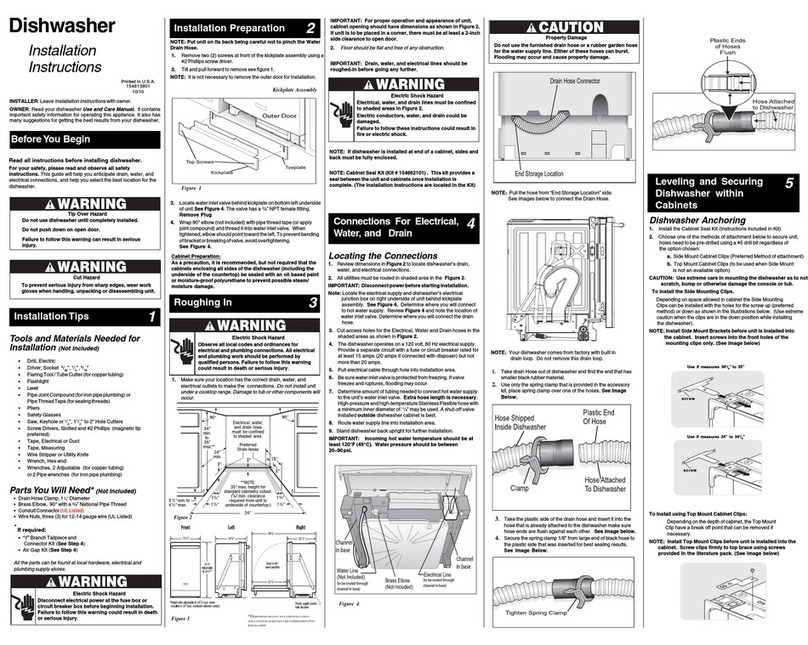
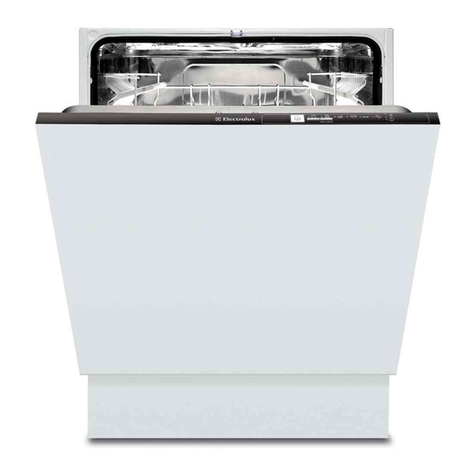
  9. Electrolux ESL 424 User manual

Electrolux ESL 424 User manual

Other manuals for ESL 424

2

Other Electrolux Dishwasher manuals

Electrolux GA55LSIWE User manual

Electrolux

Electrolux GA55LSIWE User manual

Electrolux ESL 68040 User manual

Electrolux

Electrolux ESL 68040 User manual

Electrolux ESL 66010 User manual

Electrolux

Electrolux ESL 66010 User manual

Electrolux ESI5510LAW User manual

Electrolux

Electrolux ESI5510LAW User manual

Electrolux ESF6535LOX User manual

Electrolux

Electrolux ESF6535LOX User manual

Electrolux FSB42607Z User manual

Electrolux

Electrolux FSB42607Z User manual

Electrolux ESF6010BW User manual

Electrolux

Electrolux ESF6010BW User manual

Electrolux ESF 43010 User manual

Electrolux

Electrolux ESF 43010 User manual

Electrolux ESI 602 User manual

Electrolux

Electrolux ESI 602 User manual

Electrolux 402010 User manual

Electrolux

Electrolux 402010 User manual

Electrolux EIDW6405HT - Fully Integrated Dishwasher User manual

Electrolux

Electrolux EIDW6405HT - Fully Integrated Dishwasher User manual

Electrolux EW24ID80QS User manual

Electrolux

Electrolux EW24ID80QS User manual

Electrolux 911 436 422 User manual

Electrolux

Electrolux 911 436 422 User manual

Electrolux ESL4111 User manual

Electrolux

Electrolux ESL4111 User manual

Electrolux GLDB957JB User manual

Electrolux

Electrolux GLDB957JB User manual

Electrolux 154743901 User manual

Electrolux

Electrolux 154743901 User manual

Electrolux ESM48210SX User manual

Electrolux

Electrolux ESM48210SX User manual

Electrolux GA55SLICN User manual

Electrolux

Electrolux GA55SLICN User manual

Electrolux ESA42110SW User manual

Electrolux

Electrolux ESA42110SW User manual

Electrolux FAVORIT 55010 I User manual

Electrolux

Electrolux FAVORIT 55010 I User manual

Electrolux U20149 DW 80 User manual

Electrolux

Electrolux U20149 DW 80 User manual

Electrolux ESF 66030 X User manual

Electrolux

Electrolux ESF 66030 X User manual

Electrolux EHT8G User manual

Electrolux

Electrolux EHT8G User manual

Electrolux 727035 User manual

Electrolux

Electrolux 727035 User manual

Popular Dishwasher manuals by other brands

KitchenAid KUDB230B Use and care guide

KitchenAid

KitchenAid KUDB230B Use and care guide

Brandt BDJ424DB instruction manual

Brandt

Brandt BDJ424DB instruction manual

Asko DSD767UXXL.AU user manual

Asko

Asko DSD767UXXL.AU user manual

Beko DFN26210W instruction manual

Beko

Beko DFN26210W instruction manual

NEFF S153ITX00E INFORMATION FOR USE

NEFF

NEFF S153ITX00E INFORMATION FOR USE

Midea SV 4.45 wi manual

Midea

Midea SV 4.45 wi manual

LG LDF7932 Specifications

LG

LG LDF7932 Specifications

Gorenje GV63214 instruction manual

Gorenje

Gorenje GV63214 instruction manual

Hotpoint HDA1100ZWH Installation information

Hotpoint

Hotpoint HDA1100ZWH Installation information

Blomberg LDFN2240W instruction manual

Blomberg

Blomberg LDFN2240W instruction manual

AEG FFB83836PM user manual

AEG

AEG FFB83836PM user manual

Cylinda DM3220RFD user manual

Cylinda

Cylinda DM3220RFD user manual

Atag DW8214MB manual

Atag

Atag DW8214MB manual

GE GLD8000 Series owner's manual

GE

GE GLD8000 Series owner's manual

Siemens SN23HI02KE INFORMATION FOR USE

Siemens

Siemens SN23HI02KE INFORMATION FOR USE

Omega ODW717X instruction manual

Omega

Omega ODW717X instruction manual

BORETTI BVW-683 operating instructions

BORETTI

BORETTI BVW-683 operating instructions

Siemens SN 56N591 operating instructions

Siemens

Siemens SN 56N591 operating instructions

manuals.online logo
manuals.online logoBrands
  • About & Mission
  • Contact us
  • Privacy Policy
  • Terms and Conditions

Copyright 2025 Manuals.Online. All Rights Reserved.

Dishwasher
Instruction book
Model ESL 424
UK
2
For the user
Important safety information 3
Description of the appliance 4
The control panel 4
Before use 5
Setting the water softener 5
Filling with salt 6
Rinse aid 7
Using your appliance 8
Loading your appliance 8
The lower asket 8
The cutlery asket 8
The upper asket 9
Adjusting the height of the upper asket 9
Use of detergent 10
Hints and tips 11
Washing programmes 12
Operating sequence 13
Maintenance and cleaning 14
Internal cleaning 14
Cleaning the central filters 14
Cleaning the large filter 14
External cleaning 15
Prolonged periods of non-operation 15
Frost precautions 15
Moving the machine 15
Something not orking 16
Service and spare parts 17
Customer Care Department 17
Guarantee conditions 18
Electrolux Service Force 19
Hints for test centres 21
Technical specifications 21
For the installer
Installation instructions 22
Water supply connections 22
Water outlet hose connection 23
Electrical connection 24
Building-in 25
Contents
Guide to use the instruction book
The following sym ols will e found in the text to guide you throughout the instructions:
Safety instructions
1. 2. 3. Step by step
Hints and tips
Environmental information
3
Installation
●This appliance is heavy. Care should e taken
when moving it.
●It is dangerous to alter the specifications or
attempt to modify this product in any way.
●Care must e taken to ensure that the appliance
does not stand on the electrical supply ca le.
●Any electrical work required to install this
appliance should e carried out y a qualified
electrician or competent person.
●Any plum ing work required to install this
appliance should e carried out y a qualified
plum er or competent person.
Child Safety
●This appliance is designed to e operated y
adults.
Children should not e allowed to tamper with the
controls or play with the product.
●Keep all packaging well away from children.
●Keep all detergents in a safe place out of
children's reach.
During Use
●Items that are contaminated y petrol, paint, steel
or iron de ris, corrosive, acidic or alkaline
chemicals must not e washed in this dishwasher.
●Under no circumstances should you open the
door whilst the appliance is in operation. Always
turn off the appliance efore opening the door.
●Only use detergent specifically designed for use
in dishwashers.
●Long laded knives stored in an upright position
are a potential hazard.
●Long and/or sharp items of cutlery such as
carving knives must e positioned horizontally in
the upper asket.
●When finishing loading or unloading close the
door, as an open door can e a hazard.
●Do not sit or stand on the open door.
●Isolate the appliance from the power supply and
turn off the water supply after use.
●Care should e taken when cleaning the ottom
door seal and hinge area as any exposed metal
edges may cut if care is not taken.
●This product should e serviced y an
authorised Service engineer, and only genuine
spare parts should e used.
●Under no circumstances should you attempt to
repair the machine yourself. Repairs carried out
y inexperienced persons may cause injury or
serious malfunctioning. Contact your local
Service Force Centre. Always insist on genuine
spare parts.
Conservation
In the interest of the environment:
●Materials marked with the sym ol are
recycla le.
●Check with your local Council or Environmental
Health Office to see if there are facilities in your
area for re-cycling this appliance.
●When the appliance is to e scrapped, cut off
the power supply ca le and make the door
closing device unusa le to prevent young
children from eing trapped inside.
●Help to keep your country tidy - use authorised
disposal sites for your old appliance.
Important safety information
It is most important that this instruction book should be retained ith the appliance for future
reference. Should the appliance be sold or transferred to another o ner, or should you move house
and leave the appliance, al ays ensure that the book is left ith the appliance in order that the ne
o ner can get to kno the functioning of the appliance and the relevant safety information.
This information has been provided in the interest of your safety. You MUST read it carefully before
installing or using the appliance.

4
1. Water hardness adjustment
2. Upper asket stop
3. Lower spray arm
4. Salt container
5. Detergent dispenser
6. Rinse aid dispenser
7. Control panel
8. Filters
9. Upper spray arm
10. Upper asket
11. Levelling spacers
1. On/Off push button
2. Programme guide
3. Programme marker
4. Programme selector dial
Description of the appliance
The control panel
IN99
5
Before using your dishwasher for the first time:
1. Ensure that the electrical and water connections
comply with the installation instructions.
2. Remove all packaging from inside the appliance.
3. Set the water softener.
4. Pour a litre of water inside the salt container and
then fill with salt.
5. Fill the rinse aid dispenser.
Setting the ater softener
The dishwasher is equipped with a water softener
designed to remove minerals and salts from the water
supply, which would have a detrimental or adverse
effect on the operation of the appliance.
The higher the content of these salts, the harder your
water is.
Water hardness is measured in equivalent scales,
Clarke, French degrees and PPM (parts per Million).
The softener should e adjusted according to the
hardness of the water in your area. Your local Water
Authority can advise you on the hardness of the water
in your area.
The dishwasher is factory set at level 2.
If this level is not suita le for your area the softener
should e adjusted.
To adjust the ater softener
Level 1
If your water is "level 1" it is already soft and therefore
there is no need to use salt.
Levels 3 and 5 (water softener adjustment)
If your water is level 3 or 5, proceed as follows:
- slide out the lower asket and unscrew the cap of
the salt container;
- turn the two-position selector anticlockwise from
position -to position +with the aid of a lunt knife or
screwdriver.
Levels 4 and 5 (adjustment on the machine)
If your water is level 4 or 5, open the door and drill
mem rane (A) on the upper left-hand corner of the
machine.
With a ater hardness of level 5 both adjustments
must be made.
Before use
Level
Water
softener
adjustment
Adjustment
on the
machine
French
degrees
(°TH)
PPM
(Parts per
Million)
Clarke
degrees
1
2
3
4
5
NO
NO
YES
NO
YES
NO
NO
NO
YES
YES
0 - 10
11 - 27
28 - 35
36 - 49
50 - 63
0 - 14
15 - 39
40 - 50
51 - 70
71 - 90
0 - 140
141 - 390
400 - 500
501 - 700
701 - 900
Water hardness
AA01
A
AA04
6
Filling ith salt
Only use salt specifically designed for use
in dish ashers.
All other types of salt not specifically
designed for use in a dish asher, especially
table salt, ill damage the ater softener.
Only fill ith salt just before starting one of
the complete ashing programmes (not the
Rinse and Hold programme). This ill
prevent any grains of salt or salty ater,
hich may have been spilled, remaining on
the bottom of the machine for any period of
time, hich may cause corrosion.
To fill:
1. To fill with salt, unscrew the cap of the salt
container.
2. Pour a litre of ater inside the container
(this is necessary only before filling ith salt for
the first time).
3. Using the funnel provided, pour in the salt until the
container is full.
Do not worry if water over flows from the unit when
filling with salt, this is quite normal.
4. Replace the cap making sure that there is no trace
of salt on the screw thread or on the gasket.
5. Screw on the cap tightly.
The salt container will require topping up periodically.
The salt cap has a refill indicator window in the centre.
Agreen float is clearly visi le when there is salt inside
the container, and almost disappears when the salt
has finished reminding you to add salt.
SALE
SALT
SALZ
SEL
SR02
SR11
7
Rinse aid
Rinse aid is automatically added during the last rinse,
ensuring thorough rinsing, and spot and streak free
drying. The dispenser, which is positioned inside the
door, holds a out 110 ml of rinse aid, which is
sufficient for 16 - 40 dishwashing programmes,
depending upon the dosage setting.
Filling ith rinse aid
1. Open the container y turning the lid (A)
anticlockwise.
2. Add the rinse aid until the container is completely
full. The indicator (B) will e completely dark.
3. Top up the rinse aid when the indicator (B)
ecomes clear.
Ensure that the lid is closed after every refill.
Do not put liquid detergent in the rinse aid
compartment. Clean up any rinse aid spilt during filling
with an a sor ent cloth to avoid excess foaming
during the next wash.
Adjusting the dose
According to the finish and drying results o tained,
adjust the dose of rinse aid y means of the 6 position
selector (C) (position 1 minimum dosage, position 6
maximum dosage).
Increase the dose if there are drops of water or lime
spots on the dishes after washing. Reduce it if there
are sticky whitish streaks on the dishes.
BR01
A
m
a
x
6
5
4
3
2
1
B
BR03
BR02
C
m
a
x
6
5
4
3
2
1
8
Loading your appliance
Before placing dishes in the machine, remove any
scraps of food, to avoid clogging the filters and
consequently reducing the performance.
Do not load very small items hich can fall
through the baskets.
Open the door and slide out the askets to load the
dishes.
The lo er basket
The lower asket is designed to take saucepans, lids,
plates, salad owls, cutlery etc.
Serving dishes and large lids should e arranged
around the edge of the asket, ensuring that the upper
spray arm can turn freely.
The cutlery basket
Long bladed knives stored in an upright
position are a potential hazard.
Long and/or sharp items of cutlery such as
carving knives must be positioned
horizontally in the upper basket.
Take care hen loading or unloading sharp
items such as knives.
Cutlery should e placed in the remova le cutlery
asket with the handles facing downwards.
If the handles protrude from the ottom of the asket,
o structing the lower spray arm, load the cutlery with
the handles facing upwards.
Mix spoons with other cutlery to prevent them from
sticking together.
Silver cutlery tends to go lack if mixed with steel
cutlery. Place it in the cutlery asket separate from the
others.
Using your appliance
UI57
UI12
UI45
9
The upper basket
The upper asket is designed for plates (dessert
plates, saucers, dinner plates of up to 24 cm in
diameter), salad owls, cups and glasses.
Arrange items on and underneath the cup rack so that
water can reach all surfaces.
Glasses with long stems can e placed upside down
in the raised cup racks.
Light items (plastic owls etc.) should e loaded in the
upper asket and arranged so they do not move.
Before closing the door, ensure that the
spray arms can rotate freely.
Adjusting the height of the upper
basket
If washing very large plates (over 27 cm and up to 31
cm in diameter) you can load them in the lower asket
after moving the upper asket to the higher position.
To move to the higher position proceed as follo s:
1. Move the front runner stops (A) of the upper asket
outward and slide the asket out.
2. Refit the asket in the higher position and replace
the stops (A) in their original position.
When the top basket is in the higher
position it ill only take plates up to 20 cm
in diameter and you ill not be able to use
the raised cup racks.
After loading your machine al ays close
the door, as an open door can be a hazard.
US63
A
RC01
10
Use of detergent
Only use detergents specifically designed
for use in dish ashers.
We recommend the use of Finish detergents which
are availa le in the following options:
Finish Double Action Tablets. Each ta let has the
exact amount of detergent required, simply place in
the dispenser.
Finish Po der recommended for every day use.
Finish Liquid Gel ideal for every day use. As the gel
is extra gentle it is recommended for fine one china.
If using po der detergents proceed as follo s:
1. Open the dispenser lid y pulling the catch (D).
2. Add the detergent according to the recommended
quantity given in the "Washing programmes" chart.
As all detergents are not the same, you should also
consult the instructions on the packet.
3. Always close the lid.
4. If the programme has a prewash add a little amount
of detergent over the lid of the dispenser
Follow the recommended quantity of detergent
given in the "Washing programmes" chart.
If using detergent in tablets proceed as follo s:
1. For all programmes; place 1 ta let inside the
detergent dispenser.
2. Always close the lid.
3. For all programmes with prewash; place a portion
of a further ta let on the lid of the detergent
dispenser.
Insufficient quantities of detergent ill
produce poor ashing results, hereas an
excessive amount of detergent ill not
improve ashing results and is also
asteful.
Using no more than the correct amount also
contributes to reducing pollution.
Compact detergents ith enzymes
In these low-alkaline compact powders the
environmentally unfriendly components have een
replaced y natural enzymes and other more
iodegrada le su stances.
These new compact powders are generally
phosphate-free.
D
MIN
MAX
DE17
Min = 15 g
Max = 30 g
DE02