manuals.online logo
Brands
  1. Home
  2. •
  3. Brands
  4. •
  5. Epson
  6. •
  7. Laptop
  8. •
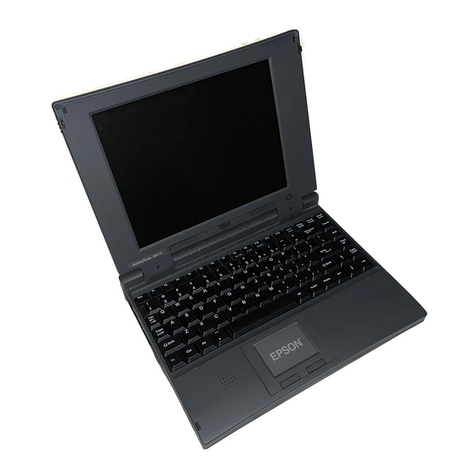
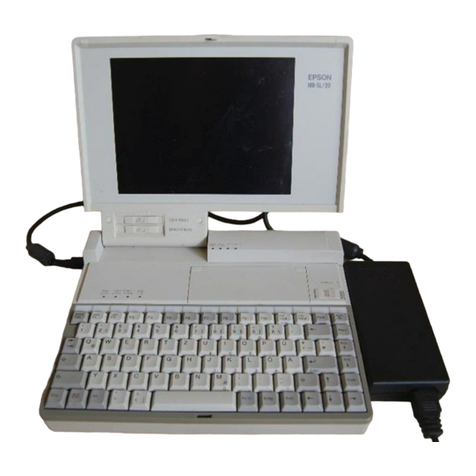
  9. Epson Equity LT Dimensions

Epson Equity LT Dimensions

Other manuals for Equity LT

1

Other Epson Laptop manuals

Epson ActionNote 650 Dimensions

Epson

Epson ActionNote 650 Dimensions

Epson ActionNote User manual

Epson

Epson ActionNote User manual

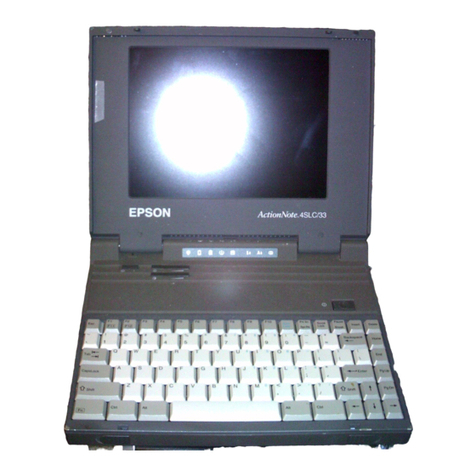
Epson ActionNote 4SLC-33 Dimensions

Epson

Epson ActionNote 4SLC-33 Dimensions

Epson Equity LT-386SX Dimensions

Epson

Epson Equity LT-386SX Dimensions

Epson ActionNote 890 Installation manual
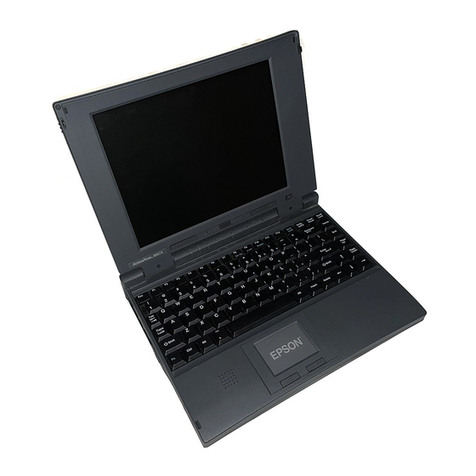
Epson

Epson ActionNote 890 Installation manual

Epson NB-SL User manual

Epson

Epson NB-SL User manual

Epson Equity LT-386SX User manual

Epson

Epson Equity LT-386SX User manual

Epson ActionNote 4SLC-25 User manual

Epson

Epson ActionNote 4SLC-25 User manual

Epson ActionNote 500C Dimensions

Epson

Epson ActionNote 500C Dimensions

Epson ActionNote 500C Installation and operation manual

Epson

Epson ActionNote 500C Installation and operation manual

Epson ActionNote 910C User manual

Epson

Epson ActionNote 910C User manual

Epson PX-8 User manual

Epson

Epson PX-8 User manual

Epson Equity LT-286e Installation and operation manual

Epson

Epson Equity LT-286e Installation and operation manual

Epson ActionNote 4SLC-33 User manual

Epson

Epson ActionNote 4SLC-33 User manual

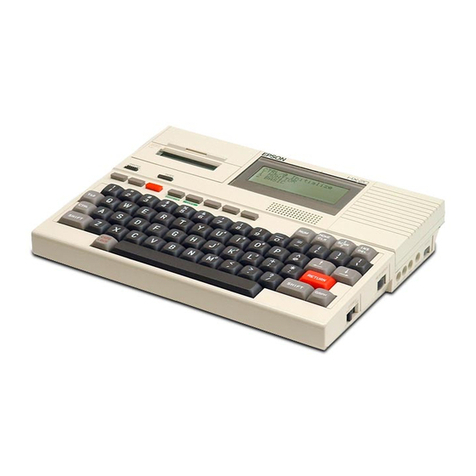
Epson HX-20 User manual

Epson

Epson HX-20 User manual

Epson ActionNote 4SLC2-50 Installation and operation manual

Epson

Epson ActionNote 4SLC2-50 Installation and operation manual

Epson ActionNote 4000 User manual

Epson

Epson ActionNote 4000 User manual

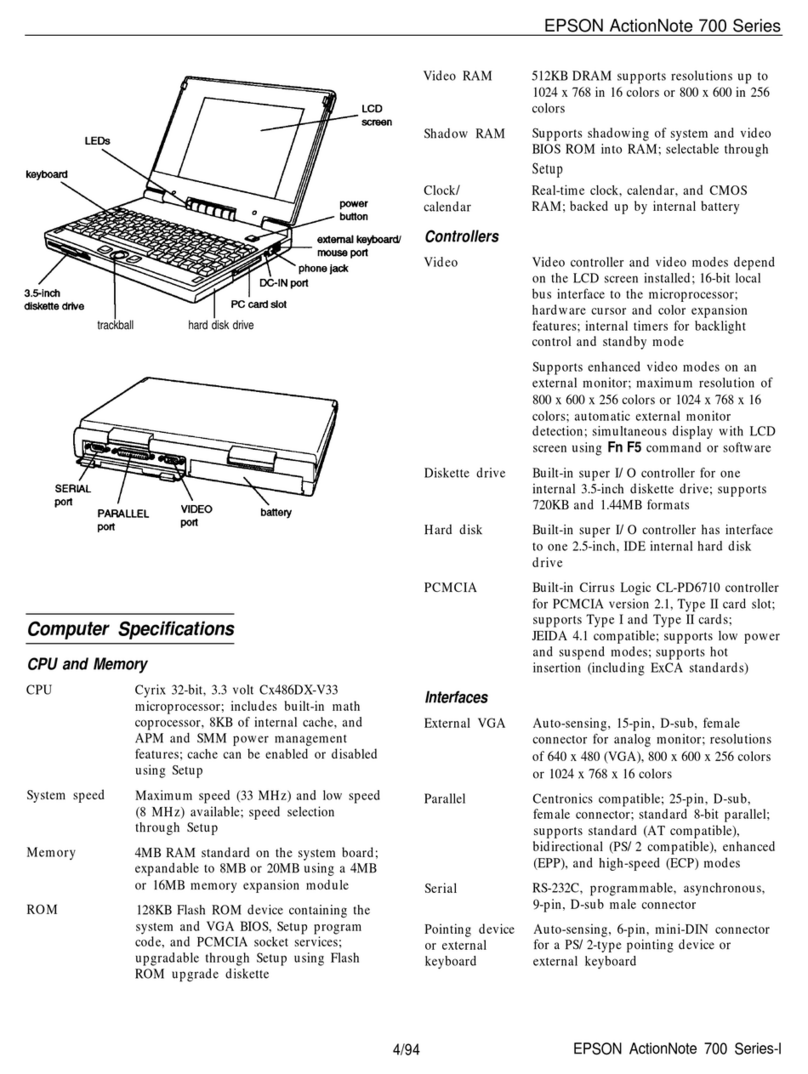
Epson ActionNote 700 User manual

Epson

Epson ActionNote 700 User manual
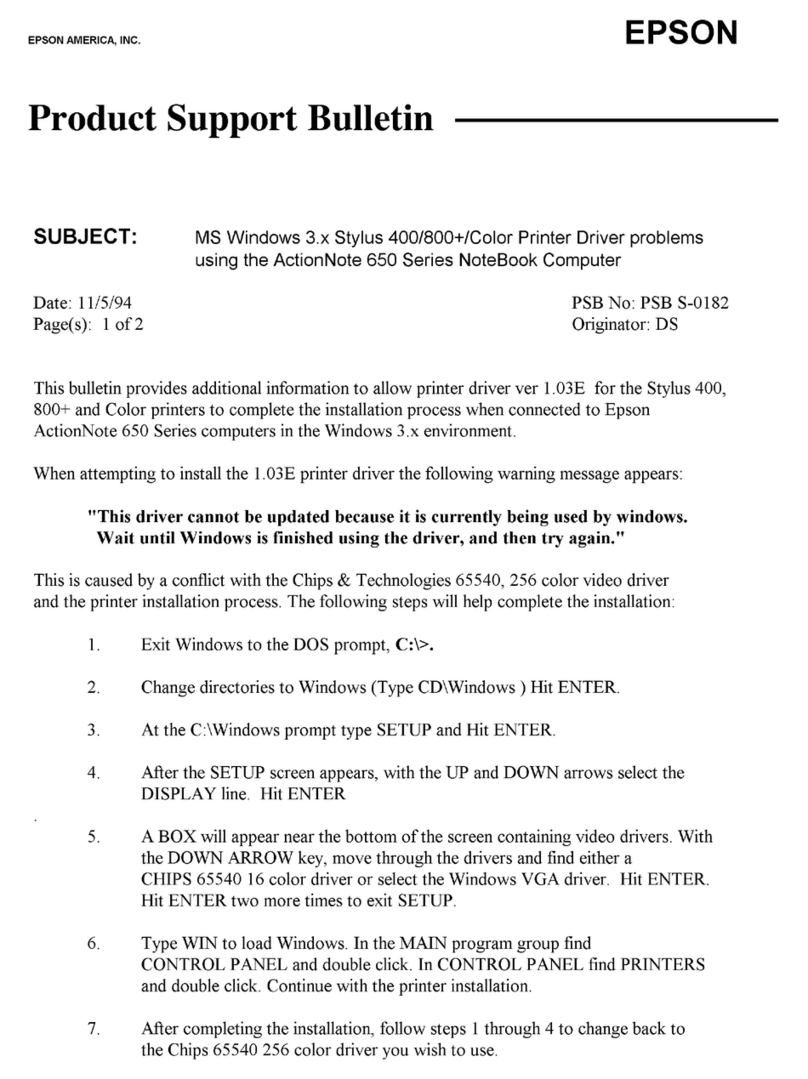
Epson ActionNote 650 User manual

Epson

Epson ActionNote 650 User manual

Epson HX-20 User manual

Epson

Epson HX-20 User manual

Epson PX-8 User manual

Epson

Epson PX-8 User manual

Epson ActionNote 866C User manual

Epson

Epson ActionNote 866C User manual

Epson NB3s User manual

Epson

Epson NB3s User manual
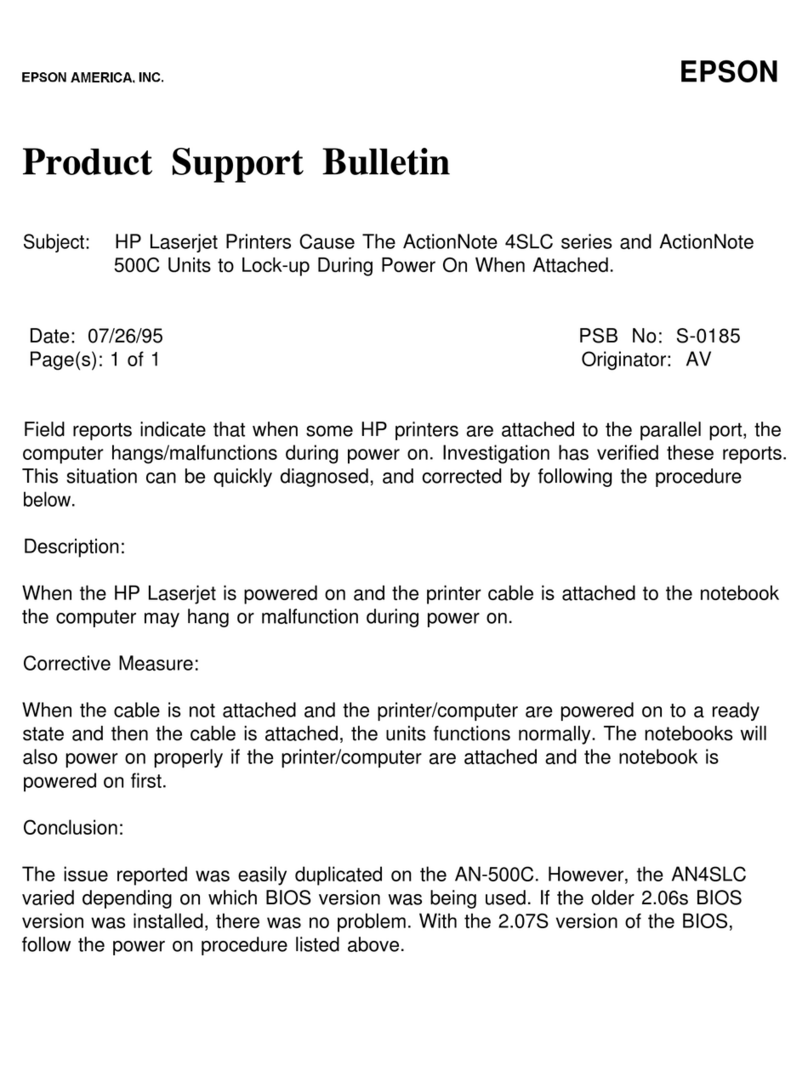
Epson ActionNote 650 User manual

Epson

Epson ActionNote 650 User manual

Popular Laptop manuals by other brands

EUROCOM ARMADILLO 2 W840AU Service manual

EUROCOM

EUROCOM ARMADILLO 2 W840AU Service manual

HP EliteBook 8570p Maintenance and service guide

HP

HP EliteBook 8570p Maintenance and service guide

Toshiba L300-EZ1522 Specifications

Toshiba

Toshiba L300-EZ1522 Specifications

HP Compaq 6520s Maintenance and service guide

HP

HP Compaq 6520s Maintenance and service guide

Lenovo ThinkPad T530 null

Lenovo

Lenovo ThinkPad T530 null

IBM THINKPAD T41 - Warranty user manual

IBM

IBM THINKPAD T41 - Warranty user manual

Lenovo ThinkPad X1 Carbon user guide

Lenovo

Lenovo ThinkPad X1 Carbon user guide

Lenovo ThinkPad T400s Ghid de service şi depanare

Lenovo

Lenovo ThinkPad T400s Ghid de service şi depanare

Toshiba TE2000 user manual

Toshiba

Toshiba TE2000 user manual

Acer SP514-51N user manual

Acer

Acer SP514-51N user manual

Fujitsu P1620 - LifeBook - Core 2 Duo 1.2 GHz Getting started

Fujitsu

Fujitsu P1620 - LifeBook - Core 2 Duo 1.2 GHz Getting started

IBM ThinkPad 240 Quick reference guide

IBM

IBM ThinkPad 240 Quick reference guide

Dell G3 15 Setup and specifications

Dell

Dell G3 15 Setup and specifications

Clevo D400P Service manual

Clevo

Clevo D400P Service manual

HP EliteBook 840r G4 Maintenance and service guide

HP

HP EliteBook 840r G4 Maintenance and service guide

Clevo NL51CU Service manual

Clevo

Clevo NL51CU Service manual

Dell Inspiron 3700 Get started

Dell

Dell Inspiron 3700 Get started

Toshiba R700-S1320 Specifications

Toshiba

Toshiba R700-S1320 Specifications

manuals.online logo
manuals.online logoBrands
  • About & Mission
  • Contact us
  • Privacy Policy
  • Terms and Conditions

Copyright 2025 Manuals.Online. All Rights Reserved.

EPSON
Product Support Bulletin
Subject: Proper Method for Running Benchmark and Diagnostics Programs
Date: 06/04/93 PSB No: S-0158
Page(s): 1 of 1 Originator: MWT
This bulletin describes the proper method for running any benchmark or diagnostics
programs. This applies to any computer system.
In most cases, the computer should be started using an MS-DOS boot diskette
that’s ‘clean’ -
in other words, one with no CONFIG.SYS or AUTOEXEC.BAT files.
The appropriate executable can then be run, either from diskette or hard drive.
There will be some exceptions to the above rule. In attempting to benchmark or
troubleshoot any add-on that requires a device driver (CD-ROM, local area network,
etc.), obviously the necessary device driver(s) must be loaded. Also, some
programs will require a minimum number of FILES or BUFFERS to be defined in
the CONFIG.SYS file. Such programs will usually display this requirement if they
are run without the necessary CONFIG.SYS file.
For the most consistent results, use the absolute minimal boot configuration that’s
allowed by the hardware being tested.
Product Support Bulletin
Subject:
Equity LT Battery Life and the AdaptaPAK Battery Pack
Date:
9/7/89
Page:
1 of 2
PSB No.: S - 0096
Originator: BGB
(-7
;i4
The purpose of this bulletin is to provide the test results of the Product R&D’s
AdaptaPAK Battery and usage instructions.
Like the Equity LT’s internal battery,
(refer to PSB S- 0055) there are several usage variables that can have a
significant effect on the working time.
In this test, the Equity LT was configured with the 20MB hard disk drive and the
EL (electroluminescent) backlit LCD and set at 10 Mhz. This is the most popular
configuration and also the one that consumes the most power. The first test was
with heavy access, constantly using the hard disk and floppy disk.
The internal battery was previously discharged. The laptop and AdaptaPAK
battery were charged for 18 hours.
The battery charge lasted a total of 5 hours
and 15 minutes before it ceased operation.
The second test was with minimum access and the hard drive turned off after
powering on. The internal battery was previously discharged. The Equity LT and
the AdaptaPAK battery were charged for 18 hours. After turning on the unit, a
program that didn’t require any keyboard input was executed. The battery charge
lasted a total of 8 hours and 15 minutes before it ceased operation.
NOTE: The battery lives listed in this document are the results of our tests.
Your experience may vary as battery life is affected by configuration and
usage.
We can also assume that if we were to follow the guidelines (PSB S-0055, P3)
to extend the battery charge time, we would get even better results.
AdaptaPAK Battery
1) Ensure the battery is fully charged before using.
approximately 10 hours.
Full charge takes
2) The battery is a sealed lead - acid type.
3) The battery is contained in a black nylon carrying case with shoulder strap.
4) It plugs into a 120V AC outlet for charging. For overseas usage an
international 220V AC recharger is available.
PSB No: S-0096
Page: 2 of 2
5) Weight 7 Ibs, size 3 X 6 X 11 inches.
The product is manufactured and available from:
Product R&D Corporation
1194 Pacific St., Suite 201
San Luis Obispo, CA 93401
Phone: (805) 546 - 9713
The AdaptaPak product includes the ExtraPAK battery and AdaptaCORD. Both
are required for use with the Equity LT.
Epson Accessories, Inc. is considering the possibility of offering the AdaptaPAK
for resale.
PSB No.: S-0062I
Page: 1 of 18
EISA SERIES DESKTOP
VER PART # DESC TYPE LOC REASON
0.10.20.01 DESKRO Phoenix 27C512 U26 INITIAL RELEASE
EISA SERIES TOWER
VER PART # DESC TYPE LOC REASON
TOWERRO U26 INITIAL RELEASE
EQUITY LT
VER PART # DESC TYPE LOC REASON
1.00
1.00
HLO-A1
HLO-B1
27C64
27C64
3F
5F
INITIAL RELEASE (FIRST 800 UNITS)
1.01
1.01
Y164802001
Y164803001
HLO-A2
HLO-B2
27C64
27C64
3F
5F
Fixes problems with the serial port and
icrosoft Word.
EQUITY LT286e
VER PART # DESC TYPE LOC REASON
1.01
1.01
A I
A I
27256
27256
U18
U19
INITIAL RELEASE
EQUITY LT386SX
VER PART # DESC TYPE LOC REASON
1.02
1.02
A I
A I
27C256
27C256
U13
U14
INITIAL RELEASE
NB3s
VER PART # DESC TYPE LOC REASON
040990-KO INITIAL RELEASE
EPSON
EPSON AMERICA, INC.
SERVICE
PRODUCT
SUPPORT
BULLETIN
PSB NO.: S-0055 DATE: 6/14/88 PAGE: 1 of 4
SUBJECT: EQUITY LT BATTERY LIFE
The purpose of this bulletin is to provide additional
information regarding battery charge life with the Equity LT.
There are several variables that can have a significant effect
on the working time obtainable from a charge. These include:
Configuration
I/O activity
Battery condition
Processor speed
Environment
Configuration
One of the more popular configurations of the Equity LT is the
hard disk drive model with the EL (electroluminescent) backlit
LCD.
Obviously, this is also the configuration that will
consume the most power and provide the shortest working time
on a charge. For example, here are some comparisons between
various configurations:
CONFIGURATION LOW BATTERY TOTAL LIFE
Dual FDD, Reflective LCD (NA) 6:00 Hours 7:00 Hours
Dual FDD, Reflective LCD (FA) 1:20 Hours 1:50 Hours
Dual FDD, Backlit LCD (NA) 5:20 Hours 6:lO Hours
Dual FDD, Backlit LCD (FA) 0:55 Hours 1:20 Hours
HDD, Reflective LCD (NA) 4:00 Hours 4:40 Hours
HDD, Reflective LCD (FA) 0:45 Hours 1:05 Hours
HDD, Backlit LCD (NA) 3:45 Hours 4:20 Hours
HDD, Backlit LCD (FA) 0:25 Hours 0:40 Hours
NA = No access: No activity including no keyboard input
FA =
Full access: "COPY A:*.* B:" or "COPY A:*.* C:"
(These times are a representative sampling. Depending on
configuration and usage, your times may vary.)
It's apparent that drive and backlight usage has a dramatic
effect on working time.
EPSON AMERICA SERVICE, 23610 TEL0 AVENUE, TORRANCE, CALIF. 90505
I
NUMBER: S-0055
PAGE:
2 of 4
I
Heavy use of the parallel, serial or RGB monitor ports can
also reduce working time. Functionally, this is of less
concern because devices that interface via these ports
(with the exception of battery-powered printers and modems)
will require AC power, allowing access to the LT's AC adapter.
Battery Condition
All NiCad batteries exhibit a phenomenon known as "memory".
Essentially, if the battery is recharged anumber of times
without being fully discharged, it "remembers" the shorter
times between charges. This is why you will see photographers
discharge their electronic flash units before putting them
away.
Processor Speed
The Equity LT employs the NEC V30 CPU, which is a low-power
CMOS 8086-compatible processor. However, the 10 MHz speed
setting will cause it to draw somewhat more power. In fact,
on a dual FDD LT with the reflective LCD, the difference
between 4.77 and 10 MHz can be as much as 48 minutes total
life.
Environment
Extremes in temperature and humidity can effect not only
battery charge life, but LCD performance as well. The standard
rule of thumb applies here: If it's comfortable for you, your
computer should function optimally.
NUMBER: S-0055
PAGE:
3 of 4
How to get the most out of the Equity LT
It is possible to extend the working battery charge time of
the Equity LT by following a few simple guidelines:
1) Turn the hard disk drive power OFF. For most applications,
constant access to the hard disk drive is not required.
Once the application is loaded into RAM, wait for the
drive access LED to go out and turn the HDD power switch
off.
When you're ready to save your work, turn the HDD
power switch back on, wait for the HDD to spin up and then
save.
Another alternative is to boot the LT from floppy
with the HDD power off. The power-on self-test will take
longer, and a"1701-C" error will display. This is normal
this situation and should be ignored.
l:cess your application from the FDD. Then you can
2) Set the backlight period to 0.5 minutes. This is
accomplished from the SETUP program. If you pause to think
about what you're doing, the backlight will turn off after
30 seconds. This drops power consumption by as much as
580mA. Also, set the brightness and contrast controls as
low as is comfortable. The difference between 1/2
brightness and full brightness can be as much as 445mA.
3) Run at 4.77 MHz. The difference in power consumption
between 4.77 MHz and 10 MHz is 70-80mA.
4) Completely discharge the battery. From time to time, let
the battery drain all the way down. When the LOW BATTERY
LED starts flashing, save your work in progress (if any)
and
then leave the LT powered up. Eventually, the power
supplied by the battery will drop below the threshold
level and the system will power down. Then give it a full
(12 hour) recharge. This will help to minimize the memory
effect.
I
NUMBER:
S-0055
PAGE:
4 of 4
I
5) Traveling Software has recently introduced a battery
monitoring
and
maintenance software package called
Battery Watch. This package has been written specifically
for a number of popular laptop systems, including the
Equity LT. Battery Watch provides the capability to:
Monitor battery life (and optionally set an audible alarm)
Customize the installation
Perform a "deep discharge" of the NiCad battery
It's a small (10-20KB) memory-resident program. For more
information, please contact:
Traveling Software, Inc.
19310 North Creek Parkway
Bothell, Wa. 98011
(206) 483-8088
By following the above guidelines, it is possible to achieve
working times well in excess of two hours with a hard drive,
backlit Equity LT.
EPSON
EPSON AMERICA, INC.
SERVICE P
RODUCT
S
UPPORT
B
ULLETIN
PSB NO.: S-0053
DATE: 6/1/88 PAGE: 1 of 1
SUBJECT:
EQUITY I+/II+/III+/LT DIAGNOSTIC "EXEC failed" MESSAGE
The purpose of this bulletin is to clarify the correct
usage of the DIAGNOSTIC DISK.
Many customers and dealers have contacted Epson's Technical
Support because of getting a"EXEC failed" error message
when trying to run the system diagnostics MEMORY test.
This occurs because many people are not booting the system
with the diagnostic disk but rather loading the diagnostic
program after booting from the MS-DOS system disk or hard
disk drive. In the instructions for performing system
diagnostics the following statement is made:
Note: To run the System diagnostics, boot your system with
the diagnostics diskette in drive A. Then select
option 4 from the OPERATION menu. If you start this
program in any other way, some tests may produce
strange results.
The "EXEC failed" error message will not occur if the
diagnostic diskette is properly loaded,
Please note that the diagnostic diskette should not be
modified in any way or similar results may occur.
If the diagnostics diskette was obtained through Epson
America's Training Department and does not contain the
system files then the system files should be copied to
the diagnostics disk before attempting to run the
diagnostic programs.
L
EPSON AMERICA SERVICE, 23610 TEL0 AVENUE, TORRANCE, CALIF. 90505
Product Support Bulletin
Subject:
Using Expanded Memory with Equity and Apex Computers
Date:
3/2/90
Page:
1 of 6
PSB No:
S-0047C
Originator:
KAS
‘/“p&
Q1.
What is Expanded Memory?
A.
Conventional memory, managed by MS - DOS, is limited to 640K. In
response to the need for greater amounts of accessible memory, the
LIM EMS (Lotus/Intel/Microsoft Expanded Memory Specification) was
introduced in 1984. EMS, version 3.2, provides usable memory
beyond the 640K limit through “bank switching”. The expanded
memory is divided into 16K portions called “pages”. The computer
accesses these pages through a “page frame” or “window” which is
64K of memory located between 768K and 896K in 80286 - based
systems and between 800K and 960K in 8086 - or 8088 - based
systems.
16K pages of memory are allocated for an application’s
use and the EMM (Expanded Memory Manager) handles the job of
mapping the pages in and out of the page frame as they are
needed. However, in order to make use of expanded memory, the
software must be written to take advantage of the EMS. Software
such as Lotus 1 - 2 - 3, Microsoft Windows and Borland’s SideKick
Plus make use of expanded memory. EMS is limited to 8Mb of
expanded memory.
Q2.
What is EEMS?
A.
A superset of EMS, AQA EEMS (AST/Quadram/Ashton - Tate
Enhanced Expanded Memory Specification) provides greater flexibility
in the mapping of expanded memory. However, it also uses the
technique of “bank switching” and has its own memory manager
which accommodates such specially written software as Quarterdeck’s
DESQview. EEMS is also limited to 8Mb of expanded memory.