manuals.online logo
Brands
  1. Home
  2. •
  3. Brands
  4. •
  5. Frequency Central
  6. •
  7. Music Pedal
  8. •
  9. Frequency Central Boom!! Manual

Frequency Central Boom!! Manual

Other Frequency Central Music Pedal manuals

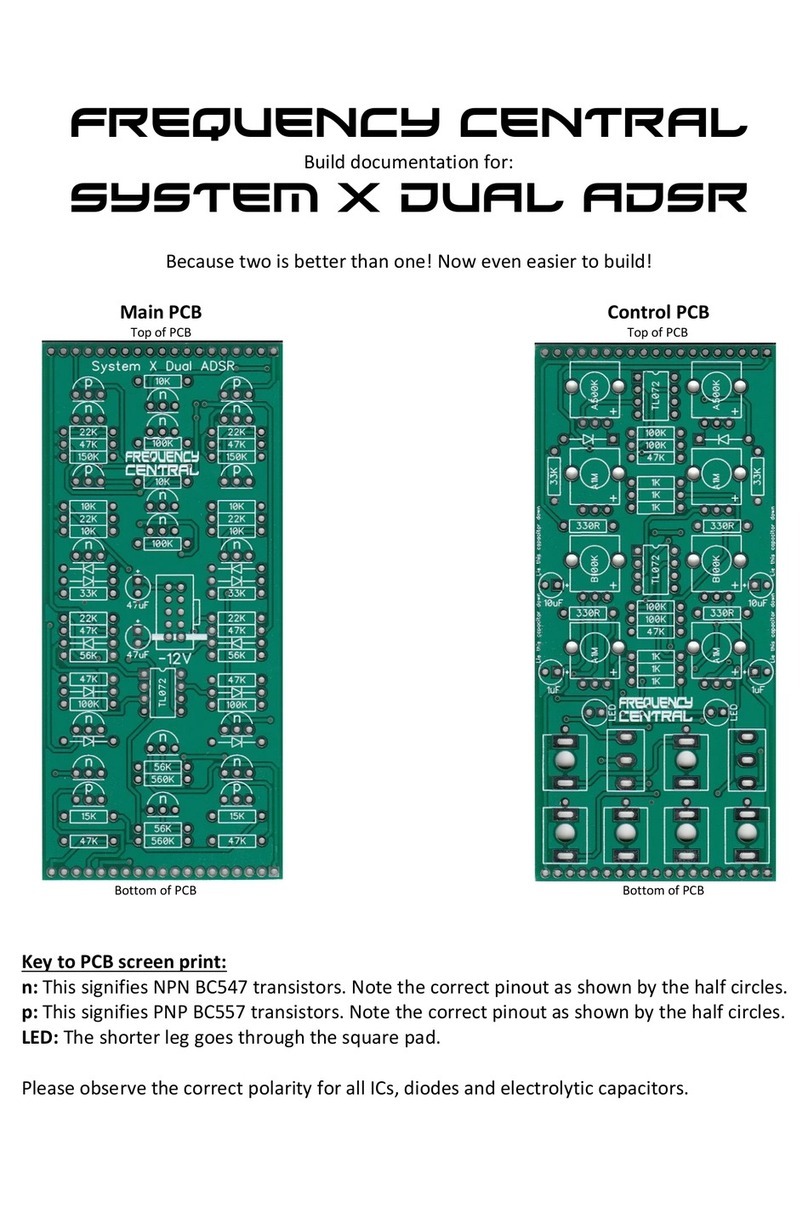
Frequency Central SYSTEM X DUAL ADSR Manual

Frequency Central

Frequency Central SYSTEM X DUAL ADSR Manual

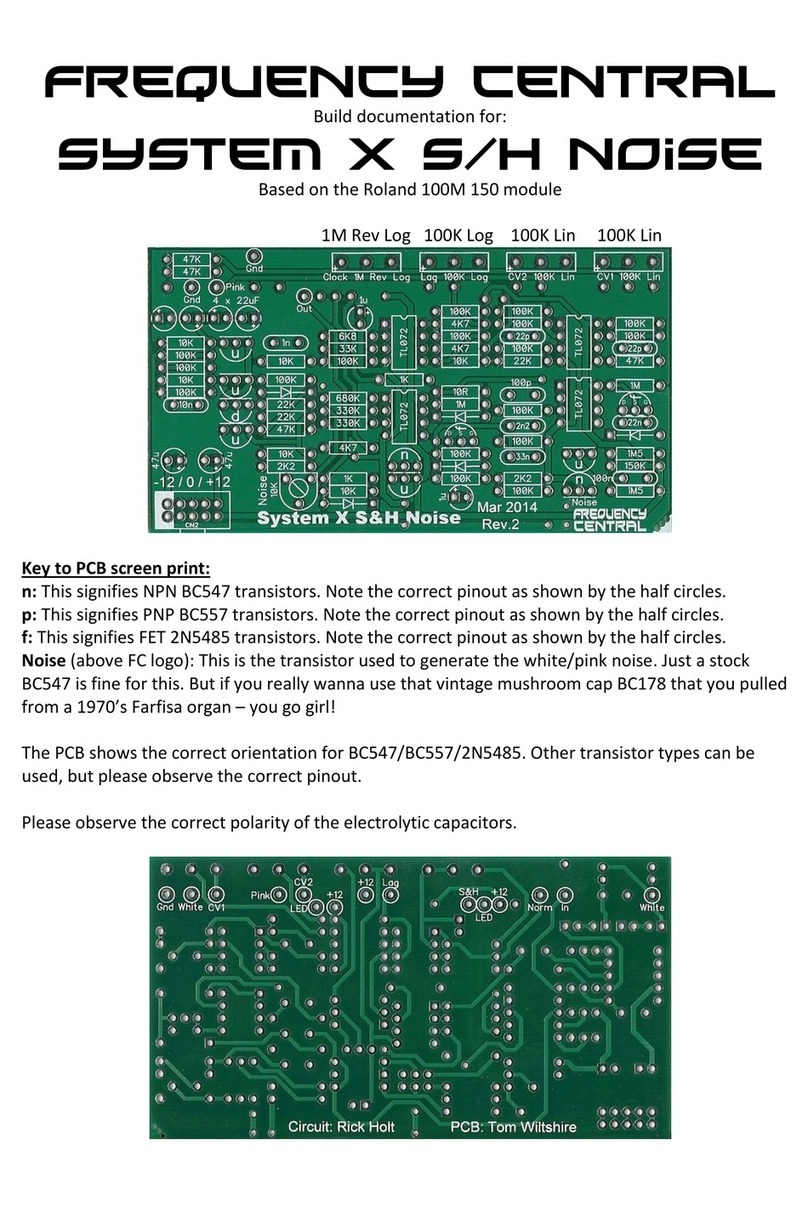
Frequency Central System X S/H Noise Manual

Frequency Central

Frequency Central System X S/H Noise Manual

Popular Music Pedal manuals by other brands

Walrus Audio ARP-87 instruction manual

Walrus Audio

Walrus Audio ARP-87 instruction manual

Ibanez Phaser Mini owner's manual

Ibanez

Ibanez Phaser Mini owner's manual

Ashdown GEEZER BUTLER PEDAL OF DOOM user guide

Ashdown

Ashdown GEEZER BUTLER PEDAL OF DOOM user guide

TC Electronic G-Natural user manual

TC Electronic

TC Electronic G-Natural user manual

Pro-MIDI G25 user manual

Pro-MIDI

Pro-MIDI G25 user manual

Whirlwind oc-bass quick start guide

Whirlwind

Whirlwind oc-bass quick start guide

Strymon Lex-rotary user manual

Strymon

Strymon Lex-rotary user manual

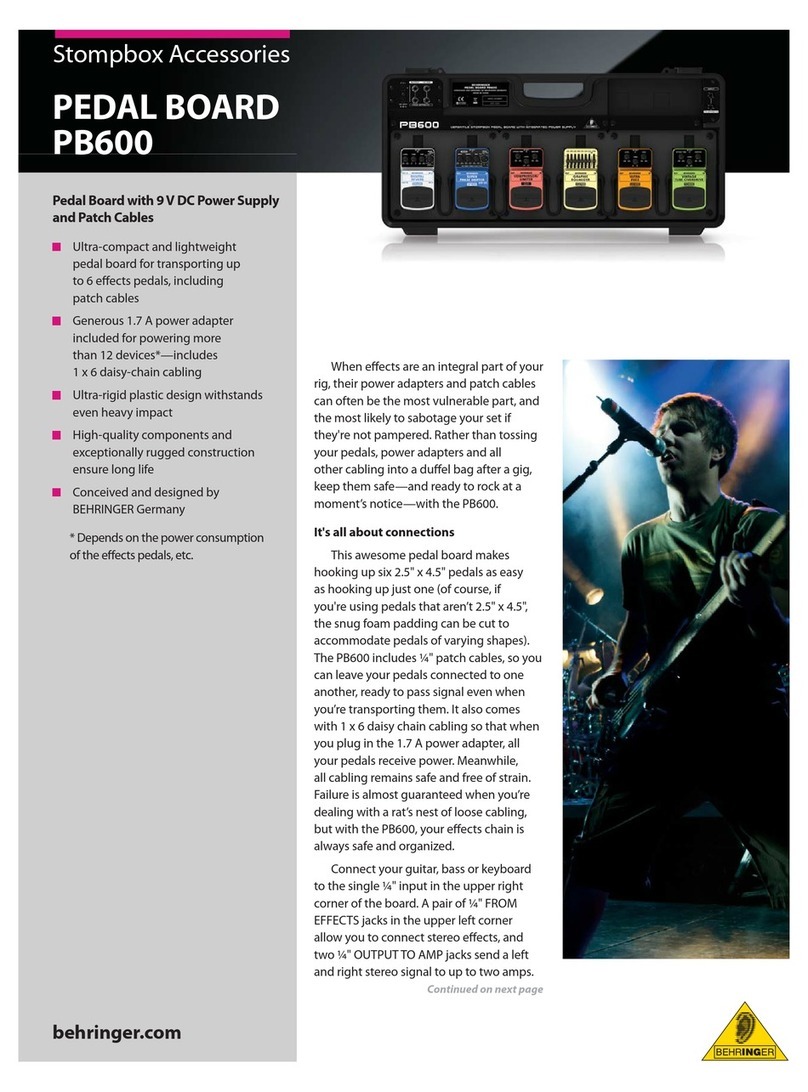
Behringer PB600 manual

Behringer

Behringer PB600 manual

Lexicon MX200 user guide

Lexicon

Lexicon MX200 user guide

Dunlop Hendrix 68 Shrine Octavio Fuzz Series quick start guide

Dunlop

Dunlop Hendrix 68 Shrine Octavio Fuzz Series quick start guide

Matthews Effects Whaler V2 manual

Matthews Effects

Matthews Effects Whaler V2 manual

Grid 1 Pedal Jeanie user manual

Grid 1

Grid 1 Pedal Jeanie user manual

Amptweaker tightboost user manual

Amptweaker

Amptweaker tightboost user manual

Ibanez TS-808 Tube Screamer Overdrive Pro owner's manual

Ibanez

Ibanez TS-808 Tube Screamer Overdrive Pro owner's manual

DW 7000 owner's manual

DW

DW 7000 owner's manual

FAMC Liquid-Foot Jr. Series user manual

FAMC

FAMC Liquid-Foot Jr. Series user manual

Dimavery EPVP-50 manual

Dimavery

Dimavery EPVP-50 manual

Tefi Vintage Lab GEGÈ operating manual

Tefi Vintage Lab

Tefi Vintage Lab GEGÈ operating manual

manuals.online logo
manuals.online logoBrands
  • About & Mission
  • Contact us
  • Privacy Policy
  • Terms and Conditions

Copyright 2025 Manuals.Online. All Rights Reserved.

Frequency central
Build documentation for:
Boom!!
Boom!! is an analogue drum voice with a broad range of applications.
The heart of the module is a VCO which is built around one half of a LM13700. The VCO has
a HIGH/LOW switch as well as a SWEEP control, which defines it’s response to the onboard
envelope.
The other half of the LM13700 has been carefully crafted into a release envelope generator,
which has a FAST/SLOW switch in addition to a RELEASE control. As a bonus, the input of the
envelope is velocity sensitive, allowing for a dynamic response.
Additionally, there is an envelope output, which can be used to drive external modules.
Main PCB Control PCB
Key to PCB screen print:
n: This signifies NPN BC547 transistors. Note the correct pinout as shown by the half circles.
p: This signifies PNP BC557 transistors. Note the correct pinout as shown by the half circles.
Please observe the correct polarity for all ICs, diodes and electrolytic capacitors.

100nF
LED
Use 2.2uF
Bill of Materials
You will notice that all of the components listed below are also hyperlinks to where I buy
each specific part from. You can also use the hyperlinks to find out more about what each
component looks like. If you want to know even more, Google is your friend.
1K x 2
4K7 x 2
10K x 6
12K x 1
22K x 1
100K x 1
All resistors ¼ watt
metal film.
1nF x 1
47nF x 1
100nF x 1
2.2uF (use instead of
1uF) x 1
10uF x 2
47uF x 2
LM13700 x 1
16 pin IC socket x 1
BC547 x 1
BC557 x 1
3mm red LED x 1
1N4148 x 4
Boom!! pcb set
Boom!! panel
B100K x 2 metal
shaft
SPDT toggle x 2
3.5mm socket x 3
Male header x 1
(cut to size)
Female header x 1
(cut to size)
Power header x 1
Knobs x 2
Main PCB assembly
1. Solder the diodes and all resistors. Watch the polarity of the diodes.
2. Solder the IC socket
3. Solder the non elecrolytic capacitor
4. Solder the BC557–watch the polarity!
5. Solder the box power header. Make sure the notch lines up with the screenprint
legend. If in doubt, have a look at a power cable, and make sure when inserted into
the header the red stripe lines up with the -12V screenprint.
6. Solder all electrolytic capacitors
7. Cut male headers to size and solder them into place. Make sure that they stick out of
the bottom of the PCB.
Control PCB assembly
1. Solder the resistors
2. Solder the BC547 –watch the polarity.
3. Solder the 2 x pots.
4. Solder the 2 x switches and 3 x sockets. Use the panel to ensure these line up nicely.
You can use cut off resistor legs to make the ground connections of the sockets.
5. Cut female headers to size and solder them into place. Make sure that they stick out
of the bottom of the PCB.
6. Solder the LED. Use the panel to ensure that these line up nicely
Bolt the pots, switches and the sockets to the panel using their nuts and washers. Looks nice
huh?
Calibration
1. There is nothing to calibrate on this module –cool!
2. Check it out now funk soul brother.
Troubleshooting
Not all DIY builds work first time. The vast majority of build issues are down to soldering
inconsistencies. This is far more likely than a bad IC, for example. The first step of successful
troubleshooting should always be to reflow all soldering to eliminate any dry joints (bad
connections) or solder bridges (short circuits). This is also an opportunity to closely inspect
your work –you might find some unsoldered pads, or an IC not inserted into its socket, for
example. Next steps are to double check all resistor values are correct, and to check
polarities of all diodes, transistors, ICs and electrolytic capacitors. This is not an exhaustive
troubleshooting guide, but should address 95% of build issues.
RDH 29/10/20
http://www.frequencycentral.co.uk/