manuals.online logo
Brands
  1. Home
  2. •
  3. Brands
  4. •
  5. Hotpoint
  6. •
  7. Dishwasher
  8. •
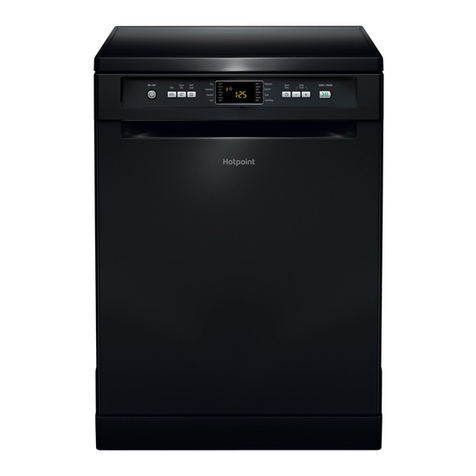
  9. Hotpoint HDA787K Installation instructions

Hotpoint HDA787K Installation instructions

This manual suits for next models

1

Other Hotpoint Dishwasher manuals

Hotpoint HDA2000ZAD Service manual

Hotpoint

Hotpoint HDA2000ZAD Service manual

Hotpoint HDA2100N User manual

Hotpoint

Hotpoint HDA2100N User manual

Hotpoint LFK 7M124 User manual

Hotpoint

Hotpoint LFK 7M124 User manual

Hotpoint LSF 7237 User manual

Hotpoint

Hotpoint LSF 7237 User manual

Hotpoint HDA750 Installation instructions

Hotpoint

Hotpoint HDA750 Installation instructions

Hotpoint DF55 Operating instructions

Hotpoint

Hotpoint DF55 Operating instructions

Hotpoint FDM 550 User manual

Hotpoint

Hotpoint FDM 550 User manual

Hotpoint LFT 2284 User manual

Hotpoint

Hotpoint LFT 2284 User manual

Hotpoint LSTB 6B00 User manual

Hotpoint

Hotpoint LSTB 6B00 User manual

Hotpoint 7850 User manual

Hotpoint

Hotpoint 7850 User manual

Hotpoint HDA 897 User manual

Hotpoint

Hotpoint HDA 897 User manual

Hotpoint H2I HD526 B UK Installation and operation manual

Hotpoint

Hotpoint H2I HD526 B UK Installation and operation manual

Hotpoint Aquarius DWF40 User manual

Hotpoint

Hotpoint Aquarius DWF40 User manual

Hotpoint Aquarius FDW60 User manual

Hotpoint

Hotpoint Aquarius FDW60 User manual

Hotpoint Potwasher HDA860 User manual

Hotpoint

Hotpoint Potwasher HDA860 User manual

Hotpoint Style FDYB 10011 User manual

Hotpoint

Hotpoint Style FDYB 10011 User manual

Hotpoint HDA787 Installation instructions

Hotpoint

Hotpoint HDA787 Installation instructions

Hotpoint HDA2100VBB User guide

Hotpoint

Hotpoint HDA2100VBB User guide

Hotpoint LSTB 4B00 User manual

Hotpoint

Hotpoint LSTB 4B00 User manual

Hotpoint HDA3500 User manual

Hotpoint

Hotpoint HDA3500 User manual

Hotpoint LSTB 6M19 User manual

Hotpoint

Hotpoint LSTB 6M19 User manual

Hotpoint HDA3600RWW - 24 in. Dishwasher User manual

Hotpoint

Hotpoint HDA3600RWW - 24 in. Dishwasher User manual

Hotpoint SIAL 11010 Aquarius User manual

Hotpoint

Hotpoint SIAL 11010 Aquarius User manual

Hotpoint PFT834 User manual

Hotpoint

Hotpoint PFT834 User manual

Popular Dishwasher manuals by other brands

Electrolux ESI5211LOX user manual

Electrolux

Electrolux ESI5211LOX user manual

KitchenAid KUDB230B Use and care guide

KitchenAid

KitchenAid KUDB230B Use and care guide

Brandt BDJ424DB instruction manual

Brandt

Brandt BDJ424DB instruction manual

Asko DSD767UXXL.AU user manual

Asko

Asko DSD767UXXL.AU user manual

Beko DFN26210W instruction manual

Beko

Beko DFN26210W instruction manual

NEFF S153ITX00E INFORMATION FOR USE

NEFF

NEFF S153ITX00E INFORMATION FOR USE

Midea SV 4.45 wi manual

Midea

Midea SV 4.45 wi manual

LG LDF7932 Specifications

LG

LG LDF7932 Specifications

Gorenje GV63214 instruction manual

Gorenje

Gorenje GV63214 instruction manual

Blomberg LDFN2240W instruction manual

Blomberg

Blomberg LDFN2240W instruction manual

AEG FFB83836PM user manual

AEG

AEG FFB83836PM user manual

Cylinda DM3220RFD user manual

Cylinda

Cylinda DM3220RFD user manual

Atag DW8214MB manual

Atag

Atag DW8214MB manual

GE GLD8000 Series owner's manual

GE

GE GLD8000 Series owner's manual

Siemens SN23HI02KE INFORMATION FOR USE

Siemens

Siemens SN23HI02KE INFORMATION FOR USE

Omega ODW717X instruction manual

Omega

Omega ODW717X instruction manual

BORETTI BVW-683 operating instructions

BORETTI

BORETTI BVW-683 operating instructions

Siemens SN 56N591 operating instructions

Siemens

Siemens SN 56N591 operating instructions

manuals.online logo
manuals.online logoBrands
  • About & Mission
  • Contact us
  • Privacy Policy
  • Terms and Conditions

Copyright 2025 Manuals.Online. All Rights Reserved.

o
0
0
ConknW
Air Gap
11
ADDlianCe
Registration
2
Care and Cleaning
11
China, Crystal,
S;erling
10
Cycle Features 4
Detergent, Detergent Guide 6, 7
Dispenser Cups
7
Door Latch
4
Energy-Saving Tips
2
Front Panel Color Change
11
Loading
8,9
Model and Serial Numbers
2
Operating Guide
4,5
Cycle Selection
5
Drying Options 4
Soil Level
7
Plate Warmer
5
Problem Solver
12-14
Repair Service
15
Rinse Agent
6
Safety Instructions
3
User Maintenance Instructions 11
Warranty Back Cover
Water Temperature
6
Winter Storage
11
GE Answer
Center@
800.626.2000
Use
and
built-in
———
Care of
models
HUA787K
HDA797K
All manuals and user guides at all-guides.com
all-guides.com
Help us
help you...
Before
usingyourdishwasher,
Write downthe model and
read this book carefully.
serial numbers.
It is intended to help you operate
and maintain your new dishwasher
properly.
Keep it handy for answers to your
questions.
If you don’t understand something
or need more help, write (include
your phone number):
Consumer Affairs
Hotpoint
Appliance Park
Louisville, KY 40225
You’ll find them on a label just
inside the dishwasher door.
These numbers are also on the
Consumer Product Ownership
Registration Card that comes with
your dishwasher. Before sending
in this card, please write these
numbers here:
Model Number
Serial Number
Use these numbers in any
correspondence or service calls
concerning your dishwasher.
If you received
a damaged dishwasher...
Immediately contact the dealer (or
builder) that sold you the dishwasher.
Save time and money.
Before you
cdl
for service...
Ene~y-saving
~ps
The power consumption of your
dishwasher can be minimized if
you follow these suggestions:
● Operate dishwasher only when
full.
Let dishes accumulate in
dishwasher. When you put in a
partial load, use RINSE HOLD
cycle to rinse off heavy soils. Be
sure to latch door when waiting for
full load. This helps keep soils
moist, easier to remove.
● Select cycle that uses least
amount of water to remove soil
from load. See
pages 4 and 5.
●
If you don’t need your dishes
right away,
use your Drying Heat
OFF feature
that turns the drying
heater off automatically and saves
energy. Dishes dry naturally over a
longer period such as overnight.
Check the Problem Solver (pages
12-14). It lists causes of minor
operating problems that you can
correct yourself.
2
All manuals and user guides at all-guides.com
W~G–When
using this
appliance, always exercise basic
safety precautions, including the
following:
●
Use this
apptiance
only
for
its
intended purpose, as you
wi~
find described in this Use
and Care Book.
●
This dishwasher must be
properly
insta~ed
and located
in
accortice
with the
InsWation
btructions
before
it is used.
If you did not receive
an Installation Instructions sheet
with your dishwasher, you can
obtain one by contacting the
service location nearest you.
–This appliance must be
connected to a grounded
meti,
permanent wiring system; or an
equipment-grounding conductor
must be run with the circuit
conductors and connected to the
equipment-grounding
terrnind
or lead of the appliance.
—Connect to a properly rated,
protected and
stied
power-supply
circuit to avoid electrical overload.
●
Use
ody
powder or liquid
detergents or wetting agents
recommended for use in a
dishwasher.
.
DO
not
wash
plastic items
urdess
marked “dishwasher safe” or the
~uitient.
For plastic items not so
marked,
check
the
manuhcturer’s
recommendations.
●
Load light plastic items so
they will not become dislodged
and drop to the bottom of the
dishwasher-they might come
into contact with the heating
unit and be damaged.
To
minimim
the possibility of
injury.
Q
When loading items to be
washed:
A.
kate
sharp items so that
they are not likely to damage
the door seal, and
B. Load sharp knives with the
handles up to reduce the risk
of cut-type injuries.
.
D
O
not touch the
heating
element during or immediately
atir
use.
. Do not operate your dishwasher
udess
all enclosure panels are
properly in place.
●
DO
not
tamper with
cOntrOls.
●
Do not abuse, sit on, or stand
on the door or dish rack of the
dishwasher.
●
Close supervision is necessary
if this appliance is used by or near
children. Do not allow children
to play inside, on or with this
appliance or any discarded
appliance. Dispose of discarded
appliances and shipping or
packing material properly.
Before discarding a dishwasher,
remove the door of the washing
compartment.
3
●
Keep
dl
washing detergents
and wetting agents out of the
reach of
cMdren,
preferably in
a locked cabinet. Observe
dl
warnings on container labels to
avoid personal injury.
●
~ROGEN
GM is
produced by the chemical action
within your water heater. It
can
accumulate in the water heater
and/or water pipes if hot water
has not been
usti
for a period of
two winks or longer.
H~ROGEN
GAS IS EXPLOSIVE. To prevent
the possibility of damage or
injury, if you have not used hot
water for two weeks or more, or
move into a residence in which
the hot water system may not
have been
usd
for some time,
turn on
dl
hot water faucets and
allow them to run for several
minutes before using any
electrical appliance which is
connected to the hot water
system. This will allow any
hydrogen gas to escape. Also,
since the gas is flammable, do
not smoke or use an open flame
or appliance during this process.
SAW
T~SE
mSTRUCTIONS
All manuals and user guides at all-guides.com
How to operate your dishwasher
Door Latch
Cycle
Indicator Dial
(Loqked)
- (Turn:0 Start)
I
Imm
STEP 1.
Load your dishwasher
with dishes, silverware, pots,
pans, bowls, etc. according to
instructions on pages 8 and 9.
STEP 2. Add detergent to the
detergent dispenser. Make sure
the Cycle Indicator Dial is at OFF
position before adding detergent.
(See pages 6 and 7.)
Use rinse aid agent to help prevent
spotting. (See page 6.)
STEP 3.
Select DRYING HEAT
option. It must be ON for PLATE
WARMER cycle, OFF for
NNSE
HOLD cycle. It can be ON or OFF,
at your option (see below), for any
of the wash cycles.
DRYINGHEAT
ON
OFF
m
~~~>
ON. Turns the drying heater on for
fast drying.
OFF. Turns the drying heater off
to save energy. Dishes will dry
naturally over a longer period
such as overnight.
If you need your dishes sooner,
open the dishwasher door after the
cycle is complete to reduce the
natural drying time.
Use of this option reduces the
electrical energy used by this
model approximately 10% for
the NORMAL WASH cycle.
STEP 4.
Select the cycle and start
the dishwasher.
If your dishwasher drains into a
food waste disposer, operate the
disposer until it is empty before
starting the dishwasher. (See Cycle
Selection Hints at right.)
To obtain the benefits of a complete
cycle, be careful that you
do not
turn the dial any further than
necessary
to start the dishwasher.
c
For
Pm
& PANS and
NORMAL WASH cycle:
POTS
NORMAL
&
PANS
WASH
a. Push selected cycle button.
b. Latch the door.
LIGHTwASH ■
GN
■
~@
MF
■
s
. RINSE
:;;N~
HOLO
“,,,=
PLATEWARMER
■
SELEm
DMDNO”EATW
c. Slowly turn Cycle Indicator Dial
to ON position to start the cycle.
●
For LIGHT WASH cycle:
a. Be sure door is unlatched.
b. Push NORMAL WASH cycle
button.
I
c.
Slowlv
turn
Cvcle
Indicator Dial
c. Slowly turn Cycle Indicator Dial
to LIGHT WASH position.
d. Latch door to start the cycle.
● For RINSE HOLD cycle:
a. Be sure door is unlatched.
b. Select DRYING HEAT-OFF
to RINSE HOLD position.
d. Latch the door to start the cycle.
4
All manuals and user guides at all-guides.com
● For PLATE
WA~ER
cycle:
a. Load clean plates and dishes to
be warmed.
b. Select DRYING HEAT–ON
drying option.
c.
Uave
the door unlatched.
LIGHT WASH
■
ON
■
OFF
■
@
●
. RINSE
::;;.:
HOLO
HEATW
PLATEWARMER
■ SCLE~DRYIN. HEAT%
d.
e.
Slowly turn Cycle Indicator Dial
clockwise to PLATE WARMER
position.
Latch the door to start the cycle.
Cycle selection
hink
It is important to follow the loading
instructions on pages 8 and
9.
P~S
& PANS—For items such as
pots, pans, cookware, dishes and
glasses with heavy soil. Everyday
dishes may be included.
NORMAL WASH—For most
loads of everyday dishes, glasses
and cookware
with
medium soils.
LIGHT WASH—For dishes
that have been pre-rinsed before
loading. Also, for washing very
lightly
soiled dishes with soils
that have not dried on.
WNSE HOLD–For rinsing
partial loads which will be washed
later. Select DRYING HEAT–
OFF drying option. Do not use
detergent.
PLATE WARMER—For warming
clean dishes and serving plates for
the serving of hot food.
What happens in each cycle
=
POTS&
PANS
12.6
NOMAL
WASH
10.7
LIGHT WASH
7.1
RINSE HOLD 3.6
Minimum
Wash
Dycle
Time
(approx.
minutes) Cycle Sequence
‘5*
wmmBmaE
55*
WWWWWE
43*
HEEE
11
Rinse
I
I
Rinse
1,
——,
● You’ll hear occasional clicking ● During the drying period:
sounds: —The motor stops.
—Soft food disposer shredding
–Water vapor is released through
action. the vent under the door handle.
—Drain valve opening to pump
It maybe visible.
water out.
—Timer control as cycle
progresses.
—Detergent cup opening.
*DRYING HEAT—ON:
Add
29minutes.
5
All manuals and user guides at all-guides.com
God
dishwashing
starts
showers, give your water heater
with
H~
water.
time to recover before operating the
To get dishes clean and dry, you
need hot
wdter,
To help you get water
of the proper temperature, your
dishwasher automatically heats the
water in the wash cycle. For good
washing and drying, the entering
water must be at least 120°F. To
prevent dish damage, inlet water
should not exceed
150°F.
How to test water temperature:
Check the water temperature
inside your dishwasher with a
candy or meat thermometer.
Let the dishwasher run through
one
fill
and pump out cycle, then
let the dishwasher fill with water
the second time.
When you hear the water stop
filling, unlatch the door and slowly
open it.
Measure the temperature of the
water in the bottom of the tub this
way:
Remove the silverware basket and
place a candy or meat thermometer
in the water towards the middle of
the tub. If the temperature is less
than 120°F, you
will
not get good
washing results. Higher water
temperature is needed to dissolve
grease and activate powder
detergents.
Helpful hints:
If outside
temperatures are unusually low, or
if your water travels a long distance
from water heater to dishwasher,
you may need to set your water
heater’s thermostat up. If you have
not used hot water for some time,
the water in the pipes will be cold.
Turn on the hot water faucet at the
sink and allow it to run until the
water is hot. Then start the
dishwasher. If you’ve recently done
laundry or run hot water for
dishwasher,
To improve washability if the water
is less than 120°F and you cannot
adjust your water heater: Select a
longer
cycle
and fill both detergent
cup;
at least half-full with dete;gent.
Help prevent spotting
with a rinse agent.
A rinse agent makes water flow off
dishes quicker than usual. This
lessens water spotting and makes
drying faster, too.
For best
dishwashing
performance, use of a rinse
agent such as JET-DRY brand is
recommended.
Rinse agents come in either liquid
or
solid
form. Your dishwasher
uses the solid form.
If you can’t find any rinse agent,
write:
BENCKISER CONSUMER
PRODU~S,
INC.
(“JET DRY”)
1210 W County Road E.
Arden
Hills, MN 55112
How to choose and use
the right detergent.
First, use only powder or liquid
detergent specifically made for
use in dishwashers. Other types
will cause
oversudsing.
Second, check the phosphate
content.
Phosphate helps prevent
hard-water materials from forming
spots or film on your dishes. If
your water is hard (7 grains or
more), your detergent has to work
harder. Detergents with a higher
phosphate
level
will probably work
better. If the phosphate content is
low (8.7% or less), you’ll have to
use extra detergent with hard water.
Your water department can tell
you how hard your water is. So
can your county extension agent.
Or your area’s water softener
company. Just call and ask them
how many “grains” of hardness is
in your water.
How much detergent should you
use?
That depends. Is your water
“hard” or “soft”? With hard water,
you need extra detergent to get
dishes clean. With soft water, you
need less detergent.
Too much detergent with soft water
not only wastes money, it can be
harmful.
It
can cause a permanent
cloudiness of glassware, called
“etching:’ An outside layer of glass
is etched away! But why take a
chance when it’s easy to find out
the hardness of your water.
Keep your detergent fresh and
dry.
Under the sink isn’t a good
place to store detergent. Too much
moisture. Don’t put powder
detergent into the dispenser until
you’re ready to wash dishes, either.
(It won’t be fresh OR dry.)
If your powder detergent gets old
or lumpy, throw it away.
It
won’t
wash well. Old detergent often won’t
dissolve.
If you use a
liquid
dishwasher
detergent, these precautions are not
necessary because liquid detergents
don’t “lump” as they age or come
in contact with water.
6

All manuals and user guides at all-guides.com
all-guides.com
You’ll find two detergent
dispensers on the inside door of
your dishwasher.
Two, because
some cycles use two washes.
I
I
See “Detergent Usage Guide”
below. (Be sure the Cycle Indicator
Dial is at
OFFposition
before
adding detergent. Otherwise, the
detergent cup will not close and
latch properly.)
How to prepare the
dishes for washing
If this is your first dishwasher, or
if you’re replacing a much older
model, you may wonder how much
pre-preparation your dishes need.
Actually very little. Pre-rinsing of
normal food soils is not necessary.
With common sense and a little
practice you’ll soon know what
foods to remove. Here are some
guidelines:
1.
Scrape off bones, seeds, skins,
toothpicks and other hard solids. It
is also best to remove hard shelled
vegetables, meat trimmings, leafy
vegetables and crusts. Remove
excessive quantities of oil or
grease.
2. Remove large quantities of any
food.
Your dishwasher has a built-in
soft food disposer that pulverizes
soft food bits and flushes them away.
It can handle
small
amounts of
soft foods,
but
large amounts will
be difficult to handle.
3.
Try to remove food scraps and
place dishes in dishwasher before
soil has a chance to dry and become
hard. Dishes with dried-on soil are
more difficult to wash and may
not come clean in the NORMAL
WASH cycle. Remember to use
your RINSE HOLD cycle for small
“holding” loads.
Note:
The foods mentioned above
are for examples only. Other foods
not mentioned may also need to be
removed from your dishes. You
may also want to consider removing
foods such as mustard, mayonnaise,
vinegar, lemon juice and other foods
that can cause discoloration of
stainless steel if allowed to remain
on dishes for a long period of time.
When using the
Pm&
PANS
cycle,
less preparation is required
before loading. The
P~S
& PANS
cycle can wash heavily-soiled
dishes. Items with burned-on and
baked-on soils may not come
clean. And the dishwasher cannot
remove burn marks or restore
fading caused by overheating
during cooking.
Close the main cup.
N~E:
Detergent cup maybe
opened manually with no harm.
Dete~ent
Usage
Guide
(powder or liquid)
SOFT WATER MEDIUM WATER HARD WATER
(O-3
grains hardness)
(3-7
grains)
(7-12 grains*)
~CLES
Main Cup
I
Open Cup
Main Cup
I
Open Cup Main
Cup$
]
Open
Cup+
POTS
&
PANS and
1
Tablespoon
+
1 Tablespoon
Half Full
NORMAL WASH cycles
+
Half Full
Completely
minimum minimum
j
Completely
Full
Full
LIGHT WASH cycle
1
Tablespoon
None Half Full None
~;l~pletely
None
minimum
RINSE HOLD cycle
Use
no detergent
Use
nodetergent
Use no
detergent
*12
grains and up is extremely hard water. A water softener is recommended. Without it,
lime can build up in the water valve. The water valve may stick while open and cause flooding.
*Filled Main Cup holds 3 tablespoons; Filled Open Cup holds 2 tablespoons.
7
All manuals and user guides at all-guides.com
How to load your
dkhwasher
fiis
is a random mixed load, the most common tvve
.
.
.
will have.
Make sure dishes are properly loaded to insure that
water can reach the soiled surfaces. The wash arm in the
bottom sprays water up. The tower that rises in the
center sends water out over the dishes to wash the items
in the upper rack.
WAXH
OmFOR
THIS.
The wash tower rises through the center of the bottom
rack during the wash and rinse portions of the cycle.
Don’t block it or load tall things next to it. Also, be
careful not to let portions of items such as knives,
skewers or pot handles extend through the bottom rack
or the silverware basket.
How to load the
~PMCK
The top rack is best for glasses, cups and saucers. Cups
and glasses
fit
best along the sides. This is the place for
dishwasher-safe plastics, too. Make sure small plastic
items are lodged in tightly so they can’t fall onto the
Calrod@
heating unit.
Sauce pans, mixing bowls and other small items may be
placed—face down—in the top rack. The top rack is
handy for all kinds of odd shapes. Be sure the force of
water and detergent can reach soiled surfaces.
8
All manuals and user guides at all-guides.com
How to load the BOTTOM
WCK
Fit plates and saucers between the pins. Load platters,
pots and bowls along the sides, in corners or in the
back.
Heavily soiled pots, pans and casseroles MUST be
loaded in the bottom rack, facing down. Prop broiler
pans
and racks
along
the
edge.
Shallow items may be
;ngled
provided the-lower
s;de
does not shield the soiled
surface inside from the water.
Put flatware in the removable silverware basket with
handles up to protect your hands. Mix knives, forks and
spoons so they don’t nest together. Distribute evenly.
Small plastic items, such as measuring spoons and lids
from small containers, are not recommended for
automatic dishwashing. If placed in the dishwasher, they
should go in the bottom of the silverware basket with the
silverware on top.
9
Take out anything that might fall or extend through the
bottom of the silverware basket.
All manuals and user guides at all-guides.com
What you can usually wash safely in your dishwasher.
And what you can’t.
Usually
Material Safe Exceptions (not safe) Special Instructions
Aluminum
YES
Some colored anodind
Some darkening or spotting possible. Remove by
aluminum can fade. scouring with soap-filled steel wool pads.
China/
YES
Antique, metal-trimmed,
If in doubt, check with the manufacturer. Or test wash
Stoneware
hand-painted or over-the-glaze
one piece daily for at least a month. Compare with the
patterns fade. rest of the set.
Gold
leaf will discolor.
Crystal
YES
Antique, metal-trimmed or
Load securely to prevent movement.
hand-painted patterns fade. Check manufacturer’s instructions for your crystal.
Gold leaf will discolor.
Nondishware
NO
Do not wash in dishwasher. Damage to dishwasher
items-such
and discoloration or staining of dishwasher may result.
as
electronic
air cleaner
filters, furnace
filters,
paint
brushes,
ete.
Glass
YES Milk Glass may yellow.
Iron
NO
Iron will rust.
Pewter NO
Pewter tarnishes.
Plastics
YES If it doesn’t say DISHWASHER SAFE, test one piece
before
dishwashing
an entire set. Wash in top rack only.
Stainl=
steel
YES Rinse if not washing immediately. Salty or acid foods
can stain if
left
on.
Sterling
Silver
YES Don’t put in same silverware Rinse if not washing immediately. Salty or acid foods can
and Silver
basket with stainless
steel.
stain if left on. Dry detergent can cause difficult-to-remove
plate
Contact between
metals
can
black spots. Place in back section of silverware basket to
damage silver. avoid exposure to detergent from
the
detergent cup.
Don’t use copper utensils in
the same load. Silver may get a
brown
film.
Adhesive used to attach some
hollow-handle knives can
lmsen.
Non-stick
YES After washing, wipe the non-stick coating area with
coatings
vegetable oil to keep it from losing its non-stick quality.
~n
NO
Tin can rust.
Wood NO
Wood can warp, crack or lose
its finish with any type washing.
Fo~et
a dish? Here’s when
However, opening the door during 2. Wait a few seconds until the
you can add it.
any cycle lessens cleaning power. water calms. Then open the door.
Add dishes any time during the So try to load everything at the 3. Add dishes you’ve forgotten.
RINSE HOLD cycle. With other
beginning.
4. Close the door and push the
wash cycles, you can add dishes Here’s how to add a forgotten dish: latch to the far right. When the
at any time BEFORE the main 1. Push the door latch to the left. door is locked, washing will
detergent wash portion of the cycle.
Washing will stop.
continue.
10
All manuals and user guides at all-guides.com