WARNINGS!
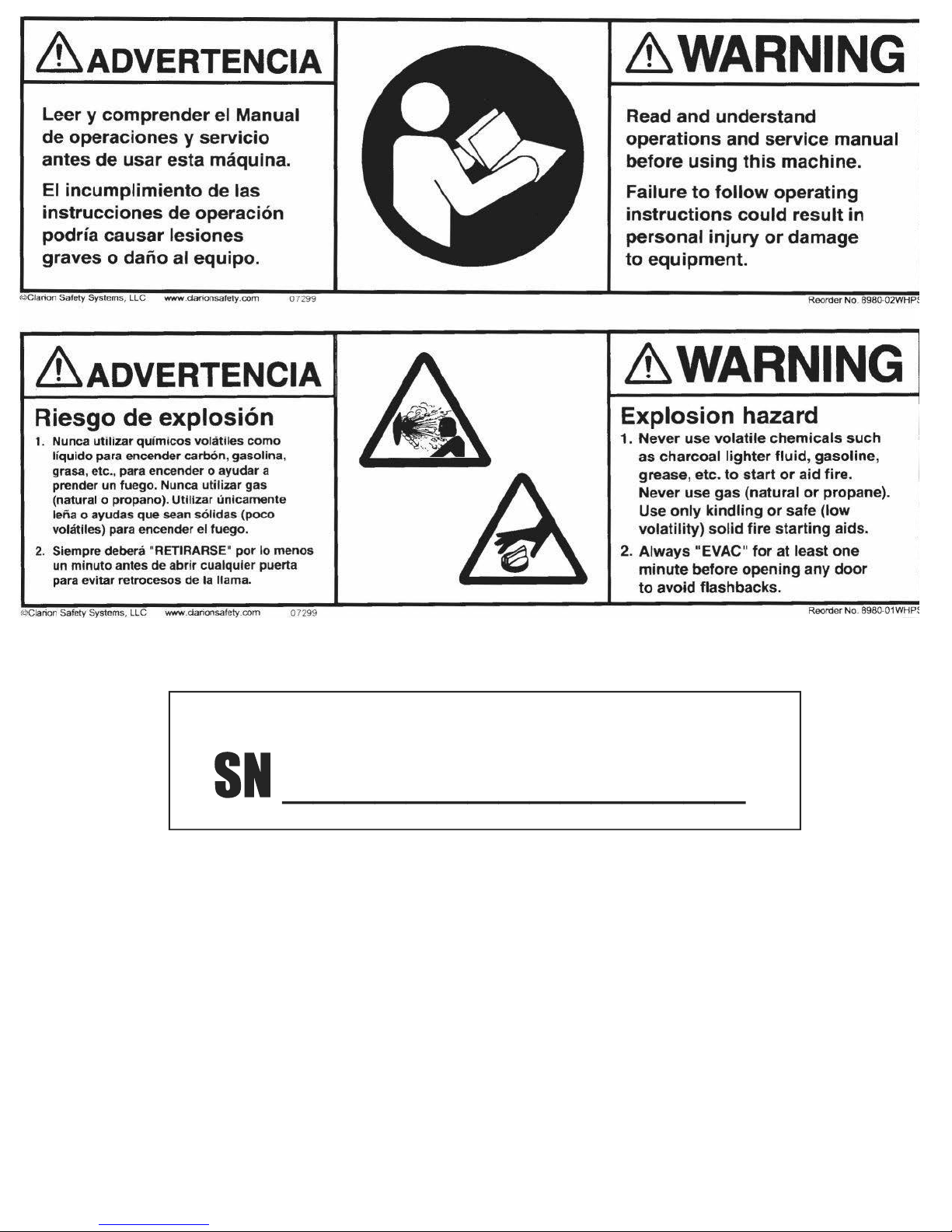
DANGER-Risk of Fire or Explosion
Do not burn garbage, gasoline, drain oil or other flammable liquids
Dedicated flue
If this unit is to be directly vented (no exhaust hood) do not connect to a flue serving
another appliance.
CAUTION-Hot Surfaces
Keep children away.
Do not touch during operation.
WARNING-Risk of Fire
Do not operate with flue draft exceeding 0.03 in. water column.
Do not operate fuel loading or ash removal doors open.
Do not store fuel or other combustible material within marked installationclearan
ces.
Inspect and clean flues and chimney regularly
If the oven temperature reaches 450 degrees F, a high limit thermostat will
temporarily interrupt the temperature control function (it will
automatic
ally resume
when it cools down). If this occurs (or if the indicating thermostat shows an
abnormally high temperature) and the front doors feel excessively hot, DO NOT
OPEN THE DOORS,
as there may be a grease fire inside. Open the doors only
after it
cools down.
Contact your supervisor (if applicable) while continuing to
observe the pit. If you observe any flames, or perceive any fire threat,
immediately contact the local fire department.
Disposal of Ashes
Ashes should be placed in a metal container with a tight-fitting lid. J&R offers ash
carts suitable for this purpose. The closed container of ashes should be placed on
a noncombustible floor or on the ground, well away from all combustible materials,
pending final disposal. If the ashes are disposed of by burial in soil or otherwise
locally dispersed, they should be retained in the closed container until all cinders
have thoroughly cooled.
Creosote – Formation and Need for Removal –
When wood is burned slowly, it produces tar and other organic vapors, which
combine with expelled moisture to form creosote. The creosote vapors condense
in the relatively cool chimney flue of a slow-burning fire. As a result, creosote
residue accumulates on the flue lining. When ignited this creosote makes an
extremely hot fire. The chimney connector and chimney should be inspected at
least twice monthly to determine if a creosote buildup has occurred. If creosote
has accumulated it should be removed to reduce the risk of a chimney fire.