CREOSOTE AND NEED FOR REMOVAL
When wood is burned slowly, it produces tar and other organic vapors, which combine with expelled
moisture to form creosote. The creosote vapors condense in the relatively cool chimney flue of a slow-
burning fire. As a result, creosote residues accumulate on the flue liner. When ignited, this creosote
makes an extremely hot fire. The chimney connector and chimney should be inspected at least every 2
months during the heating season to determine if a creosote buildup has occurred. If creosote has
accumulated, it should be removed to reduce the risk of a chimney fire.
ASHES
Before adding more wood, you should rake the ashes with the poker to break up any clods and cause
the fire ashes to sift down into the ash pan. Always allow a couple inches of ashes to remain on the
grate. This will result in better efficiency and finer, more cleanly burned-up ashes.
Ashes should be placed in a metal container with a tight-fitting lid. The closed container of ashes
should be placed on a non-combustible floor or on the ground well away from all combustible materials
pending final disposal. If ashes are disposed of by burial in the soil, or otherwise locally disposed of,
they should be retained in the closed container until all cinders have thoroughly cooled.
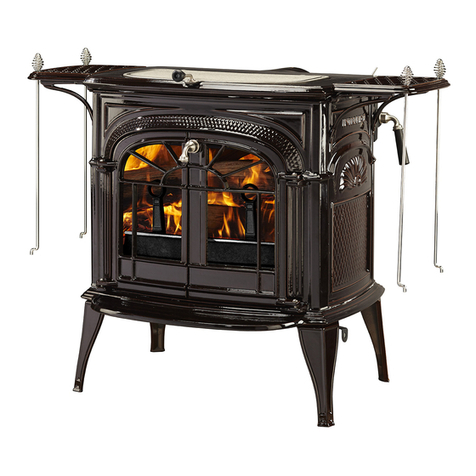
MAINTENANCE OF YOUR STOVE
Clean the top daily. You may use soap and water for initial cleaning.
Follow up with emery cloth to maintain a smooth, glossy finish. The top will blue and
finally turn black, which is normal. If it is properly cared for, it will remain smooth
and shiny.
When the stove is not in use for more than a couple of days, coat with a light oil to
prevent rust. It will rust if left uncoated when the stove is cold.
The porcelain is easily cleaned with soap and water.
DO NOT CLEAN THE PORCELAIN WITH OVEN CLEANER; IT
WILL RUIN THE FINISH.
Save These Instructions
Keep the manual available for future reference. The manual is an important part of your
stove. If your stove is sold, deliver the manual to the new owner along with the stove.
The quality of the installation (especially the chimney connector and chimney), and the
quality of the fuel being burned will affect the performance of your stove, but the most
important factor is the way you operate the stove. Be sure to read it entirely, including
the terms of reference and function.
Page 6