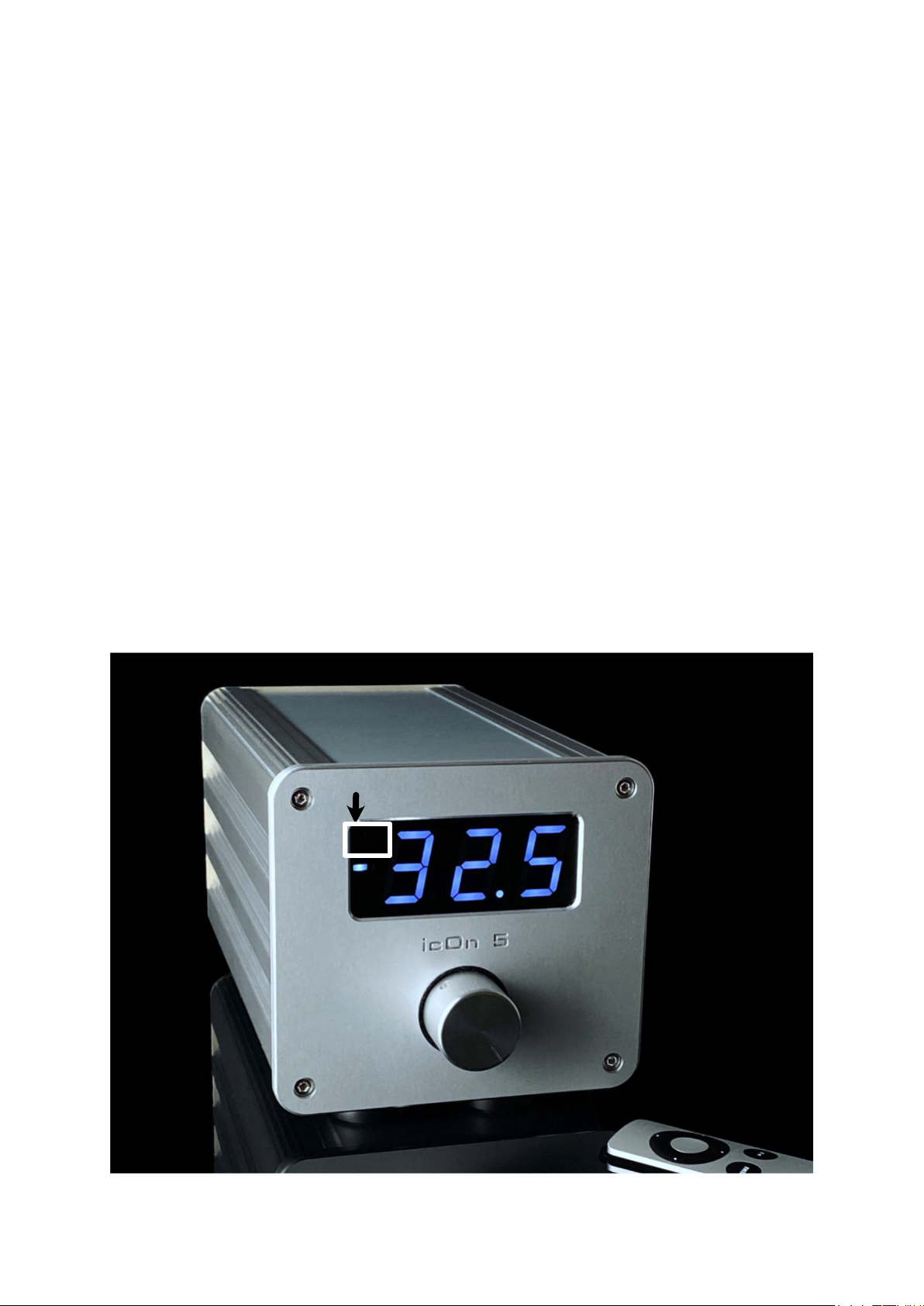
Volume: turn the Volume up with the button on top (1) and turn down with
the button on bottom (2).
Changing the Inputs: Inputs can be changed with the left and right
buttons (3) if Balance or Tilt adjustment is not active. If Balance or Tilt
adjustments are active to go back to normal listening mode push the Menu
button again once or twice.
Changing the Outputs: Press the PLAY/PAUSE (4) button on the remote
to mute the music. In the muted state pressing the volume up button the
active output is changing and the number of the actual active output is
displayed on the right of the display. On the left you can see the active
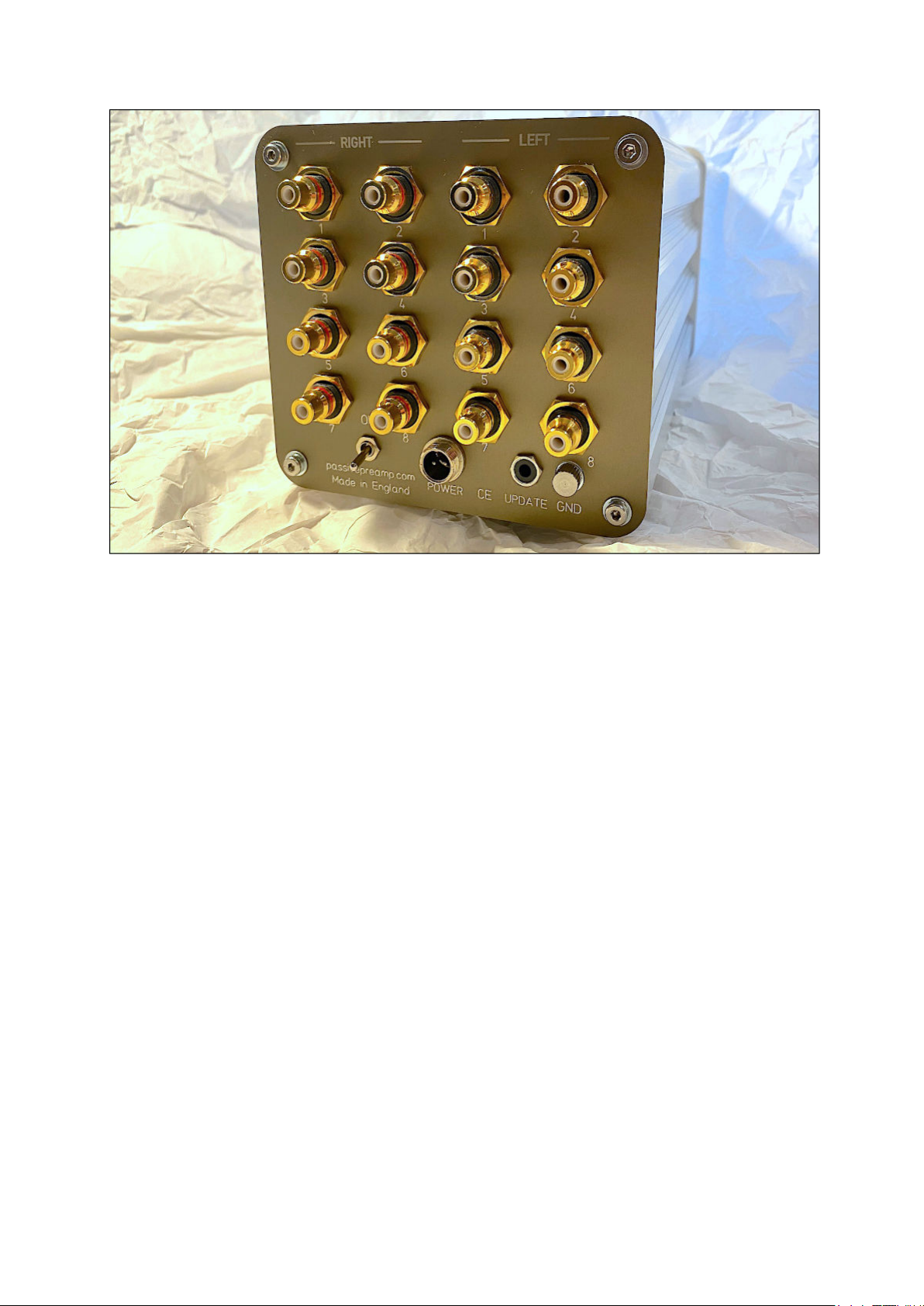
input number. The output numbers show the engraved numbers above the
RCA sockets. The output 9 indicates when all outputs are active. You can
go back to music listening with the chosen output(s) with pressing again
PLAY/PAUSE (4) button.
Adjusting the Tilt: Start with pushing the Menu button (6) once. On the
display a “t”, the number of 0.5 dB tilt steps and a dash will appear,
showing the state of the tilt. When the number is 0 and the dash appears
in the middle the tilt function is defeated and it’s circuit is out from the
signal path. The dash in the top position will indicate slight treble increase
and bass decrease. Adjust the Tilt (in range +/- 4 steps) with the left and
right (3) buttons. When you push the left button the level of the bass is
increasing and the treble decreasing, for the right button the opposite. To
go back to the normal listening mode you should press the Menu button
twice. One push leads to the Balance adjustment mode.
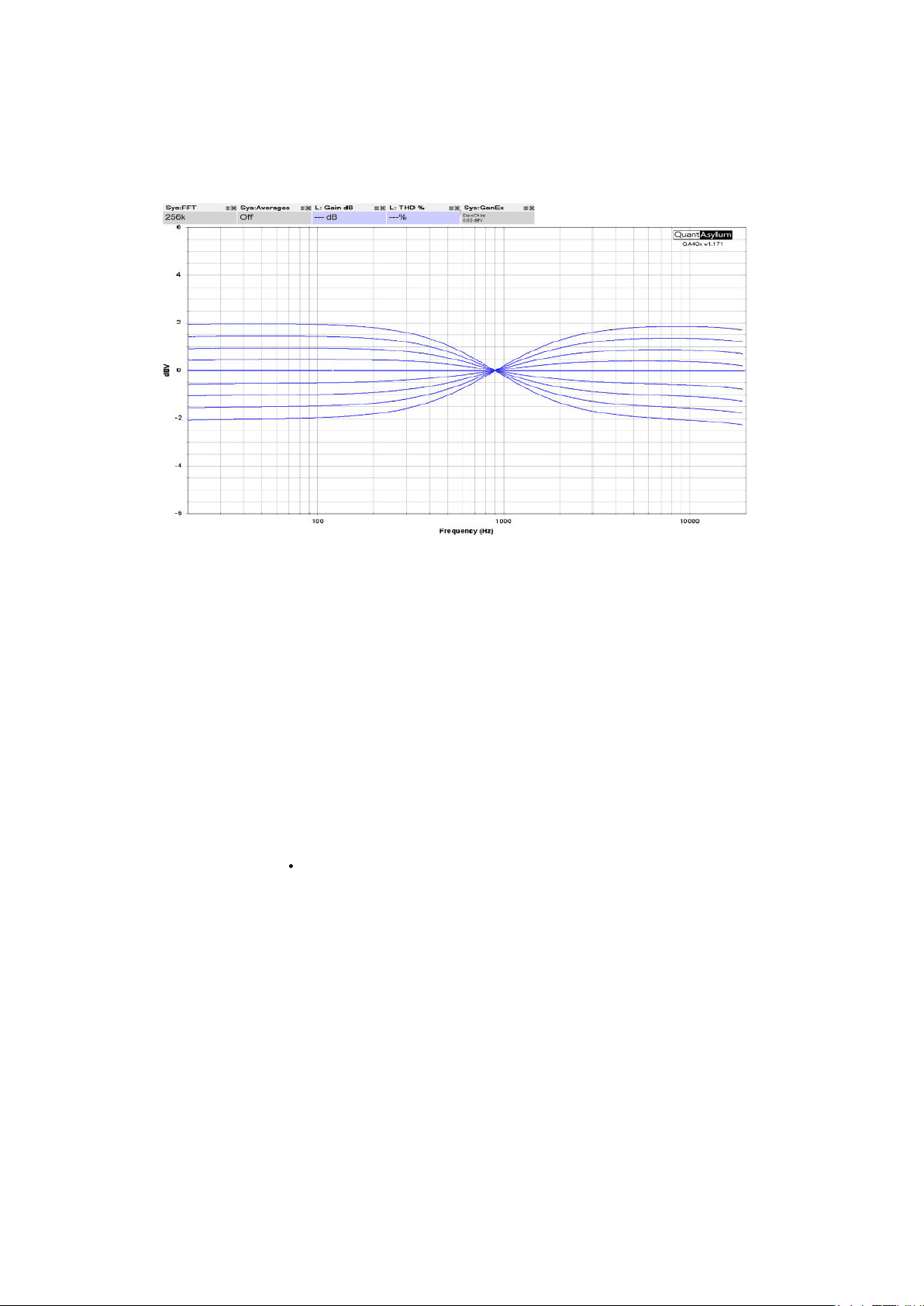
“The tilt control operates exactly as its name implies and produces a very
gradual change in balance across the musical spectrum without changing
the overall subjective level. When set for 1 with lower dash there will be a
gradual fall of only 1 dB from bass to treble with the maximum rate of
change in the centre (900Hz) of no more than ¼ dB per octave. This
absence of any sudden change means that there won’t be ‘colouration’
added to the sound. The sound will remain entirely natural but with a slight
added ‘warmth’. Such a setting will be used if the recording and/or
listening room are slightly too analytical or over-bright. Conversely if both
recording environment and listening room have reverberation falling with
frequency rather than sounding lush, the 2 - 3 or even 4 would be used to
restore detail …”