Instruction Manual
Marking
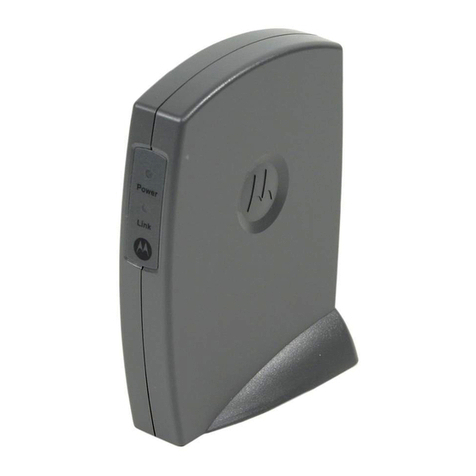
Bullet WirelesHART Adapter
WHA-BLT-F9D0-N-A0-Z0-Ex1
EC-Type Examination Certificate: FM 11 ATEX 0019 X
II 1 G Ex ia IIC T6/T5 Ga
II 1 D Ex ia IIIC T95 °C Da
Certificate: FM 11 ATEX 0068 X
II 3 G Ex nA IIC T6/T5 Gc
FM approval: CoC3040786(C)
Class I, Zone 0, (A)Ex ia IIC T6/T5 Ga
Class I, Zone 2, (A)Ex nA IIC T6/T5 Gc
Class I, Zone 20, (A)Ex ia IIIC T95°C Da
Class I, Division 1, Groups A - D
Class II, Division 1, Groups E - G
Class III
Class I, Division 2, Groups A - D
IECEx approval: IECEx FMG 11.0010X
Ex ia IIC T6/T5 Ga
Ex nA IIC T6/T5 Gc
Ex ia IIIC T95°C Da
table 1
Pepperl+Fuchs GmbH
Lilienthalstraße 200, 68307 Mannheim, Germany
table 2
Validity
Specific processes and instructions in this instruction manual require
special provisions to guarantee the safety of the operating personnel.
Responsibility for planning, assembly, commissioning, operation,
maintenance, and dismounting lies with the plant operator.
The personnel must be appropriately trained and qualified in order to carry
out mounting, installation, commissioning, operation, maintenance, and
dismounting of the device. The trained and qualified personnel must have
read and understood the instruction manual.
Reference to Further Documentation
Observe laws, standards, and directives applicable to the intended use
and the operating location. Observe Directive 1999/92/EC in relation to
hazardous areas.
The corresponding datasheets, manuals, declarations of conformity, EC-
type-examination certificates, certificates, and control drawings if
applicable (see datasheet) are an integral part of this document. You can
find this information under www.pepperl-fuchs.com.
Due to constant revisions, documentation is subject to permanent change.
Please refer only to the most up-to-date version, which can be found under
www.pepperl-fuchs.com.
Intended Use
The device is only approved for appropriate and intended use. Ignoring
these instructions will void any warranty and absolve the manufacturer
from any liability.
Use the device only within the specified ambient temperature range.
The device is used in control and instrumentation technology
(C&I technology) for wireless data transfer from HART devices.
Take the intended use of the connected devices from the corresponding
documentation.
Improper Use
Protection of the personnel and the plant is not ensured if the device is not
used according to its intended use.
Mounting and Installation
Prior to mounting, installation, and commissioning of the device you
should make yourself familiar with the device and carefully read the
instruction manual.
Do not mount the device at locations where an aggressive atmosphere
may be present.
Do not mount a damaged or polluted device.
Avoid electrostatic charges which could result in electrostatic discharges
while installing or operating the device.
If the device has already been operated in general electrical installations,
the device may subsequently no longer be installed in electrical
installations used in combination with hazardous areas.
Observe the installation instructions according to IEC/EN 60079-14.
Connection or disconnection of energized non-intrinsically safe circuits is
only permitted in the absence of a potentially explosive atmosphere.
If circuits with type of protection Ex i are operated with non-intrinsically
safe circuits, they must no longer be used as circuits with type of
protection Ex i.
The usage of 2400 MHz equipment is bound to local restrictions. Ensure
that local restrictions allow usage of this device before commissioning.
Observe the respective peak values of the field device and the associated
apparatus with regard to explosion protection when connecting intrinsically
safe field devices with intrinsically safe circuits of associated apparatus
(verification of intrinsic safety). Also observe IEC/EN 60079-14 and
IEC/EN 60079-25.
Keep the separation distances between all non-intrinsically safe circuits
and intrinsically safe circuits according to IEC/EN 60079-14.
Observe the compliance of the separation distances between two
adjacent intrinsically safe circuits according to IEC/EN 60079-14.
If no Lo and Co values are specified for the simultaneous appearance of
lumped inductances and capacitances, the following rule applies.
lThe specified value for Lo and Co is used if one of the following
conditions applies:
lThe circuit has distributed inductances and capacitances only, e. g., in
cables and connection lines.
lThe total value of Li (excluding cable) of the circuit is < 1 % of the
specified Lo value.
lThe total value of Ci (excluding cable) of the circuit is < 1 % of the
specified Co value.
lA maximum of 50 % of the specified value for Lo and Co is used if the
following condition applies:
The total value of Li (excluding cable) of the circuit is ≥ 1 % of the
specified Lo value.
The total value of Ci (excluding cable) of the circuit is ≥ 1 % of the
specified Co value.
lThe reduced capacitance for gas groups I, IIA, and IIB must not exceed
the value of 1 µF (including cable). The reduced capacitance for
gas group IIC must not exceed the value of 600 nF (including cable).
Provide a transient protection. Ensure that the peak value of the transient
protection does not exceed 140 % of the rated voltage.
Observe the tightening torque of the screws.
The device provides a grounding terminal to which an equipotential
bonding conductor with a minimum cross section of 4 mm² must be
connected.
Observe the grounding requirements for type of protection Ex i according
to IEC/EN 60079‑14.
The associated apparatus must provide a characteristic which is limited by
a resistor.
Mark permanently the selected type of protection for your specified
application. Use the tick box on the nameplate for that. It is forbidden to
change this marking afterwards.
The device contains aluminum. Thereby the device is considered to
constitute an ignition hazard by impact effect or friction. Avoid impact
effect or friction during mounting and operating.
Ensure that the degree of protection is not violated by the conduit.
Use seals that are suitable for the specified application.
Requirements for Cables and Connection Lines
Observe the permissible cable type and cable length given in the
respective hazardous area certificate.
Regarding the verification of intrinsic safety, observe the maximum
permissible external capacitance of this device and the other devices in
the circuit.
External capacitance Co22 µF
table 3
Install cables and cable glands in a way that they are not exposed to
mechanical hazards.
Protect cables and cable glands from tensile load and torsional stress or
use certified cable glands.
Unused cables and connection lines must be either connected to terminals
or securely tied down and isolated.
Requirements for Cable Glands
Only use cable glands that are suitably certified for the application.
Only use cable glands with a temperature range appropriate to the
application.
For cable glands only use incoming cable diameters of the appropriate
size.
Ensure that the degree of protection is not violated by the cable glands.
Operation, Maintenance, Repair
Do not repair, modify, or manipulate the device.
If there is a defect, always replace the device with an original device.
When the device is in operation, maintain at all times a distance of at least
20 cm to the device antenna. This also applies to any other person in the
vicinity of the device.
Delivery, Transport, Disposal
Check the packaging and contents for damage.
Check if you have received every item and if the items received are the
ones you ordered.
Keep the original packaging. Always store and transport the device in the
original packaging.
Store the device in a clean and dry environment. The permitted ambient
conditions must be considered, see datasheet.
Disposing of device, packaging, and possibly contained batteries must be
in compliance with the applicable laws and guidelines of the respective
country.
DOCT-5165 / 2016-04 1 / 1