manuals.online logo
Brands
  1. Home
  2. •
  3. Brands
  4. •
  5. Onyx
  6. •
  7. Refrigerator
  8. •
  9. Onyx 160 LA User manual

Onyx 160 LA User manual

Other manuals for 160 LA

2

Other Onyx Refrigerator manuals

Onyx 160 RA User manual

Onyx

Onyx 160 RA User manual

Onyx 160 LA User manual

Onyx

Onyx 160 LA User manual

Onyx 160R User manual

Onyx

Onyx 160R User manual

Onyx 160 LA User manual

Onyx

Onyx 160 LA User manual

Onyx 160 RE User manual

Onyx

Onyx 160 RE User manual

Onyx 160 RA User manual

Onyx

Onyx 160 RA User manual

Onyx 160 RA User manual

Onyx

Onyx 160 RA User manual

Popular Refrigerator manuals by other brands

Frigidaire FRS26TS7DW2 Use & care manual

Frigidaire

Frigidaire FRS26TS7DW2 Use & care manual

Fisher Scientific 10ECEEFSA manual

Fisher Scientific

Fisher Scientific 10ECEEFSA manual

Summit FF22BDRSS user manual

Summit

Summit FF22BDRSS user manual

Frigidaire FFRU17B2QWE use & care

Frigidaire

Frigidaire FFRU17B2QWE use & care

Hotpoint ENBGH 19xxx FW operating instructions

Hotpoint

Hotpoint ENBGH 19xxx FW operating instructions

Hitachi R-SG28KPH instruction manual

Hitachi

Hitachi R-SG28KPH instruction manual

Dometic RMH 7390 L operating instructions

Dometic

Dometic RMH 7390 L operating instructions

AEG S71700TSW0 user manual

AEG

AEG S71700TSW0 user manual

Electrolux ENB3669 Instruction book

Electrolux

Electrolux ENB3669 Instruction book

Electrolux ERN 2930 Instruction book

Electrolux

Electrolux ERN 2930 Instruction book

Beko GNE 60520 X user manual

Beko

Beko GNE 60520 X user manual

Jenn-Air JUR248LBES00 Use & care guide

Jenn-Air

Jenn-Air JUR248LBES00 Use & care guide

Dometic RGE 4000 Installation and operating manual

Dometic

Dometic RGE 4000 Installation and operating manual

Dometic L-0191B Brochure & specs

Dometic

Dometic L-0191B Brochure & specs

LG LRBP1031W - 10 Cu. Ft. Cabinet Depth Bottom Freezer... owner's guide

LG

LG LRBP1031W - 10 Cu. Ft. Cabinet Depth Bottom Freezer... owner's guide

Daewoo RN-33 Series user manual

Daewoo

Daewoo RN-33 Series user manual

Haier RF-8888-174 Service manual

Haier

Haier RF-8888-174 Service manual

Blaupunkt 5CK2 Series user manual

Blaupunkt

Blaupunkt 5CK2 Series user manual

manuals.online logo
manuals.online logoBrands
  • About & Mission
  • Contact us
  • Privacy Policy
  • Terms and Conditions

Copyright 2025 Manuals.Online. All Rights Reserved.

A/O/8-3. (02.)1347163
INSTRUCTION BOOK
REFRIGERATOR 160 LA
2
This instruction book contains safety precautions, information on use and helpful hints and tips.
To ensure you use this appliance effectively and safely, please read this instruction book carefully
before installing or using the appliance and retain it for future reference.
The symbols below help you to find things more easily:
Safety precautions
Warnings and safety information.
Hints and useful information
Environmental information
Ideas
This symbol indicates information regarding food and its storage.
3
IMPOR
IMPORT
TANT S
ANT SAFET
AFETY INF
Y INFORMA
ORMATION
TION
These warnings are provided in the interest of your safety. Ensure that you understand them all fully
before installing or using the appliance. Your safety is of paramount importance. If you are unsure
about any of the meanings or these warnings contact the Customer Care Department.
Prior to installation
Check the appliance for transport damage. Under
no circumstances should a damaged appliance be
installed. In the event of damage please contact
your retailer.
Installation
This appliance is heavy. Care sold be taken when
moving it.
It is dangerous to alter the specifications or attempt
to modify this product in any way.
Ensure that the appliance does not stand on the
electrical supply cable. If the supply cable is
damaged, it must be replaced by a cable available
from you local Service Force Centre.
Any electrical work required to install this appliance
should be carried out by a qualified electrician or
competent person.
Parts which heat up should not be exposed.
Whenever possible, the back of the appliance
should be close to a wall, but leaving the required
distance for ventilation, as stated in the installation
instructions.
The appliance should be left for 2 hours after
installation before it is turned on, in order to allow
the refrigerant to settle.
Child Safety
This appliance is designed to be operated by
adults. Children should not be allowed to tamper
with the controls or play with the product.
Do not allow children to tamper with the controls or
play with the product.
There is a risk of suffocation. Keep packaging
material away from children.
During Use
This appliance is designed for domestic use only,
specifically for the storage of edible foodstuffs. It is
not intended for commercial or industrial use.
Containers with flammable gases or liquids can
leak at low temperatures. Do not store any
containers with flammable materials, such as spray
cans, fire extinguisher refill cartridges etc in the
appliance.
Maintenance and Cleaning
Before cleaning, always switch off the appliance
and disconnect from the electrical supply.
When unplugging always pull the plug from the
mains socket, do not pull on the cable.
Servicing
This product should be serviced by an
authorised engineer and only genuine spare
parts should be used.
Under no circumstances should you attempt to
repair the appliance yourself. Repairs carried
out by inexperienced persons may cause injury
or serious malfunctioning. Contact your local
Service Force Centre.
At the End of the Appliances Life
When disposing of your appliance use an
authorised disposal site.
Remove the plug and ensure that any locks and
catches are removed, to prevent young children
being trapped inside.
The appliance and the Environment
This appliance does not contain gasses which
could damage the ozone layer.
Avoid damaging the cooling unit.
The packaging used on the appliance marked with
this symbol is recyclable ( ).
Keep this instruction book for future
reference and ensure that it is passed in to
any new owner

4
Cont
Contents
ents
Instructions for the Installer
Technical data 13
Installing the appliance 13
Transportation and unpacking 13
Cleaning 13
Location of the appliance 13
Ventilation 14
Levelling 14
Door Reversal 14
Electrical Connection 15
Instructions for the User
Guide to use the Instruction Book 2
Important Safety Information 3
Description of the Appliance 5
Using the Appliance 6
Before first use 6
To start the appliance 6
Thermostat control 6
Normal operating sounds 6
Defrosting 6
Useful information and advice 7
Storage time chart 8
Maintenance & Cleaning 9
Something Not Working 10
Service & Spare Parts 11
Guarantee Conditions 12
5
Ins
Instr
tructions f
uctions for the User
or the User
General information
This appliance is designed for the refrigeration of food
in a domestic home.
To ensure correct operation, the appliance should
be located where the ambient temperature is
between 10-32 °C.
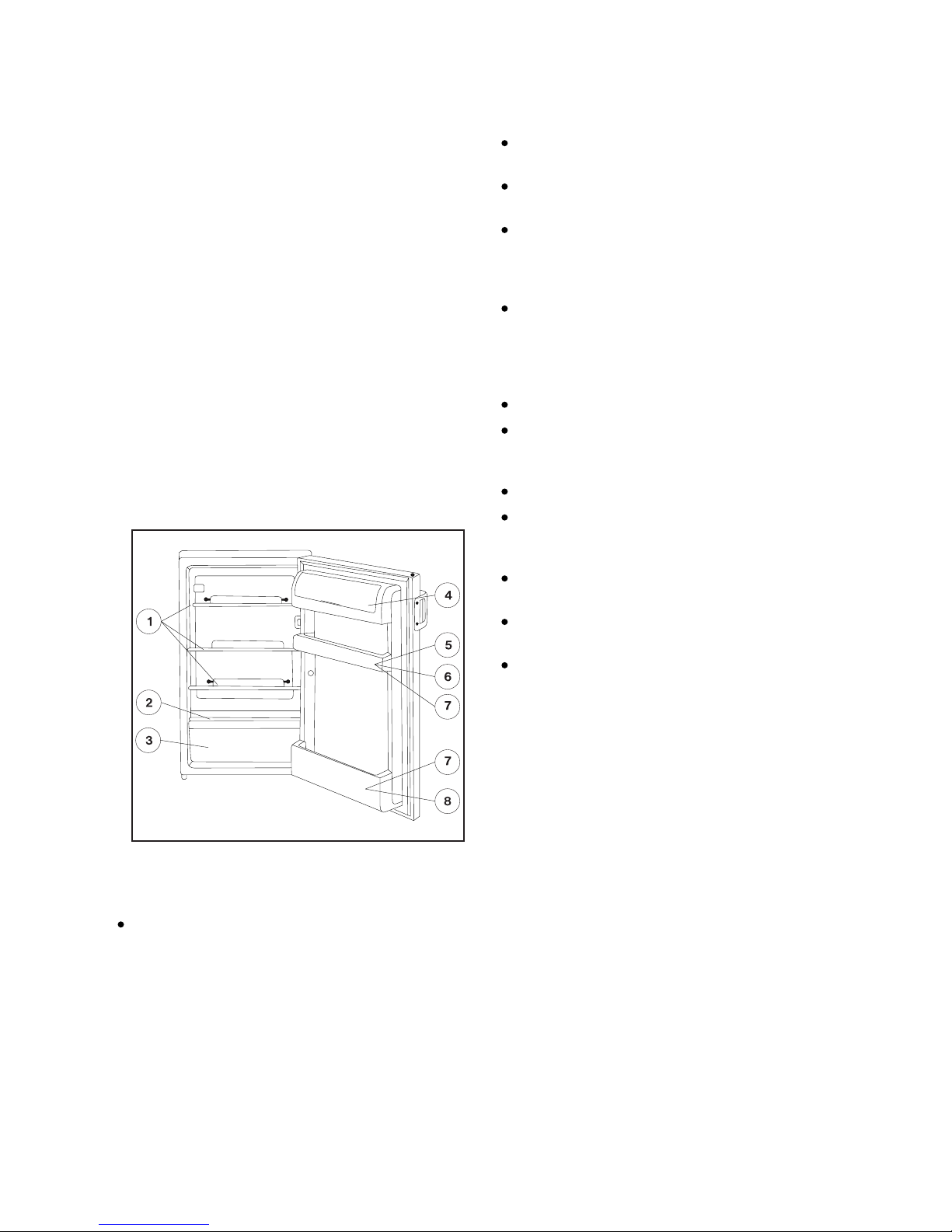
Description of the appliance
1. Wire shelf
2. Defrost water outlet
3. Glass shelf
4. Salad bin
5. Rating plate
6. Adjustable feet
7. Butter compartment
8. Thermostat control and interior light
9. Door gasket
10. Door shelf
11. Bottle shelf
12. Egg tray
13. Ventilation
14. Ventilation grille
15. Condenser
16. Evaporator tray
17. Compressor
6
Using the appliance
Using the appliance
Before first use
Remove all securing tapes.
Wash the inside of the appliance with lukewarm water
to which a little bicarbonate of soda has been added
(5 ml to 0.5 litre of water). Do not use soap or
detergent as the smell may linger. Dry the appliance
thoroughly.
Do not use detergents, abrasive powders,
highly perfumed cleaning products, wax
polishes or products containing alcohol.
To start the appliance
1. Allow the appliance to stand for 2 hours after
installation.
2. Plug in the appliance and switch on at the mains
supply.
3. Turn the thermostat control to the required setting.
A setting of 3 is usually suitable for normal
operation (see thermostat control).
4. Leave the appliance for approximately 4 hours for
the correct temperature to be reached before
placing food inside.
Thermostat Control
The thermostat control situated inside the refrigerator
regulates the temperature of the appliance. The
thermostat control is marked from 1-5, the highest
number being the coldest setting.
Position 0 - Off
Position 1 - Cold
Position 5 - Coldest
The thermostat setting can vary as the temperature
inside the cabinet depends on the following
factors:
room temperature
how often the door is opened
how much food is stored
position of the appliance
During prolonged periods of abnormally hot
weather, if the thermostat is set on too high a
number, the cooling system may operate
continuously and the fridge cooling plate may not
defrost. Turning the thermostat control to a lower
number will cause the automatic defrosting to
resume.
Normal operating sounds
You may hear faint gurgling or bubbling sounds
when the refrigerant is pumped to the cooling plate
through the coils or tubing at the rear.
When the compressor is on, the refrigerant is being
pumped round, and you will hear a whirring sound
or pulsating noise from the compressor.
A thermostat controls the compressor, and you will
hear a faint 'click' when the thermostat cuts in and
out.
Defrosting
The refrigerator defrosts every time the compressor
stops. The water is discharged, via the water
outlet, to the evaporation tray over the compressor
where it evaporates.
7
Hints for storage
To obtain the best performance, do not store warm
food or evaporating liquids in the refrigerator; do cover
or wrap the food, particularly if it has a strong flavour.
Do not cover the shelves with any protective material,
such as paper, cardboard or plastic, which may
obstruct air circulation through them.
Below is the recommended storage positions for
various food types:
1. Ready cooked foods, convenience foods, fresh
meat, cold cuts
2. Milk, dairy products
3. Fruit, vegetables and salads
4. Cheese and butter
5. Eggs
6. Yoghurt and sour cream
7. Small bottles, soft drinks
8. Large bottles, drinks
The following tips should help you to ensure that the
food in your home is in as perfect condition as
possible.
Keep the time between buying chilled food and
placing it in your fridge as short as possible. Tests
showed that the temperature of 1 litre of orange
juice rose to 22 °C in an hour between the
supermarket and home. It then took 11 hours to
get down to 7 °C in the refrigerator.
Keep the refrigerator door closed as much as
possible.
Do not push food together too much, try to allow
air to circulate around each item.
Cool cooked food as quickly as possible but do
NOT place in the refrigerator until cool. (Leave
food in a cool place in order that it can be placed
in the refrigerator as soon as possible).
Do NOT mix raw and cooked meat, they must be
separate containers. Take care not to let the
meat juices drip onto other food. If the meat
does drip, remove everything and clean
thoroughly.
Do not store food uncovered.
Remove suspect food from your refrigerator and
clean the interior (see Maintenance &
Cleaning).
Never allow spills to dry and harden.
Store eggs in the egg rack provided in the
refrigerator door. Discard any broken or
chipped eggs.
Regularly check the door seal to ensure that it is
free from debris.
Always wash your hands in soapy water and dry
them with a clean towel before handling food.
Keep work surfaces clean and avoid cross
contamination by not using the same work
surface or knife, without washing them
thoroughly in between.
Useful inf
Useful infor
ormation and advice
mation and advice
8
S
St
tor
orage time char
age time chart
t
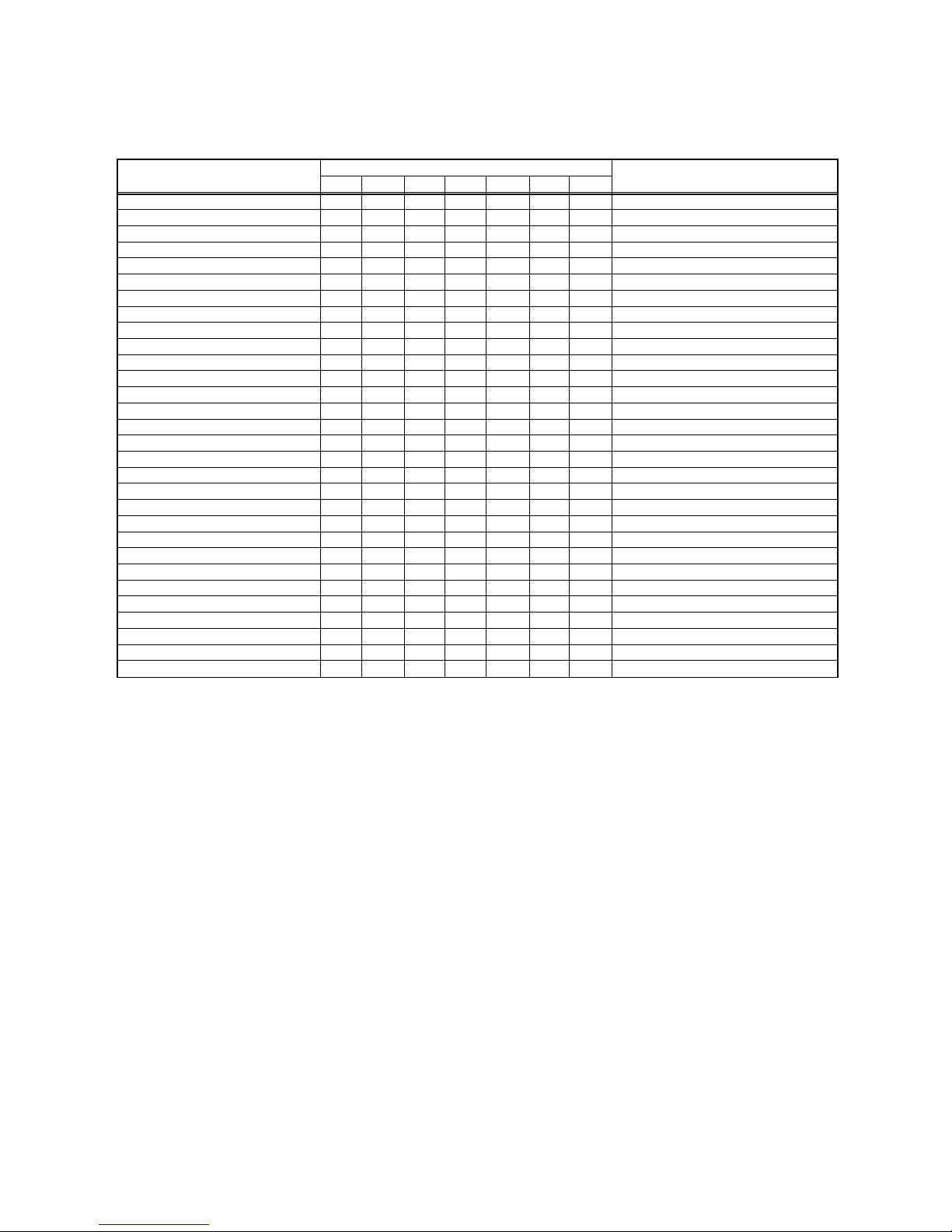
Time and method of storage of fresh foods in the refrigerator
Notation:
Xrecommended storage time
x maximum recommended storage time
Foods Storage time in days Method of packaging
1234567
Raw meat XXx x x cling film, airtight
Cooked meat XXXx x x dish covered
Roasted meat XXXx x dish covered
Raw minced meat Xdish covered
Roasted minced meat XXx x dish covered
Cold cuts XXx x cling film, cellophane, grease-proof paper
Fresh fish Xx x cling film, airtight
Cooked fish XXx x dish covered
Tinned fish, open Xx x dish covered
Fresh chicken XXXx x x cling film, airtight
Fried chicken XXXx x x dish covered
Fresh duck, goose XXXx x x cling film, airtight
Roasted duck, goose XXXXx x x dish covered
Butter unopened XXXXXXXoriginal packaging
Butter opened XXxxxxxoriginal packaging
Milk XXXx x original packaging
Cream XXx x plastic box
Sour cream XXXXx x x plastic box
Cheese (hard) XXXXXXXaluminium foil
Cheese (soft) XXXXx x x cling film
Egg XXXXXXX
Spinach, sorrel XXx x cling film
Green peas, green beans XXXXx x x cling film
Mushroom XXx x x cling film
Carrot XXXXXXXcling film
Tomato XXXXXXXcling film
Cabbage XXXXXx x cling film
Strawberry, raspberry, etc. XXXx x cling film
Tinned fruits opened XXXx x dish covered
Cakes filled with cream XXx x dish covered
9
Maint
Maintenance and Cleaning
enance and Cleaning
Before any maintenance or cleaning work is carried
out, DISCONNECT the appliance from the
ELECTRICITY supply.
Internal Cleaning
Clean the inside and accessories with warm water and
bicarbonate of soda (5ml to 0.5 litre of water). Rinse
and dry thoroughly.
NEVER USE DETERGENTS, ABRASIVE POWDERS,
HIGHLY PERFUMED CLEANING PRODUCTS OR
WAX POLISHES TO CLEAN THE APPLIANCE
INTERIOR AS THESE WILL DAMAGE THE SURFACE
AND LEAVE A STRONG SMELL.
Clean the drain hole of the water trough at regular
intervals and make sure that the drain hole is never
obstructed, so that the defrost water may flow freely.
If blocked, carefully clear using a piece of curtain wire
inserted into the drain outlet to remove the blockage.
External Cleaning
Wash the outer cabinet with warm soapy water. Do
NOT use abrasive products.
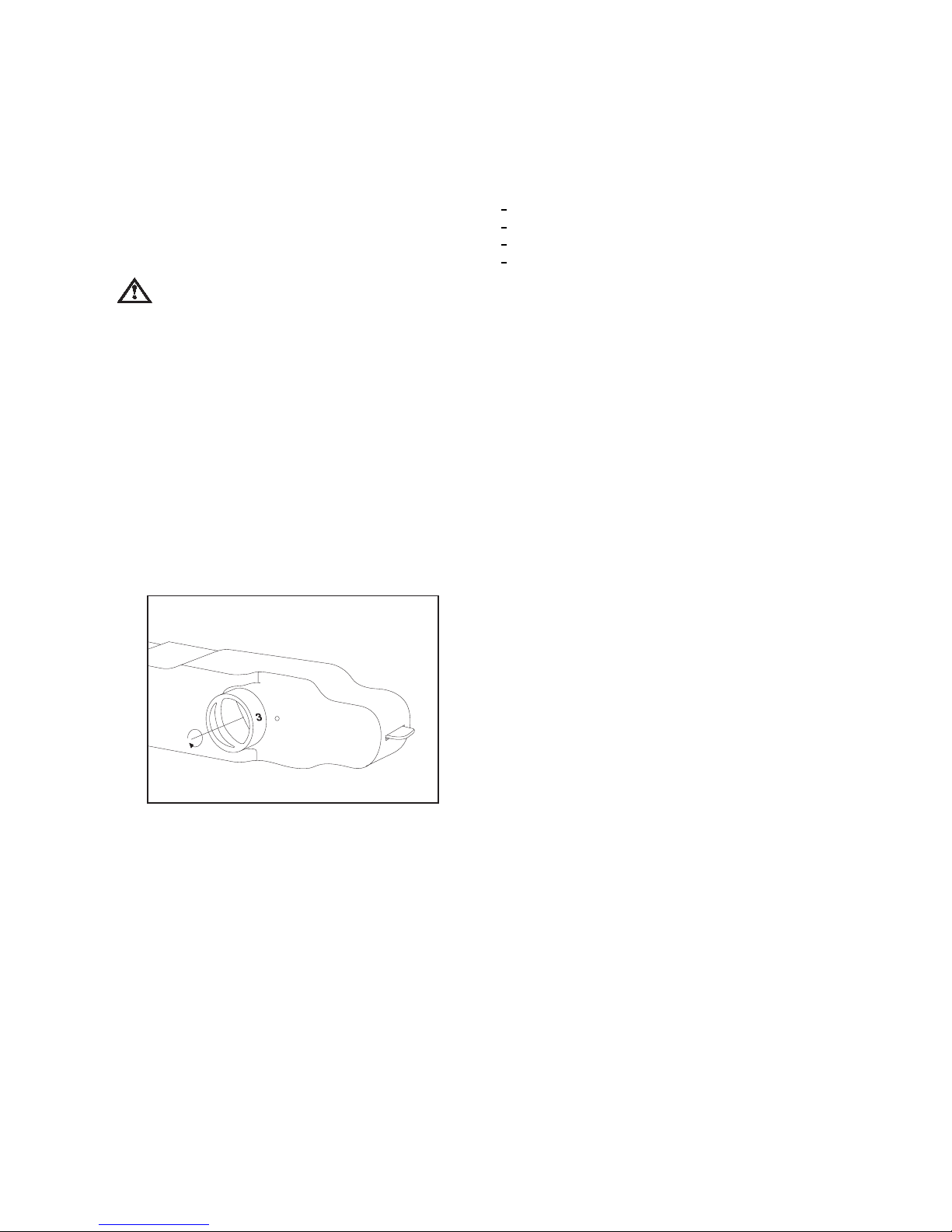
Once or twice a year dust the condenser (black grill)
and the compressor at the back of the appliance, with
a brush or vacuum cleaner, see figure.
Changing the Light Bulb
Should the interior light fail to work, first switch off
the appliance and disconnect from the electricity
supply then replace as follows.
Spring off the light cover in the direction of the
arrows and replace the bulb with one of the same
type (230V, 15W, E14 thread).
After changing the bulb, replace the light cover and
reconnect the appliance to the electrical supply.
When the appliance is not in use
When the appliance is not in use for long periods,
disconnect from the electricity supply, empty all
foods and clean the appliance, leaving the door
ajar to prevent the build up of unpleasant odours.
10
If after the above checks there is still a fault, please contact your local Service Force Centre.
In-guarantee customer should ensure that the above checks have been made as the engineer will make a
charge if the fault is not a mechanical or electrical breakdown.
Please note that proof of purchase is required for any in-guarantee calls.
Some
Something N
thing No
ot W
t Wor
orking?
king?
Before contacting your local Service Force Centre, please check the following points.
Symptom
No power to the
appliance.
The light does not come
on.
The temperature in the
appliance is too high.
The compressor runs
continuously and/or
excessive frost and ice
has built up.
The appliance is noisy
Water under the salad
bin.
Possible Cause
No power at the socket.
There is a power cut.
The fuse has blown.
Thermostat control is set at 0.
The bulb is not fitted correctly.
The bulb has blown.
The appliance is located in an unsuitable position.
The thermostat control is set too low.
The thermostat control is set too high.
The door is not closed correctly.
The door is opened unnecessarily often.
The appliance is not level.
The drain hole is blocked.
Solution
Check there is power at the socket.
Check there is not a power cut by checking the
household lights.
Check the fuse has not blown.
Check the thermostat setting.
Check the bulb and replace if necessary.
Check the ambient temperature is within the
appliances limits of 10-32 °C.
Check that the thermostat control is turned to the
correct setting relative to the ambient conditions.
Turn the thermostat control to a warmer setting
(lower number).
Check that the door is closed and that the gasket
is clean and intact.
Only open the door for as long as is necessary.
Check that the appliance is stable on all four feet.
Refer to the Normal operating sounds.
Check the drain hole. See Maintenance and
Cleaning.