manuals.online logo
Brands
  1. Home
  2. •
  3. Brands
  4. •
  5. Pentacon
  6. •
  7. Film Camera
  8. •
  9. Pentacon PENTAFLEX AK16 User manual

Pentacon PENTAFLEX AK16 User manual

Other Pentacon Film Camera manuals

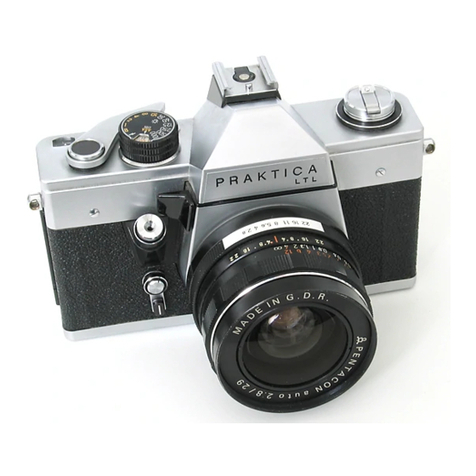
Pentacon PRAKTICA LTL User manual

Pentacon

Pentacon PRAKTICA LTL User manual

Pentacon six TL User manual

Pentacon

Pentacon six TL User manual

Popular Film Camera manuals by other brands

Pentax IQZoom 60R operating manual

Pentax

Pentax IQZoom 60R operating manual

ZEISS IKON Contessa 35 manual

ZEISS IKON

ZEISS IKON Contessa 35 manual

ECLAIR NPR operating manual

ECLAIR

ECLAIR NPR operating manual

Sharp VC-C10PN Operation manual

Sharp

Sharp VC-C10PN Operation manual

Hitachi DK-H100 operating instructions

Hitachi

Hitachi DK-H100 operating instructions

Polaroid SL92 Specifications

Polaroid

Polaroid SL92 Specifications

Canon Sure Shot Z115 instruction manual

Canon

Canon Sure Shot Z115 instruction manual

Minolta ZOOM 70 instruction manual

Minolta

Minolta ZOOM 70 instruction manual

Minolta MAXXUM 450SI - PART 2 manual

Minolta

Minolta MAXXUM 450SI - PART 2 manual

Minolta Maxxum 8000i manual

Minolta

Minolta Maxxum 8000i manual

Canon F-1 instructions

Canon

Canon F-1 instructions

FujiFilm GW690 2 Factory Service Manual and Parts List

FujiFilm

FujiFilm GW690 2 Factory Service Manual and Parts List

Canon EOS 1000 F instructions

Canon

Canon EOS 1000 F instructions

Minolta DYNAX 7 Repair guide

Minolta

Minolta DYNAX 7 Repair guide

SMENA 8M user guide

SMENA

SMENA 8M user guide

Kodak Auto-Focus Camera manual

Kodak

Kodak Auto-Focus Camera manual

Minolta SR-T 102 manual

Minolta

Minolta SR-T 102 manual

Canon Canon 7 How to use

Canon

Canon Canon 7 How to use

manuals.online logo
manuals.online logoBrands
  • About & Mission
  • Contact us
  • Privacy Policy
  • Terms and Conditions

Copyright 2025 Manuals.Online. All Rights Reserved.

PENTAFLEX AK16
OPERATION MANUAL
Translated from German
Good results are guaranteed to you if
you read the first recordings before
the start of your first recording and
have a test piece of film in the hand
of the device
The ak16
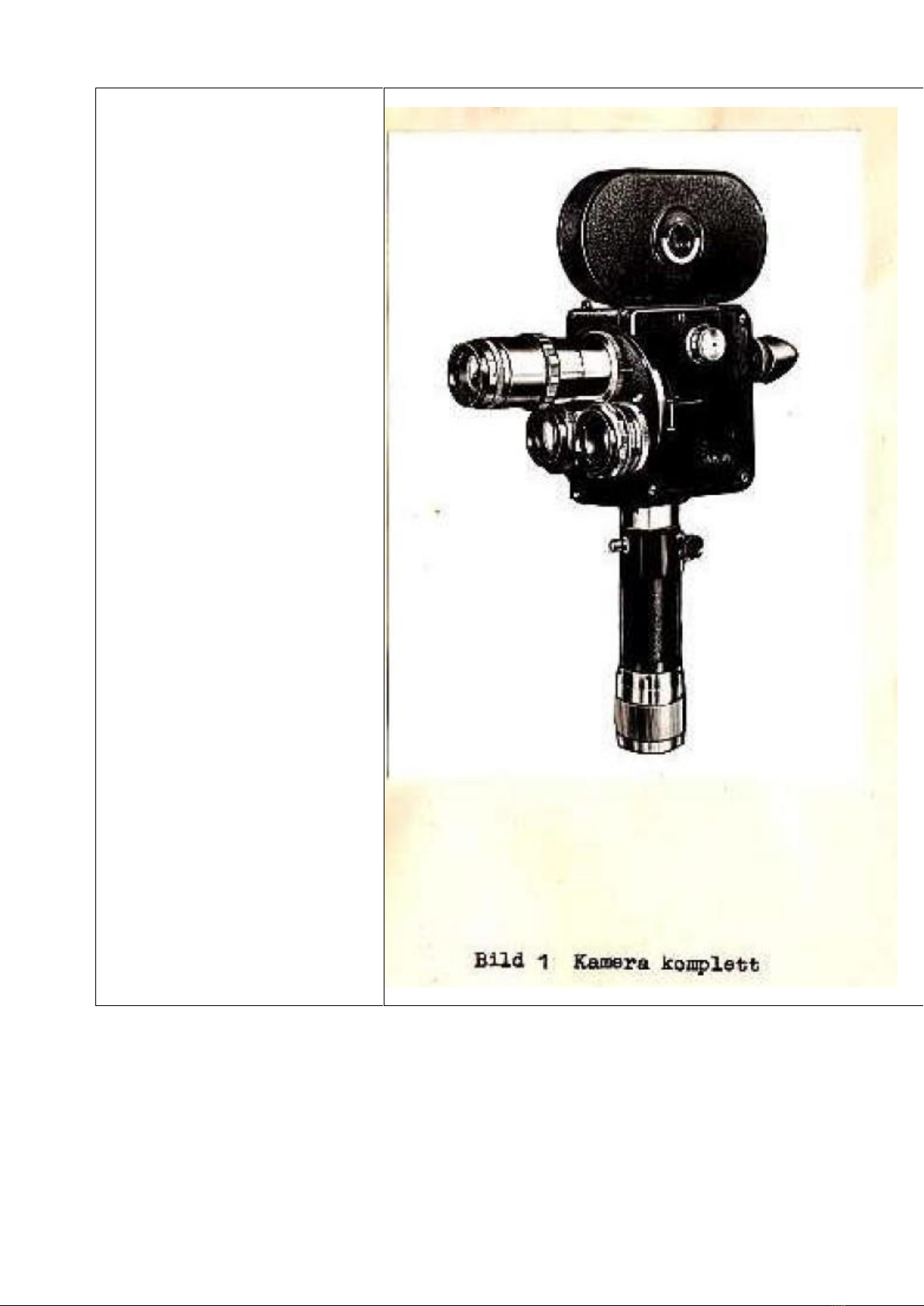
(Image 1) a recording camera for
16mm one or two-sided perforated
film, brings through 1hr system many
advantages and expansion
possibilities, which are for the
filmbericht, the scientist and the
amateur.
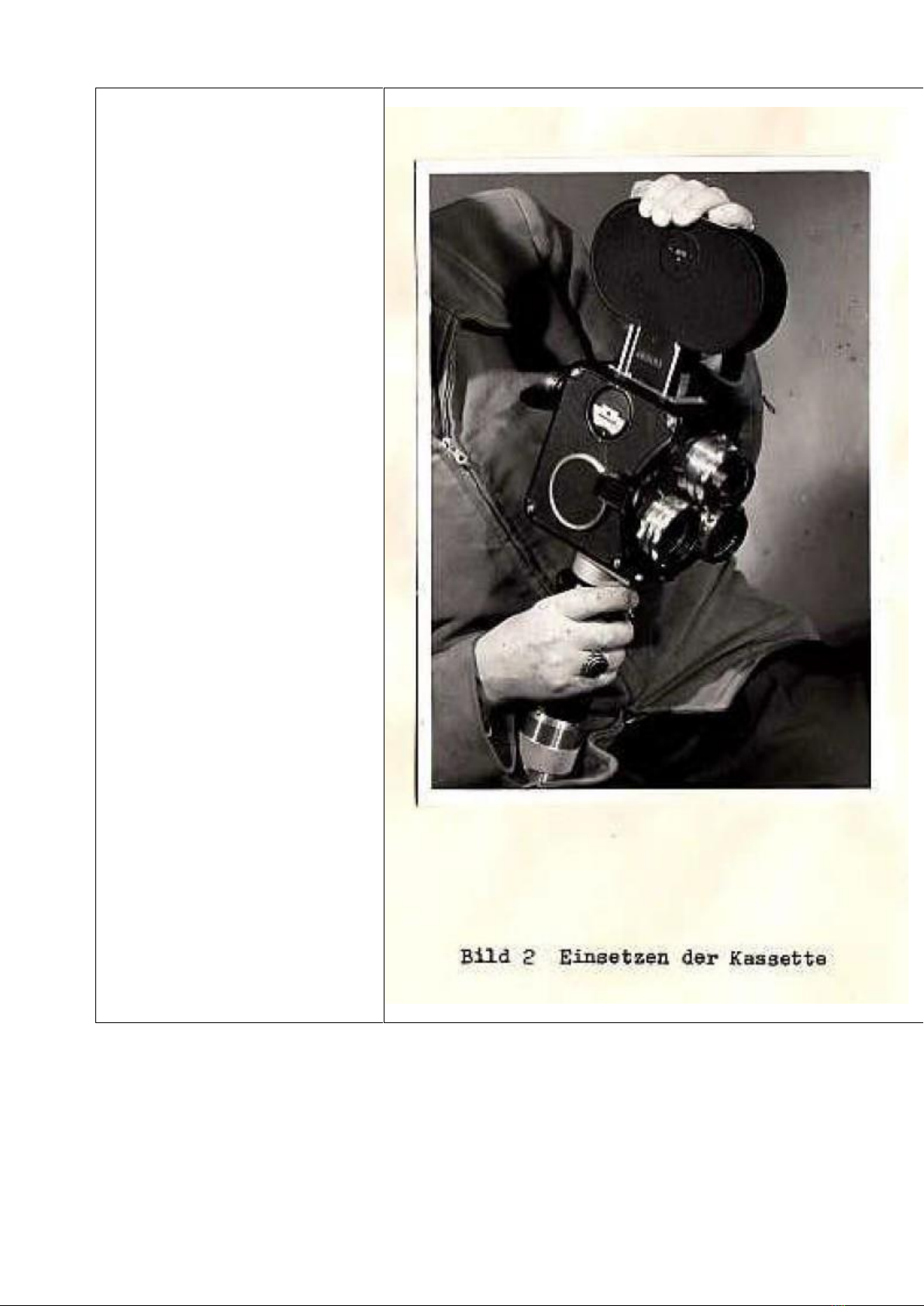
(2) with which a film exchange can be
made within a few seconds by the
change of the cassette. The cassette
(picture 3) carries the entire transport
mechanisms - with the exception of
the gripper - A sensing-lever-counting
device, which always shows the
remaining film quantity in meters and
/ or. It can be supplied with cassettes
with a film capture capacity of 30m,
60m or 120m.
The ak16
(Ref. 4) shows 1m standstill and in
the run a right-sided, parallar-free and
10-fold magnified matt screen image,
which allows very light and clear dis-
evaluation of the image cut-out and
the image sharpness. The viewfinder
is in the receiving direction.
The sector diaphragm of the AK16
can be continuously adjusted (0-
closed) in the range of 0 degrees to
180 degrees. It is used mainly for
landing and take-offs, as well as in
conjunction with a sine rewinding
crankshaft.
Furthermore, different exposure times
can be achieved by changes in the
sector opening at the same recording
frequency. for example:
16 speed - sector opening 180
degree = 1/32 seconds
16 speed - sector opening 90 degree
= 1/64 seconds
The table as of the Camera rear gives
an impression of the table
AK16
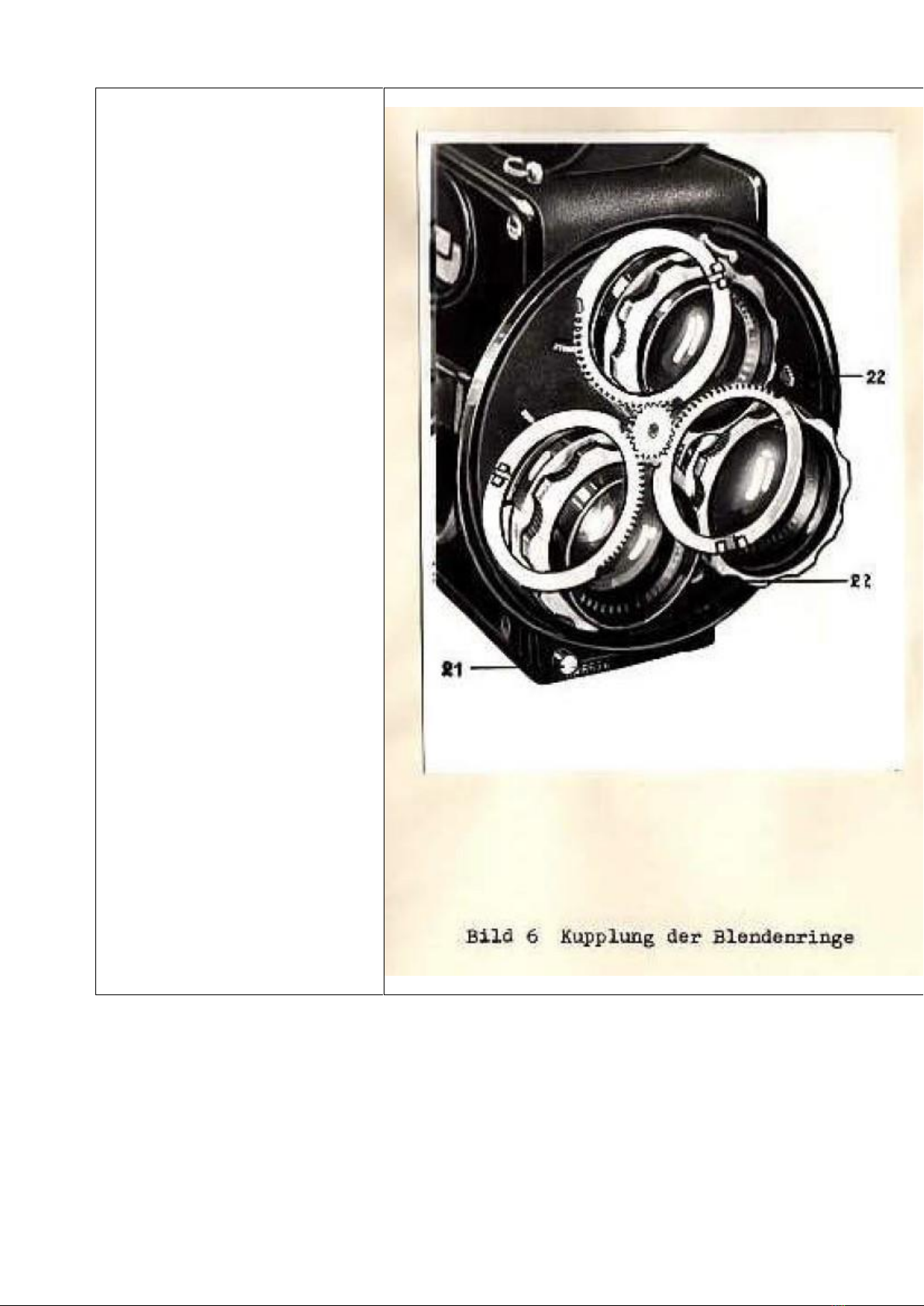
Lenses (image 7), the following types
are available:
Original Jena wide angle lens 2.8 /
12.5mm
Original Jena standard lenses 1.4 /
25mm
Original Jena telephoto lenses 1.4 /
50mm
Original Jena telephoto lens 2.8 /
80mm
Original Jena telephoto lens 4.0 /
135mm
The first 3 lenses are called standard
objective ones. All lenses have a
depth-of-field scale and are equipped
with anti-reflective coating.
The Ak16
The drive is fitted with a battery-
driven battery motor (Fig. 8) that can
be attached to the side or from below
with a bayonet mount. The speeds
are 12,16,20,24 and 32 images / sec.
The running accuracy is plus or
minus 5% despite the voltage
fluctuations between 10.8 and 13
volts. The operating switch is
designed as a pressure switch, which
can be locked in the working position
by sliding in the direction of the
camera as a continuous-action
switch.
When the engine is switched off, the
gearbox and thus also the mirror
diaphragm is automatically set so that
the image can be viewed in the
search beam path. The switch-off
process is thus reduced to max. 2
images limited.
A tipping-resistant lead-over for 12
volt 10amp. Used with a battery
charge at 24 frames / sec. About
2400m film.
The AK16
Offers expansion options for a wide
variety of special areas, such as
hardly any other camera.
Accessories for:
Image frequencies from 3 to 96 F/per
sec.
Spring drive
Rewinding cartridges
Hand crank
Single Image Switch
Three-phase synchronous motor for
25 B / sec.
Time marker
Intermediate rings For the use of
screwed lenses, including the macro
accessory
Clear glass panes For micro
recording etc.
Can be readily applied.
Synchronous coupling with other belt
loops (eg with a magnetic sound
device) is also possible. When the
second drive point of the camera is
coupled to the tape device by a
flexible shaft or by a toothed drive.
Filming in
In the 30meter cassette (picture 3
and 9) do not take place in a bright
sun.
After turning the locking lever (1)
upwards and forwards, the cover (2)
is lifted off.
The empty coil (4) lying in the
cassette (3) is pulled out. From the
full spool (5) about 60cm of film are
unrolled. The counter clock button (6)
is pulled to the right and thus the
space for the insertion of the full coil
is released. Unroll the unrolled end to
the bottom right. When the free end is
finished, the embossed layer scheme
is used.
For this purpose, the two pressure
pads (7) are pressed against one
another by light pressure until they
engage. As a result, the two tooth
drums (8) are released for inserting
the film. At the same time, the
toothed disc (9) of the counter-
platform (10) is moved to the right
with simultaneous pivoting inwards
until it engages. When inserting the
film, the perforation must be pushed
into the teeth. By pushing the two
knobs (11), the runners (7) rest
against the tooth drums and
guarantee a firm fit of the film
perforation in the teeth. The counter
platform (10) is pivoted outwards into
the working position with one finger.
With slight fingertip pressure on the
detent button (13), at the same time,
(14), the correct loop size (picture 10)
is set, whereby it must be noted that
the stop pin penetrates through the
perforation and becomes visible in
the hole (15).