3
Understanding priming and pump operation
Your pump is powered by an electric motor that directly aects your water ow rate. When the electric
motor is turned on it utilizes centrifugal force to generate velocity of the water. The water then ows
into the strainer pot from the water source, ltering out debris. Water continues its ow into the eye of
the impeller where the water meets the impeller vanes and converts kinetic energy into static pressure
allowing the pump to maintain pressure and is then forced out of the pumps discharge port resulting
in continuous water ow for your waterscape oasis.
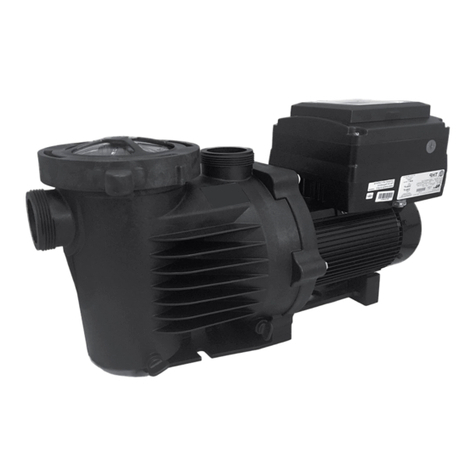
The Artesian 2 Low RPM pump is considered a“true”self-priming pump. This means it is designed to
prime and operate at varying heights up to 9 feet above the water source surface as well as varying
horizontal lengths. It is important to note that operating at maximum suction lift height may negatively
aect the pumps overall performance. If after starting the pump you notice it takes more than three
minutes for water to start owing into the priming pot after being lled with water and energized, it is
recommended to install a rubber apper type swing check valve. The valve should be as low and as
close to your source water as possible to maintain constant pressure and shorten prime time. The best
location can even be underwater when possible as this can provide an air tight t even without PVC
adhesive. Some swing check valves have true union connection ttings that oer easier access for
cleaning when needed.
What to expect for priming cycle with swing check valve installed.
Essentially, when utilizing a properly installed swing check valve the priming process is less time
consuming and is more ecient. When installing a swing check valve, be sure your connections are
properly seated and air tight. Then, simply ll the priming pot with water until the intake plumbing and
priming pot are full. Replace the lid, securing tightly and turn on your pump. With the swing check
valve in place your pump is fully primed from the beginning. However, if after running your pump you
observe the water level in the strainer pot decreasing continuously, this indicates there is either a
blockage limiting the ow or a union tting, connection on the intake pipe or lid is not airtight. Check
all connections for debris, crimping, or cracking and re-tighten or replace parts as needed.
What to expect for priming cycle without a swing check valve installed.
In installation applications where the pump and plumbing are above the water level and no swing
check valve is installed, the priming process will work as listed in the installation instructions on page 4.
In this application the internal pressure in the pipe drops below outside barometric pressure which
allows this pressure to slowly push water toward the pump. This slow push results in a longer priming
cycle. It is important to note that the incoming water ow may initially be very little or non-existent for
the rst few minutes. If three minutes pass with no water owing into the priming pot, the pump
should be shut o, connections rechecked, water relled and system restarted.
With a valve or without a valve, the time it takes for your pump to complete the prime cycle is based on
a variety of factors including pipe type, diameter, suction lift height, horizontal distance, motor speed
and horsepower. The entire cycle can range from one to fteen minutes to complete; however, as noted
above, you should see water owing into the pump within three minutes or less.
For system specic assessments including suction lift and friction loss guidance and operating
PUMP OPERATION
The Basics
The Prime
With Valve
No Valve