manuals.online logo
Brands
  1. Home
  2. •
  3. Brands
  4. •
  5. Plankton Electronics
  6. •
  7. Microcontroller
  8. •
  9. Plankton Electronics BUMBLEBEE Operation instructions

Plankton Electronics BUMBLEBEE Operation instructions

Popular Microcontroller manuals by other brands
Microsemi IGLOO nano Starter Kit user guide

Microsemi

Microsemi IGLOO nano Starter Kit user guide

GOWIN DK START GW1NSR-LV4CQN48PC7I6 V 1.1 user guide

GOWIN

GOWIN DK START GW1NSR-LV4CQN48PC7I6 V 1.1 user guide

HETRONIC ERGO-S Service manual

HETRONIC

HETRONIC ERGO-S Service manual

Laird BL654PA user guide

Laird

Laird BL654PA user guide

Novatek NT6861 manual

Novatek

Novatek NT6861 manual

Lantronix Intrinsyc Open-Q 865XR SOM user guide

Lantronix

Lantronix Intrinsyc Open-Q 865XR SOM user guide

Nuvoton ISD61S00 ChipCorder Design guide

Nuvoton

Nuvoton ISD61S00 ChipCorder Design guide

STMicrolectronics ST7 Assembler Linker user manual

STMicrolectronics

STMicrolectronics ST7 Assembler Linker user manual

Texas Instruments Chipcon CC2420DK user manual

Texas Instruments

Texas Instruments Chipcon CC2420DK user manual

NEC 78GK0S/K 1+ Series Application note

NEC

NEC 78GK0S/K 1+ Series Application note

Mikroe SEMITECH N-PLC Click Application note

Mikroe

Mikroe SEMITECH N-PLC Click Application note

Intel Agilex user guide

Intel

Intel Agilex user guide

DIGITAL-LOGIC MICROSPACE manual

DIGITAL-LOGIC

DIGITAL-LOGIC MICROSPACE manual
Texas Instruments TMS320F2837 D Series Workshop Guide and Lab Manual

Texas Instruments

Texas Instruments TMS320F2837 D Series Workshop Guide and Lab Manual

CYPRES CY14NVSRAMKIT-001 user guide

CYPRES

CYPRES CY14NVSRAMKIT-001 user guide
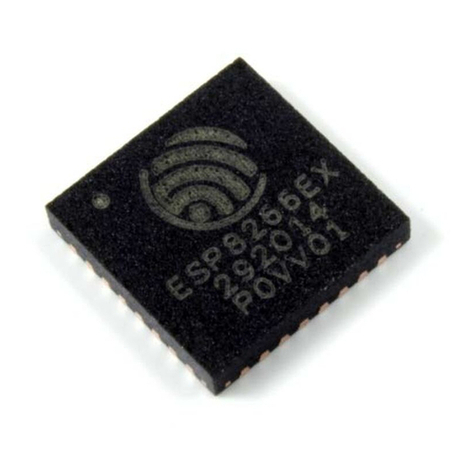
Espressif Systems ESP8266EX Programming guide

Espressif Systems

Espressif Systems ESP8266EX Programming guide

Abov AC33M8128L user manual

Abov

Abov AC33M8128L user manual

Silicon Laboratories C8051F800 user guide

Silicon Laboratories

Silicon Laboratories C8051F800 user guide

manuals.online logo
manuals.online logoBrands
  • About & Mission
  • Contact us
  • Privacy Policy
  • Terms and Conditions

Copyright 2025 Manuals.Online. All Rights Reserved.

THE BUMBLEBEE
ASSEMBLY TUTORIAL
REV 2. 15/10/2014
PLANKTON ELECTRONICS
Thank you for purchasing The Bumblebee. In this step by step tutorial we will show you how to
assemble the machine.
Before start: Ensure that you work in a well ventilated area and that you have all the necessary
tools (soldering iron, solder, cutting pliers, etc.). If you have very little or no soldering experience
make a search on the www. There are many tutorials on how to solder.
We will start soldering the resistors. Take the BOM (Bill Of Materials) document and start with the
4R7 resistor. Put it in place, turn the PCB, solder and cut. Continue with the 1K resistors and so. Go
by groups, don't solder all the resistors at a time. If you don't know how to identify the different
resistors here you have a tip.
This is how the PCB will looks like after soldering all the resistors.
We will follow soldering the film capacitors (the rectangular ones). Start with the
10n (103) and continue [82n (823), 100n (104), 220n (224) & 330n (334)]. Then we
will solder the 4 diodes. Note that the diodes have an orientation marked with a
stripe that's also on the PCB.
Solder the electrolytic caps. These are the cilindric ones. But we will solder these
ones to the rear part. Take in mind that these capacitors are polarized, so you
must respect the orientation. The long led corresponds to the positive "+" side.
The negative "-" side is also marked with a visible white line.
Time for the transistors now and the 78l05. It have an orientation also, just follow
the shape of the drawing. Transistors are heat sensitive, don't sleep when
soldering. We recommend to mount all the transistors on the PCB and then solder
all the left legs. After that continue with the middle leg following the same order
and finally do the same with the right leg. This way you will let the transistors to
cool down avoiding high temperatures.
Now solder the IC sockets. The mark on one of the sides points to the first and last
pin. This one should face up.
Now it's time to solder the 3,5mm connectors. Before solder place all of them in
place. Then take the front panel and insert all the connectors to its hole. After that
turn the whole piece and solder all the connectors. Take special attention to make
strong solderings here. These are mechanical parts where you will be switching in
and out the jacks, so you want that these parts be very solid.
Time for the potentiometers now. First of all we need to take the nut and the
washer off. Then we have to remove the small tab in the top part of the
potentiometer. Use a small pliers to do it.
Now put all the pots in place on the PCB and insert the front panel. Put the nuts to
every potentiometer (without the washer) and then solder.
Now solder the power connector. If you want to use The Bumblebee with the
desktop case solder the 2,1mm. If you want to use it on an eurorack system solder
one of the 2 other connectors. Insert the ICs. Check polarity!
Finally we will solder the leds. These are polarized components. The short led
must go where the circle is cutted. First we insert it inside the holes of the front
panel. Then we insert it through the PCB and solder.
Time to test The Bumblebee! Plug it with a power chord (+@ring, -@tip for the
2.1mm connector) and check that all its elements are working .
Now it's time for the case. If you have bought an opaque yellow case I recommend
to paint the engraved symbols. Use a black permanent pen or acrylic paint and fill
all the engravings. Then take a cloth with alcohol or isopropil and wash the
surface. The paint will remain inside the engravings while it will disappear from
the surface.
If you have bought the translucent case I don't recommend to paint it. If you do it
don't use black paint, use a white or a light color one.
If you have some trouble here you have some pictures of the case mounting
process. Peel of the thin plastic protector that is in one of the sides, specially for
the translucent cases!
As you can see, before insert the top panel you have to screw the PCB to it via the
potentiemeters with its nuts. You can mount the knobs when the case is ready.
If you have arrived here congratulations!
Enjoy The Bumblebee!
http://www.planktonelectronics.com