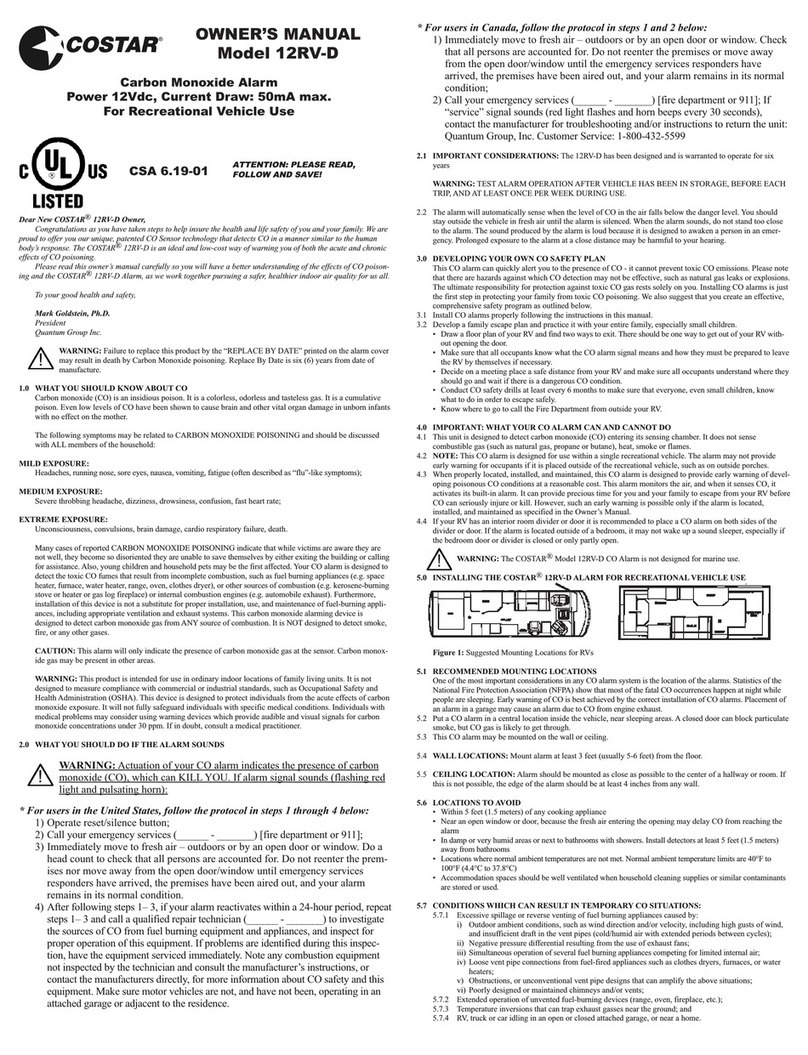
Figure 4
A. Remove the assembly screw from the back of the door alarm and
remove the top cover. (See Figure 2)
B. Pull down the battery spring and install the 9v battery (see figure 2).
NOTE: If the battery spring is not in the correct position under the
battery, the alarm will not go back together.
C. When the 9v battery is installed, the ED will flash once every 10
seconds. When the alarm sounds, the ED will flash once every
second.
D. Reassemble the door alarm with the assembly screw. NOTE: Once
the battery is installed the alarm may sound accidentally until the
sensors are connected properly.
A. Determine the best location. The door alarm must be installed at least
54” above the threshold of the door.
B. With a pencil, mark 2 spots 2 1/2” apart vertically (up & down) where
the alarm will be mounted. These 2 marks are where the 2 larger
supplied screws will be inserted into the wall to hang the door alarm.
C. Insert the 2 larger supplied screws into the wall on the 2 marks. eave
about 5/32” (not including the head of the screw) of the screw from
the wall.
D. Hang the door alarm on the mounted screws and pull downward until
the screws are positioned in the small end of the hanger holes in the
back of the alarm.
E. If you purchased the OPTIONAL Screen Door Kit see section 6.
(Figure 5)
IN TALLING DOOR EN OR
(FIG. 4)
A. The Door Alarm comes with one sensor switch and one sensor
magnet; remove the covers from both of these parts by using your
fingernail or small tool to unclip the cover from the bottom side and
sliding it off the sensor.
B. Each sensor has two holes for mounting, the sensor magnet usually
goes on the door and the sensor switch is usually mounted to the
door frame.
C. Metal framed doors may need a space between the sensors and the
door using a small piece of wood or double sided foam tape.
D. The Sensors must be installed parallel to each other with a spacing
between them of approximately 3/4”. The sensors can be mounted
Horizontally or Vertically as long as they remain parallel.
E. oosen the two terminals on the sensor switch by loosening the
screws then place either wire end coming from the door alarm
between each of the terminals. It doesn’t matter which wire goes to
which terminal, Replace Plastic Covers.
Note: If the cover for the sensor switch does not lock into place because
of the sensor wires, remove the knockout from the side of the sensor
switch cover (See Figure 4)
3.
OPERATING YOUR DOOR ALARM
(FIG. 1)
4.
Your Poolguard Door Alarm is designed to be installed within 22” of the
sensor switch for the sensor wire connection. To mount the door alarm
on wall next to door:
Figure 2
The POO GUARD DOOR A ARM uses two delay modes which allow
the user to exit and enter the door without the alarm sounding. These
two modes are explained below.
A. FIRST DE AY MODE: When the door is opened the alarm
automatically goes into the first delay mode which gives you 7
seconds after the door is opened to push the pass thru switch. If the
pass thru switch is not pushed within 7 seconds the alarm will sound
with the door open or closed. To silence the alarm close the door
then push the pass thru switch.
B. SECOND DE AY MODE: When the door is opened and the pass thru
switch is pushed within 7 seconds, this puts the door alarm in the
second delay mode which allows you 14 seconds to go through the
door and close it. When the door is closed within 14 seconds, the
alarm will automatically reset. If the door is not closed within 14
seconds, the alarm will sound.
www.poolguard.com
IN GROUND POO A ARM
WITH REMOTE RECEIVER
GATE A ARM Poolguard’s
Family of Products
Helps Protct Your Family!
ABOVE GROUND POO A ARM
WITH REMOTE RECEIVER
IN TALLING POOLGUARD DOOR ALARM
(FIG . 1 & 2)
2.
Indoor Use Only