Indicators
1. There are two indicators consisting of 10 LED 10 steps) on user interface.
2. Left one (green): State of Charge - indicating approximate battery level. The solid
blocks stand for remaining battery. LED will change from green to orange when 50% is
reached and to red when last 20% of battery power is reached.
3. Right one (blue): Power - indicating level of power in use. When moving forward, indica
tor LEDs will start to light up from bottom to top. When moving in reverse/backward
motion, LEDs will also start to light up in reverse positions; from top to bottom.
Charging
1. Charge the battery when the state of charge level is low or empty.
2. Power o the outboard by removing the killswitch.
3. It’s recommended to charge the battery after turning o the outboard though it’s
allowed to operate and charge the outboard simultaneously.
4. Connect the charger cable to the connector on top of interface and connect to the AC
power plug of the charger to the 100V~240V wall outlet.
5. While charging you can check the state of charge by turning the outboard on with the
key/killswitch.
6. When charging, LED indicator on RemigoOne charger is red.
7. When battery is fully charged, LED indicator on charger is green.
8. Disconnect the charger cable.
9. It is okay to leave the outboard connected to the charger for a couple of days or so.
However do not leave charger on gor a longer period as it may aect the performance
of the battery.
Propeller Assembly
The propeller is assembled on the outboard. Before use always quick check the propeller. If it
gets damaged and you need to change it, please follow these instructions:
`
Installation
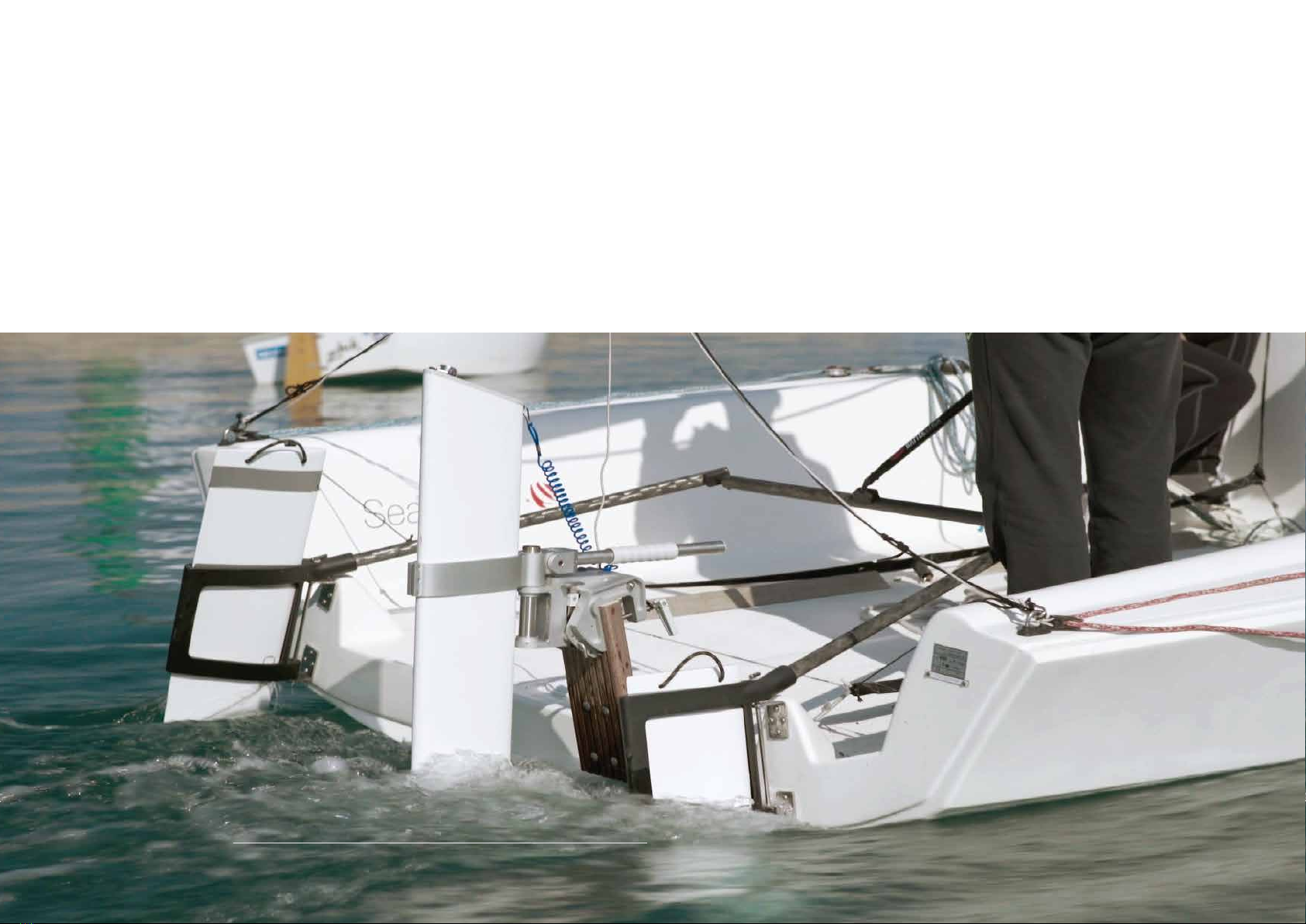
1. First install the bracket only - separate it from the outboard
2. Mount the bracket on the transom of the boat and tighten the two tightening clamps.
(Transom Thickness Range: 15mm~64mm)
3. Adjust trim angle of the moiunting bracket so that circular console mount is in vertical
position.
4. With the “pump-action pull” put the steering handle on the unit in upward position.
5. Hold RemigoOne with both hands and carefully mount it on the console.
6. Insert the safety ring into the opening on top of the circular console mount to prevent
separation of the motor and the mounting bracket.
7. With the “pump-action pull” put the steering handle on RemigoOne in horizontal
position to enable steering.
8. Steering handle in upward position locks the outboard in center. Use this position for
tilting the outboard out of the water or when steering with another (primary) rudder.
9. For carrying RemigoOne put the steering handle in downward position
10. Ensure the outboard is firmly fixed as loosened clamp screws may cause the outboard
to fall into water or get damaged.
11. Check the screws and tightening clamps every time before use since they may be
loosened because of mechanical vibrations.
12. A rope is recommended to be used to avoid loss of your outboard in case it falls o the
transom. Use the rope to connect your outboard and a secure mounting point on the
boat.
13. The mounting height of the outboard aects the running speed seriously. When the
mounting height is too high, cavitation may occur to waste power. When the mounting
height is too low, the water resistance will increase and it will lead to running speed
loss.
14. Adjust mounting height according to your transom height and applications. The
optimum mounting height is aected by the conditions of boat and requirements. It’s
recommended to test running the outboard at a dierent mounting heights to find the
optimummounting height and thus the outboard’s performance.
CAUTION: When RemigoOne is assembled with bracket and in use, make sure to use
safety ring on console mount to prevent bracket falling in the water.
Trim Angle Adjusting
1. RemigoOne has four trim angle options including 21°, 14°, 7° and 0°.
2. The trim angle should be adjusted according to the boat type and the running speed
to achieve higher eiciency. It is recommended to try dierent trim angles at your
desired running speed to achieve the best performance.
3. Only adjust the trim angle when the outboard is stopped.
4. Never toggle the Tilt Release Lever if the propeller is rotating.
5. Pull the Tilt Release Lever up and tilt up the outboard.
6. Remove the safety ring on the trim pin and then pull the trim pin out.
7. Select a desired trim angle and insert the trim pin into the corresponding position,
attach the safety ring to fix the trim pin.
8. Put RemigoOne‚ back in vertical/operating position.
Adjusting shaft length
1. Unscrew security bolts on three screws on the back of the brace that holds motor in
position.
2. Unscrew the three screws completely.
3. Insert the divider wedge in the brace to widen it.
4. Gently move the brace to a desired position.
5. Remove the divider wedge so the brace will close
6. Insert and tighten the three screws. Each screw should be retightened at least 3 times
to secure a tight grip.
7. Screw on security bolts and tighten them.
8. Before turning on the engine check if the depth of propeller is correct and it turns
freely when the outboard is positioned sideways – not to hit the boat.
Operation
1. Ensure RemigoOne is correctly and firmly installed on the boat.
2. To turn it on, put the magnetic killswitch on its designated position on bottom of the
unit’s interface and attach the other end of the killswitch cord to your wrist or life vest.
3. Check and ensure the battery has enough power and plan your trip accordingly.
4. Wait for 3 seconds before operation. When both stop blinking and start to show actual
data, you can set RemigoOne in operation.
5. To start the motor press the button that shows the desired direction.
6. Press the button again to increase power 10 steps available).
7. To decrease power, press the other button as many times as desired.
8. Hold the button pressed to faster increase/decrease the speed.
9. Press both buttons at the same time to stop the motor instantly, at any speed.
10. In case of emergency stop pull the killswitch/key o the interface.
11. Tilt the outboard out of water and uninstall it from mounting bracket according to your
requirement.
Tilting up the Outboard Motor
1. Put the steering handle in upwards position and ensure the outboard is locked in
straight position. Note that locking pin in steering handle facing upward will lock only
in fully central position.
2. Press the Tilt Release Lever, then pull the steering handle until the outboard tilts out
of the water and Tilt Lock Lever jumps in locked position.
3. Hold the steering handle and press the Tilt Lock Lever to release the outboard from
tilted position back to vertical. Lay down the outboard gently to the original position in
the water.
4. Never toggle the Tilt Release Lever when the propeller is rotating.
CAUTION: Make sure Tilt Release Lever is in locked position before setting the
outboard in reverse (backward motion).
1. Remove the shaft anode.
2. Remove the bolt and washer.
3. Remove propeller by pulling it o the shaft.
4. Check the pin in the hole on motor shaft, and change it if damaged.
5. Attach the new propeller.
6. Tighten the hex locknut with 17mm socket wrench.
7. Attach the shaft anode back in position.
Maintenance
1. Conduct the maintenance under these instructions or your dealer.
2. Use only RemigoOne original components for replacement and maintenance.
3. Ensure the key is disconnected before each maintenance check, to prevent injuries
due to rotating propeller.
4. Check the propeller blades for wear and other damage.
5. Check the pin on motor shaft for wear and damage.
6. Check regularly if anything is twisted around the propeller. (seaweed, fishing net ...)
Replacing the Anodes
There are 3 anodes on RemigoOne:
1. Shaft anode - located next to propeller bolt.
2. Housing anode - located behind the propeller.
3. Mounting bracket anode – located on the bottom side of the mounting console
(bracket)
4. Check anodes regularly and replace them once a year if necessary.
6
Locations of anodes
Power indicator while driving forward L and reverse R