manuals.online logo
Brands
  1. Home
  2. •
  3. Brands
  4. •
  5. Siemens
  6. •
  7. Oven
  8. •
  9. Siemens HS658GE.7B User manual

Siemens HS658GE.7B User manual

Other Siemens Oven manuals

Siemens HB675GB.1B User manual

Siemens

Siemens HB675GB.1B User manual

Siemens HS736G3 1 Series User manual

Siemens

Siemens HS736G3 1 Series User manual

Siemens avantGarde SKU HB30D50U User manual

Siemens

Siemens avantGarde SKU HB30D50U User manual

Siemens iQ700 CD634GB 1B Series User manual

Siemens

Siemens iQ700 CD634GB 1B Series User manual

Siemens NB535AB 0B Series User manual

Siemens

Siemens NB535AB 0B Series User manual

Siemens HB234A0 0 Series User manual

Siemens

Siemens HB234A0 0 Series User manual

Siemens HB 904 Series User manual

Siemens

Siemens HB 904 Series User manual

Siemens HB 760.60 B User manual

Siemens

Siemens HB 760.60 B User manual

Siemens CM756G1 1 Series User manual

Siemens

Siemens CM756G1 1 Series User manual

Siemens hb21ab520e User manual

Siemens

Siemens hb21ab520e User manual

Siemens CB875G0 2 Series User manual

Siemens

Siemens CB875G0 2 Series User manual

Siemens HB510AB 0 Series User manual

Siemens

Siemens HB510AB 0 Series User manual

Siemens HB13AB550B/38 User manual

Siemens

Siemens HB13AB550B/38 User manual

Siemens HB36P572 User manual

Siemens

Siemens HB36P572 User manual

Siemens HB36LB.60 User manual

Siemens

Siemens HB36LB.60 User manual

Siemens VB554DFR0 User manual

Siemens

Siemens VB554DFR0 User manual

Siemens CS856GB 1S Series User manual

Siemens

Siemens CS856GB 1S Series User manual

Siemens CS658GR 1B Series User manual

Siemens

Siemens CS658GR 1B Series User manual

Siemens HB 55NB550B User manual

Siemens

Siemens HB 55NB550B User manual

Siemens HB78GB.90B User manual

Siemens

Siemens HB78GB.90B User manual

Siemens HS836GV 6 Series User manual

Siemens

Siemens HS836GV 6 Series User manual

Siemens CM656GB 6B Series User manual

Siemens

Siemens CM656GB 6B Series User manual

Siemens HS736G1.1 User manual

Siemens

Siemens HS736G1.1 User manual

Siemens HB772A1 1S Series User manual

Siemens

Siemens HB772A1 1S Series User manual

Popular Oven manuals by other brands

Bosch HVA531NS0 instruction manual

Bosch

Bosch HVA531NS0 instruction manual

Electrolux EOF6P46X user manual

Electrolux

Electrolux EOF6P46X user manual

NEFF B44S32 5GB Series instruction manual

NEFF

NEFF B44S32 5GB Series instruction manual

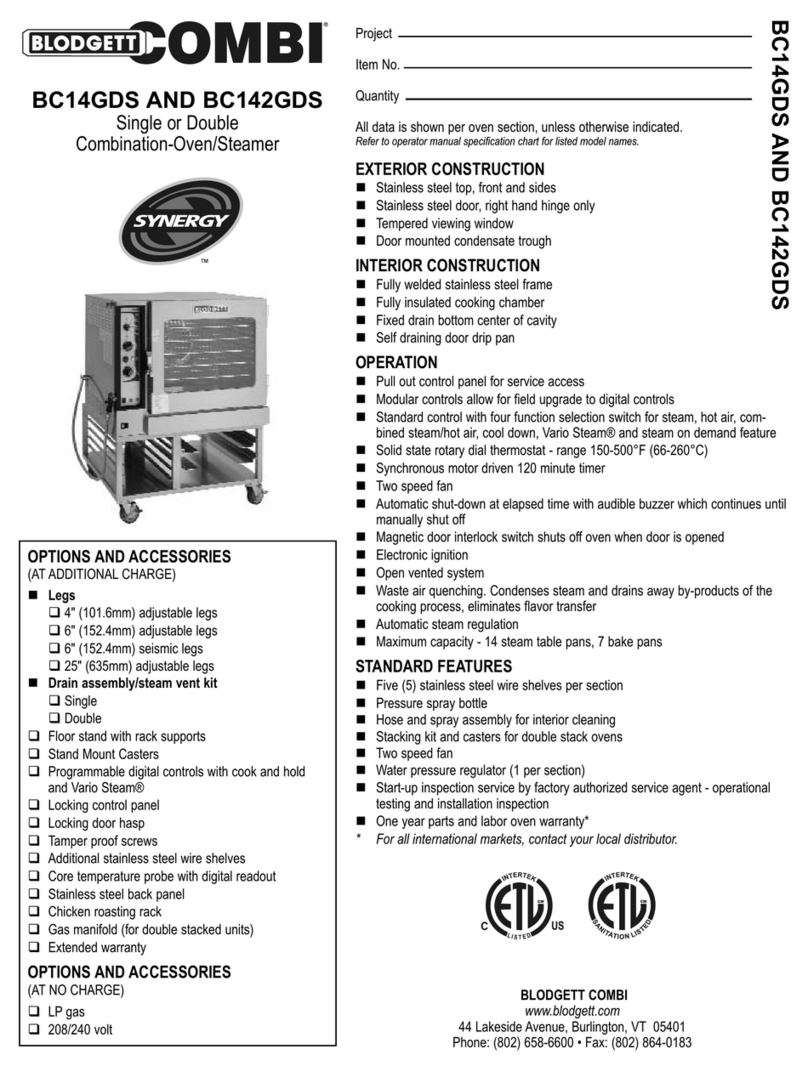
Combi BLODGETT BC142GDS Specifications

Combi

Combi BLODGETT BC142GDS Specifications

AEG COMPETENCE 311704300 Installation and operating instructions

AEG

AEG COMPETENCE 311704300 Installation and operating instructions

Rational SCC WE 61G installation manual

Rational

Rational SCC WE 61G installation manual

Smeg DOSPA38X User manuals

Smeg

Smeg DOSPA38X User manuals

Electrolux air-o-convect 20 GN 2/1 user manual

Electrolux

Electrolux air-o-convect 20 GN 2/1 user manual

Miele HR 1954-2 operating instructions

Miele

Miele HR 1954-2 operating instructions

KHIND OT50 instruction manual

KHIND

KHIND OT50 instruction manual

Henny Penny Smoker Box installation manual

Henny Penny

Henny Penny Smoker Box installation manual

Lang ECOD-AP Installation and operation instructions

Lang

Lang ECOD-AP Installation and operation instructions

AEG BEK455310M user manual

AEG

AEG BEK455310M user manual

Frigidaire FNGE90JGR user manual

Frigidaire

Frigidaire FNGE90JGR user manual

Hotpoint FE9 S831 JSH IX user manual

Hotpoint

Hotpoint FE9 S831 JSH IX user manual

GE Advantium SCB2000 owner's manual

GE

GE Advantium SCB2000 owner's manual

AEG DE401301DM user manual

AEG

AEG DE401301DM user manual

DeLonghi XA660 Directions for use

DeLonghi

DeLonghi XA660 Directions for use

manuals.online logo
manuals.online logoBrands
  • About & Mission
  • Contact us
  • Privacy Policy
  • Terms and Conditions

Copyright 2025 Manuals.Online. All Rights Reserved.

Combi steam oven
HS658GE.7B
en User manual and installation instructions
Register your product on My Siemens and discover exclusive ser-
vices and offers.
siemens-home.bsh-group.com/welcome
The future moving in.
Siemens Home Appliances
en Safety
2
Table of contents
INFORMATION FOR USE
1 Safety....................................................................2
2 Preventing material damage ...............................5
3 Environmental protection and saving en-
ergy .......................................................................6
4 Familiarising yourself with your appliance ........6
5 Operating modes .................................................9
6 Accessories........................................................10
7 Before using for the first time ...........................12
8 Basic operation ..................................................14
9 Rapid heating .....................................................15
10 Time-setting options..........................................15
11 Steam..................................................................16
12 Meat probe..........................................................19
13 Dishes.................................................................21
14 Childproof lock...................................................23
15 Sabbath mode ....................................................23
16 HomeConnect ...................................................23
17 Basic settings.....................................................25
18 Cleaning and servicing......................................26
19 Cleaning function ..............................................28
20 Cleaning assistance...........................................29
21 Descaling............................................................29
22 Drying .................................................................30
23 Appliance door...................................................30
24 Rails ....................................................................34
25 Troubleshooting.................................................34
26 Disposal..............................................................37
27 Customer Service...............................................37
28 Declaration of Conformity .................................38
29 How it works.......................................................38
30 INSTALLATION INSTRUCTIONS .......................46
30.1 General installation instructions.......................46
1 Safety
Observe the following safety instructions.
1.1 General information
¡Read this instruction manual carefully.
¡Keep the instruction manual and the
product information safe for future refer-
ence or for the next owner.
¡Do not connect the appliance if it has been
damaged in transit.
1.2 Intended use
This appliance is designed only to be built
into kitchen units. Read the special installation
instructions.
Only a licensed professional may connect ap-
pliances without plugs. Damage caused by in-
correct connection is not covered under the
warranty.
Only use this appliance:
¡To prepare meals and drinks.
¡In private households and in enclosed
spaces in a domestic environment.
¡Up to an altitude of max. 2000m above
sea level.
1.3 Restriction on user group
This appliance may be used by children aged
8 or over and by people who have reduced
physical, sensory or mental abilities or inad-
equate experience and/or knowledge,
provided that they are supervised or have
been instructed on how to use the appliance
safely and have understood the resulting
dangers.
Do not let children play with the appliance.
Children must not perform cleaning or user
maintenance unless they are at least 15 years
old and are being supervised.
Keep children under the age of 8 years away
from the appliance and power cable.
Safety en
3
1.4 Safe use
Always place accessories in the cooking com-
partment the right way round.
→"Accessories", Page10
WARNING‒Risk of fire!
Combustible objects that are left in the cook-
ing compartment may catch fire.
▶Never store combustible objects in the
cooking compartment.
▶If smoke is emitted, the appliance must be
switched off or the plug must be pulled out
and the door must be held closed in order
to stifle any flames.
Loose food remnants, fat and meat juices
may catch fire.
▶Before using the appliance, remove the
worst of the food residues and remnants
from the cooking compartment, heating ele-
ments and accessories.
Opening the appliance door creates a
draught. Greaseproof paper may come into
contact with the heating element and catch
fire.
▶Never place greaseproof paper loosely
over accessories when preheating the ap-
pliance and while cooking.
▶Always cut greaseproof paper to size and
use a plate or baking tin to hold it down.
WARNING‒Risk of burns!
The appliance and its parts that can be
touched become hot during use.
▶Caution should be exercised here in order
to avoid touching heating elements.
▶Young children under 8 years of age must
be kept away from the appliance.
Accessories and cookware get very hot.
▶Always use oven gloves to remove ac-
cessories or cookware from the cooking
compartment.
When the cooking compartment is hot, any al-
coholic vapours inside may catch fire. The ap-
pliance door may spring open. Hot steam and
jets of flame may escape.
▶Only use small quantities of drinks with a
high alcohol content in food.
▶Do not heat spirits (≥ 15% vol.) when undi-
luted (e.g. for marinating or pouring over
food).
▶Open the appliance door carefully.
WARNING‒Risk of scalding!
The accessible parts of the appliance become
hot during operation.
▶Never touch these hot parts.
▶Keep children at a safe distance.
Hot steam may escape when you open the
appliance door. Steam may not be visible, de-
pending on the temperature.
▶Open the appliance door carefully.
▶Keep children at a safe distance.
If there is water in the cooking compartment
when it is hot, this may create hot steam.
▶Never pour water into the cooking compart-
ment when the cooking compartment is
hot.
WARNING‒Risk of injury!
Scratched glass in the appliance door may
develop into a crack.
▶Do not use any harsh or abrasive cleaners
or sharp metal scrapers to clean the glass
on the oven door, as they may scratch the
surface.
The appliance and its parts that can be
touched may have sharp edges.
▶Take care when handling and cleaning
them.
▶If possible, wear protective gloves.
The hinges on the appliance door move when
the door is opened and closed, which could
trap your fingers.
▶Keep your hands away from the hinges.
Components inside the appliance door may
have sharp edges.
▶Wear protective gloves.
Alcoholic vapours may catch fire in the hot
cooking compartment, and the appliance
door may spring open and may fall off. The
door panels may shatter and fragment.
→"Preventing material damage", Page5
▶Only use small quantities of drinks with a
high alcohol content in food.
▶Do not heat spirits (≥ 15% vol.) when undi-
luted (e.g. for marinating or pouring over
food).
▶Open the appliance door carefully.
en Safety
4
WARNING‒Risk of electric shock!
Incorrect repairs are dangerous.
▶Repairs to the appliance should only be
carried out by trained specialist staff.
▶Only use genuine spare parts when repair-
ing the appliance.
▶If the power cord of this appliance is dam-
aged, it must be replaced by trained spe-
cialist staff.
If the insulation of the power cord is dam-
aged, this is dangerous.
▶Never let the power cord come into contact
with hot appliance parts or heat sources.
▶Never let the power cord come into contact
with sharp points or edges.
▶Never kink, crush or modify the power
cord.
An ingress of moisture can cause an electric
shock.
▶Do not use steam- or high-pressure clean-
ers to clean the appliance.
If the appliance or the power cord is dam-
aged, this is dangerous.
▶Never operate a damaged appliance.
▶Never pull on the power cord to unplug the
appliance. Always unplug the appliance at
the mains.
▶If the appliance or the power cord is dam-
aged, immediately unplug the power cord
or switch off the fuse in the fuse box.
▶Call customer services. →Page37
WARNING‒Danger: Magnetism!
Permanent magnets are used in the control
panel or in the controls. These may affect
electronic implants, e.g. heart pacemakers or
insulin pumps.
▶Wearers of electronic implants must stay at
least 10 cm away from the control panel.
WARNING‒Risk of suffocation!
Children may put packaging material over
their heads or wrap themselves up in it and
suffocate.
▶Keep packaging material away from chil-
dren.
▶Do not let children play with packaging ma-
terial.
Children may breathe in or swallow small
parts, causing them to suffocate.
▶Keep small parts away from children.
▶Do not let children play with small parts.
1.5 Steam
Follow these instructions when using a steam
function.
WARNING‒Risk of scalding!
The water in the water tank may become very
hot if you operate the appliance for long peri-
ods.
▶Always empty the water tank after using the
steam function.
Hot steam is generated in the cooking com-
partment.
▶Do not reach into the cooking compartment
when using steam.
Hot liquid may spill over the sides of the ac-
cessory when it is removed from the cooking
compartment.
▶Remove hot accessories with care and al-
ways wear oven gloves.
WARNING‒Risk of fire!
Due to the hot surfaces, vapours from flam-
mable liquids may catch fire in the cooking
compartment (explosion). The appliance door
may spring open. Hot steam and jets of flame
may escape.
▶Do not pour flammable liquids (e.g. alco-
holic drinks) into the water tank.
▶Only fill the water tank with water or with
the descaling solution we have recommen-
ded.
1.6 Meat probe
WARNING‒Risk of electric shock!
Using the wrong meat probe could damage
the insulation.
▶Only use the meat probe for this specific
appliance.
1.7 Cleaning function
WARNING‒Risk of burns!
The outside of the appliance gets very hot
when the cleaning function is in progress.
▶Never touch the appliance door.
▶Allow the appliance to cool down.
▶Keep children at a safe distance.
Preventing material damage en
5
2  Preventing material damage
2.1 General
ATTENTION!
Alcoholic vapours may catch fire in the hot cooking
compartment and cause permanent damage to the ap-
pliance. The appliance door may spring open due to
an explosion and it may fall off. The door panels may
shatter and fragment. Due to the resulting negative
pressure, the cooking compartment may become con-
siderably deformed inwards.
▶Do not heat spirits (≥ 15% vol.) when undiluted (e.g.
for marinating or pouring over food).
If there is water on the cooking compartment floor
when operating the appliance at temperatures above
120°C, this will damage the enamel.
▶Do not use the appliance if there is water on the
cooking compartment floor.
▶Wipe away any water on the cooking compartment
floor before operation.
Objects on the cooking compartment floor at over
50°C will cause heat to build up. The baking and
roasting times will no longer be correct and the enamel
will be damaged.
▶Do not place any accessories, greaseproof paper or
foil of any kind on the cooking compartment floor.
▶Only place cookware on the cooking compartment
floor if a temperature above 50°C has been set.
Using silicone moulds or any film, covers or accessor-
ies that contain silicone could damage the baking
sensor. Damage may occur even if the baking sensor
is not active.
▶Do not use silicone moulds or any film, covers or
accessories that contain silicone.
▶Never place objects made of silicone in the cooking
compartment.
When the cooking compartment is hot, any water in-
side it will create steam. The change in temperature
may cause damage.
▶Never pour water into the cooking compartment
when it is still hot.
▶Never place cookware containing water on the
cooking compartment floor.
The prolonged presence of moisture in the cooking
compartment leads to corrosion.
▶Allow the cooking compartment to dry after use.
▶Do not keep moist food in the cooking compartment
for a long time with the door closed.
▶Do not store food in the cooking compartment.
Leaving the appliance to cool down with the door open
will damage the front of neighbouring kitchen units over
time.
▶Always allow the cooking compartment to cool
down with the door closed after cooking at high
temperatures.
▶Take care not to trap anything in the appliance
door.
▶Only leave the cooking compartment to dry with the
door open if a lot of moisture was produced during
operation.
Fruit juice dripping from the baking tray leaves stains
that cannot be removed.
▶When baking very juicy fruit flans, do not pack too
much on the baking tray.
▶If possible, use the deeper universal pan.
Using oven cleaner in a hot cooking compartment
damages the enamel.
▶Never use oven cleaner in the cooking compartment
when it is still warm.
▶Remove all food remnants from the cooking com-
partment and the appliance door before you next
heat up the appliance.
If the seal is very dirty, the appliance door will no
longer close properly during operation. This may dam-
age the front of adjacent kitchen units.
▶Keep the seal clean at all times.
▶Never operate the appliance if the seal is damaged
or missing.
Sitting or placing objects on the appliance door may
damage it.
▶Do not place, hang or support objects on the appli-
ance door.
▶Do not place cookware or accessories on the appli-
ance door.
With certain models, accessories may scratch the door
pane when closing the appliance door.
▶Always push accessories fully into the cooking com-
partment.
2.2 Steam
Follow these instructions when using the steam func-
tion.
ATTENTION!
Using cookware with rust spots may cause corrosion in
the cooking compartment. Even the smallest spots of
rust can cause corrosion.
▶Do not use cookware with rust spots.
Dripping liquids make the cooking compartment floor
dirty.
▶When steaming with a perforated cooking container,
always place the baking tray, the universal pan or
the unperforated cooking container underneath. This
will catch any liquid that drips down.
Hot water in the water tank may damage the steam
system.
▶Only fill the water tank with cold water.
If there is water on the cooking compartment floor
when operating the appliance at temperatures above
120°C, this will damage the enamel.
▶Do not use the appliance if there is water on the
cooking compartment floor.
▶Wipe away any water on the cooking compartment
floor before operation.
A lot of steam is produced during operation with the
types of steam heating. Condensate that collects in the
drip trough underneath the cooking compartment may
overflow and damage adjacent units.
▶Do not open the appliance door, or open it as infre-
quently as possible, while the appliance is in opera-
tion.

en Environmental protection and saving energy
6
If descaling solution comes into contact with the control
panel or other delicate surfaces, it will damage them.
▶Remove descaling solution immediately with water.
Cleaning the water tank in the dishwasher will damage
it.
▶Do not clean the water tank in the dishwasher.
▶Clean the water tank with a soft cloth and standard
washing-up liquid.
3  Environmental protection and saving energy
3.1 Disposing of packaging
The packaging materials are environmentally compat-
ible and can be recycled.
▶Sort the individual components by type and dispose
of them separately.
3.2 Saving energy
If you follow these instructions, your appliance will use
less power.
Only preheat the appliance if the recipe or the recom-
mended settings tell you to do so.
¡Not preheating the appliance can reduce the en-
ergy used by up to 20%.
Use dark-coloured, black-coated or enamelled baking
tins.
¡These types of baking tin absorb the heat particu-
larly well.
Open the appliance door as little as possible during
operation.
¡This maintains the temperature in the cooking com-
partment and eliminates the need for the appliance
to reheat.
When baking multiple dishes, do so in succession or
in parallel.
¡The cooking compartment is heated after baking
the first dish. This reduces the baking time for the
second cake.
If the cooking time is relatively long, you can switch
the appliance off 10minutes before the cooking time
ends.
¡There will be enough residual heat to finish cooking
the dish.
Remove any accessories that are not being used from
the cooking compartment.
¡Accessories that are not being used do not need to
be heated.
Allow frozen food to defrost before cooking.
¡This saves the energy that would otherwise be re-
quired to defrost it.
Note:
The appliance requires:
¡A maximum of2W in networked standby mode
¡A maximum of 1W when the appliance is not con-
nected to the network, with the display switched on
¡A maximum of 0.5W when the appliance is not con-
nected to the network, with the display switched off
4  Familiarising yourself with your appliance
4.1 Control panel
You can use the control panel to configure all functions
of your appliance and to obtain information about the
operating status.
Note:On certain models, specific details such as col-
our and shape may differ from those pictured.
1
4
1
3
2
1
Buttons
The buttons on the left- and right-hand side of
the control panel have a pressure point. Press
a button to execute its function. On appliances
without a stainless steel front, the buttons are
also touch fields.
2
Rotary selector
You can turn the rotary selector without limits
clockwise or anti-clockwise.
Touch fields are touch-sensitive surfaces. To
select a function, simply press lightly on the rel-
evant field.
3
Touch display
You can see the current selection options in the
touch displays. To select a function, press dir-
ectly on the corresponding field. The text fields
change depending on the selection.
4
Touch fields
Touch fields are touch-sensitive surfaces. To
select a function, simply press lightly on the rel-
evant field.
Familiarising yourself with your appliance en
7
4.2 Buttons
Use the buttons on the left- and right-hand side of the control panel to switch your device or the operating mode on
and off.
Button Function Use
On/off Switch the appliance on or off.
Menu Open the operating mode menu
Information Display notifications Activate and deactivate the childproof lock
Childproof lock Activate and deactivate the childproof lock
Time-setting options Press briefly: Start or pause operation.
Press and hold for approx. threeseconds: Cancel operation.
Rapid heat-up Switch rapid heat-up on and off
Start/stop Start, pause or cancel the operation
Opening the control
panel
Open the control panel to remove the water tank.
4.3 Rotary selector
Use the rotary selector to change the setting values
that are shown in the display.
If you have reached the minimum or maximum value
for setting values, e.g. the temperature, this value re-
mains in the display. If required, use the rotary selector
to turn the value back again.
For lists, e.g. the types of heating, the first value starts
again after the last value.
4.4 Display
The display shows the current setting values.
The value that you can change in the display is high-
lighted in colour.
Status bar
The status bar is at the top of the display.
The time and set time functions are shown in the status
bar.
Progress line
The line is shown in the display below the highlighted
value.
The progress line shows you how much the appliance
has already heated up or how much time has elapsed.
The line is filled from left to right.
Countdown
You can view the countdown time or the cooking time
for the previous operation in the top right in the status
bar.
If you have set a cooking time and the cooking time is
deleted, the countdown time takes over from the time
that has already elapsed from the cooking time. You
can therefore always check how long the operation has
already been running.
Temperature display
The heating-up control and the residual heat indicator
show you the temperature in the cooking compartment.
Due to thermal inertia, the temperature that is displayed
may differ slightly from the actual temperature inside
the cooking compartment. You can use the ⁠ button
to check the current temperature.
¡Heating-up control
After the operation starts, the heating-up indicator
displays the rising temperature in the cooking com-
partment. When you are preheating the appliance,
the optimal time to place your food in the cooking
compartment is as soon as all the bars are filled.
For set levels, e.g. for grill settings, the heating-up
indicator is not displayed.
¡Residual heat indicator
When the appliance is switched off, the display
shows the residual heat in the cooking compart-
ment. The residual heat indicator goes out at ap-
prox. 60°C.
Symbols
Different symbols may appear on the display.
Symbol Name Use
HomeConnect ¡Home network and HomeCon-
nect server connected
¡The number of lines shows the
signal strength of the home net-
work
→"HomeConnect ", Page23
Home network Home network not connected
→"HomeConnect ", Page23
en Familiarising yourself with your appliance
8
Symbol Name Use
HomeConnect server HomeConnect server not connected
→"HomeConnect ", Page23
Remote start Remote start activated
→"HomeConnect ", Page23
Remote diagnostics Remote diagnostics activated
→"HomeConnect ", Page23
4.5 Cooking compartment
The functions in the cooking compartment make your
appliance easier to use.
Shelf supports
The rails in the cooking compartment enable you to
place accessories at different heights.
→"Accessories", Page10
Your appliance has five shelf positions. The shelf posi-
tions are numbered from bottom to top.
You can remove the rails, e.g. for cleaning.
→"Rails", Page34
Self-cleaning surfaces
The self-cleaning surfaces in the cooking compartment
are coated with a porous, matt ceramic layer and have
a rough surface. When the appliance is in operation,
the self-cleaning surfaces absorb splashes from roast-
ing or grilling and break them down.
The following surfaces are self-cleaning:
¡Back wall
¡Ceiling
¡Side walls
Use the cleaning function regularly to help retain the
cleaning ability of the self-cleaning surfaces and pre-
vent damage.
→"Cleaning function ", Page28
Lighting
One or more oven lights illuminate the cooking com-
partment.
When you open the appliance door, the light in the
cooking compartment switches on. If the appliance
door remains open for longer than 15minutes, the light
switches off again.
For most operating modes, the lighting is switched on
during operation. The lighting switches off again when
the operation ends.
Cooling fan
The cooling fan switches on and off depending on the
appliance's temperature. The hot air escapes above
the door.
ATTENTION!
Do not cover the ventilation slot above the appliance
door. The appliance overheats.
▶Ensure that the ventilation slots are unobstructed.
To ensure that the appliance cools down more quickly
after operation, the cooling fan continues to run for a
certain period afterwards.
Appliance door
If you open the appliance door during operation, the
operation stops. When you close the appliance door,
the operation continues automatically.
Water tank
You need the water tank for the types of steam heating.
The water tank is behind the control panel.
→"Filling the water tank", Page16
1 2
3
1
Tank cover
2
Opening for filling and emptying
3
Handle for removing and inserting
Operating modes en
9
5  Operating modes
This is where you can find an overview of your appli-
ance's operating modes and main functions.
Press ⁠ to open the menu.
Operating
mode
Use
Types of
heating
Select finely tuned types of heating for
the optimal preparation of your food.
→"Types of heating", Page9
Meals Use programmed, recommended set-
tings for various meals.
→"Dishes", Page21
Steam Gently prepare food with types of steam
heating.
Operating
mode
Use
Drying func-
tion
Use after every operation with steam or
the microwave.
→"Drying", Page30
Descaling You can use this to remove limescale
from the evaporator.
→"Descaling", Page29
Cleaning
function
The cleaning function cleans your oven
almost automatically.
→"Cleaning function ", Page28
Basic set-
tings
Adjust the basic settings. Basic settings
→Page25
HomeCon-
nect
Connect the oven to a mobile end
device and remotely control it.
→"HomeConnect ", Page23
5.1 Types of heating
To ensure that you always use the right type of heating
to cook your food, we explain the differences and ap-
plications below.
The symbols for each type of heating help you to re-
member them.
When you select a type of heating, the appliance sug-
gests a suitable temperature or setting. You can use
these values or change them within the specified
range.
For temperature settings above 275°C and grill set-
ting3, the appliance reduces the temperature to ap-
prox. 275°C or grill setting1 after approx. 40minutes.
Symbol Types of heating Temperature
range
What it's used for and how it works
Possible additional options
4Dhot air 30–250°C Bake and roast on one or more levels.
The fan distributes the heat from the ring-shaped heating element
in the back wall evenly around the cooking compartment.
Top/bottom heating 30–250°C Traditionally bake or roast on one level. This type of heating is
ideal for cakes with moist toppings.
The heat is emitted evenly from above and below.
Hot air eco 30–250°C Cook selected dishes gently on one level without preheating.
The fan distributes the heat from the ring-shaped heating element
in the back wall evenly around the cooking compartment. The
food is cooked in phases using residual heat.
This type of heating is most effective between 125 and 250°C.
Always keep the appliance door closed when cooking.
This type of heating is used to determine the energy consump-
tion in air recirculation mode and the energy efficiency class.
Top/bottom heating
eco
30–250°C Gently cook selected dishes.
Heat is emitted from above and below.
This heating function is most effective between 150 and 250°C.
This type of heating is used to measure the energy consumption
in the conventional mode.
Circulated air grilling 30–250°C Roast poultry, whole fish or larger pieces of meat.
The grill element and the fan switch on and off alternately. The
fan circulates the hot air around the food.
Grill, large area Grill settings:
1 = low
2 = medium
3 = high
Grill flat items such as steak and sausages, or make toast. Grat-
inate food.
The entire area below the grill element becomes hot.
Grill, small area Grill settings:
1 = low
2 = medium
3 = high
Grill small quantities, such as steak, sausages or toast. Gratinate
small quantities of food.
The central area below the grill element becomes hot.
en Accessories
10
Symbol Types of heating Temperature
range
What it's used for and how it works
Possible additional options
Pizza setting 30–250°C Cook pizza or dishes that require a lot of heat from below.
The bottom heating element and the ring-shaped heating ele-
ment in the back wall heat the cooking compartment.
Intensive heat 30–250°C Prepare dishes with a crispy base.
The heat is emitted from above and more intensively from below.
Slow cooking 70–120°C Slowly and gently cook seared, tender pieces of meat in un-
covered cookware.
The heat is emitted evenly from above and below at a low tem-
perature.
Bottom heating 30–250°C Final baking or cooking food in a bain marie.
Heat is emitted from below.
Drying 30–150°C Dry herbs, fruit or vegetables.
Keeping food warm 60–100°C Keep cooked food warm.
Plate warming 30–70°C Plate warming.
CoolStart function 30–250°C For quickly preparing frozen products at position3. The temper-
ature depends on the manufacturer's instructions. Use the
highest temperature specified on the packaging.
The cooking time is as specified, or shorter.
Preheating is not useful.
5.2 Types of steam heating
This is where you can find an overview of the types of steam heating and their use.
Symbol Type of heating Temperature Use
Steam 30–100°C Cook vegetables, fish and side dishes. Juice fruit. Blanch food.
Reheating 80–180°C Gently reheat plated meals and baked items.
The steam ensures that the food does not dry out.
Proving dough 30–50°C Allow yeast dough and sourdough to rise.
The dough rises considerably more quickly than at room temper-
ature. The surface of the dough does not dry out.
Defrosting 30–60°C Gently defrost vegetables, meat, fish and fruit.
Thanks to the moisture, the food does not dry out or use its
shape.
6  Accessories
Use original accessories. These have been made espe-
cially for your appliance.
Note:Accessories may become deformed if they get
hot. Deformation has no effect on function. As the ac-
cessory cools down, it will regain its original shape.
The accessories supplied may differ depending on the
appliance model.