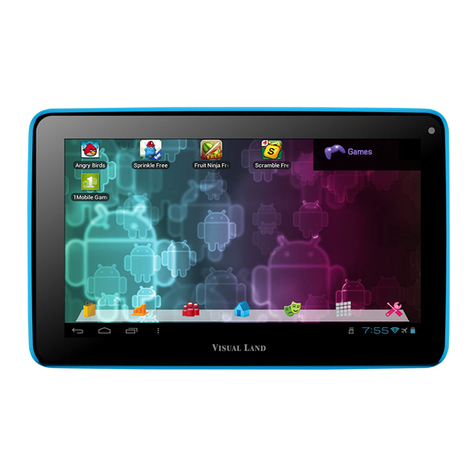
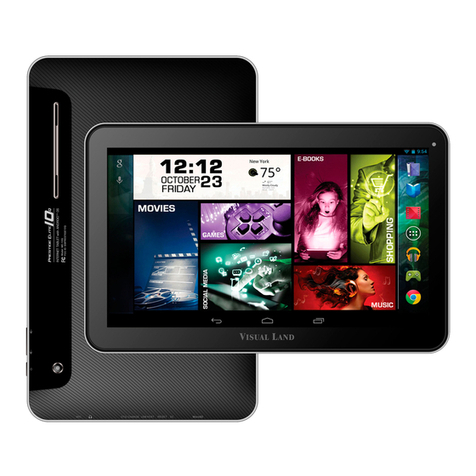
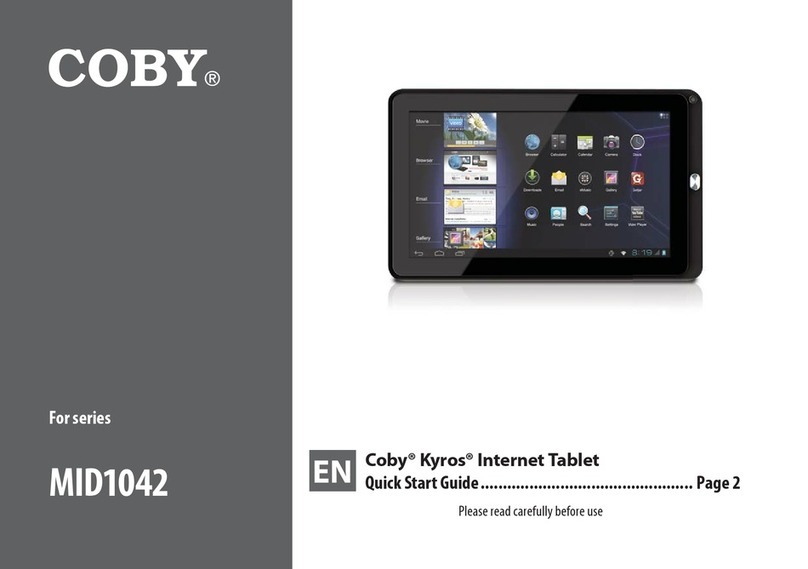
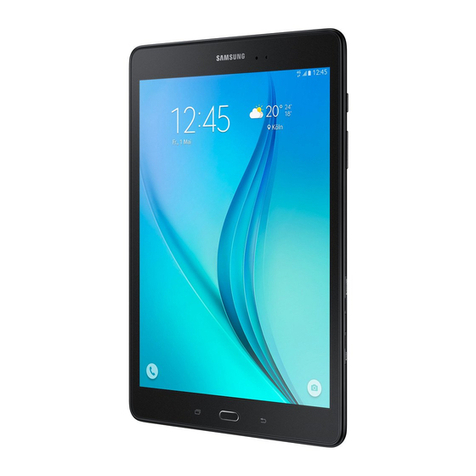
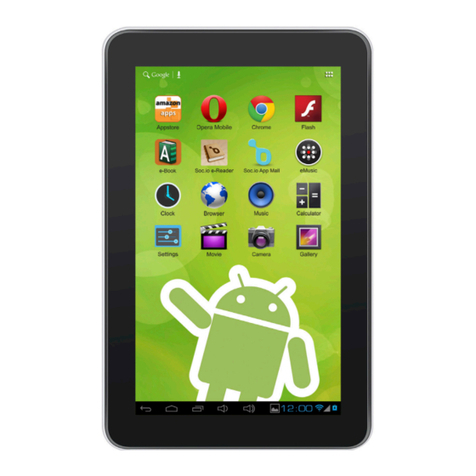
After you finish setting up your device, the Home screen appears
for the
first time. Here, you can add app icons and widgets (an “at- a-glance”
view of an app’s most important information) to your
Home screens to
easily find them.
•
To move between Home screens, swipe left or right.
•
To see notifications, swipe down from the top of the screen
with
one finger.
•
To open Quick Settings—frequently used settings—swipe down
from the top of the screen twice with one finger or once with two
fingers. See Quick Settings .
•
To open Settings , swipe down from the top of any screen with
two fingers, then touch the Settings icon at the top right.
•
From the Home screen, touch Google at the top of the screen , or
say “Ok Google” to search, send messages, ask for directions, or
give other instructions.
Status bar
The status bar is at the very top of the screen. On the right, you can see the
Wi-Fi and mobile signal strength, how much battery power is left, and the
time. On the left, you can see which apps have sent you notifications.
Navigation Basics
At the bottom of your device's screen, no matter what
you’re doing,
you’ll always find the navigation bar with three buttons.
Back
Opens the previous screen you were working in, even
if it
was in a different app. Once you back up to the Home
screen, you can’t go back any further.
ANDROID GUIDE Page | 9