CONNECTING THE CAMERA AND TUNING THE TELEVISION
The colour of connector leads may vary due to availability although yellow is always
video. When connecting the system please follow the colour coding on the attached
diagram. Notice that the video and audio connectors are of the same standard
RCA/Phono type, but that the power connector is smaller and of different design.
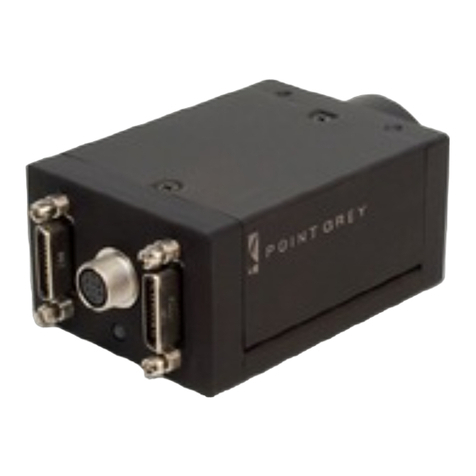
Before proceeding with the main connections, on the long extension cable check to
establish which power connector fits to the camera and which to the power adapter,
as it is likely that it will connect in only one way. This then gives you the orientation
of the long cable. If there is one, gently pull off the camera lens cap!
Follow the colour coded wiring diagram as illustrated making sure all the relevant
connections are secure. To connect to the television, plug the white and yellow
connectors into the colour coded connections on the scart adapter and plug it into a
spare scart socket on the TV. When complete, and with the power adapter plugged
into the mains electricity, you are ready to power the system.
At this point switch on the power to the camera system and switch on the television.
If a picture does not appear on your television you may need to use the remote
control to change to the appropriate input channel. Depending upon the number of
scart and other possible inputs to your TV, there will be a button on the remote
control called ‘source’ or ‘AV1/2’ (see owner manual). Usually this is a scroll button
and pressing repeatedly will scroll through the various input sources. By doing so
you should find the appropriate input for a picture to appear from your camera. You
may adjust the colour, brightness, sound etc on your TV in the normal way.
Alternatively, if your television has colour coded direct phono connections
(sometimes on the side or behind a drop-down panel on the front) you may omit the
intermediate scart adapter and connect to these inputs. Tuning may be required as
described above. If you wish to monitor and record images, then the scart adapter
may be connected to the input of a vhs/dvd recorder and the signal tuned to the TV
in the normal way.
The lens on the camera is designed for subjects in close proximity and focus may
be adjusted by gently screwing the lens in/out by small amounts. Like any other
camera when the focus is set there will be a ‘depth of field’ in front of and beyond
the focus point within which elements in the picture will be in focus.
For this reason, when setting up the camera in the nestbox it is recommended that
the primary focus point is concentrated on the main area of activity you wish to mon-
itor, in other words it is perfectly normal for the adult bird to appear slightly blurred
as it enters the nest access hole, but to be fully in focus in the core nesting area.
Note: the camera is not waterproof and should always be located within a housing
and protected from the elements.
3