6 | P a g e
17. IMPORTANT SAFETY NOTE:
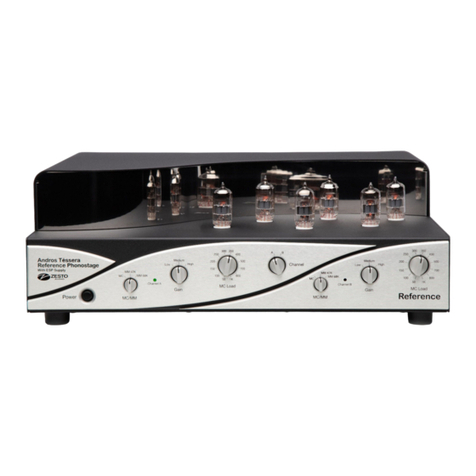
• Before connecting a new product such as the Andros Téssera Phonostage to your
audio or home theater system, turn off all other equipment (preferably unplugging
them from the AC power source). Many audio components feature automatic
turn-on circuits that may activate during an installation, potentially causing
damage to electronic components or speakers. This type of damage is not
covered by product warranties, and Zesto Audio specifically disclaims
responsibility for any such damage.
• Power Cord: The removable IEC power cord provided with your unit was
specifically designed for use with this product, but other AC cords may be used.
Consult your dealer for advice on AC power cords and high quality wire in your
system.
• AC Fuse: The fuse is located inside the IEC power entry connector. If the unit does
not power up, contact an authorized service representative.
• Wiring: Cables running inside walls should have the appropriate markings to
indicate compliance and listing by the UL, CSA or other standards required by
the UL, CSA, NEC, or your local building code. Questions about cables inside of
walls should be directed to a qualified custom installer, licensed electrician, or
low-voltage contractor.
18. RECORDING COPYRIGHT: Recording of copyrighted material for other than
personal use is illegal without permission of the copyright holder.
19. FCC INFORMATION FOR USER:
• CAUTION: Any changes or modifications not expressly approved by Zesto Audio
could void the user's authority to operate the equipment.
• These limits are designed to provide reasonable protection against harmful
interference in a residential installation. This equipment generates and can
radiate radio frequency energy, and if not installed and used in accordance with
the instructions it may cause harmful interference to radio communications.
However, there is no guarantee that interference will not occur in a particular
installation. If this equipment does cause harmful interference to radio or
television reception, which can be determined by turning the equipment off and
on, the user is encouraged to try to correct the interference by one or more of the
following measures:
• Reorient or relocate the equipment.
• Increase the separation between the equipment and receiver.
• Connect the equipment into an outlet on a circuit different from where the
receiver is connected.