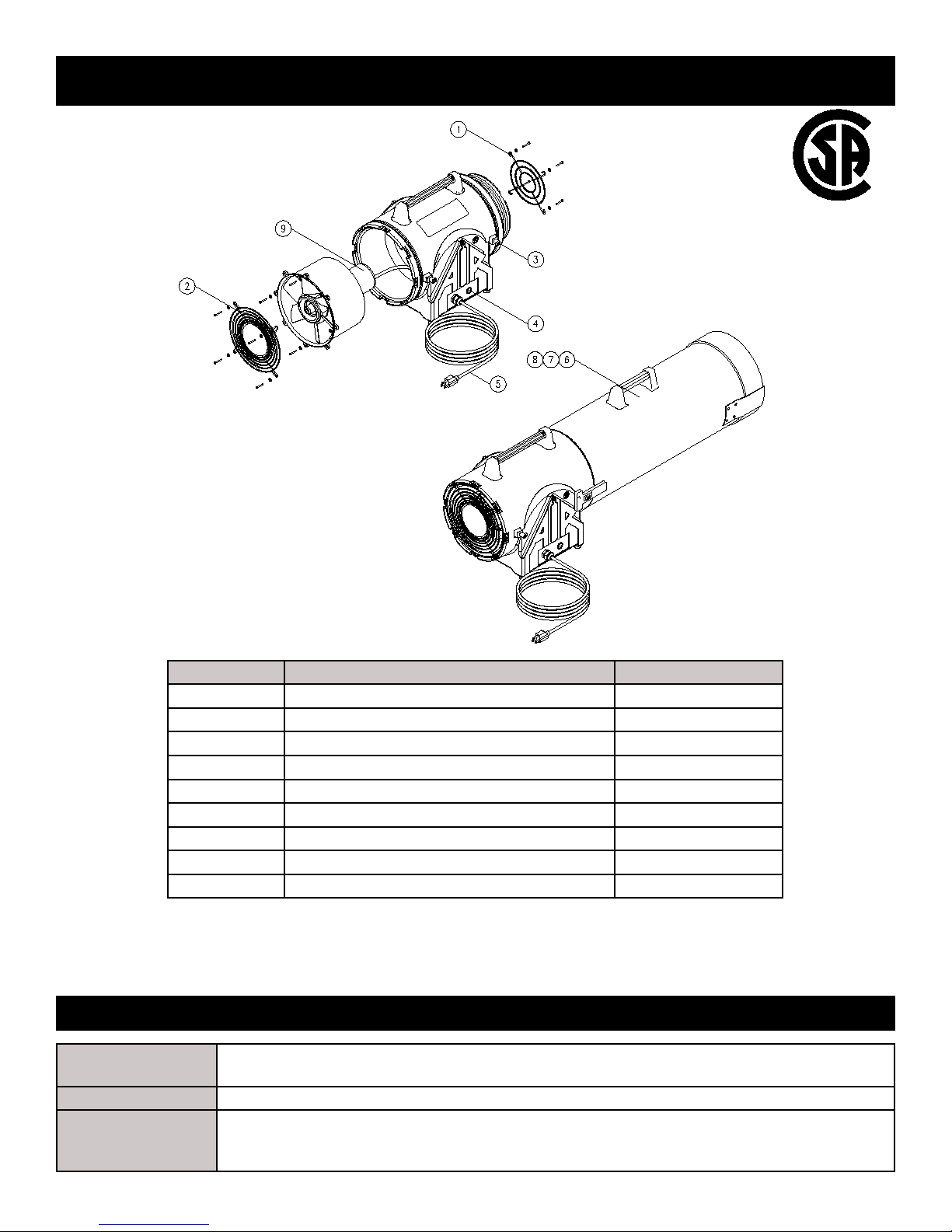
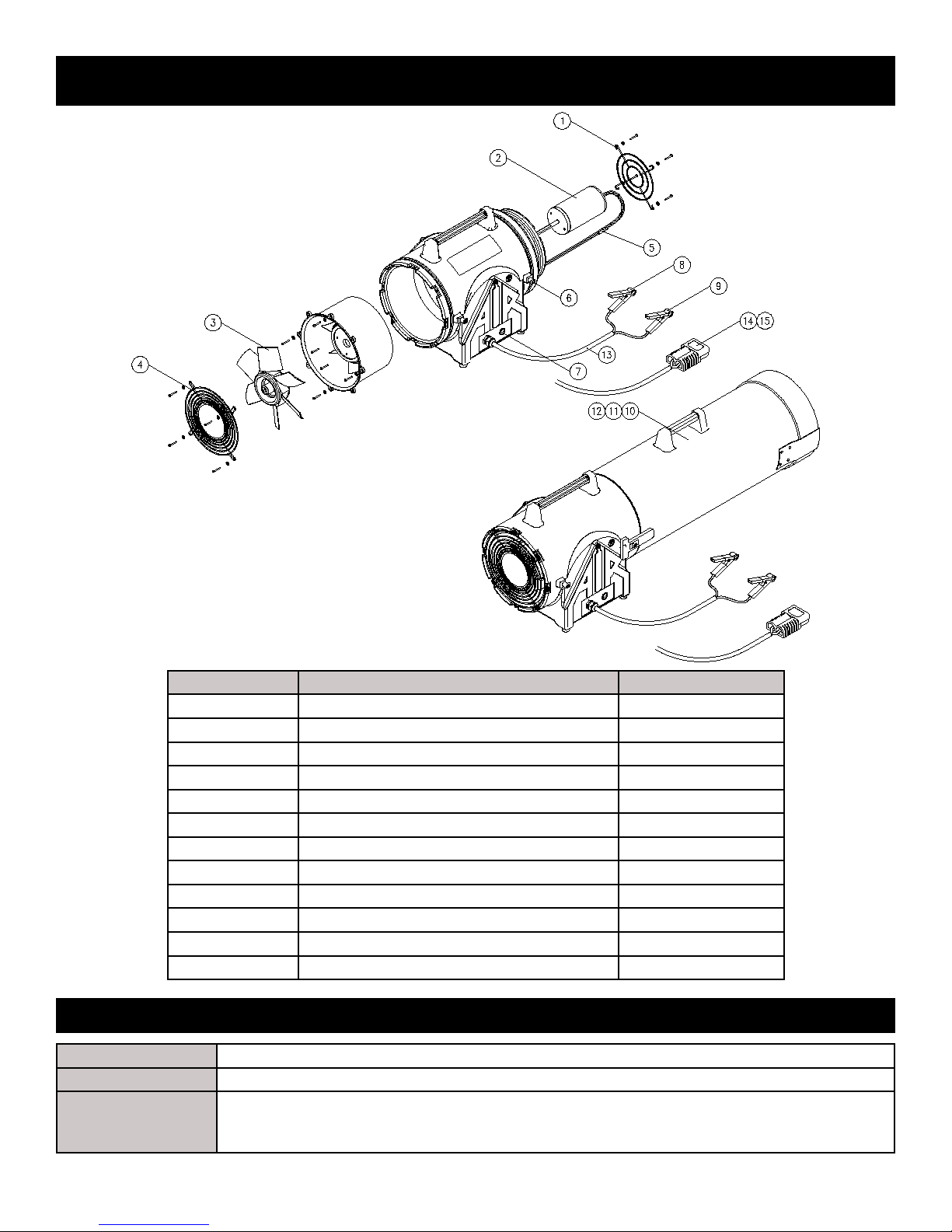
General Set-Up and Operation
For CVF-8AC, CVF-8AC50, and CVF-8DC Models
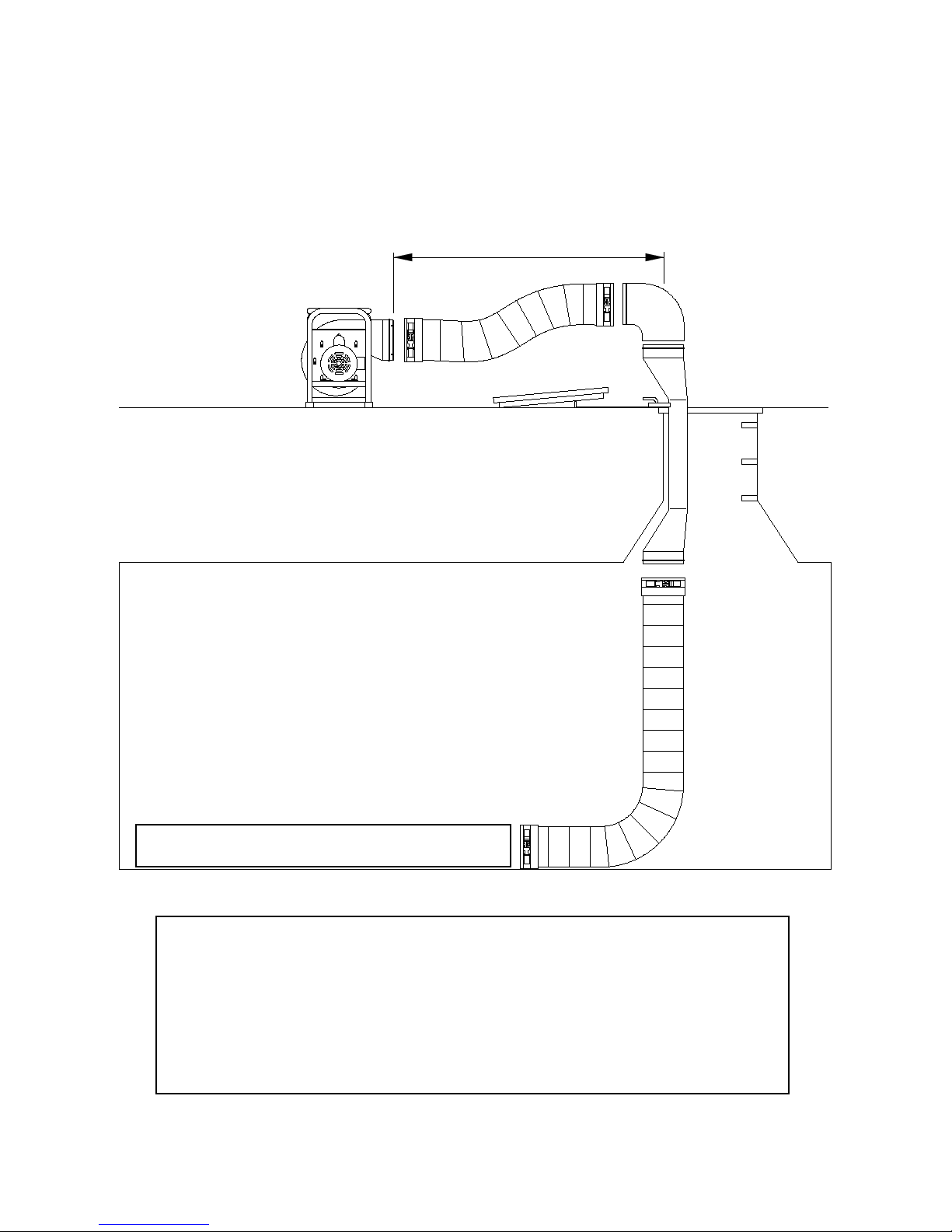
1) Place fan in a clean fresh air environment.
2) Air quality of the conned space should be tested prior to ventilation. If air quality of the conned space is
unacceptable, consult a trained professional.
3) Inspect fan for damaged or worn parts and ducting for air leaks prior to fan operation.
4) Install duct cuff to exhaust ange and secure. Keep bends and kinks in ducting to a minimum to maximimize
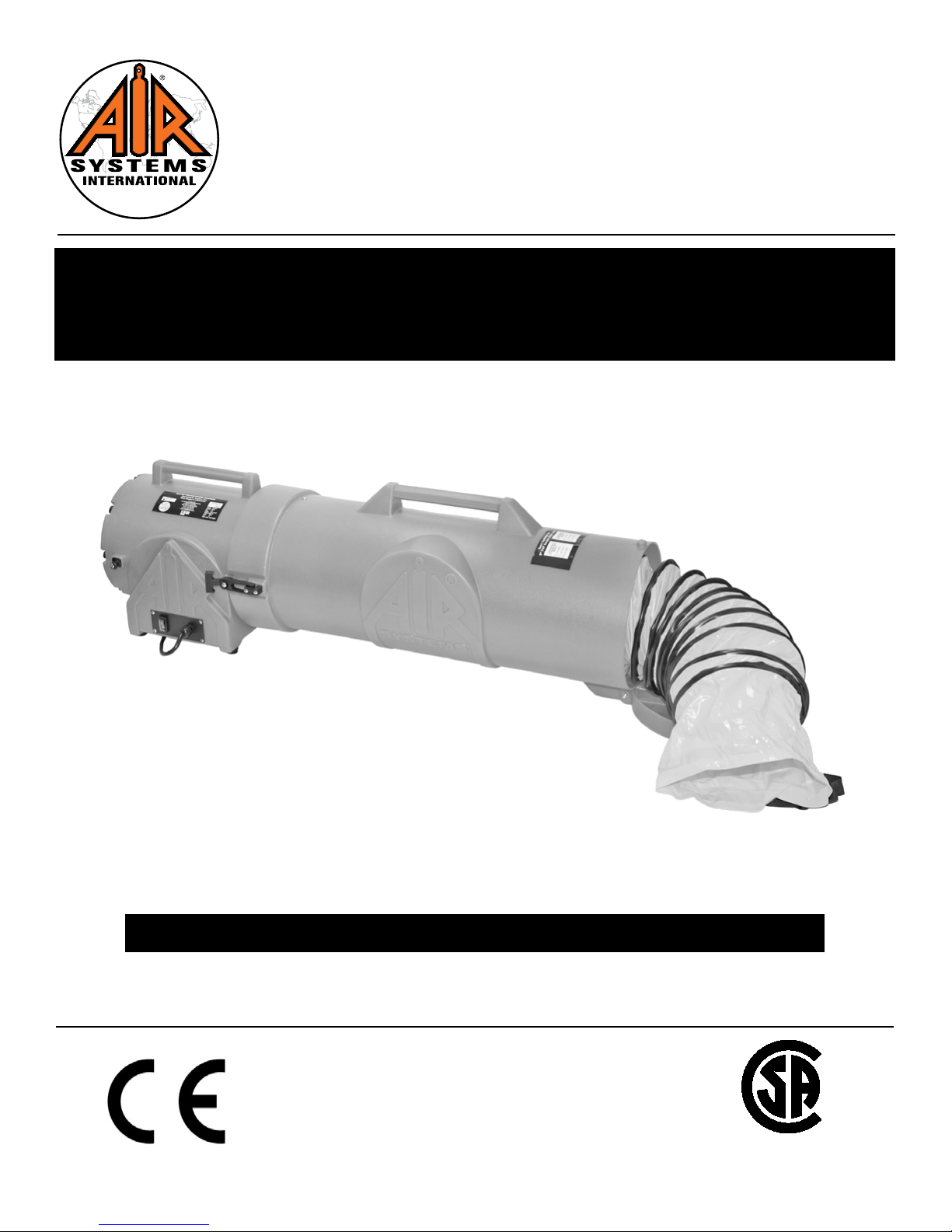
air ow. If canister model is used, secure canister with connect straps, open lid and pull out ducting. Inspect
for air leaks.
5) Set fan upwind from the work location and a minimum of 5 ft. from the manhole opening.
6) Connect fan to power source.
AC versions require 115 VAC/60Hz, 15 amp service or 220 VAC/50Hz.
Note: If an extension cord is required, the minimum recommended size is 14 AWG up to
25 ft. For further information refer to the National Electric Code Tables, Article 400.
7) Push ON/OFF switch to “I” position on CVF-8AC and CVF-8DC models.
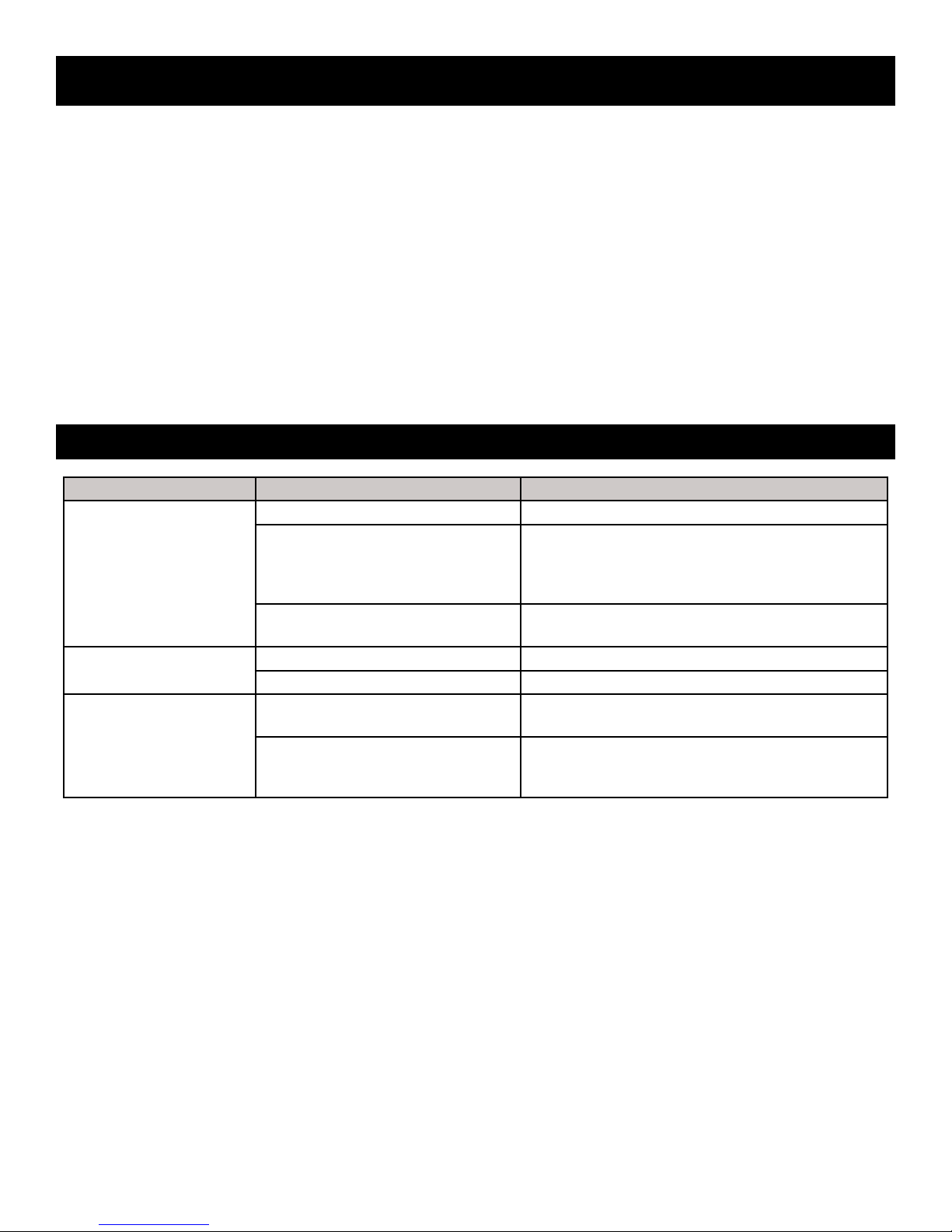
PROBLEM POSSIBLE CAUSE SOLUTION
Excessive vibration
Air intake blocked Turn fan off and clear debris from intake.
Possible internal damage
Turn off and inspect fan blades, shaft, and housing
for debris, damage, and loose screws.
Note: Never run fan for extended periods without
installing duct on the exhaust ange.
Possible external damage Turn fan off and inspect for loose guards, broken
welds, etc.
Circuit breaker trips
CVF-8AC series only
Voltage output insuf cient Test outlet with volt meter.
Extension cord improperly sized Use 14 AWG extension cord up to 25 ft.
Fan will not run
CVF-8DC only
Blown fuse (DC version only) Check and replace. Use only a 20A/32 VDC slow
blow fuse.
Battery connection
Ensure proper connection from battery clips to bat-
tery terminal posts. On battery pack units, recharge
battery.
4
Troubleshooting