NITID S6 May 2023
10
Amate Audio
8V). This avoids undesirable effects from sound sources and mixers capable of
delivering a higher output voltage.
It must be noticed that driving a system continuously over its nominal input
level may drastically decrease the sound quality, normally because of the lack of
headroom (dynamic response). In the long term, it might also produce unnecessary
damaging of the transducers and reduce their reliability. The maximum power of
the system is obtained at its nominal input level. Under this condition, the limiter
indicator may blink occasionally. Working continuously above this level is never
translated into better results.
To avoid loudspeaker damage because of input overload issues, NÍTID systems
build in an input monitoring system that prevents the cabinet from being
continuously operated at excessive input signal levels.
After a period of exposure to high average input levels (over +2.5Vrms), a dynamic
compressor will progressively reduce the output power, to protect the
transducers.
The higher the voltage at the input is, the higher the reduction of the output power,
being maximum reduction 18dB. While the dynamic compressor is active, the
message “Input Overload” will be present on the rear screen and the front logo will
blink constantly.
To get back to the normal operation mode, the input level should be reduced to
below 2 Vrms. After the level reduction, the system needs about 5 seconds to
recover the normal operation mode.
Loudness (ALC)
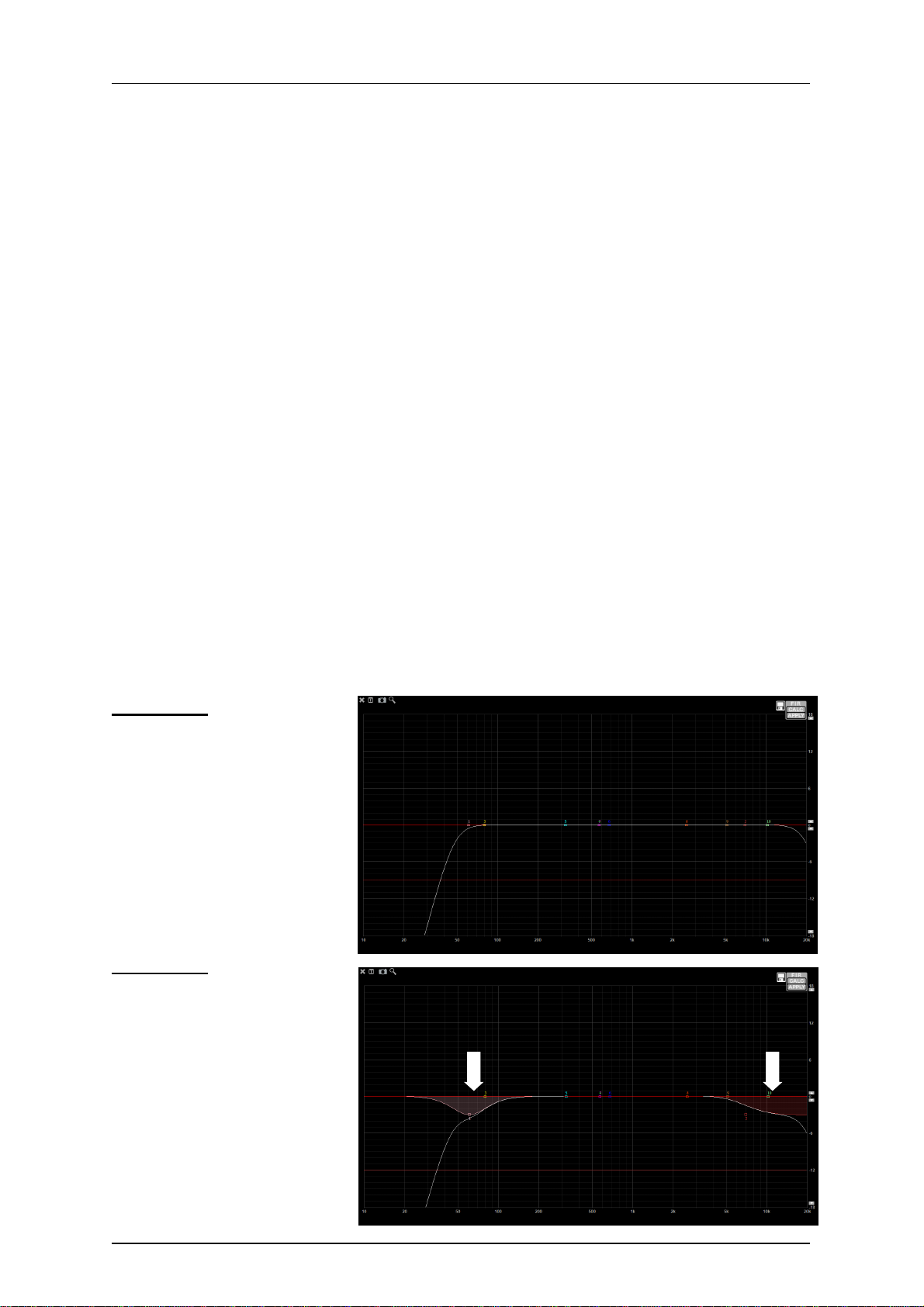
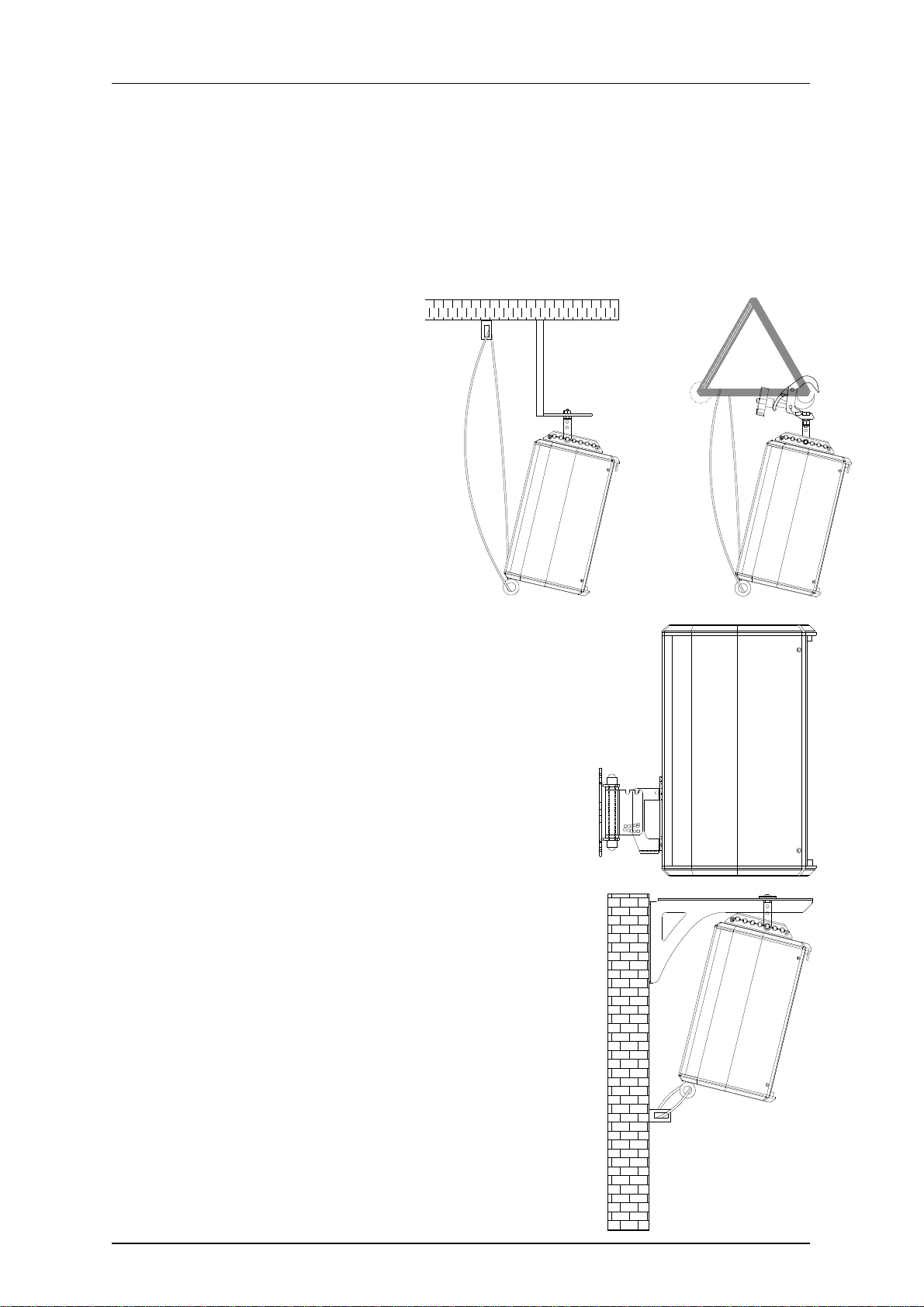
The ALC feature is present when the Presets FLAT or HPF90 are selected.
ALC is a DSP algorithm developed by the Research and Development team at
Amate Audio to improve the listening experience when the cabinet is being used at
low reproduction levels.
Under this listening condition, the behaviour of human ear is to naturally enhance the
level of middle frequencies. The lower the level, the higher is the middle frequency
enhancement. To compensate for that effect, ALC applies a correction to the
frequency response of the system.
In order to do that, ALC automatically senses the average signal level at the input:
when this level is low, the DSP will apply loudness compensation curves (based on
Fletcher-Munson’s equal loudness contours), that will dynamically adapt the
frequency response of the cabinet to the listening conditions.
This feature will only influence the frequency response when the input signal
average is below 6dB of the nominal input, that is, when the cabinet is performing at
levels below half of its rated program power. In the range between -6dB and 0dB in
respect to the nominal input, the ALC will not modify the response.