6 Controls & Connectors
Front Panel
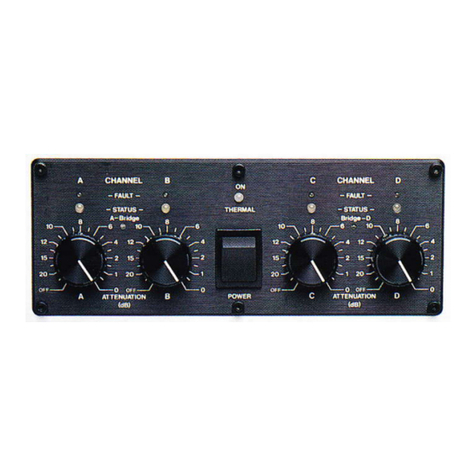
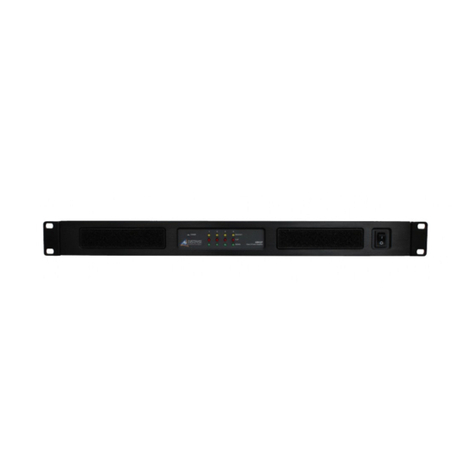
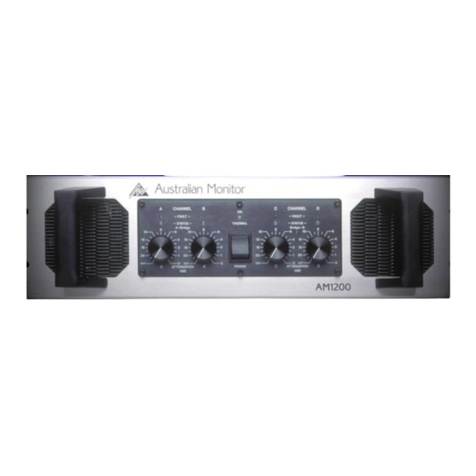
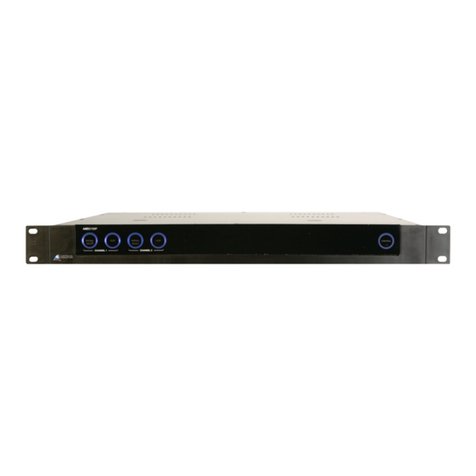
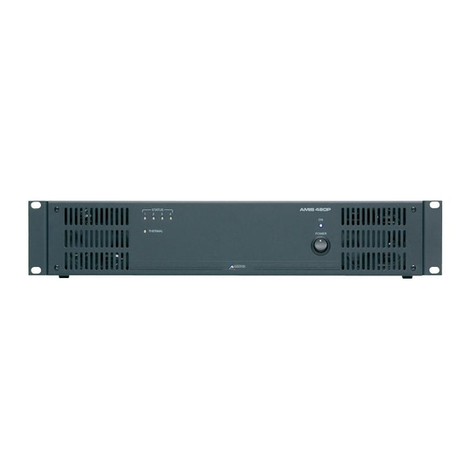
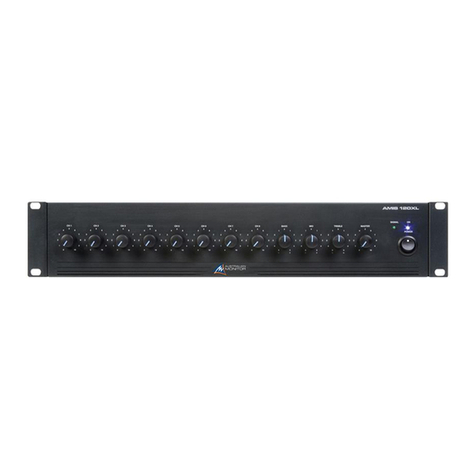
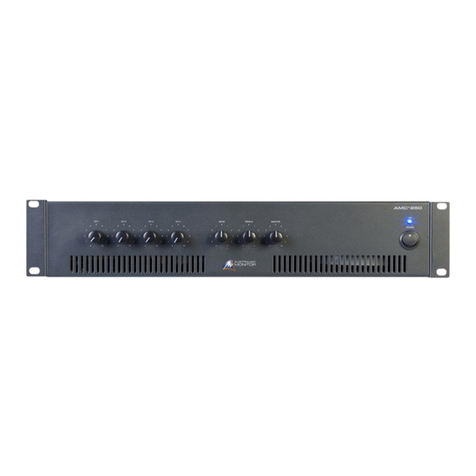
Figure 2 shows layouts of the front panels; the section
numbers refer lo areas on the drawing. The functions of
the controls and indicalors are as follows:
l. Faultlndicator
This amber LED will flash when a fault condition
exists.
The fault detection circuit monitors the difference
between drive and output of your amplifier.
A short on the speaker output or a blown negative
rail fuse the LED will flash brightly in sync with the
programme. This LED willalso flash with programme
peaks forgross overloads; or if the load is 2 ohms or
less.
The circuit has two stages of operation:
1. lt will provide indication (e.g gross overload) but
does not affect the input signal_
2. lt will indicate and mute the input signal (e.g
shorted output).
2. Attenuator
Level control for your amplifier is provided by a 21
position detented potentiometer and indicates gain
reduction in decibels from the '0 dB' position (maxi-
mum gain, no attenuation).
3. Power Switch
Press the switch to the right for power ON. press
the switch to the left for power OFF. At start-up
(turn-on) the input to the amplifier is muted by 30dB
for approximately two seconds.
4. On/Thermal Indicator
This is a dual colored LED which will normally be
green and indicates that the amplifier is on and
receiving mains power.
ln the advent of a thermal overload this LED will tum
red indicating that the internal operating tempera-
ture of the amplifier has exceeded a safe level of
operation and that the amplifier has shut down. The
fans will continue to run and once the amplifier has
had a cooFdown period the unit will restart, auto-
matically providing inrush cunent suppression and
input muting.
5. Status Indicator
This is a dual colour LED which displays the status
of the output stage and displays three tevels of
operation. These levels are:
Below 1 watt (unlit)
1 watt and above (green)
1dB below actual ctipping (red)
The LED will turn green once the output voltage
exceeds 2.828 volts (1 watt re 8 ohms, or 2 watts re
4 ohms).
The LED will change to red once the output exceeds
the -1dB point before actual clipping of the amplifi-
er's output stage. The threshold of the -1dB point is
with reference to the amplifier supply rails and will
alter with changes in the mains supply, changes in
the load, and duty cycle fluctuations.
The attack and delay time (ballistics) of the status
circuitarethoseof a Peak Programme Meter(p.p.M.)
lf using this indicator to line up sensitivities, apply a
steady tone (e.g slate on a mixing console). The 1
watt level is the point when indicator comes on, re g
ohms, (or 2 wafts for 4 ohm loads).
The amplilier is not damaged by running into clip-
ping, butyourspeakers may be. To maximisethe life
of your speakers, try to keep clipping infrequent.
/tu