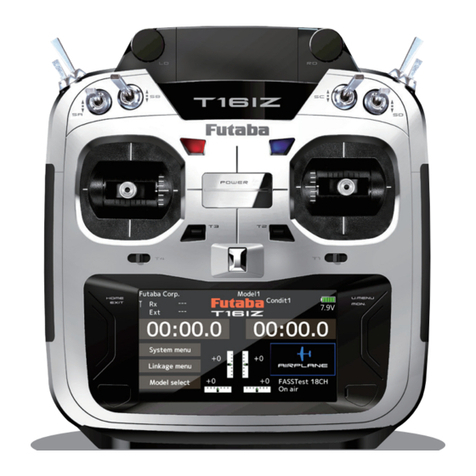
The transmitter and receivers in your locomotives are designed to communicate and exchange
information about the way you want your trains to operate. In order to establish a link
between them you need to set up options in the transmitter. These include settings like the
locomotive’s name and road number, the top speed that you want it to achieve, the rate at
which you want it to accelerate and how long you want it to delay when the direction is
changed. Once these parameters are set the link between the units is finalized by a process
called “linking”. Once the transmitter and a locomotive’s receiver are bound together they are
set to communicate and run your train.
The second concept has to do with the Cab number that is associated with each locomotive.
The Cab numbers range from CAB-0 through CAB-49. Once you link a locomotive you must
select the Cab number that it will run under. This allows you to easily move between as many
as 50 locomotives while operating. The Cab number is also used to identify groups of
locomotives that you might want to run in a consist ‘MU’. Locomotives can be operated
independently or grouped for multiple unit operation. CAB-0, CAB-1 and CAB-2 might be
used to operate three different locomotives while CAB-3 can be used to operate those same
three locomotives in a consist ‘MU’. Changing between single unit (SU) operation and
multiple unit (MU) operation is as simple as selecting a Cab number.
Once you have an opportunity to experience the process used to operate trains with the T
Revolution I think you will find that Aristo Craft has found an elegant solution to what can be
a complex problem
Functions for System Components
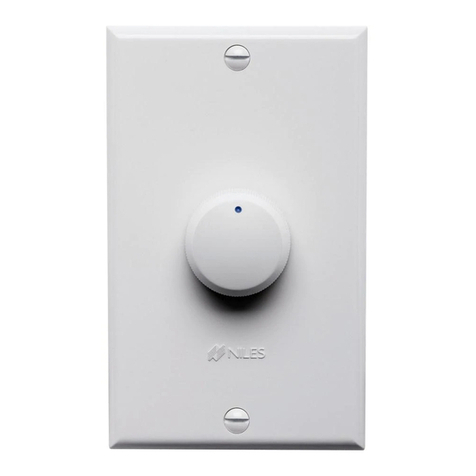
4. CODE SET SWITCH
a. Mount the code set switch so you can get access to program your locomotive.
b. Press the code set switch and hold down to link the transmitter and receiver.
2.4 TRA N ENG NEER INSTRUCTION MANUAL NS Page 10 of 39