1.2) GENERAL
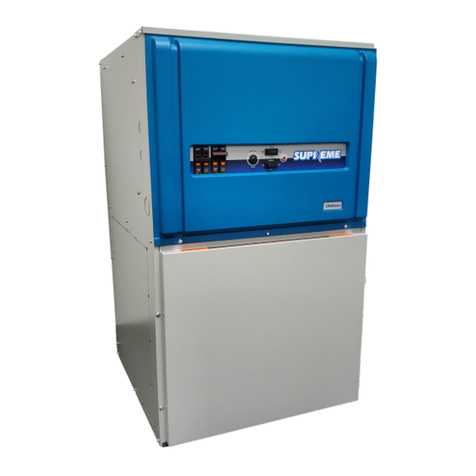
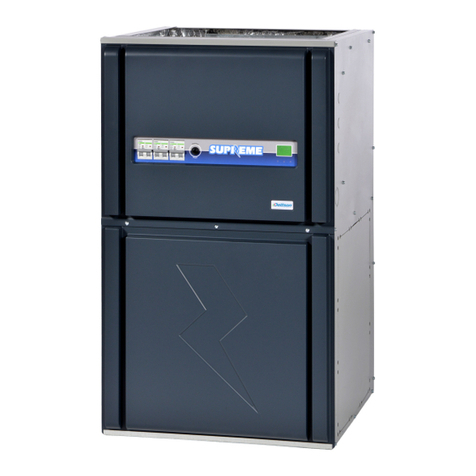
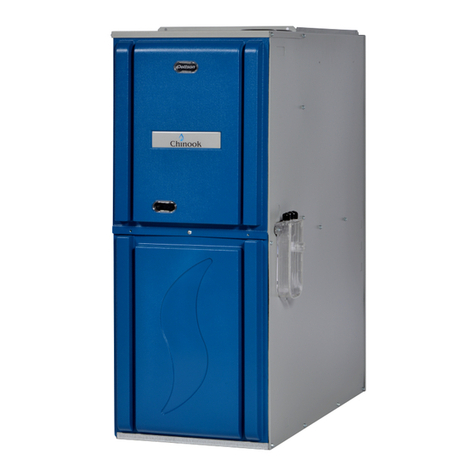
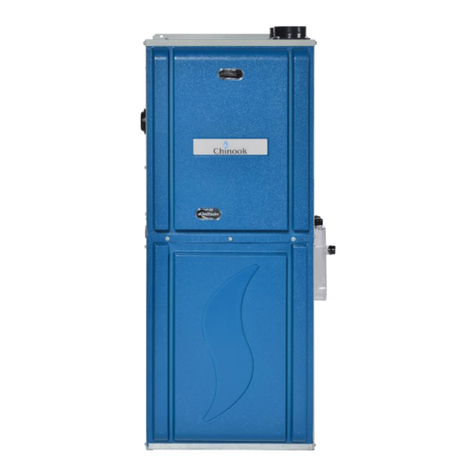
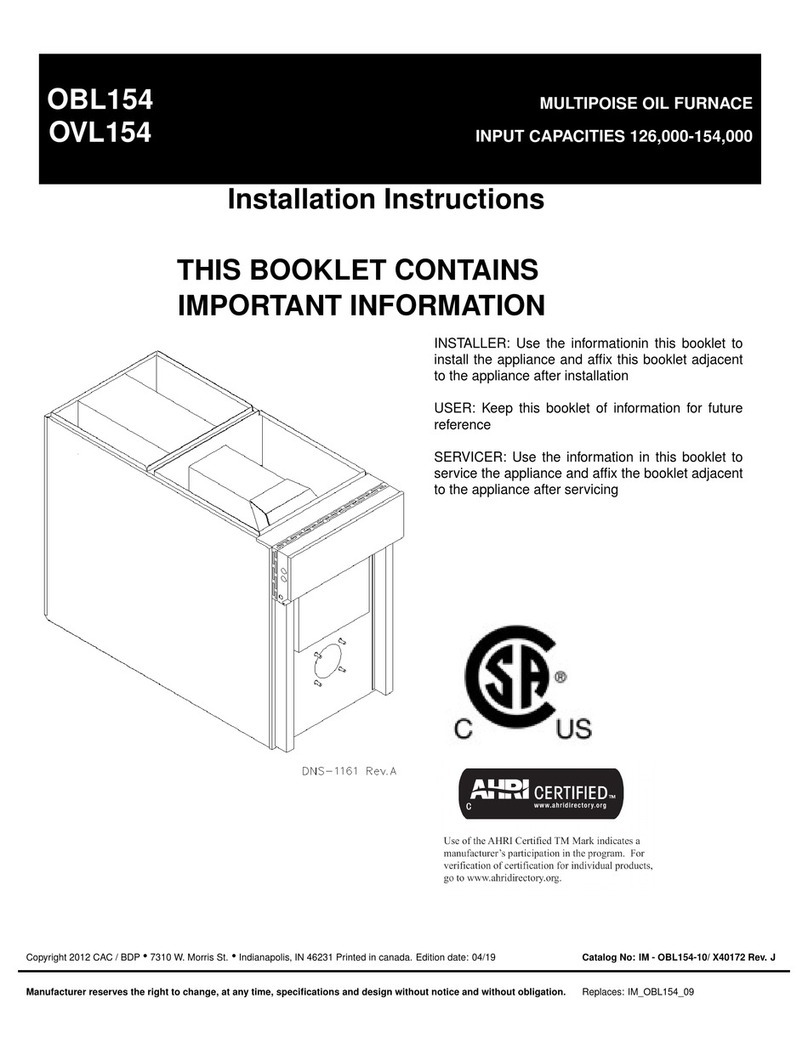
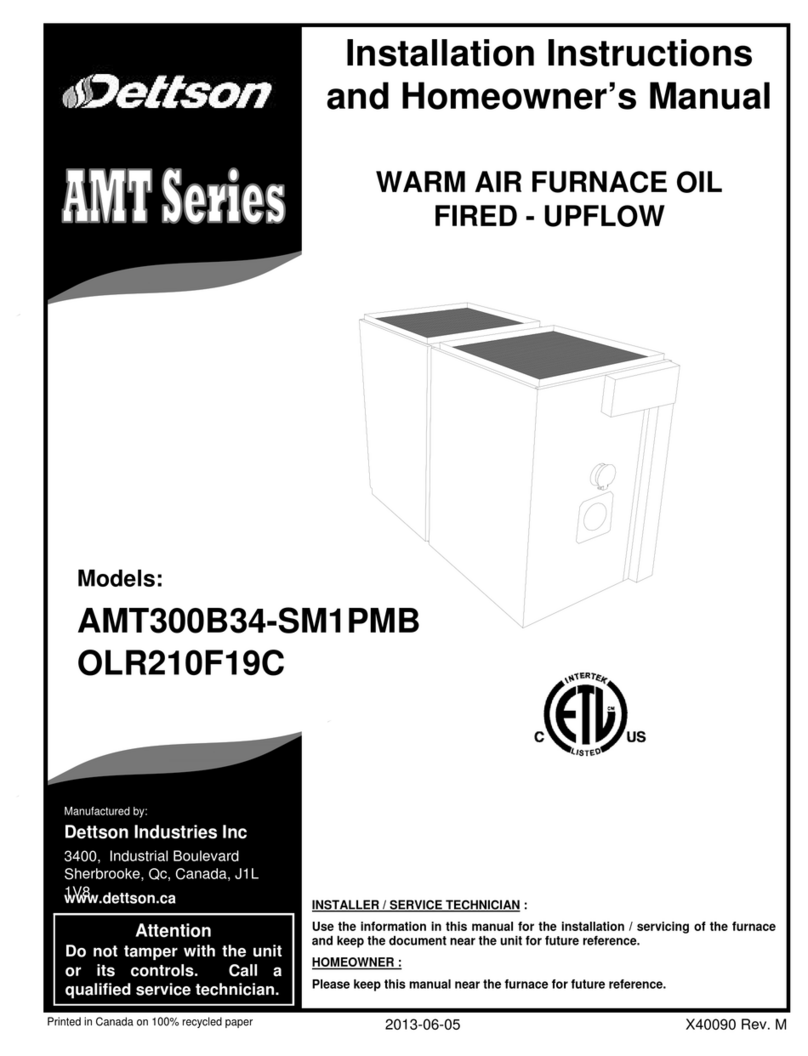
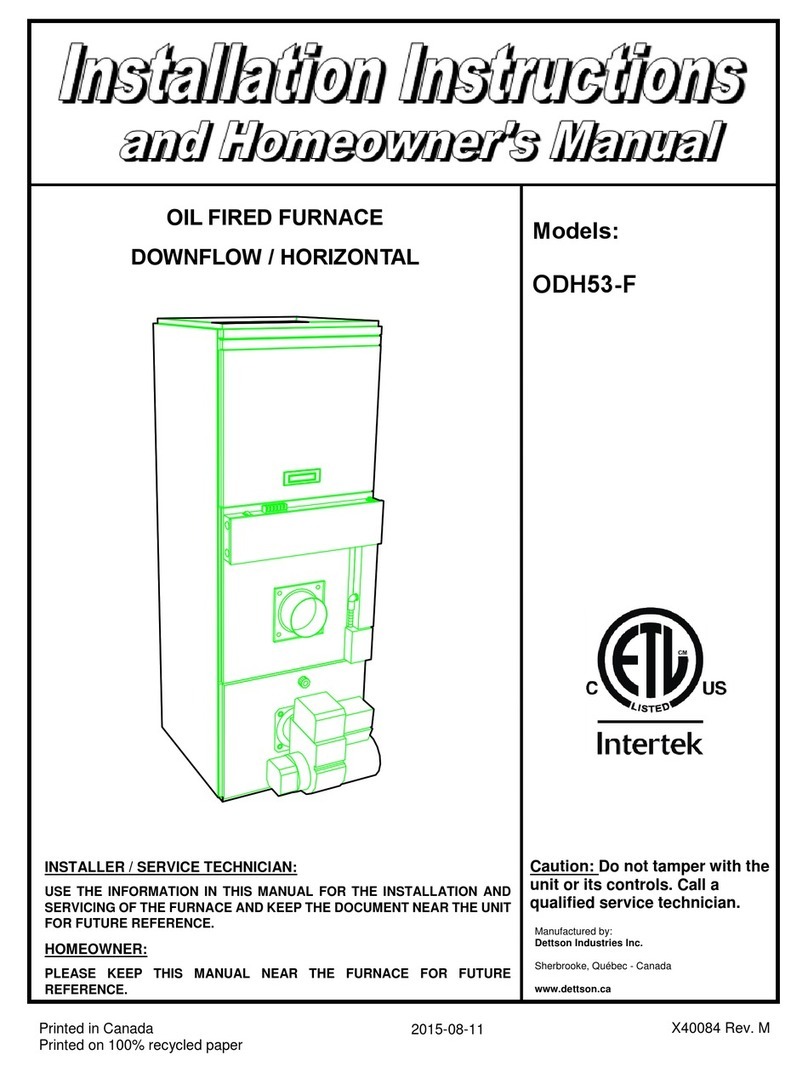
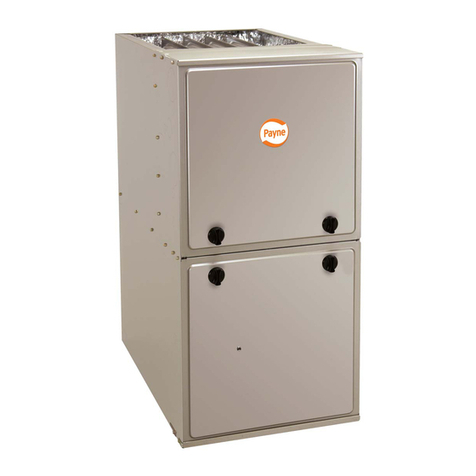
This central heating unit is a true multi-position unit, in that it
can operate in four different configurations, i.e., upflow,
counter flow (downflow), and horizontal (both left-to-right and
right-to-left airflow).
Very few modifications are required during installation in
order to change the furnace from one configuration to
another. The furnace is shipped in the upflow configuration,
however, instructions on how to change to the other
configurations are included in this manual.
The furnace is shipped complete with burner and controls. It
requires a 115VAC line voltage connection to the control
panel, thermostat hook-up as shown on the wiring diagram,
one or more oil line connections, suitable ductwork and
connection to a properly sized vent.
The air handling capacity of this furnace is designed for
cooling as well. Refer to Tables 6 & 7, p. 19 & 20 for the
expected airflow.
1.3) SAFE INSTALLATION REQUIREMENTS
4
WARNING
Installation or repairs performed by
unqualified persons can result in hazards to
them and others. Installation MUST conform
to local codes or, in the absence of same, to
codes of the country having jurisdiction.
The information contained in this manual is
intended for use by a qualified service
technician familiar with safety procedures and
quipped with the proper tools and test
instruments.
Failure to carefully read and follow all
instructions in this manual can result in
death, furnace malfunction and/or property
damage
WARNING
Fire hazard.
The furnace must be installed in a level
position, never where it will slope toward the
front.
If the furnace is not installed level, oil will
drain into the furnace vestibule and create a
fire hazard.
NOTE: It is the personal responsibility and obligation
of the customer to contact a qualified installer to
ensure that the installation conforms to governing local
and/or national codes and ordinances
a. This furnace is NOT approved for installation in mobile
homes, trailers or recreational vehicles;
b. Do NOT use this furnace as a construction heater or to
heat a building under construction;
c. There must be a sufficient supply of fresh air for
combustion as well as ventilation in the area where the
furnace is located;
d. Use only the type of fuel oil approved for this furnace
(see page 7 of this manual). Overfiring will result in heat
exchanger failure and cause dangerous operating
conditions;
e. Visually check all oil line joints for signs of leakage;
f. Connect furnace to the chimney;
g. The points in Part 2 “Operation” are vital to the proper
and safe operation of the heating system. Take the time
to ensure that all steps were followed;
h. Follow the regulations of the NFPA No.31 (in the USA)
and CSA B-139 (in Canada) or local codes for placing
and installing the oil storage tank;
i. Follow a regular service and maintenance schedule for
efficient and safe operation;
j. Before servicing, allow furnace to cool down. Always
shut off electricity and fuel to furnace when servicing.
This will prevent electrical shock or burns;
k. Seal supply and return air ducts;
l. The vent system MUST be checked to determine that it
is the correct type and size;
m. Install correct filter type and size;
n. Unit MUST be installed so that electrical components
are protected from direct contact with water.
1.4) Safety Rules
Your unit is built to provide many years of safe and
dependable service, provided it is properly installed and
maintained. However, abuse and/or improper use can
shorten the life of the unit and create hazards for you, the
owner.
a. The U.S. Consumer Product Safety Commission
recommends that users of oil-burning appliances install
carbon monoxide detectors. There can be various
sources of carbon monoxide in a building or dwelling.
The sources could be gas-fired clothes dryers, gas
cooking stoves, water heaters, furnaces, gas-fired
fireplaces, wood fireplaces, and several other items.
Carbon monoxide can cause serious bodily injury and/or
death. Therefore, to help alert people to potentially
dangerous carbon monoxide levels, you should have
carbon monoxide detectors listed by a nationally
recognised agency (ex. Underwriters Laboratories or
International Approval Services) installed and
maintained in the building or dwelling (see Note below).
b. There can be numerous sources of fire or smoke in a
building or dwelling. Fire or smoke can cause serious
bodily injury, death, and/or property damage. Therefore,
in order to alert people to potentially dangerous fire or
smoke, you should have fire and smoke detectors listed
by Underwriters Laboratories installed and maintained in
the building or dwelling (see Note below).