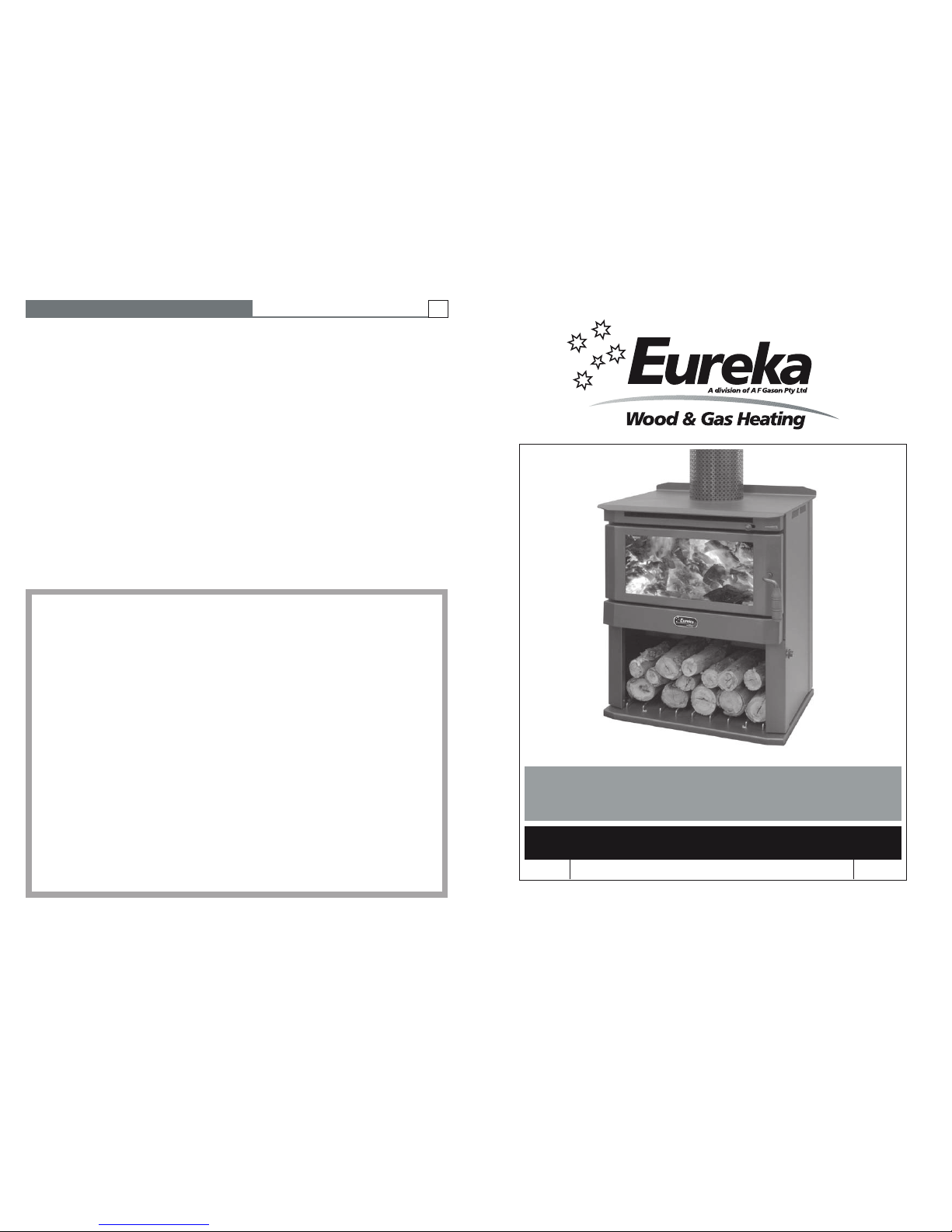
Woodstock Freestanding
4
Woodstock Freestanding
5
Fitting the Baffle Plate
1. Feed baffle plate through the door opening with
front edge folded up all the way to the rear of the
heater.
2. Lift front over Pin A and slide towards front of
heater.
3. Lift rear so baffle plate is horizontal and move
towards back of heater.
4. Lower over Pin B.
5. Baffle plate must be sitting on Pins A & B.
Baffle Plate Installation
Baffle Plate
Final inspection prior to use
•Ensure the baffle is firmlylocated.
•Ensure firebrick liners – sides, back and base are positioned correctly.
•Check fan cord has not been damaged during transit.
•Plug in fan cord and ensure cord does not touch stove surface.
•Check all door seals are fitting correctly.
Operating your Woodstock (Continued)
Care of your glass
If you are burning good dry wood, you will have very little discolouration of your glass in normal burning cycle. If you aim for
an eight to ten hour overnight burn, you should not get much discolouration.You can control this by adjusting the air
control, moving from the left and slowlycreeping the control to the right. After a number of days you will find the right
positionto suit your requirements and the fuel that you are using.
Cleaning the glass
Generally the only time you will possibly need to clean your glass is after a long overnight burn. If you find that you have a
wet sticky black film on your glass (creosote), it isbetter toburnthe heater as normal for one load of wood. Whenthe wood
has burnt downto a hot bed ofembers, openthe door and leave it wide openuntil the glass cools sufficiently tobe wiped
with a damp cloth. This should clean all the white smoky film off the glass. Creosote on the glass is normally a sign that you
have tried toget too long an overnight burn or you have burnt excessivelywet or greenwood.Ifthe film onthe glass won’t
come off with a wet cloth, you can use wet ash from the ash bed as a cleaner or commercial products such as Crystal Clear,
Johnson Foam Clean or Windex.
Normal Operations
When you get up inthe morning, open up the air control of the heater to highpositionto start the embersglowing. Place
three or four piecesof wood ontop of the embersand leave the door open25mm. Once the fuel starts to flame close the
door.As the heater startstoheat up turn the fan on tolow, (approx 20minutes) and beginreducing the air control towards
a lower setting.
You will find with the fan on low you will only need to run the heater between low and medium to maintain the
temperature you desire in your home. To obtain the maximum heat dissipation from the heater it is necessarytorun the fan
at anytime the heater isrunning above the low position.
For best results it is best toburn270mm long wood and load your wood straight into the firebox front to rear. This will give
optimum efficiency and recoverable heat, and minimise creosote formation and smoke emissions.
Overnight burn
Approximately30 minutes before turning the heater down toovernight burn it isrecommended toload the heater with fuel
for the overnight burn. Leave the air control inthe medium to highposition. Let the heater run for about thirtyminutes. This
will reduce the moisture content in the fuel before shut down. (This will help reduce the creosote formation inthe firebox
and flue.) Set the air control tothe setting you have found best for your requirements.Turn the fan off and retire. The aim
when overnight burning isto have only a few hot embersleft in the bottom ofthe firebox in the morning. Not huge lumps
of wood.
Cleaning your flue
Carefully remove baffle plate and put it to one side. Close the heater door. Obtain a 150mm fluebrush from your local
Eureka Dealer and proceed up onto your roof. Remove the cowl. Slowly push the flue brush down the chimney until it stops.
Pull the brush back out and repeat the process. Each time you do this you will notice that the brush will go further down the
chimney till it reaches the bottom.The soot and creosote will fall down the chimney and into the firebox. Clean residue from
firebox. Replace the baffle plate. Make sure you do the job well.The cleaner the flue the less chance there will be of the
creosote sticking again.After you have replaced the cowl, inspect the roof flashing for any damage that may have been
incurred whilst you were cleaning the flue. Reseal the seal on the roof with roof and gutter silicone if required.
The fan
It is recommended to run the fan while the heater is operating above low burn on low speed. For extended periods when
the heater is running above medium fire, high or boost is recommended. Boost is recommended for short bursts where a
quick temperature rise is desired in conjunction with a high fire setting.The fan should be cleaned on a regular basis. (Refer
Troubleshooting for fan removal and cleaning.)
Installation Permit
Depending on what your local authority requires, a permit may be required for the installation of your heater. It is your
responsibility to arrange the same.
•IF FIREBOX FAILURE IS REPORTED AND IT IS FOUND THAT THE FIREBOX HAS BEEN ABUSED THROUGH IMPROPER
USE OF THE FAN, EUREKA RESERVE THE RIGHT TO DISALLOW ANY WARRANTY CLAIMS IN RELATION TO FIREBOX
FAILURE.
•DO NOT ATTEMPT TO OPERATE THIS APPLIANCE WITHOUT READING AND UNDERSTANDING THESE OPERATING
INSTRUCTIONS THOROUGHLY. FAILURE TO OPERATE THIS APPLIANCE PROPERLY MAY CAUSE UNDUE DAMAGE TO
THE APPLIANCE OR RESULT IN A FLUE FIRE.
Operating your Woodstock
Starting your fire
Place afirelighter or paper in the bottom of the firebox and place a large amount of small kindling ontop. Ignite the paper
or the firelighter. Set the air control to high and leave the main door open approximately 25mm.When the kindling is
burning, place about four pieces of small wood on top of the burning kindling. Once the wood is alight, close the main
door. After approximately 20 minutes, turn the air control down to medium and, turn the fan on to low speed.
On the initial fire up you may detect smoke coming from the paint finish and from any oils that may be on the steel on the
outside of the firebox.This is normal. It is suggested to well ventilate your home on the initial fire up. Please refer to our
section ‘Paint curing and cure’.
The glassdoor
Always operate your heater with the door closed and locked.The only time you can leave the door open is on initial
lighting, or when reloading the heater.