manuals.online logo
Brands
  1. Home
  2. •
  3. Brands
  4. •
  5. Frigidaire
  6. •
  7. Oven
  8. •
  9. Frigidaire FPMC2785PFB Owner's manual

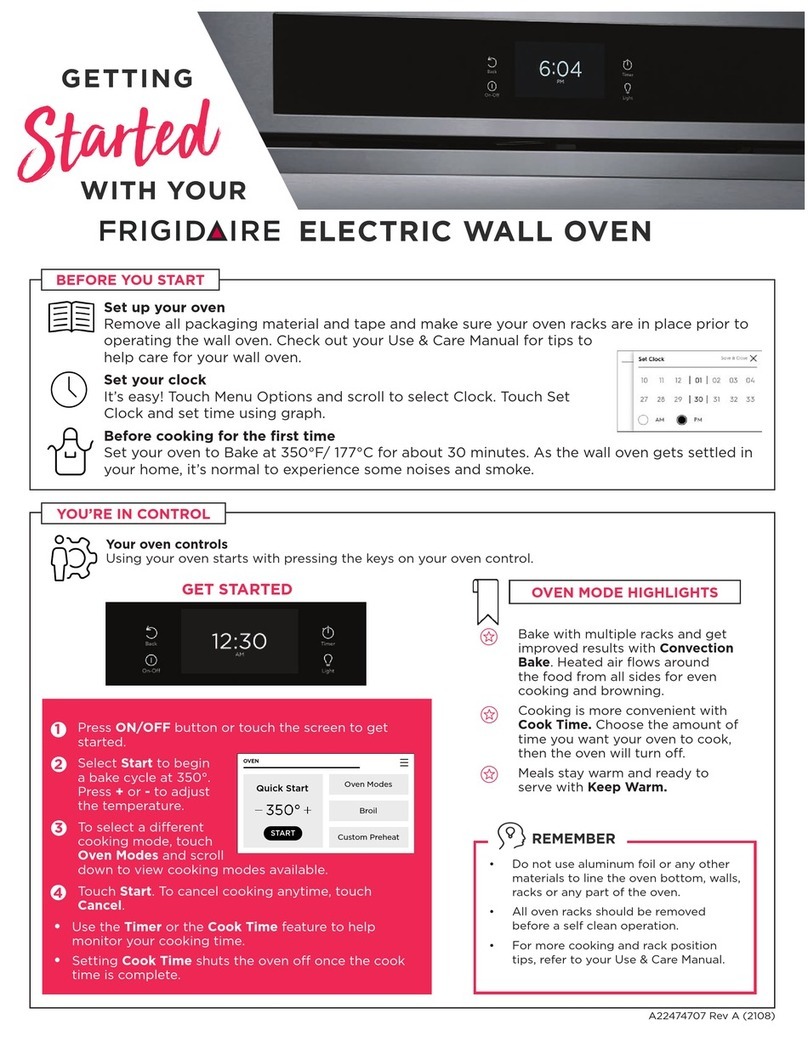
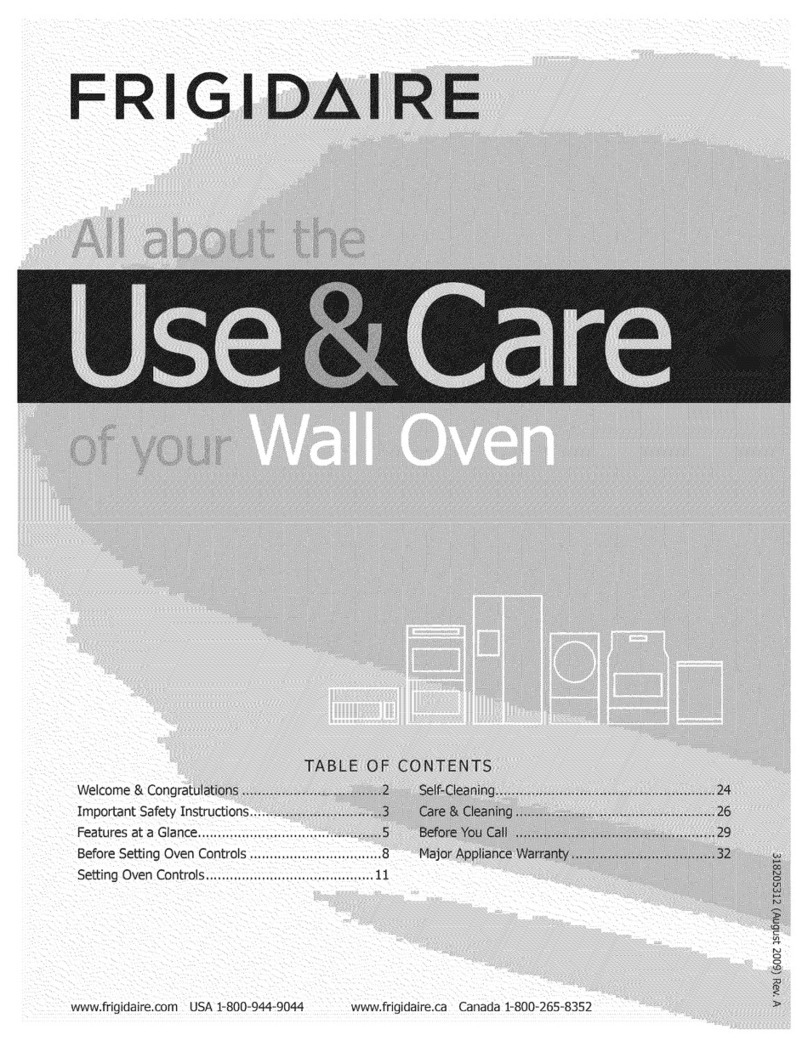
Frigidaire FPMC2785PFB Owner's manual

Other manuals for FPMC2785PFB

1

This manual suits for next models

5

Other Frigidaire Oven manuals

Frigidaire FEB30T5DCD Instruction Manual

Frigidaire

Frigidaire FEB30T5DCD Instruction Manual

Frigidaire FEB27T7FC - 27" Electric Double Wall Oven Quick start guide

Frigidaire

Frigidaire FEB27T7FC - 27" Electric Double Wall Oven Quick start guide

Frigidaire FGB24S5DCC User guide

Frigidaire

Frigidaire FGB24S5DCC User guide

Frigidaire 703 User manual

Frigidaire

Frigidaire 703 User manual

Frigidaire FGB24L2AB User manual

Frigidaire

Frigidaire FGB24L2AB User manual

Frigidaire FGB500CE User manual

Frigidaire

Frigidaire FGB500CE User manual

Frigidaire FGEW3066UF User manual

Frigidaire

Frigidaire FGEW3066UF User manual

Frigidaire FEB27T5DBB Instruction Manual

Frigidaire

Frigidaire FEB27T5DBB Instruction Manual

Frigidaire CFEB30S5GC4 Guide User manual

Frigidaire

Frigidaire CFEB30S5GC4 Guide User manual

Frigidaire GLES388CSB Use and maintenance manual

Frigidaire

Frigidaire GLES388CSB Use and maintenance manual

Frigidaire FEB386CESA User manual

Frigidaire

Frigidaire FEB386CESA User manual

Frigidaire FGB24S5DC - 24 Inch Single Gas Wall Oven User manual

Frigidaire

Frigidaire FGB24S5DC - 24 Inch Single Gas Wall Oven User manual

Frigidaire Gallery FGMC2765K User manual

Frigidaire

Frigidaire Gallery FGMC2765K User manual

Frigidaire FGB24T3A User manual

Frigidaire

Frigidaire FGB24T3A User manual

Frigidaire Oven Quick start guide

Frigidaire

Frigidaire Oven Quick start guide

Frigidaire FEB30S6FCC Instruction Manual

Frigidaire

Frigidaire FEB30S6FCC Instruction Manual

Frigidaire FES355ABA Control User manual

Frigidaire

Frigidaire FES355ABA Control User manual

Frigidaire FEB27S5A User manual

Frigidaire

Frigidaire FEB27S5A User manual

Frigidaire FEB27T7DCB Instruction Manual

Frigidaire

Frigidaire FEB27T7DCB Instruction Manual

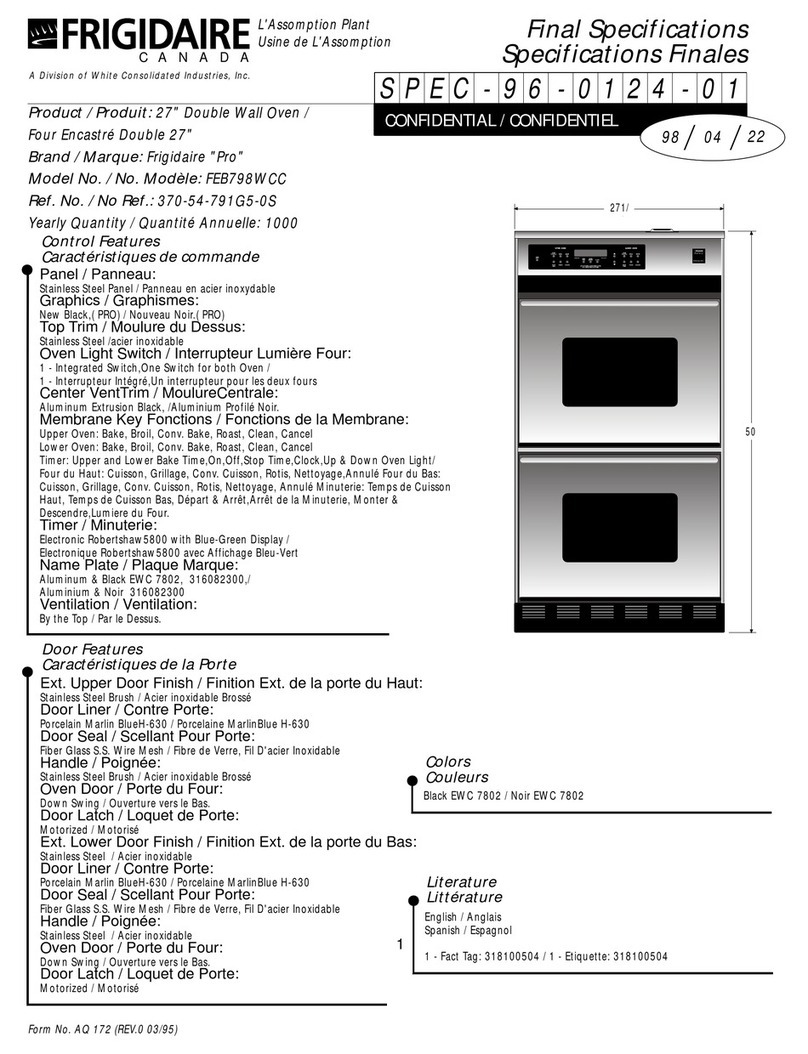
Frigidaire FEB798WCCH Use and maintenance manual

Frigidaire

Frigidaire FEB798WCCH Use and maintenance manual

Frigidaire CPET3085KF2 Owner's manual

Frigidaire

Frigidaire CPET3085KF2 Owner's manual

Frigidaire CFES366FC5 Use and maintenance manual

Frigidaire

Frigidaire CFES366FC5 Use and maintenance manual

Frigidaire FEB798WCCI Quick start guide

Frigidaire

Frigidaire FEB798WCCI Quick start guide

Frigidaire FGB24S5A User manual

Frigidaire

Frigidaire FGB24S5A User manual

Popular Oven manuals by other brands

Bosch HVA531NS0 instruction manual

Bosch

Bosch HVA531NS0 instruction manual

Electrolux EOF6P46X user manual

Electrolux

Electrolux EOF6P46X user manual

NEFF B44S32 5GB Series instruction manual

NEFF

NEFF B44S32 5GB Series instruction manual

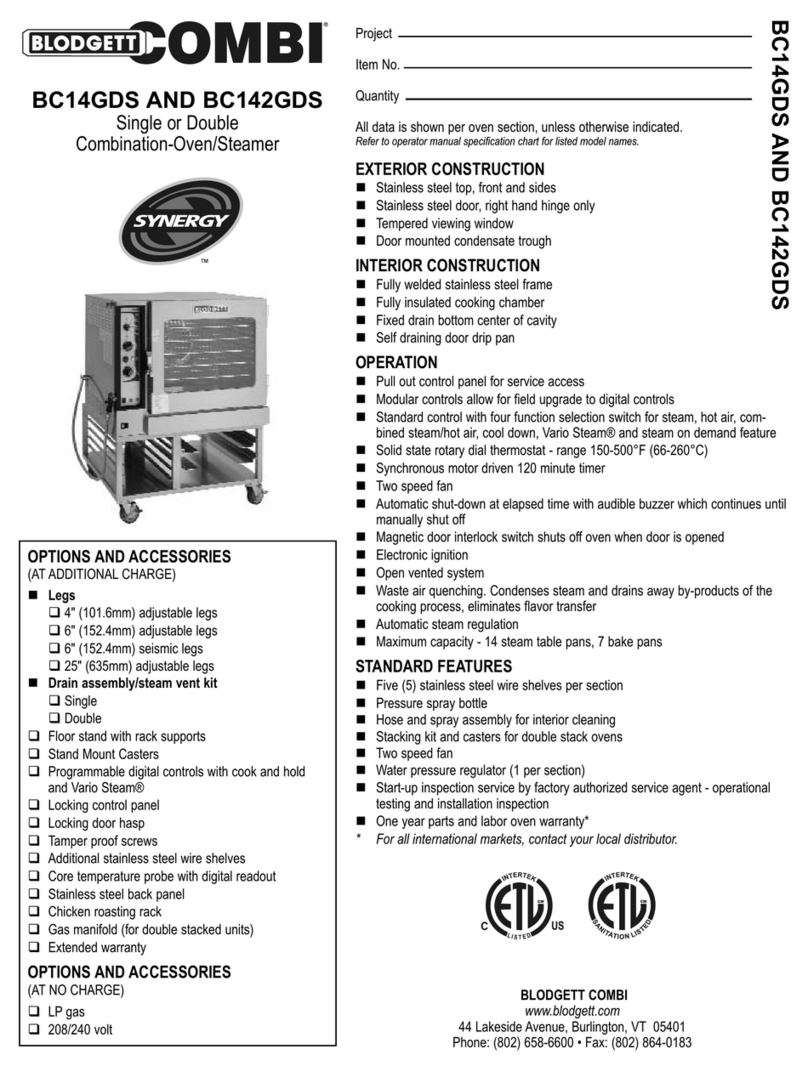
Combi BLODGETT BC142GDS Specifications

Combi

Combi BLODGETT BC142GDS Specifications

AEG COMPETENCE 311704300 Installation and operating instructions

AEG

AEG COMPETENCE 311704300 Installation and operating instructions

Rational SCC WE 61G installation manual

Rational

Rational SCC WE 61G installation manual

Smeg DOSPA38X User manuals

Smeg

Smeg DOSPA38X User manuals

Electrolux air-o-convect 20 GN 2/1 user manual

Electrolux

Electrolux air-o-convect 20 GN 2/1 user manual

Miele HR 1954-2 operating instructions

Miele

Miele HR 1954-2 operating instructions

KHIND OT50 instruction manual

KHIND

KHIND OT50 instruction manual

Henny Penny Smoker Box installation manual

Henny Penny

Henny Penny Smoker Box installation manual

Lang ECOD-AP Installation and operation instructions

Lang

Lang ECOD-AP Installation and operation instructions

AEG BEK455310M user manual

AEG

AEG BEK455310M user manual

Hotpoint FE9 S831 JSH IX user manual

Hotpoint

Hotpoint FE9 S831 JSH IX user manual

GE Advantium SCB2000 owner's manual

GE

GE Advantium SCB2000 owner's manual

AEG DE401301DM user manual

AEG

AEG DE401301DM user manual

DeLonghi XA660 Directions for use

DeLonghi

DeLonghi XA660 Directions for use

AEG BEB331010M user manual

AEG

AEG BEB331010M user manual

manuals.online logo
manuals.online logoBrands
  • About & Mission
  • Contact us
  • Privacy Policy
  • Terms and Conditions

Copyright 2025 Manuals.Online. All Rights Reserved.

FRIGIDAIRE
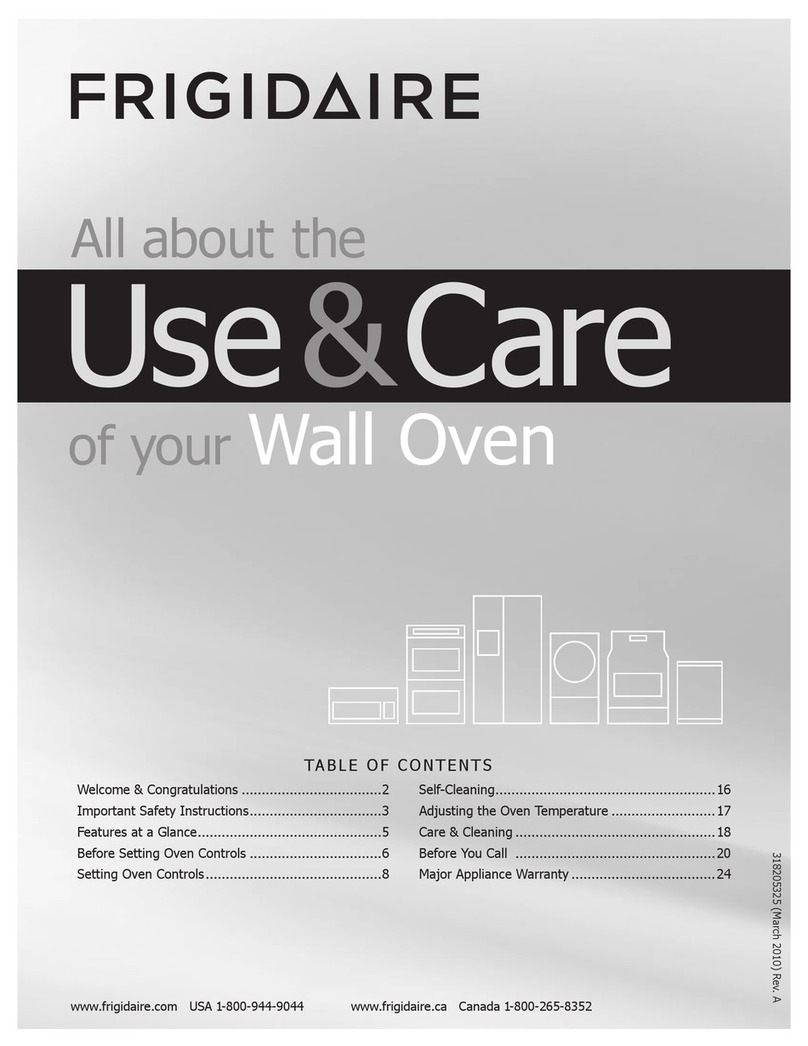
TABLE OF
Welcome & Congratulations ................................... 2
Important Safety Instructions ................................. 3
Microwave Oven Important Information .................. 8
Features at a Glance............................................ !1
Microwave Parts Names & Control Panel ............... 12
Before Operating the Microwave Oven .................. 13
Setting the Microwave Oven ................................. 13
Before Setting Oven Controls ............................... 23
CONTENTS
Setting Oven Controls .......................................... 26
Steam-Cleaning ................................................... 40
Self-Cleaning ....................................................... 41
Care & Cleaning (Microwave Cleaning Chart) ......... 43
Care & Cleaning (Oven Cleaning Chart) ................. 44
Care & Cleaning ................................................. 45
Before You Call .................................................. 46
Major Appliance Warranty .................................... 48
www.frigidaire,com USA 1-800-944-9044 www.frigidaire,ca Canada 1-800-265-8352
GO
O
4_
R
p,J
o
L_
v7O
rb
.<
Product Registration
Register Your Product
The PRODUCT
REGISTRATION CARD
should be filled in completely,
signed and returned to
Electrolux Home Products.
Serial Plate Location
Please record your model and serial numbers
below for future reference.
Model Number:
Serial Number:
Purchase Date:
Congratulations on your purchase of a new appliance! At
Electrolux Home Products, we are very proud of our
product and are completely committed to providing you
with the best service possible. Your satisfaction is our
number one priority.
We know you'll enjoy your new appliance and Thank You
for choosing our product. We hope you consider us for
future purchases.
PLEASE CAREFULLY READ AND SAVE THESE
INSTRUCTIONS
This Use & Care Manual contains general operating
instructions for your appliance and feature information
for several models. Your product may not have
all the described features. The graphics shown are
representative. The graphics on your appliance may not
look exactly like those shown. These instructions are not
meant to cover every possible condition and situation
that may occur. Common sense and caution must be
practiced when installing, operating and maintaining any
appliance.
© 2013 Electrolux Canada Corp.
All rights reserved
Printed in U,S,A,
Please attach sales receipt here for future reference.
Read aii instructions before using this appliance, Save these instructions for future reference,
DEFINITIONS
AThis isthe safety alert symbol. It is used to alert
you to potential personal injury hazards. Obey all
safety messages that follow this symbol to avoid
possible injury or death.
This symbol will help alert you to situations
that may cause bodily injury or property
damage,
This symbol will help alert you to situations
that may cause serious bodily harm, death
or property damage, ............................................................................................................................................
IMPORTANT indicates installation, operation or
maintenance information which is important but
not hazard=related.
For your safety the information in this manual must be followed to minimize the risk of fire or
explosion or to prevent property damage, personal injury or loss of life.
•Do Not Attempt to operate this microwave oven with the door open since open-door operation
can result in harmful exposure to microwave energy. It is important not to defeat or tamper with
the safety interlocks.
Do Not Place any object between the microwave oven front face and the door or allow soil or
cleaner residue to accumulate on sealing surfaces.
Do Not Operate the microwave oven if it isdamaged. It is particularly important that the
ii microwave oven door close properly and that there is no damage to the: :1..Door (bent), 2,
ii Hinges and latches (broken or loosened), 3. Door seals and sealing surfaces.
ii The Microwave Oven Should Not be adjusted or repaired by anyone except properly
ii
Tip Over Hazard
A child or adult can tip the
range and be killed.
Verify the anti-tip device has
been installed to floor or wall.
Ensure the anti-tip device is re-engaged to
floor or wall when the range is moved.
Do not operate the range without the anti-tip
device in place and engaged.
Failure to follow these instructionscan result
in death or serious burns to children and
adults.
Refer to the anti-tip
bracket installation
instructions supplied
with your appliance for
proper installation.
Check for proper
installation with a visual
Anti-tipmountingholes check that the anti=tip
screws are present.
Test the installation with light downward
pressure on the open oven door. The oven
..........should not tip forward. ..............................................................................................................................................................................
®Remove all tape and packaging wrap
before using the appliance, Destroy the
carton and plastic bags after unpacking
the appliance, Never allow children to play
with packaging material. Do not remove the
wiring label and other literature attached to the
appliance. Do not remove model/serial number
plate.
®ProperInstallation, Besureyourappliance
is properly installed and grounded by a
qualified technician in accordance with
the National Electrical Code No, 70 =
latest edition in the United States, or CSA
C22,1, Part 1in Canada, and local code
requirements, Install only per installation
instructions provided in the literature package
for this appliance.
Ask your dealer to recommend a qualified
technician and an authorized repair service.
Know how to disconnect the electrical power to
the appliance at the circuit breaker or fuse box
in case of an emergency.
Stepping, leaning, sitting or pulling down
on the door of this appliance can result in
serious injuries and may also cause damage
to the appliance, Donot allow children to climb
or play around the appliance.
Do not use the oven for storage,
Never use your appliance for warming or
heating the room,
®User Servicing, Do not repai ror replace any
part of the appliance unless specifically
recommended in the manuals, All other
servicing should be done only by a qualified
technician to reduce the risk of personal injury
and damage to the appliance.
®Never modify or alter the construction of
an appliance such as removal of panels,
wire covers or any other permanent part
of the appliance,
Electronic controllers can be damaged by
cold temperatures, When you use your
appliance for the first time, or if it has
not been used for a long period of time,
make sure that it has been exposed to a
temperature above 0°C/32°F for at least
3 hours before connecting it to the power
supply,
Do not store items of interest to children
in the cabinets above the appliance,
Children climbing on the oven door to reach
items could be seriously injured:........................................................................................
To reduce the risk of fire, burns, electric shock,
injury to persons, or exposure to excessive
microwave energy when using your appliance,
follow basic precautions, including the
following sections, ;
=Remove the oven door from any
unused appliance if it is to be stored or
discarded,
®Storage in or on Appliance=Flammable
materials should not be stored in an
oven, This includes paper, plastic and cloth
items, such as cookbooks, plasticware and
towels, as well as flammable liquids. Do not
store explosives, such as aerosol cans, in or
near the appliance.
oDe not leave children alone, Children
should not be left alone or unattended
in the area where an appliance is in use,
They should never be allowed to sit or stand on
any part of the appliance.
®DO NOT TOUCH INTERIOR OVEN
ELEMENTS OR INTERIOR SURFACES OF
THE OVEN UNTIL THEY HAVE COOLED,
The oven heating elements may be hot even
though the elements are dark in color. Areas
near the elements may become hot enough
to cause burns. During and after use, do
not touch, or let clothing or other flammable
materials touch these areas until they have
had sufficient time to cool. Among these areas
are the oven vent openings, the surfacesnear
these openings, oven door and window.
®Wear Proper Apparel, Loose=fitting or
hanging garments should never be worn
while using the appliance, Do not let
clothing or other flammable materials contact
hot surfaces.
®Do Not Use Water or Flour on Grease
Fires, Smother the fire with apan lid, or
use baking soda, a dry chemical or foam=
type extinguisher,
®When heating fat or grease, watch it
closely, Fat or grease may catch fire if allowed
to become too hot.
®Use Only Dry Pot holders, Moist or damp
pot holders on hot surfaces may result in
burns from steam, Do not let the pot holders
touch hot surface units. Do not use a towel or
other bulky cloth instead of a pot holder.
®Do Not Heat Unopened Food Containers,
Buildup of pressure may cause the
container to burst and result in injury,
Do not attempt to operate the appliance
during a power failure, If the power
fails, always turn off the unit, If the unit
is not turned off and the power resumes, the
appliance will not operate and an error message
ed...................................................................................................................................................................................................................................
IMPORTANT INSTRUCTIONS FOR USING
YOUR MICROWAVE
• Read all instructions before using the
appliance.
• Read and follow the specific"PRECAUTIONS TO
AVOID POSSIBLE EXPOSURE TO EXCESSIVE
MICROWAVE ENERGY" on page 3.
• Some products such as whole eggs and sealed
containers --for example, closed glass jars--are
able to explode and should not be heated in this
microwave oven.
• Use this appliance only for its intended use as
described in this manual. Do not use corrosive
chemicals or vapors in this appliance. This type of
microwave oven is specifically designed to heat,
cook or dry food. It is not designed for industrial
or laboratory use.
•As with any appliance, close supervision is
necessary when used by children.
• Do not operate this appliance if it has a damaged
cord or plug, if it is not working properly or if it
has been damaged or dropped.
•This appliance should be serviced only by qualified
service personnel. Contact nearest Electrolux
Authorized Servicer for examination, repair or
adjustment.
• Do not cover or block any openings on the
appliance.
• Do not store or use this appliance outdoors. Do
not use this product near water--for example,
near a kitchen sink, in a wet basement or near
a swimming pool, or similar locations.
•See door surface cleaning instructions (page
43).
•To reduce the risk of fire in the microwave oven
cavity:
- Do not overcook food. Carefully attend applia nce
when paper, plastic or other combustible
materials are placed inside the microwave oven
to facilitate cooking.
-Remove wire twist-ties from paper or plastic
bags before placing bag in microwave oven.
-If materials inside the microwave oven
should ignite, keep microwave oven
door closed, turn microwave oven off
and disconnect the power cord or shut
off power at the fuse or circuit breaker
panel,
- Do not use the cavity for storage purposes. Do
not leave paper products, cooking utensils or
food in the cavity when not in use.
• Liquids, such as water, coffee or tea are able to
be overheated beyond the boiling point without
appearing to be boiling. Visible bubbling or
boiling when the container is removed from the

microwave oven is not always present. THIS
COULD RESULT IN VERY HOT LIQUIDS
SUDDENLY BOILING OVERWH EN A SPOON
OR OTHER UTENSIL IS INSERTED INTO
THE LIQUID,
To reduce the risk of injury to persons:
-Do not overheat the liquid.
-Stir the liquid both before and halfway through
heating it.
- Do not use straight=sided containers with narrow
necks. Use a wide=mouthed container.
-After heating, allow the container to stand in
the microwave oven at least for 20 seconds
before removing the container.
-Use extreme care when inserting a spoon or
other utensil into the container.
oil the microwave oven light fails, consult an
Electrolux Authorized Servicer.
IMPORTANT SAFETY INSTRUCTIONS FOR
USING YOUR OVEN
® Use Care When Opening an Oven Door--
Stand to the side of the appliance when
opening the door of a hot oven. Let hot air or
steam escape before you remove or replace
food in the oven.
®Keep Oven Vent Ducts Unobstructed. The
wall oven is vented at the center trim under
the control panel. Touching the surfaces in this
area when the oven is operating may cause
severe burns. Also, do not place plastic or heat=
sensitive items near the oven vent. These items
could melt or ignite.
®Placement of Oven Racks. Always place
oven racks in desired location while oven is
cool. Remove all utensils from the rack before
removing rack. If rack must be moved while
oven is hot, use extreme caution. Use pot
holders and grasp the rack with both hands to
reposition. Do not let pot holders contact the
hot oven element or interior of the oven.
• Do not use abroiler pan without its
insert. Broiler pan and grid allow dripping fat
to drain and be kept away from the high heat
of the broiler.
• Do not cover the broiler grid or oven
bottom with aluminum foil, Exposed fat
and grease could ignite.
•Do not touch a hot oven light bulb with a
damp cloth, Doing so could cause the bulb to
break. Disconnect the appliance or shut off the
power to the appliance before removing and
replacing the bulb.
®Protective liners--Do not use aluminum foil
to line the oven bottom. Only use aluminum
foil as recommended in this manual. Improper
installation of these liners may result in risk of
electric shock, or fire.
IMPORTANT SAFETY INSTRUCTIONS FOR
CLEANING YOUR OVEN
®Clean the appliance regularly to keep all
parts free of grease that could catch fire,
Exhaust fan ventilation hoods and grease filters
should be kept clean. Do not allow grease to
accumulate. Greasy deposits in the fan could
catch fire. Refer to the hood manufacturer's
instructions for cleaning.
®Cleaners/Aerosols--Always follow the
manufacturer's recommended directions for
use. Be aware that excess residue from cleaners
and aerosols may ignite causing damage and/
or injury.
®Clean in the self=cleaning cycle only the
parts of the appliance listed in this Own=
er's Guide, Before using the self=cleaning cycle
of the appliance, remove all utensils stored in
the appliance.
® Do not clean the oven door gasket. The
door gasket is essential for a good seal. Care
should be taken not to rub, damage or move
the gasket.
®Do not use oven cleaners, No oven cleaner
or oven liner protective coating of any kind
should be used in or around any part of the
appliance.
Limit use of microwave oven to 2-3 minutes
during self-cleaning of the wall oven to lower
risk of overheating the fuse.
The health of some birds is extremely sensitive
to the fumes given off during the self-clean
cycle of any wall oven. Move birds to another
well ventilated room.
GROUNDING INSTRUCTIONS
Do not use an adapter plug or an extension cord,
or remove grounding prong from the power cord.
Failure to follow this warning may cause serious
injury, fire, or death. For personal safety, this
appliance must be properly grounded.
For models factory=equipped with apower
cord:
For maximum safety, the power cord must be
plugged into an electrical outlet that is the correct
voltage, is correctly polarized, and is properly
grounded in accordance with local codes.
For ovens to be wired into ajunction box'
It is the personal responsibility of the consumer
to have the appropriate outlet with the correct,
properly grounded wall receptacle installed by a
qualified electrician. See the installation instructions
packaged with this appliance for complete
installation and grounding instructions.
IMPORTANT SAFETY NOTICE
The California Safe Drinking Water and Toxic
Enforcement Act requires the Governor of
California to publish a list of substances known
to the state to cause cancer, birth defects or
other productive harm, and requires businesses
to warn customers of potential exposure to such
substances.
Federal Communications Commission
Radio Frequency Interference
Statement (U.S.A, Only)
This equipment generates and uses ISM frequency
energy and if not installed and used properly, that
is in strict accordance with the manufacturer's
instructions, may cause interference to radio and
television reception. It has been type tested and
found to comply with limits for ISI Equipment
pursuant to part 18 of FCC Rules, which are
designed to provide reasonable protection against
such interference in a residential installation.
However, there is no guarantee that interference
will not occur in a particular installation. If this
equipment does cause interference to radio or
television reception, which can be determined
by turning the equipment off and on, the user is
encouraged to try to correct the interference by
one or more of the following:
•Reorient the receiving antenna of the radio or
television.
• Relocate the microwave oven with respect to
the receiver.
•Move the microwave oven away from the
receiver.
•Plug the microwave oven into a different outlet
so that the microwave oven and the receiver are
on different branch circuits.
The manufacturer is not responsible for any
radio or television interference caused by
unauthorized modification to this microwave oven.
It is the responsibility of the user to correct such
interference.
SAVE THESE INSTRUCTIONS
ABOUT YOUR MICROWAVE OVEN
This Use and Care Manual is valuable: read it carefully
and always save it for reference.
A good microwave cookbook is a valuable asset. Check it
for microwave cooking principles, techniques, hints and
recipes.
NEVER use the microwave oven without the turntable
and support nor turn the turntable over so that a
large dish could be placed in the microwave oven. The
turntable will turn both clockwise and counterclockwise.
ALWAYS have food in the microwave oven when it is on
to absorb the microwave energy.
When using the microwave oven at power levels below
100%, you may hear the magnetron cycling on and off.
It is normal for the exterior of the microwave oven to be
warm to the touch when cooking or reheating.
Condensation is a normal part of microwave cooking.
Room humidity and the moisture in food will influence
the amount of moisture that condenses in the microwave
oven. Generally, covered foods will not cause as much
condensation as uncovered ones. Ventilation openings
must not be blocked.
The microwave oven is for food preparation only. It
should not be used to dry clothes or newspapers.
All microwave ovens are rated by using the [EC Test
Procedure as 1200 watts, except for CPM0209 and
CGIVlO205which are 1100 watts. In using recipes or
package directions, check food a minute or two before
the minimum time and add time accordingly.
ABOUT MICROWAVE COOKING
- Arrange food carefully. Place thickest areas towards
outside of dish.
o Watch cooking time. Cook for the shortest amount of
time indicated and add more as needed. Food severely
overcooked can smoke or ignite.
Cover foods while cooking. Check recipe or cookbook
for suggestions: paper towels, wax paper, microwave
plastic wrap or a lid. Covers prevent spattering and help
foods to cook evenly.
Shield with small fiat pieces of aluminum foil any thin
areas of meat or poultry to prevent overcooking before
dense, thick areas are cooked thoroughly.
Stir foods from outside to center of dish once or twice
during cooking, if possible.
Turn foods over once during microwaving to speed
cooking of such foods as chicken and hamburgers.
Large items like roasts must be turned over at least
once.
Rearrange foods such as meatballs halfway through
cooking both from top to bottom and from the center of
the dish to the outside.
Add standing time. Remove food from microwave oven
and stir, if possible. Cover for standing time which
allows the food to finish cooking without overcooking.
Check for doneness. Look for signs indicating that
cooking temperatures have been reached.
•Doneness signs include:
- Food steams throughout, not just at edge.
- Center bottom of dish is very hot to the touch.
- Poultry thigh joints move easily.
- Neat and poultry show no pinkness.
- Fish is opaque and flakes easily with a fork.
ABOUT FOODS
Eggs, sausages,
nuts, seeds, fruits
& vegetables
Popcorn
-Puncture egg yolks before cooking
to prevent "explosion".
o Pierce skins of potatoes, apples, squash, hot
Use specially bagged popcorn for microwave cooking.
Listen while popping corn for the popping to slow
to 1 or 2 seconds or use special popcorn pad.
Cook eggs in shells.
Reheat whole eggs.
- Dry nuts or seeds in shells.
Pop popcorn in regular brown
bags or glass bowls.
- Exceed maximum time on
popcorn package.
Baby food -Transfer baby food to small dish and heat carefully, _ Heat disposable bottles.
stirring often. Checktemperature before serving. - Heat bottles with nipples on.
Put nipples on bottles after heating and shake - Heat baby food in original jars.
thoroughly. "Wrist" test before feeding.
General -Cut baked goods with filling after heating
to release steam and avoid burns.
Stir liquids briskly before and after
heating to avoid "eruption".
Use deep bowl, when cooking liquids
or cereals, to prevent boilovers.
Heat or cook in closed glass
jars or air tight containers.
- Can in the microwave as harmful
bacteria may not be destroyed.
Deep fat fry.
- Dry wood, gourds, herbs or wet papers.
ABOUT UTENSILS AND COVERINGS
]t is not necessary to buy all new cookware. Many pieces
already in your kitchen can be used successfully in your new
microwave oven. Hake sure the utensil does not touch the
interior walls during cooking.
Use these utensils for safe microwave cooking and
reheating:
=Glass ceramic (Pyroceram®), such as Corningware ®.
Heat-resistant glass (Pyrex_)
Microwave-safe plastics
Paper plates
Microwave-safe pottery, stoneware and porcelain
Browning dish (Do not exceed recommended preheating
time. Follow manufacturer's directions.)
These items can be used for short time reheating of
foods that have little fat or sugar in them:
• Wood, straw, wicker
DO NOT USE
=Metal pans and bakeware
Dishes with metallic trim
Non-heat-resistant glass
Non-microwave-safe plastics (margarine tubs)
Recycled paper products
Brown paper bags
Food storage bags
Metal twist-ties
Should you wish to check if a dish is safe for mlcrowaving,
place the empty dish in the microwave oven and microwave
on HTGHfor 30 seconds. A dish which becomes very hot
should not be used.
The following coverings are ideal:
Paper towels are good for covering foods for reheating and
absorbing fat while cooking bacon.
• Wax paper can be used for cooking and reheating.
Plasticwrap that is specially marked for microwave use can
be used for cooking and reheating. DO NOT allow plastic
wrap to touch food. Vent so steam can escape.
Lidsthat are microwave-safe are a good choice because
heat is kept near the food to hasten cooking.
Oven cooking bags are good for large meats or foods that
need tenderizing. DO NOT use metal twist ties. Remember
to slit bag so steam can escape.
How to use aluminum foil in your
microwave oven:
Small fiat pieces of aluminum foil placed smoothly on the
food can be usedto shield areasthat are either defrosting or
cooking too quickly.
• Foilshould not come closer than one inch to any surface of
the microwave oven.
Should you have questions about utensils or coverings,
check a good microwave cookbook or follow recipe
suggestions.
ACCESSORIES There are many microwave accessories
available for purchase. Evaluate carefully before you
purchase so that they meet your needs. A microwave-safe
thermometer will assist you in determining correct doneness
and assure you that foods have been cooked to safe
temperatures. Electrolux is not responsible for any damage
to the microwave oven when accessories are used.
ABOUT CHILDREN AND THE HICROWAVE
Children below the age of 7 should usethe microwave oven
with a supervising person very near to them. Between the
ages of 7 and 12, the supervising person should be in the
same room.
At no time should anyone be allowed to lean or swing on the
microwave oven door.
Children should be taught all safety precautions: use
potholders, remove coverings carefully, pay special attention
to packages that crisp food because they may be extra hot.
Don't assume that because a child has mastered one
cooking skill he/she can cook everything.
Children need to learn that the microwave oven is not a toy.
See page 21 for Child Lock feature.
ABOUT SAFETY
*Check foods to see that they are cooked to the United
States Department of Agriculture's recommended
temperatures.
160°F - Forfresh pork, ground meat, boneless white
poultry, fish, seafood, egg dishes and frozen
prepared food.
165°F - For leftover, ready-to-reheat refrigerated, and
deli and carry-out fresh food.
170°F- White meat of poultry.
175°F- Dark meat of poultry.
To test for doneness, inserta meat thermometer in a
thick or dense area away from fat or bone, NEVERleave
the thermometer in the food during cooking, unless it is
approved for microwave oven use,
oALWAYS use potholders to prevent burns when handling
utensils that are in contact with hot food, Enough heat from
the food can transfer through utensils to cause skin burns,
•Avoid steam burns by directing steam away from the face and
hands,Slowlyli_thefarthestedgeofadish'scoveringandcarefully
open popcorn and oven cooking bags away from the face,
Stay near the microwave oven while it's in useand check
cooking progress frequently so that there is no chance of
overcooking food,
NEVERuse the cavity for storing cookbooks or other items,
Select, store and handle food carefully to preserve its high
quality and minimize the spread of foodborne bacteria,
Keep waveguide cover clean, Food residue can cause
arcing and/or fires,
Use care when removing items from the microwave oven
so that the utensil, your clothes or accessories do not
touch the safety door latches,