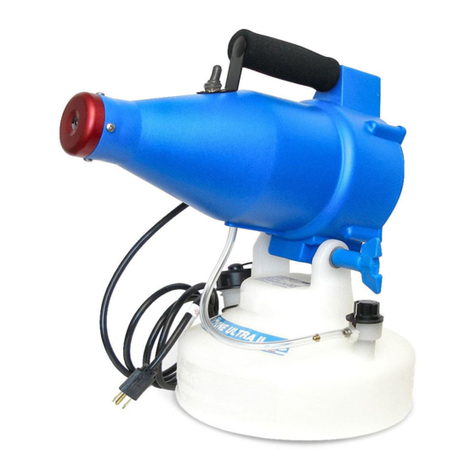
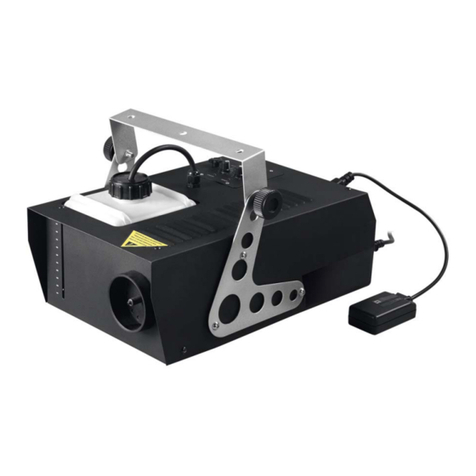
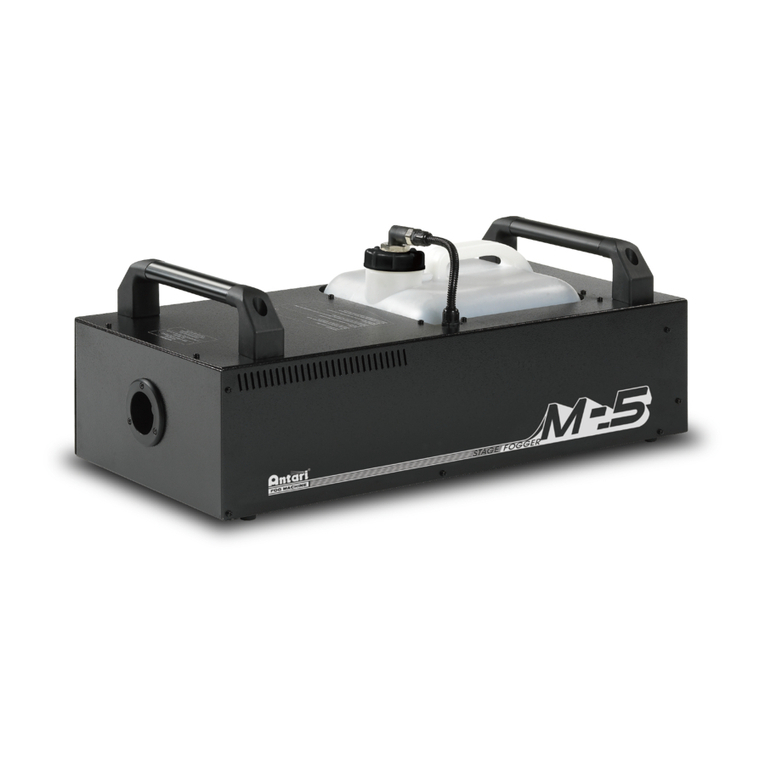
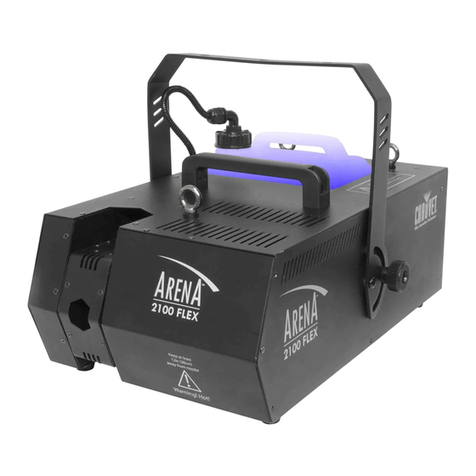
The initial source of ignition is a spark plug powered by an electronic ignition system. After original
ignition the repeated cycles are sustained by a glow coil which is an integral and inseparable part of the
engine tube assembly. A sample of the pressure pulses from the combustion chamber is routed to the
carburetor where it operates a diaphragm fuel pump within the carburetor to pump additional fuel from the
fuel tank to the carburetor. When the fuel pump operation has stabilized, further operation of the priming
pump is not required.
The exhaust emission of a pulse jet engine is low in pollutant components due to the following basic
design features: The combustion chamber and a length of the discharge (exhaust) tube attached to it
operate at a bright red temperature approximating 1800°F., (982°C.) In addition, an amount of air
(oxygen) in excess of that required for normal burning of fuel vapor is fed to the engine. Thus, combustion
is quite complete and pollutants formed in other types of engines are actually burned to their non-pollutant
end products in the pulse jet engine.
The formulation remains in the formulation tank under pressure until the formulation valve is
opened. Then, the formulation is forced from the tank and delivered to the engine tube where it is injected
into the high velocity pulsating flow of hot gases. The formulation is broken into small particles by the
pulsating gases, then discharged into the atmosphere.
SAFETY PRECAUTIONS
WARNING
READ AND UNDERSTAND THESE SAFETY PRECAUTIONS BEFORE OPERATING MACHINE.
1. FUEL. This machine uses GASOLINE as the fuel and all precautions commonly applying to this volatile fuel
should be observed. Be careful not to spill gasoline over the machine but if this occurs wipe it off and allow
evaporation time before starting the machine. GASOLINE ON THE MACHINE OR SPILLED IN THE IMMEDIATE
AREA IS HAZARDOUS. DO NOT ATTEMPT TO PUT FUEL IN A HOT MACHINE.
2. FOGGING FORMULATION. All thermal fogging formulations are combustible, that is, they all can
be caused to bum. This is true even of high flash point or "no" flash point formulations. A combustible liquid vapor can
be ignited because it readily forms a uniform mixture with the air which contains the oxygen needed for combustion.
However, fine particles of combustible liquids or solids suspended in the air very closely spaced are capable of
propagating flame from one to another once ignition starts. A good analogy is the grain mill explosion. Although the
fine particle dust in a grain mill has "no" flashpoint, the phenomena of the grain mill explosion is an all too common
occurrence. While a high flashpoint or a "no " flash point liquid formulation will ignite far less readily than a low flash
point liquid, and for this reason is strongly advocated, the high or "no" flash point formulation can ignite if the proper
conditions exist. These conditions are basically two: 1) a sufficient volume of liquid in the form of fine particles
suspended in the air; and 2) a sufficiently high-energy source of ignition.
3. FOG CONCENTRATION. It has been fully established that an acceptable level of liquid in the
atmosphere is one gallon (3.8 liters) for each 50,000 cubic feet (1400 cubic meters). There is a margin of safety of at
least 5 to 1 in this figure. But long before this concentration is reached, with the fine white particle fog that this
machine generates, visibility within the fog is reduced to less than 15 inches (38 CM.) Thus, an operator fogging
within a closed area will not be able to see his way long before a combustible atmosphere can be approached.
However, if the operator is outside of the closed area, it is quite possible to over fog, particularly if the area is small,
i.e., crawl spaces under buildings or between ceiling and roof.
It is important to always employ a dry fog setting in a closed area to avoid depositing oil particles on
combustible surfaces, thus creating a fire hazard. If a combustible atmosphere is established or a combustible
deposit is laid down, a source of ignition may cause a fire. Even in open areas, care should be taken to avoid
unnecessary accumulations of oil particles on objects within the fogging area. To avoid danger of fire or explosion in
a closed space, the enclosed volume, fogging time and required formulation volume must be carefully calculated.
4. FOG IGNITION. The greatest hazard of fog ignition is from an external source. This can be gas or oil pilot
lights or sparks from electrical controls such as switches, relays, etc. Therefore, it is strongly recommended that all
such sources be eliminated by extinguishing all pilot lights and turning off all electrical power before fogging.
The design of the machine is such that it is quite difficult to ignite the fog from an external source since the
ignition must be positioned just at the proper distance from the discharge end to cause fog ignition and this distance
is on the order of only 8-6 inches (20-15 CM). If an external source ignites the fog being discharged. It will produce a
torching effect. Should this occur, quickly release the FORMULATION ON-OFF BUTTON to stop the fog discharge.
Never artificially wedge or block open the formulation ON-OFF VALVE.
(CONTINUED ON PAGE 6)
5