manuals.online logo
Brands
  1. Home
  2. •
  3. Brands
  4. •
  5. H-KING
  6. •
  7. Hair Clipper
  8. •
  9. H-KING F-18 50MM EDF 4S User manual

H-KING F-18 50MM EDF 4S User manual

This manual suits for next models

1

Popular Hair Clipper manuals by other brands

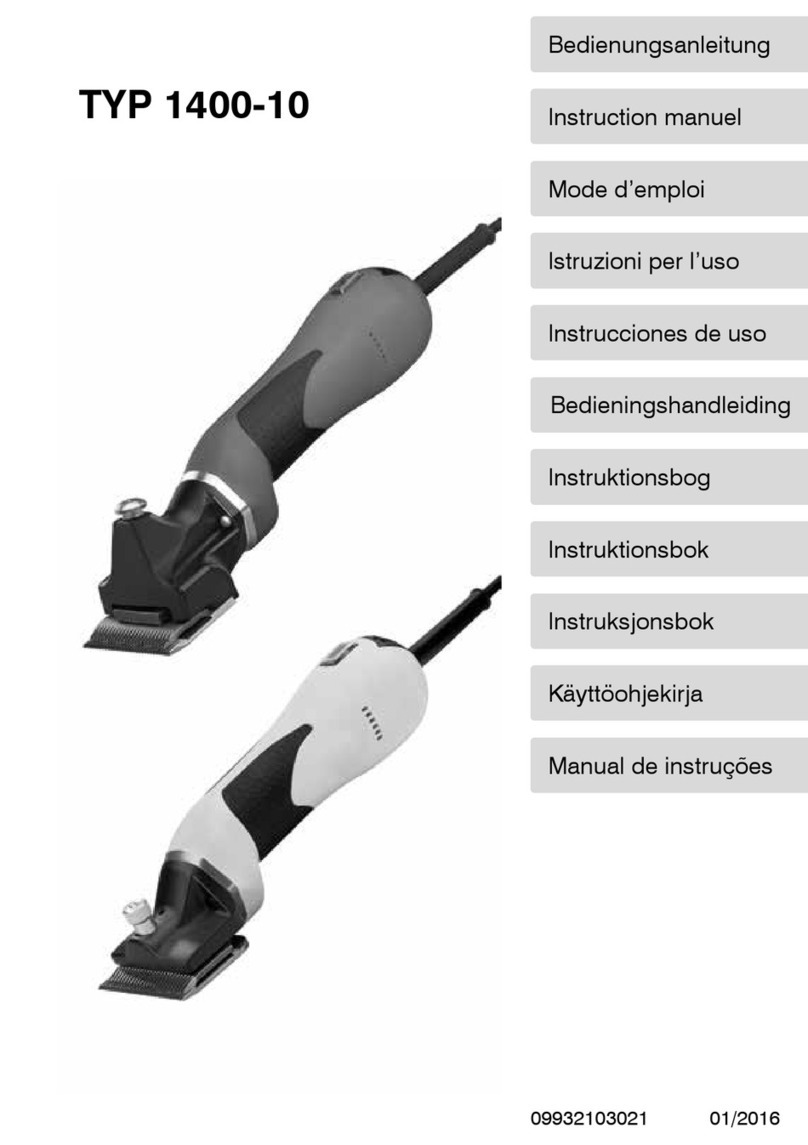
Lister 1400-10 instruction manual

Lister

Lister 1400-10 instruction manual

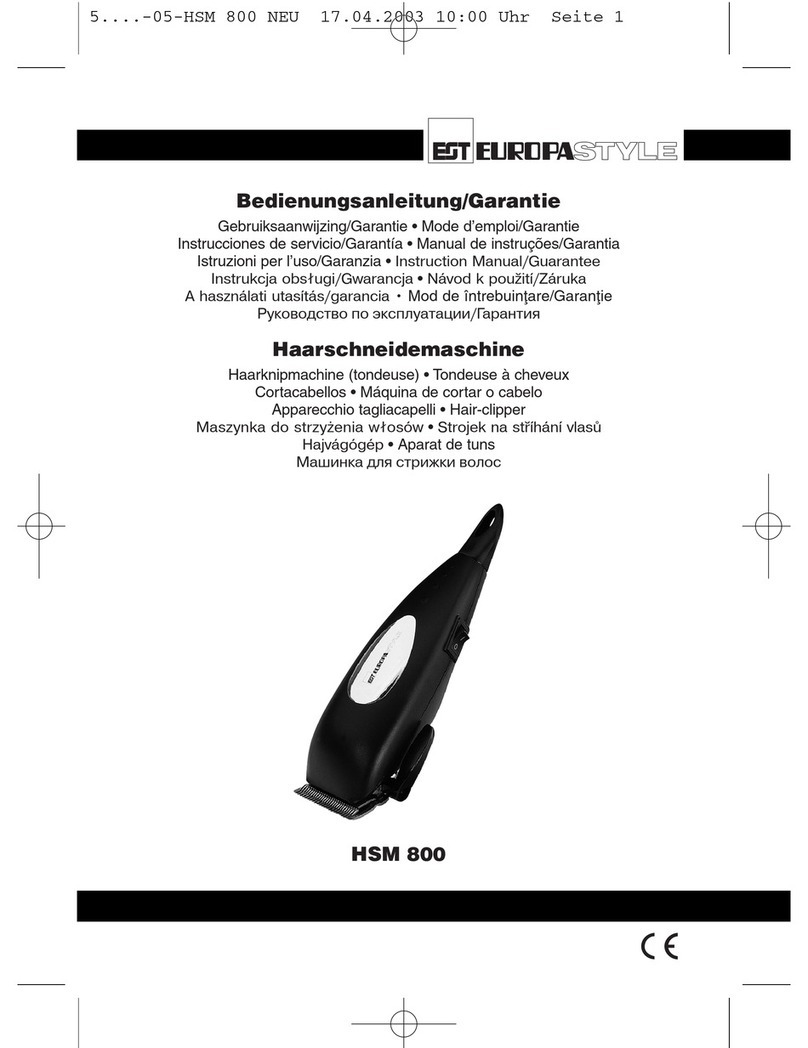
Clatronic HSM 800 instruction manual

Clatronic

Clatronic HSM 800 instruction manual

Mellerware MACRO ALDANY MA20001 instructions

Mellerware

Mellerware MACRO ALDANY MA20001 instructions

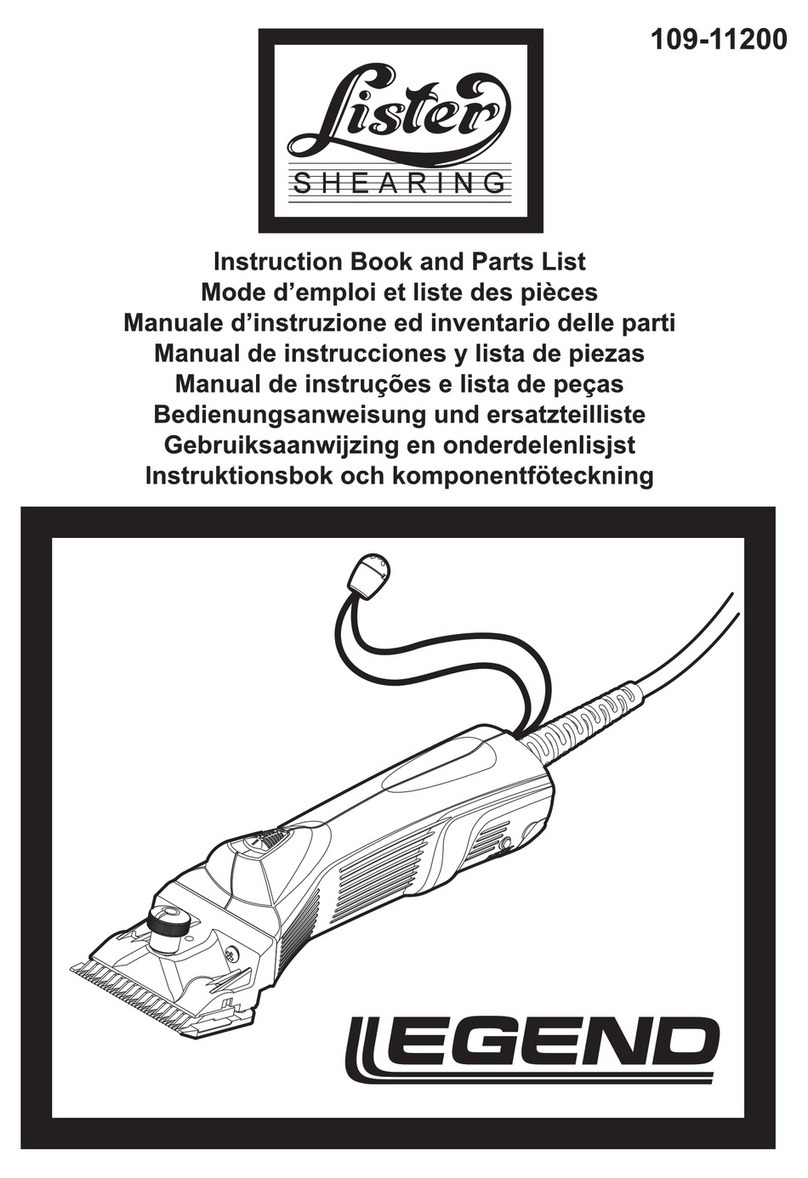
Lister Legend Instruction book and parts list

Lister

Lister Legend Instruction book and parts list

Philips HC5440/80 user manual

Philips

Philips HC5440/80 user manual

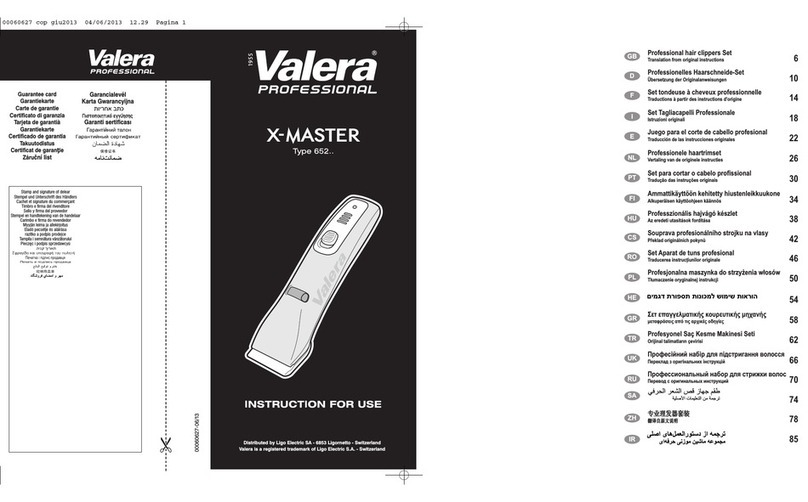
VALERA X-Master 652 operating instructions

VALERA

VALERA X-Master 652 operating instructions

Wahl 1870Li operating manual

Wahl

Wahl 1870Li operating manual

Remington HC5780 manual 

Remington

Remington HC5780 manual 

Shear Magic Nifty 1800 instruction manual

Shear Magic

Shear Magic Nifty 1800 instruction manual

Philips QC5390 Brochure & specs

Philips

Philips QC5390 Brochure & specs

Andis US-1 Use and care instructions

Andis

Andis US-1 Use and care instructions

Panasonic EH-KA81 Service manual

Panasonic

Panasonic EH-KA81 Service manual

Andis US-1 Use and care

Andis

Andis US-1 Use and care

Remington Classic HC450 manual

Remington

Remington Classic HC450 manual

O'Barber MINI SLIDE user guide

O'Barber

O'Barber MINI SLIDE user guide

Oster 76110 instruction manual

Oster

Oster 76110 instruction manual

Andis ML Use and care

Andis

Andis ML Use and care

Hyundai HC 420 instruction manual

Hyundai

Hyundai HC 420 instruction manual

manuals.online logo
manuals.online logoBrands
  • About & Mission
  • Contact us
  • Privacy Policy
  • Terms and Conditions

Copyright 2025 Manuals.Online. All Rights Reserved.

INSTRUCTION MANUAL
H-KING F-18 50MM EDF 4S
WITH ORX FLIGHT STABILIZER
WARNING
SAFETY PRECAUTIONS
Read this instruction manual fully so as to become completely familiar with the features of the product before
operating. Failure to operate this product correctly could result in damage to the product, personal property
and cause serious injury. This is a sophisticated hobby product and is NOT a toy. It must always be operated
with caution, common sense and some basic mechanical ability. This manual provides instructions on the
assembly, safe operation and maintenance of this hobby product. It is highly recommended that you read and
follow fully the instructions and warnings stated in this manual including safety, assembly, set-up and flying
guidelines in order to operate this product correctly and avoid damage or serious injury.
As the user of this product you and you alone are responsible for operating it in a manner that does not
endanger yourself and others around you or result in damage to the product or property of others. This product
is operated via a radio controlled system that in some cases can be subject to interference from sources
outside of your control. Interference may result in a momentary loss of control so it is always recommended
that this product be used in a suitable open outdoors space.
• This is a radio controlled flying model and as such must always be flown with caution, this is NOT a toy.
• The H-King brief was to design a model for low hours to intermediate pilots.
• Always exercise great caution when using the recommended battery to power this product. For full safety
notes and operating procedures please read the information provided by your battery supplier.
• Take great care when connecting/disconnecting the battery. Once again see your battery suppliers informtion
for the full safety procedures.
•Never power up the model in a confined space and always keep the fan air intake clear of obstructions,
clothing and anything that can be drawn into the fan unit.
• This product is not a toy, children must be accompanied by an adult at all times when operating this product.
• Only fly this model in an open area away from crowds, people, buildings, trees, power lines, roads, airports
and other obstructions.
• Always put safety first when operating this model and consider the warnings stated above.
• The supplier/manufacturer accepts no responsibility for damage or injury caused through the use of this
product. A reminder that it is not suitable for children under the age of 14. THIS IS NOT A TOY.
1

SPECIFICATION
- Length: 800mm
- Wing span: 588mm
- Weight w/battery: 4S Li-Po 1300 mAh (500g+/-10g)
- Power: 50mm EDF 4S high power brushless motor.
- Radio: Radio: 6ch and up with electronic mixing capability computer radio
(Recommended)
- Battery: 1000-1300 mAh 4S Li-Po 30-60C (Recommended)
- ESC: 30A with BEC
- Servo: 4 x 9g
2
CONTENTS
1. Fuselage
2. Canopy
3. Main wing set
4. Vertical fin
5. Horizontal stabilizer
6. Nose cone
7. Carbon fiber wing joiner
8. Pushrods
9. Double sided tape
1
3
MAIN WING
ASSEMBLY INSTRUCTIONS
1. Pass the supplied carbon fiber wing joiner through the fuselage
1
2. Install the right wing onto the fuselage and connect the wing servo lead. Then
gently push the wing against the fuselage until it hits the magnet on the wing
saddle. The servo lead should also be tucked nicely inside the groove in between
the wing and the fuselage. The built-in magnet wing locking system on the wing
saddle will hold the wing securely.
3. Repeat Step #2 for the left wing.
4
HORIZONTAL STABILIZER
1. Get the Left/Right stabilizer parts ready. Apply foam safe glue to the root of the
stabilizer and install the left hand side stab onto the fuselage tail as shown.
2. Repeat the above steps for the right-hand side horizontal stabilizer.
3. View the model from the front, ensure the left and right horizontal stabilizer are
installed correctly, check this frequently as the glue dries.
VERTICAL FIN
Apply a thin layer of foam safe glue to one of the vertical finsand install it
onto the fuselage as shown. Repeat this process for the other fin, check
the alignment frequently as the glue dries.
5
NOSE CONE
YOUR F-18 BUILD IS COMPLETE
6
Use a foam safe glue to attach the nose cone.
C OF G POSITION
The C of G is 48-53 mm from the wings leading edge. For first flights we
recommend you use the forward measurement. Once you get used to the
model you can then move it back, do not though exceed the most rearward
measurement.
7
F-18 ORX FLIGHT
STABILISATION SYSTEM
FEATURES
• Integrated with a 32bit MCU and a 6 axis digital gyro for ultra fast flight control
response.
• The ORX stabilisation device is tuned specifically to a particular model for the
best flying performance.
• Supports PWM, PPM and SBUS. Auto-detect.
• Supports 3 different flight modes (Beginner, Intermediate and Expert)
CHANNEL INPUT
Flight mode (a 3-way toggle switch should be assigned for flight mode selection)
PWM input: Ch 1. Aileron, Ch 2.Elevator, Ch 3 Throttle, and Ch 5 Flight mode
(a 3-way toggle switch should be assigned for flight mode selection)
PPM input: Plug the flight mode/SBUS/PPM channel input plug into your
receiver which supports PPM out. Here is the Ch assignment and shown as
follow. Ch 1. Aileron, Ch 2. Elevator, and Ch 3 Throttle. Ch 5 (a 3-way toggle
switch should be assigned for flight mode selection)
SBUS input: Plug the Flight mode/SBUS/PPM channel input plug into a receiver
which supports SBUS. CH 5 (a 3-way toggle switch should be assigned for flight
mode selection)
8
PUSHROD LINKAGES SETUP
Connect the ORX via one of the PWM/PPM/SBUS inputs of your chosen
receivers. Connect a 4S Li-Po battery pack and switch on your TX to prepare to
set the throws of the control surfaces. Ensure the servo horns on all servo
output shafts are perpendicular to servo cases, and all control surfaces are
perfectly level. Reset all electronic trims on your TX to the centre position and
remove any Dual Rates/End points settings, leave them at 100% and expo at
0%. There are two sets of pushrods which come with the kit. The shorter ones
are used for ailerons and the longer ones are used for elevators. Install the
supplied longer pushrod to the right-hand side elevator servo horn and use the
third hole from the top as shown. Then repeat the above steps for the elevator
servo on the left-hand side. If you are happy with the above setup, you may
start to set up aileron control surfaces. Install the supplied shorter pushrod to the
right-hand side aileron servo horn and use the forth hole from the top as shown.
Then repeat the above steps to install the pushrod linkage on the left-hand side.
1
9