ENGLISH
24
GB
5. Do not operate a chain saw with one hand! Serious
injurytotheoperator,helpers orbystandersmayresult
fromone-handedoperation.Forpropercontrol,always
usetwo handswhenoperating achainsaw,one hand
whichoperates thetrigger.Thiscan resultinthe chain
saw“skating” or skidding,whichcan result inpersonal
injury due to loss of control.
6. Keepagood firm gripon thesaw withbothhands,with
the right hand on the rear handle and the left hand on
the front handle, when the engine is running. Use a
firm grip with thumbs and fingers encircling the chain
sawhandles.Afirmgrip willhelpyou reducekickback
and maintain control of the saw. Two hands must be
used to control the saw at all times.
7. Donot overreachorcut abovechestheight.
8. Make sure that the area in which you are cutting is
freefrom obstructions.Donot let thebarnose contact
alog, branch,orany otherobstructionwhich couldbe
hit while you are operating the saw.
9. Cuttingathighenginespeedsmayreducethelikelihood
of kickback.
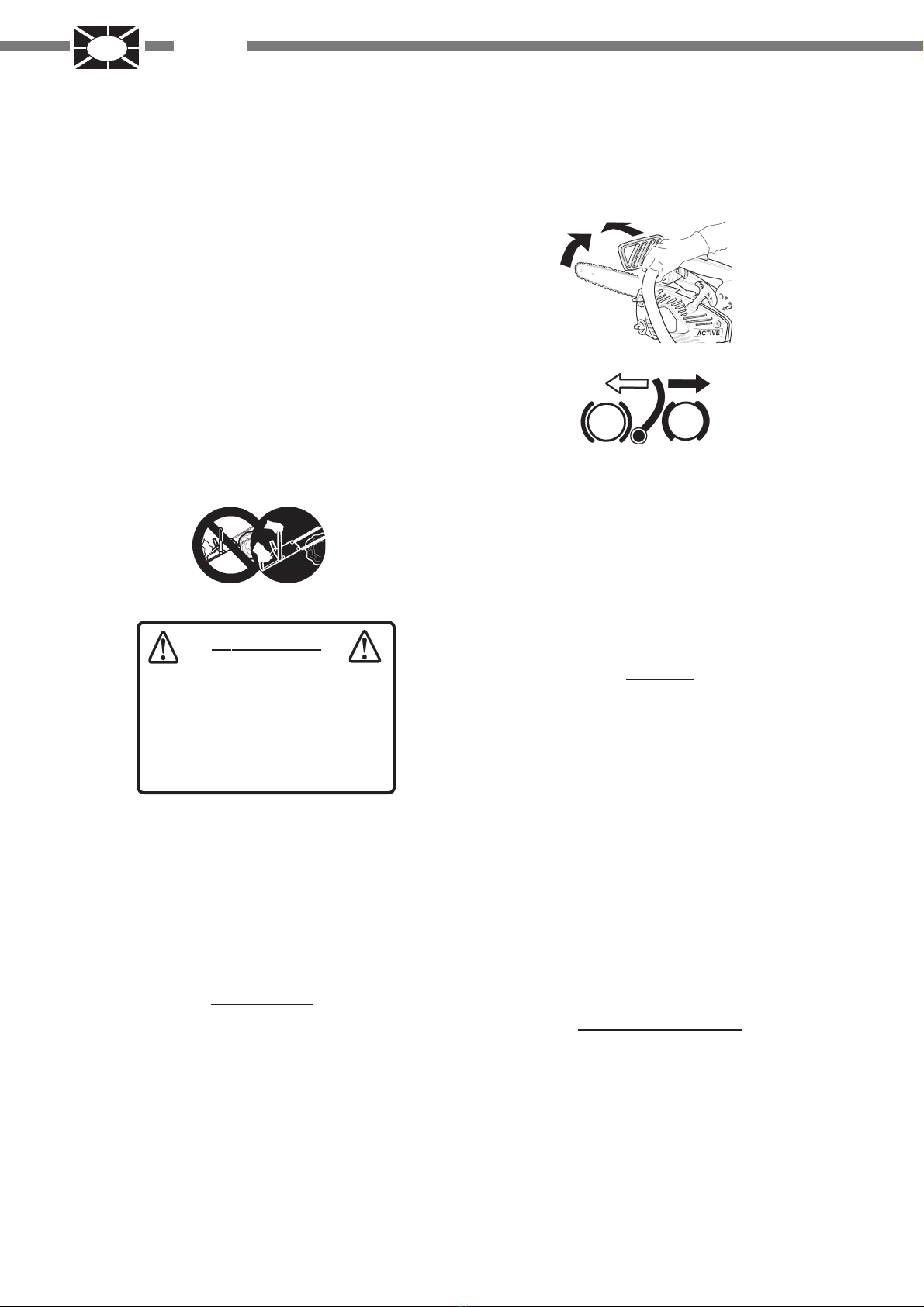
5.
WARNING
KICKBACKMAYOCCURWHEN
THENOSEORTRIPOFTHEGUIDE
BAR TOUCHES AN OBJECT OR
WHEN THE WOOD CLOSES IN
ANDPINCHESTHESAWCHAININ
THECUT
10.But cuttingat part-throttleor lowenginespeeds may
bepreferabletocontrolthechain saw intight situations
and may also reduce the likelihood of kickback.
11. Followmanufacturer’ssharpening andmaintenance
instructions for the saw chain.
12.Useonly replacementguidebarand chainsspecified
bythe manufacturer,orthe acceptableequivalents of
theseguide barand chains.
CHAINBRAKE
Thechainbrake’s functionistostop chainrotation aftera
kickback. It neither prevents nor reduces kickback. Do
not depend on the chain brake for protection against
kickback.
Evenwithachainbrake,dependonyour own goodsense
andproper cuttingmethods justasthough therewereno
chainbrake.
Even with normal use and proper maintenance, the
response time of the brake may lengthen. The following
mayinterferewiththebrake’sabilitytoprotecttheoperator.
1. Sawwronglyheldtooclosetooperator’sbody.Kickback
time may be too fast even for a perfectly maintained
brake to work in time.
2. The operator’s hand may not be in position to contact
thehand guard.Thebrake willnot betripped.
3. Lack of proper maintenance lengthens the brake’s
stopping time, making it less effective.
4. Dirt, grease, oil, pitch, etc. getting into the working
partsofthemechanismmaylengthenthestoppingtime.
5. Wear and fatigue of the activating brake spring, and
wear of the brake/clutch drum and pivot points may
lengthenthe brake’sstopping time.
6. Adamagedhandguardandlevermayrenderthebrake
inoperative.
INJURIES
It is believed that overusing the muscles and tendons of
the fingers, hands, arms and shoulders may cause
soreness, swelling, numbness, weakness and extreme
pain to the areas just mentioned. To reduce the risk of
repetitivestress injury, dothefollowing.
1. Avoid using your wrist in a bent, extended or twisted
position.Instead,trytomaintainastraightwristposition.
Also, when grasping, use your whole hand, not just
thethumb andindexfinger.
2. Take periodic breaks to minimize repetition and rest
yourhands.
3. Reduce the speed and force in which you do the
repetitivemovement.
4. Doexercisestostrengthen thehand and armmuscles.
5. See a doctor if you feel tingling, numbness or pain in
the fingers, hands, wrists or arms.
VIBRATIONANDCOLD
Exposure to cold and vibration may cause tingling and
buming followed by loss of color and numbness in the
fingers.Westronglyrecommend yourtaking thefollowing
precautionsbecausethe minimumexposure whichmight
triggerthe ailmentis unknown.
1. Keep your body warm, especially the head and neck,
feet and ankles, and hands and wrists
2. Maintaingoodbloodcirculationbyperforming vigorous
arm exercises during frequent work breaks and also
by not smoking.