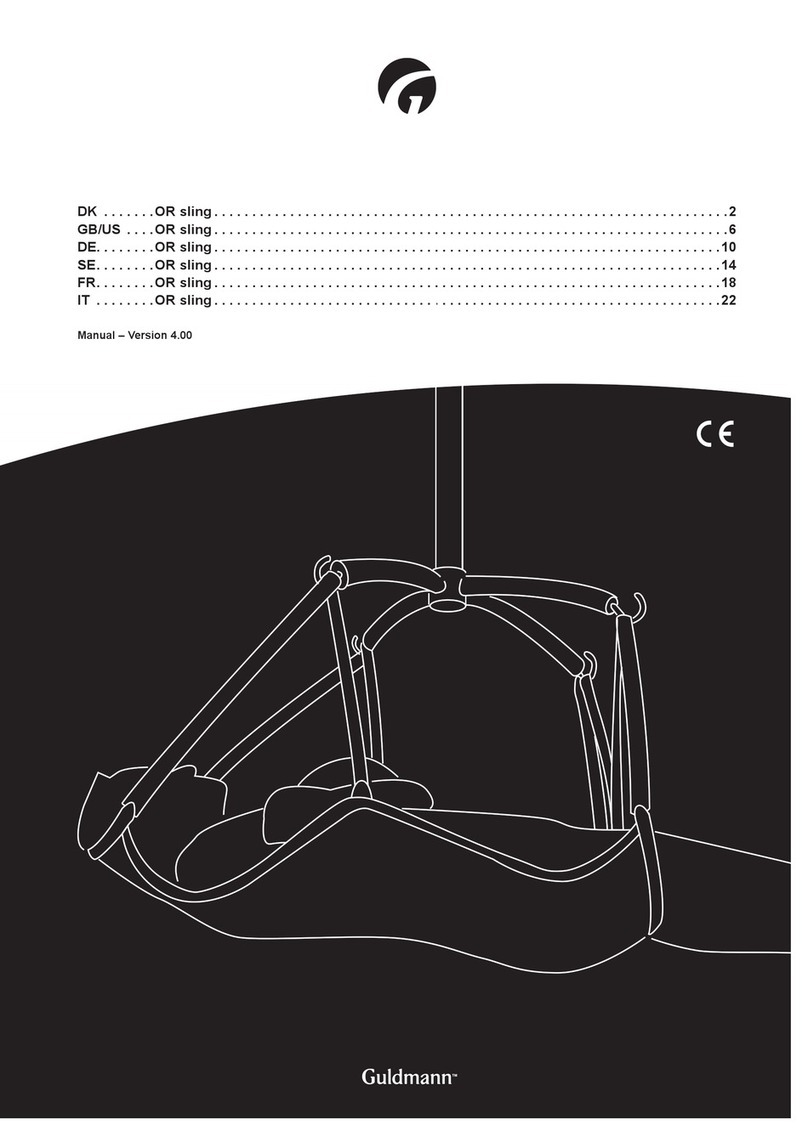
•Inordertoavoidthataloadswingsinadangerousmanner,itisrecommendedtouseaholdingrope.
•Donotshock-loadchainslingsorjerkloads.
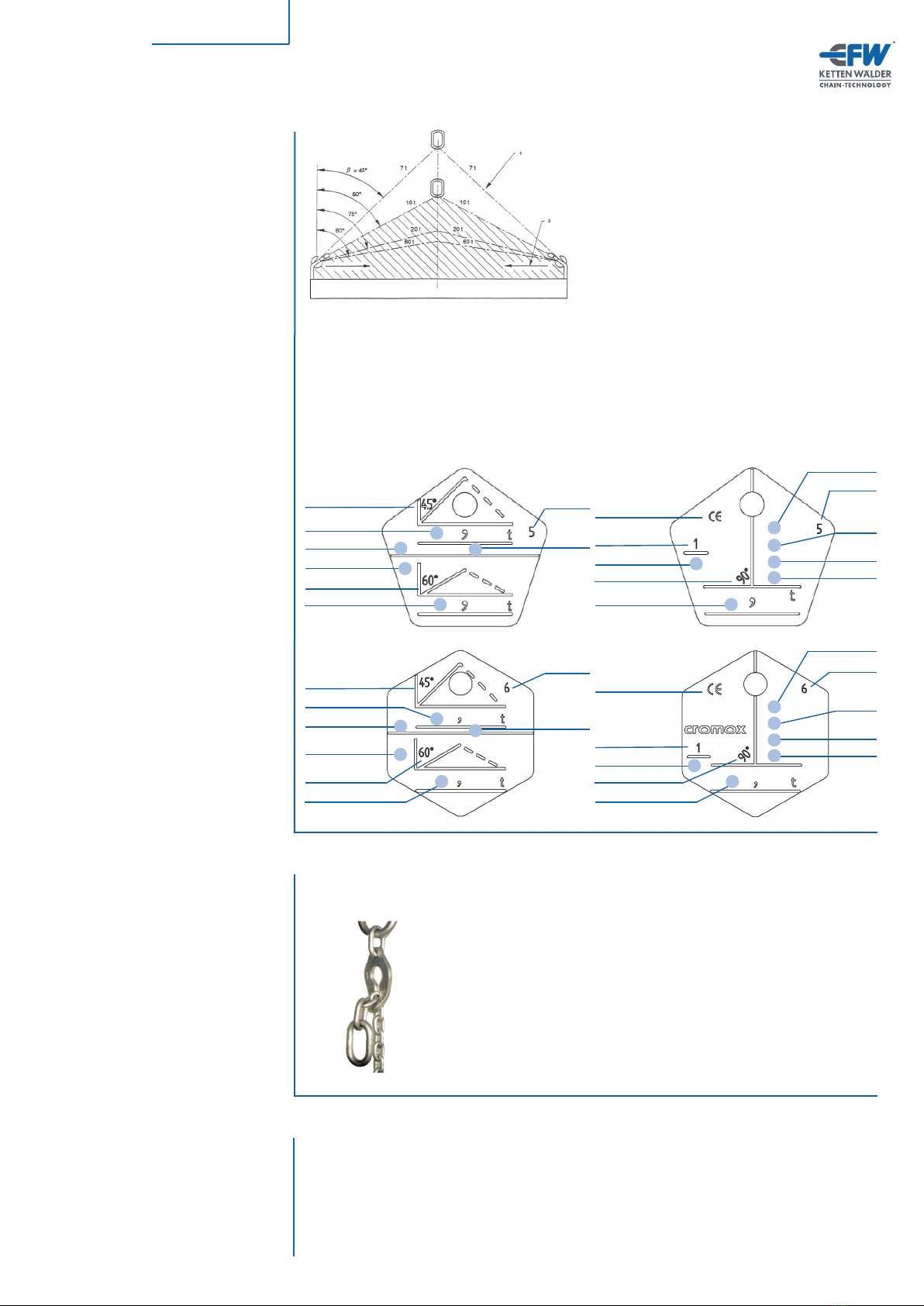
•Inindicatingthesafeworkingload,itisassumedthattheindividuallegsofthechainslingareloaded
symmetrically.Symmetricalloadingcanbeassumedifallofthefollowingconditionsaremet:
utheloadislessthan80%oftheratedsafeworkingloadand
utheangleofinclinationforeachchainlegisnotlessthen15°and
utheanglesofinclinationofthechainlegsdonotdeviatebymorethan15°fromeachotherand
utheslingattachmentpointsfor3-and4-leggedchainslingsarelocatedinasling
planeofnotmorethan15°.
•Forunsymmetricalloading,theclassificationoftheliftingoperationaswellasthedetermination
ofthesafeworkingloadistobeentrustedtoacompetentperson.Alternativelyinthecaseof
unsymmetricalloading,thesafeworkingloadshouldbereducedto50%oftheratedvalue.
•Whenusingmulti-leggedchainslings,thefollowingistobeobservedifnotallofthelegs
arerequiredforlifting:
uIndividuallegswhicharenotbeingusedshouldbehookedbackontothemasterlink.
uInsuchcases,thefollowingloadfactorsapply:
•Allinfluencingfactorsaretobetakenintoaccountwhendeterminingaslingtypeandchoosing
theappropriatechainsling,withthesafeworkingloadtobegreaterthantheloadtobelifted.
•Safetyduringliftingoperations:
uISO12480-1istobeobservedintheplanningandcarryingoutofliftingoperations.
uHandsandotherbodypartsaretobekeptclearwhentauteningthechainsling.
uNootherpersonsmustbeputindanger.
•Theplacewheretheloadistobeputdownshouldbepreparedandmadesufficientlyaccessible.
•Thegroundmusthavesufficientload-bearingcapacity.
•Itmaybenecessarytostabilisetheloadbyusingwoodenblocksorthelike.
•Inordertopreventdamage,theslingchainmustnotbewedged,norpulledoutbymeansoftheliftinggear.
•Storageofchainslingsthatarenotinuse:
uInordertominimisecorrosionattacksonchainslingsthathavebeenusedinacidsoralkalis
orinacidoralkalinevapours,thosechainslingsshouldbecleanedthoroughlyalsobeforeremoving
themfromoperationtemporarily.
uChainslingsshouldbestoredonspeciallydesignedandprovidedracks.
Ifchainslingsarelyingonthefloor,thereisariskthattheymightgetdamaged.
uChainslingsremainingonthecranehookshouldbehookedbackontothemasterlink.
uIfchainslingsarenottobeusedintheforeseeablefuture,theyaretobecleanedandprotectedagainstcorrosion.
Inspectionsshouldbeperformedbyacompetentpersonatintervalsofnomorethan12months.
Ifnecessary,theseintervalsshouldbeshortenedindependenceofthecircumstancesofuse.
•Priortoinspection,thechainslingsaretobecleanedthoroughly.
•Anycleaningmethodthatdoesnotattackthebasicmaterialisadmissible,whereasany
processesorproceduresthatmaycausehydrogenembrittlement,overheatingormaterialabrasion
orwhichmayhidesurfacedamagearetobeavoided.
•Sufficientlightingistobeprovidedduringinspections,andallcomponentsofthechainsling
are to be examined.
•Bymeansofvisualinspections,thechainslingsaretobecheckedforunmistakable
identification(tags)aswellasforanyvisuallynoticeabledefects.
If any of the following defects are found, the chain sling has to be removed from
operation and inspected by a competent person or serviced/repaired:
uMarking/identificationillegibleormissing.
uDeformationofsuspensionorslingparts.
uInadmissibleelongationofchainlinks,differencesinleglengths.
6. When putting
the load down,
the following is
to be observed:
7. Maintenance:
Safety Notes
4
d
Type of chain sling Number of Factor to be applied with
individual legs used respect to the rated SWL
1 1/2
2 2/3
1 1/3
2- leged
3- and 4-legged
3- and 4-legged