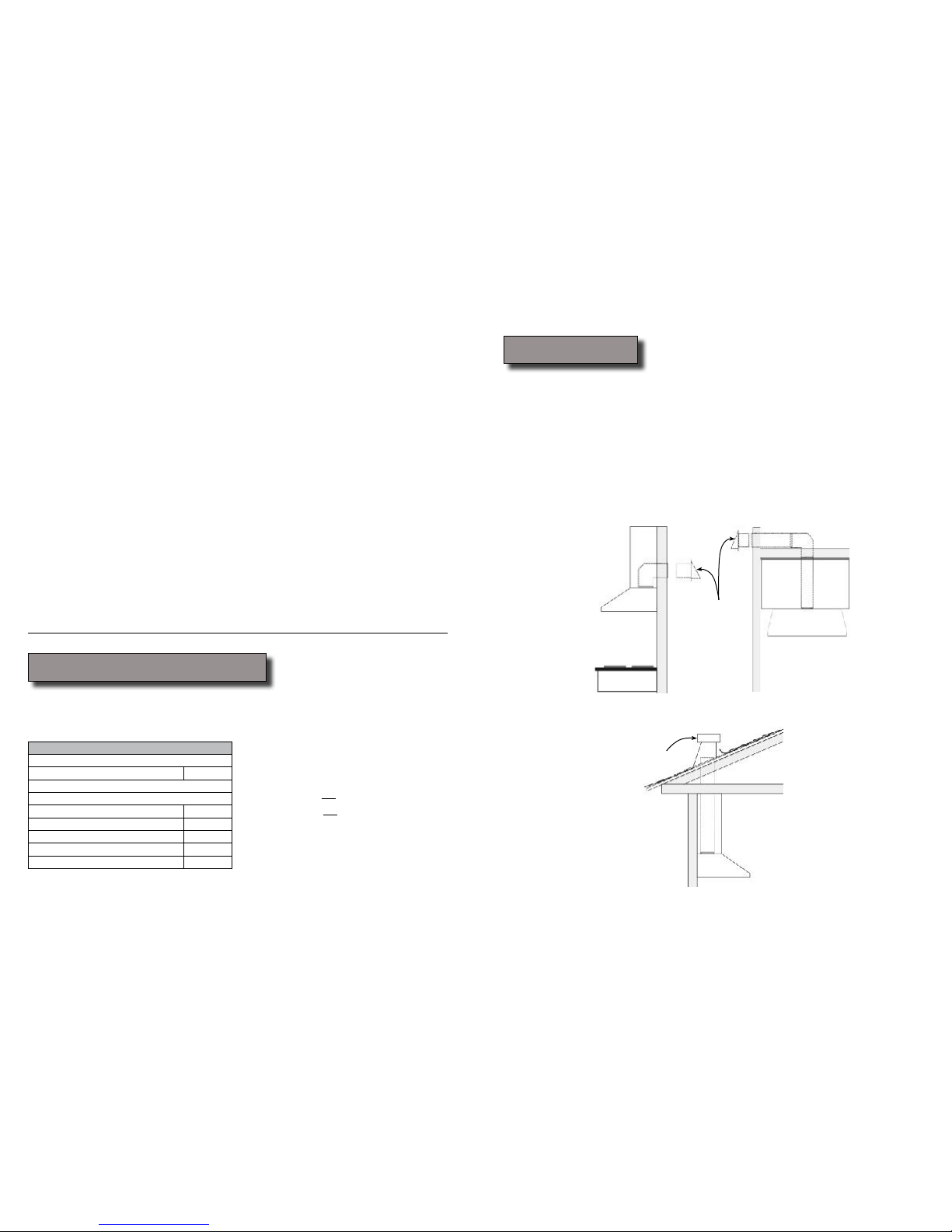
IMPORTANT: Observe all governing codes and ordinances.
((THIS HOOD REQUIRES 120V POWER TO OPERATE PROPERLY)
It is the customer’s responsibility:
• To contact a qualied electrical installer.
• To assure that the electrical installation is adequate and in conformance with National Electrical Code, ANSI/
NFPA 70 — latest edition*, or CSA Standards C22. 1-94, Canadian Electrical Code, Part 1 and C22. 2 No.
0-M91 - latest edition** and all local codes and ordinances.
If codes permit and a separate ground wire is used, it is recommended that a qualied electrician determine that
the ground path is adequate.
A 120-Volt, 60 Hz, AC-only
DO NOT ground to a gas pipe.
Check with a qualied electrician if you are not sure that the range hood is properly grounded.
DO NOT have a fuse in the neutral or ground circuit.
IMPORTANT: Save this Installation Guide for electrical inspector’s use.
The range hood must be connected with copper wire/plug only.
The range hood should be connected directly to the fused disconnect (or circuit breaker) box through exible
armored or non-metallic sheathed copper cable. A U.L. - or C.S.A. - listed strain relief must be provided at each
end of the power supply cable.
Wire sizes (copper wire only) and connections must conform with the rating of the appliance as specied on
the model/serial rating label. Wire sizes must conform to the requirements of the National Electrical Code
ANSI/NFPA 70 — latest edition*, or CSA Standards C22. 1-94, Canadian Electrical Code Part 1 and C22.
2 No. 0-M91 - latest edition** and all local codes and ordinances. A U.L. - or C.S.A. - listed conduit con-
nector must be provided at each end of the power supply cable (at the range hood and at the junction box).
Copies of the standards listed may be obtained from:
* National Fire Protection Association
Batterymarch Park
Quincy, Massachusetts 02269
** CSA International
8501 East Pleasant Valley Road
Cleveland, Ohio 44131-5575
Page 9Page 8
Electrical Requirements
Advanced Preparations:
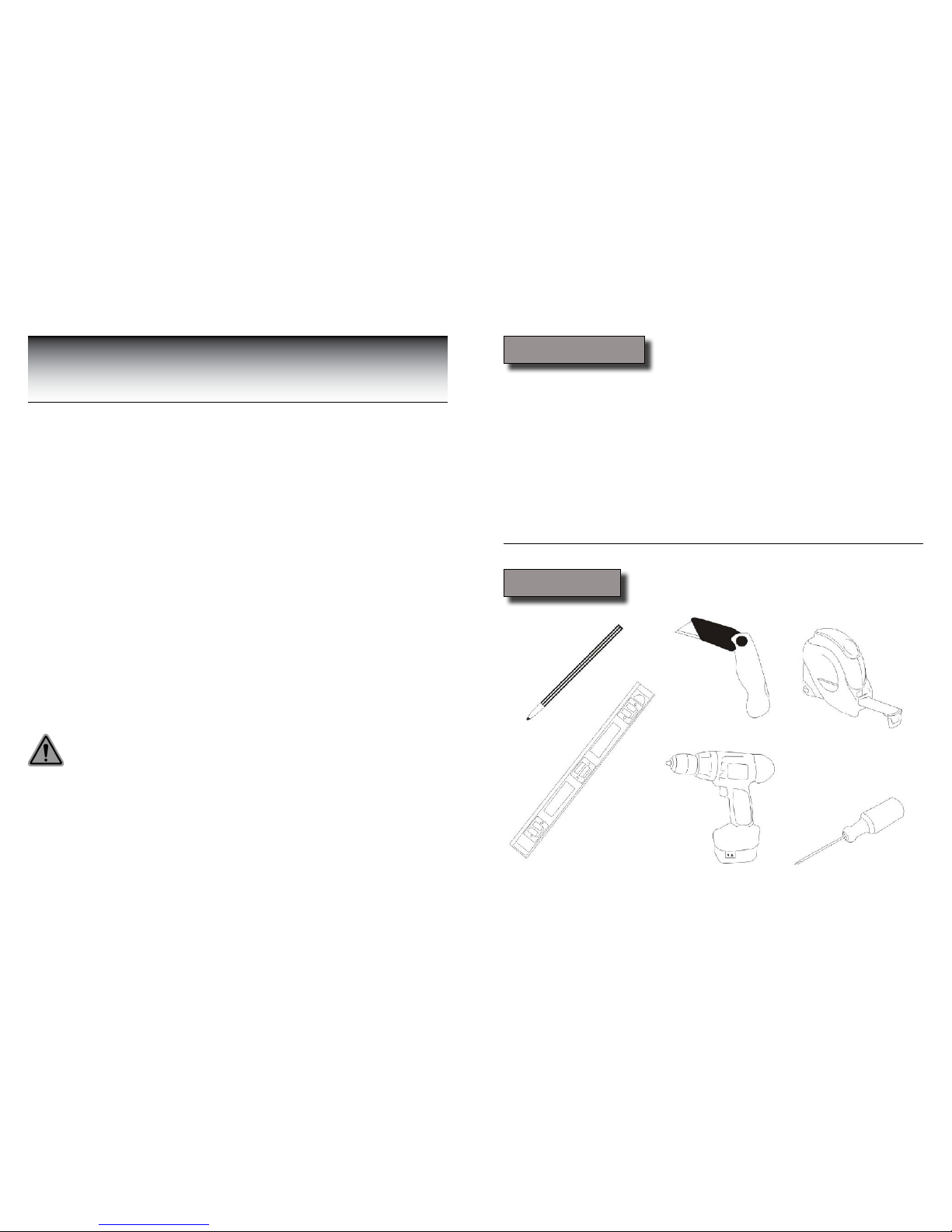
1. Read the entire installation guide and users manual thoroughly, understand instructions and warnings.
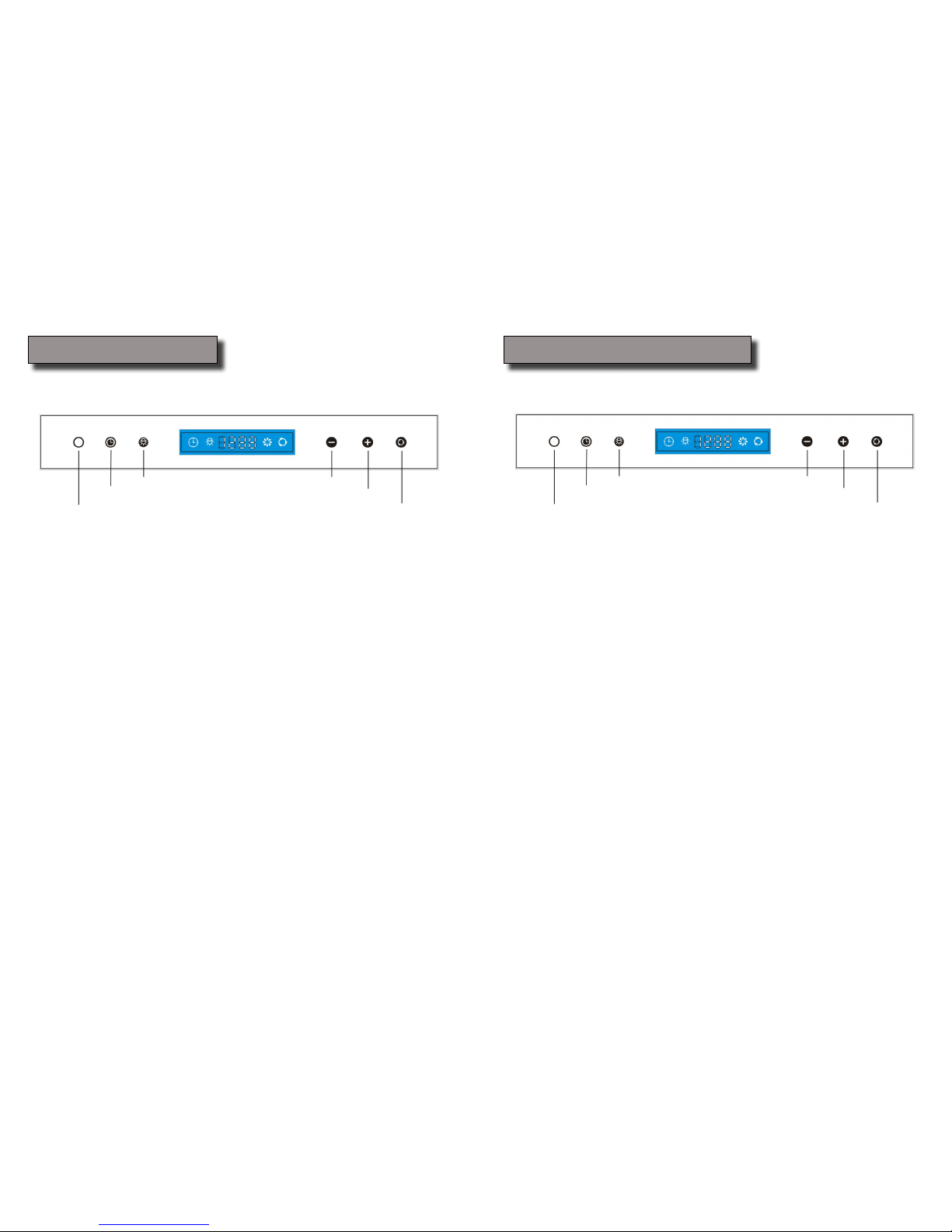
2. Be familiar with the controls of the range hood by reading through Range Hood Operations, Page 12.
3. Place the range hood on a at, stable surface. Connect the range hood to a designated standard outlet (please
refer the product label for the suitable voltage of this unit) and verify no debris has entered the vent openings,
then turn on the range hood. Verify all operations of the range hood by referring to Range Hood Operations,
Page 12.
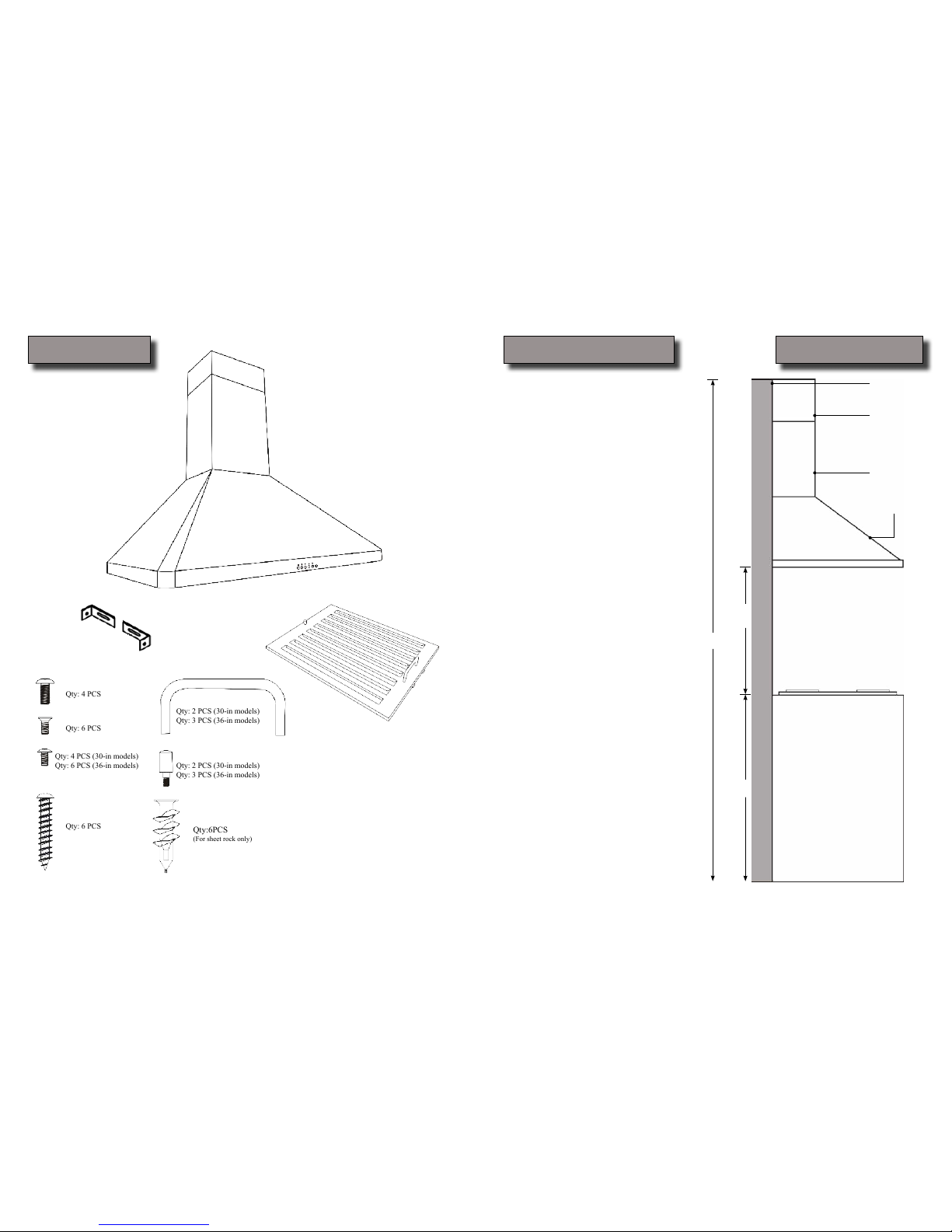
4. Place all supplied parts and required hardware on a at, stable surface and verify the existence of all supplied
parts listed on Page 4.
5. Carefully remove the white plastic protective coat from the chimney covers and range hood if any.
WARNING
Severe Injury
Hood may have very shape edges. Please wear
protective gloves if it is necessary to remove
any parts for installing, cleaning or servicing.
Preparation
WARNING
Excessive Weight
Require three or more person to move and
install this range hood. Spinal or other bodi-
ly injuries could occur if it is not followed.
Preparations:
NOTE: To avoid damage to your hood, prevent debris from
entering the vent opening.
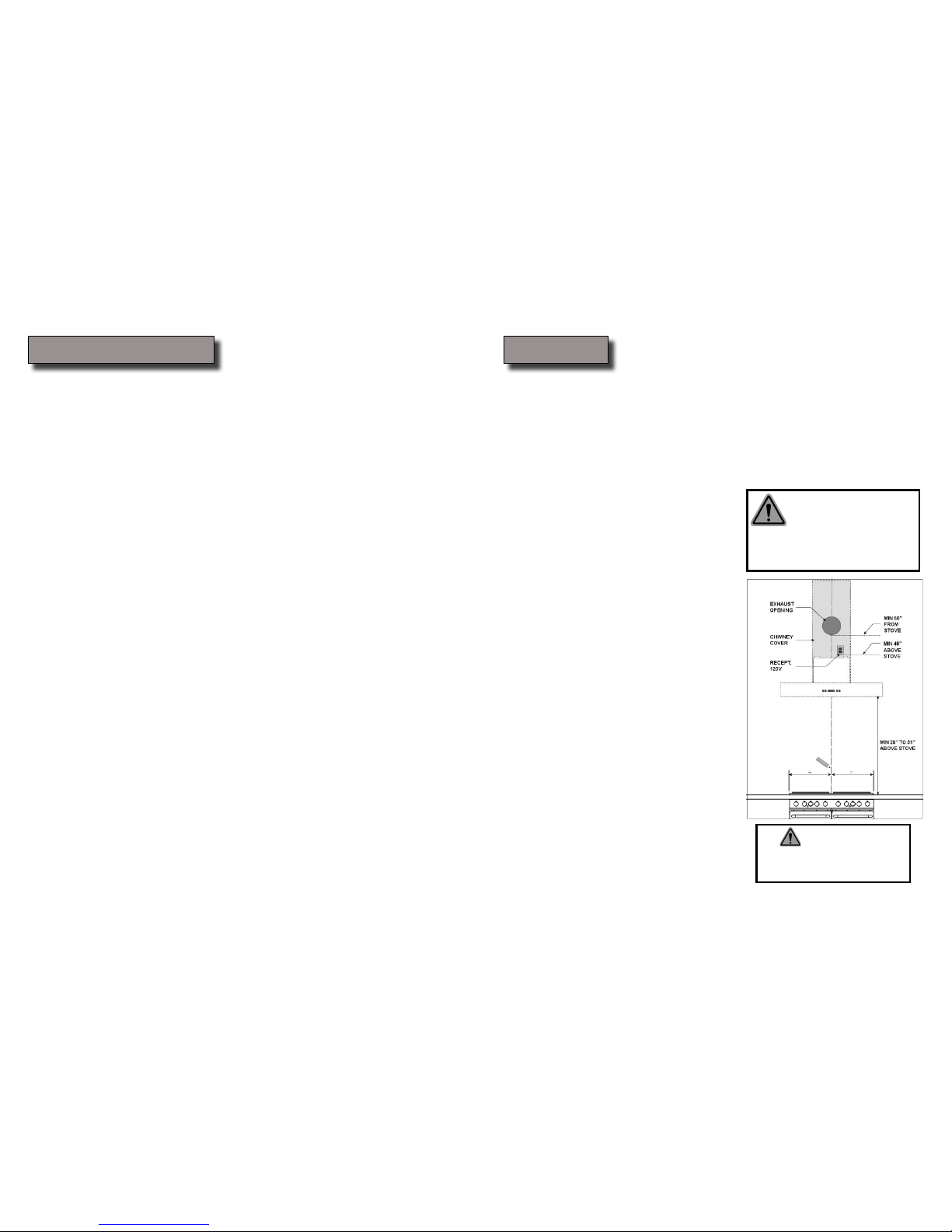
1. Determine and mark the center line on the ceiling where the
range hood will be installed. Make sure there is proper clear-
ance within the ceiling or wall for exhaust vent.
2. Due to the weight and size of this unit, please make sure that
the support system or framework being used is stable and
secure in the ceiling.
3. Put a thick, protective covering over counter top, cook top or
range to protect from damage or dirt. Remove any hazardous
objects around the area when installing.
4. Mark the locations of the support mounting bracket holes,
vent cutout (if used) and power supply cable cutout on the
ceiling. Use drill and saber saw or keyhole saw to cut open-
ings for power supply cable and vent (see Venting Methods
and Electrical requirements, Pages 7-8).
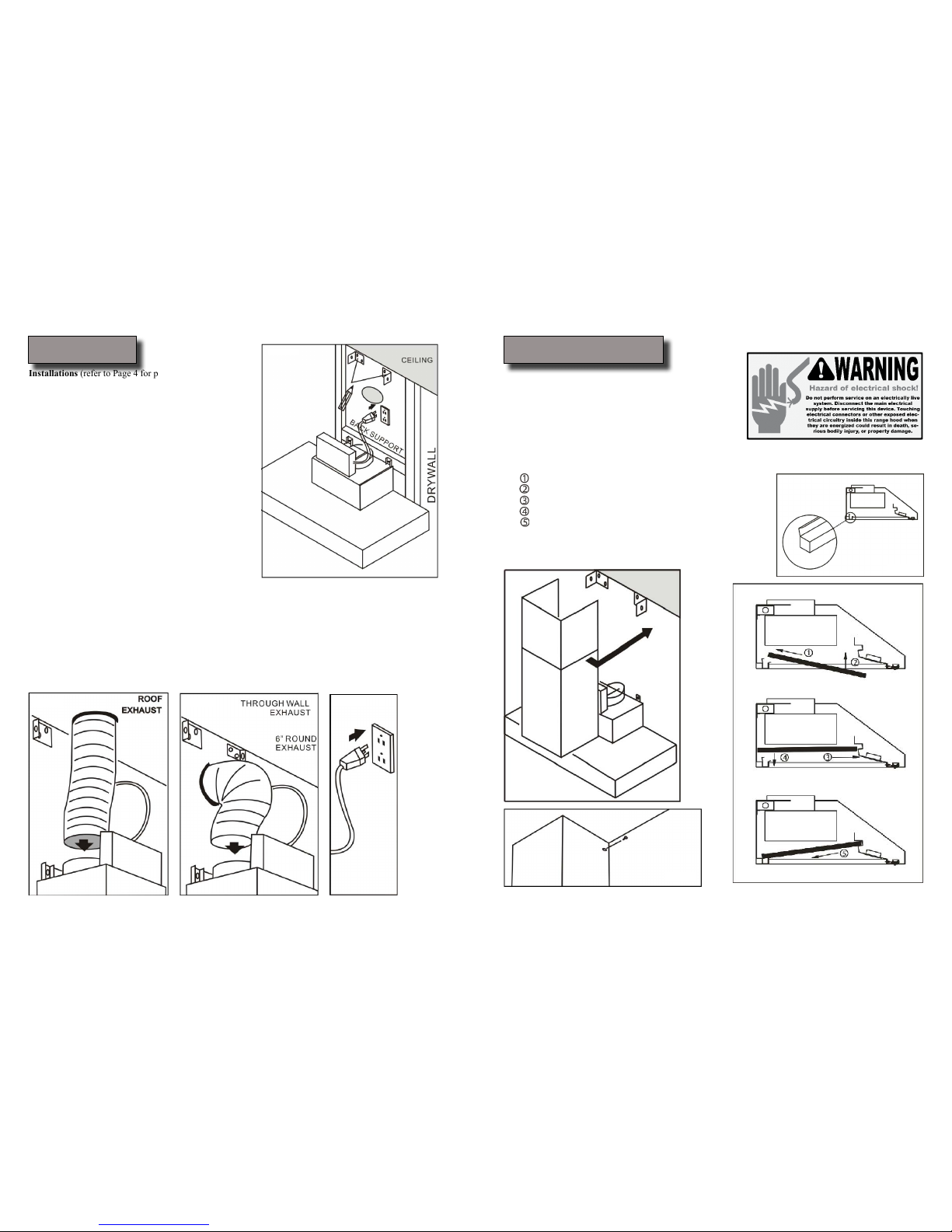
5. If venting to the outside install vent system (see Venting
Methods, Page 7). Use caulking to seal exterior wall or roof
openings.
6. Disconnect main electrical supply, prepare and run electrical
wiring through ceiling. Leave approximately 12” of electri-
cal cord hanging from the ceiling. Do not restore power until
wiring is completed.
7. Disconnect power cord, remove the stainless steel bafe l-
ter (see Figure 9, Page 11) and grease tunnel.
8. Set aside the stainless steel bafe lters and grease tunnel
until the range hood is properly installed.
9. If the range hood comes with a glass canopy and has not
already been mounted to the hood, loosen the four canopy
screws and washers from the hood top, carefully place the
canopy on the hood top, and loosely tighten the four canopy
screws along with washers. DO NOT put excessive pressure
against the glass.