Kustom PH Series User manual

PH
AMPS
PH1012 PH2012R PHTUBE12
PH1012 PH2012R PHTUBE12
10 Watt 20 Watt 12 Watt
12" 4Ω12W 12" 6Ω24W 12" 6Ω24W
Passive
Bass Treble
Passive
Bass Mid Treble
Passive
Bass Treble
Yes Yes Yes
No No One 12AX7
No Spring Reverb No
Aux/Headphone Aux/Headphone Aux/Headphone
WxDxH
395 x 220 x 360
15-⅝x 8-⅝x 13-¼
WxDxH
395 x 220 x 360
15-⅝x 8-⅝x 13-¼
WxDxH
395 x 220 x 360
15-⅝x 8-⅝x 13-¼
6.85 Kg
15.1 lbs.
7.4 Kg
16.3 lbs.
7.6 Kg
16.7 lbs.
Model
Power
Tone Stack
SPECIFICATIONS
Weight
Speaker
Overdrive
Tube Preamp
Input/Outputs
Dimensions
mm
Inches
Effects
1 2 4 5 6
7 8
9
1) INPUT: This ¼” jack is for connecting your guitar to the amplifier.
2) GAIN: Adjusts the gain at the input of the amplifier. It is used
in conjunction with the Master Volume (6) to adjust the amount of
distortion and volume of your amp. For cleaner sounds, this control
should be set to lower settings and the Master set higher...for slight
breakup, these controls should be set in their middle ranges.
3) MAX DRIVE: Push this button IN for heavier distortion.
4) BASS: This passive tone control adjusts the low frequencies of
the amplifier. For a tighter low end, use the Bass EQ set to lower
settings. This is particularly helpful when using the amp at very
loud settings. *
5) TREBLE: This passive EQ adjusts the high frequency
equalization of the amplifier. *
6) MASTER VOLUME: This controls the overall volume of the
amplifier.
7) Line In: This is a 3.5mm stereo line input. It bypasses the
tone controls and feeds straight into the power amplifier. Use
the volume and tone controls on your external device to control
the audio signal.
8) Headphone Jack: This is a 3.5mm stereo output jack. When
used, it turns off the internal speaker.
It combines all inputs from your guitar and Line In for silent
practice.
9) On/Off Power—Provides AC power to the amplifier.
3
*More About Passive Tone Controls: The PH Amplifiers
use a true vintage-style Passive Tone Stack. This simple yet
highly effective design has become a favorite among guitarists
for decades. The equalization of the amplifier is adjusted as
follows: As the Treble is increased, the Bass automatically
decreases. Conversely, if the Treble is decreased, the Bass
automatically increases in frequency.

www.kustom.com
3015 Kustom Drive
Hebron, Kentucky
USA 41048
21 4 5 6 7 8 11
3 9 10
1) INPUT: This ¼” jack is for connecting your guitar to the
amplifier.
2) GAIN: Adjusts the gain at the input of the amplifier. It is used
in conjunction with the Master Volume (7) to adjust the amount
of distortion and volume of your amp. For cleaner sounds, this
control should be set to lower settings and the Master set higher.
For slight breakup, these controls should be set in their middle
ranges.
3) MAX DRIVE: Push this button IN for heavier distortion.
4) BASS: This passive tone control adjusts the low frequencies of
the amplifier. For a tighter low end, use the Bass EQ set to lower
settings. This is particularly helpful when using the amp at very
loud settings. *
5) MIDDLE: This passive EQ adjusts the midrange equalization of
the amplifier. For a heavier, more distorted sound, set the Middle
lower. For more of a vintage-style, cleaner sound, set the Middle
higher. *
6) TREBLE: This passive EQ adjusts the high frequency
equalization of the amplifier. *
7) MASTER VOLUME: This controls the overall volume of the
amplifier.
8) REVERB: Controls the amount of reverberation effect in the
amplifier. This effect is created by an authentic spring reverb pan,
and emulates the sound of playing the amp in a large room.
9) Line In: This is an 3.5mm stereo line input. It bypasses the
tone controls and feeds straight into the power amplifier. Use the
volume and tone controls on your external device to control the
audio signal.
10) Headphone Jack: This is a 3.5mm stereo output jack. When
used, it turns off the internal speaker.
It combines all inputs from your guitar and Line In for silent
practice.
11) On/Off Power—Provides AC power to the amplifier.
1) AC POWER CORD RECEPTACLE: Insert the AC cord (provided) firmly into the AC connector. NOTE: Replace the AC power cord
if protective jacket is damaged or ground pin is damaged or removed. The fuse is located in a housing just below the receptacle. Re-
place only with same type and size. To remove the fuse, remove AC power cord and pull out on the tab above the fuse symbol located
on the fuse carriage. Place the new fuse in the carriage clip and re-insert.
NOTE: To prevent an electrical hazard, DO NOT replace fuse without using the fuse carriage. Replace the fuse carriage if lost
or damaged before re-inserting the AC power cord.
2) FUSE: The fuse is located in a fuse tray just below the receptacle. Replace only with the same type and size. For your convenience,
a spare fuse is located inside the fuse tray toward the front. To replace fuse, remove AC power cord. Remove fuse tray by pulling the
tab located above the fuse symbol away from the receptacle.
1 2
*More About Passive Tone Controls: The PH Amplifiers use
a true vintage-style Passive Tone Stack. This simple yet highly
effective design has become a favorite among guitarists for
decades. The equalization of the amplifier is adjusted as follows:
As the Treble is increased, the Bass automatically decreases and
the Middle slides down in frequency. Conversely, if the Treble is
decreased, the Bass automatically increases and the Middle slides
up in frequency.
This manual suits for next models
3
Other Kustom Amplifier manuals
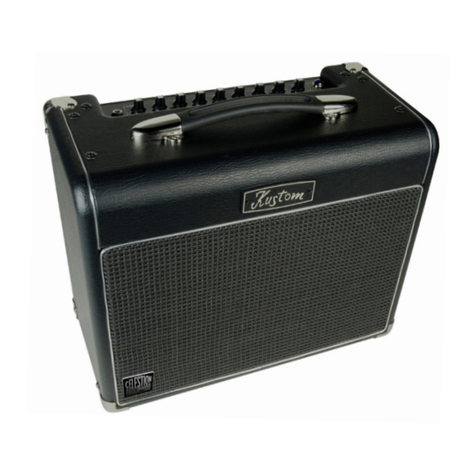
Kustom
Kustom HV 20T User manual

Kustom
Kustom KXB200H User manual

Kustom
Kustom KXB10 User manual
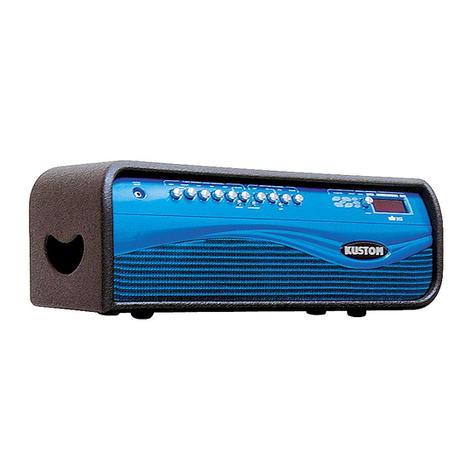
Kustom
Kustom Wav 1000 User manual

Kustom
Kustom KXB20 User manual

Kustom
Kustom Defender V50 User manual
Kustom
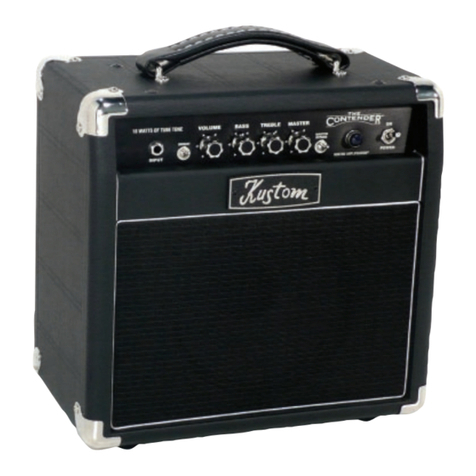
Kustom The Contender User manual

Kustom
Kustom XII SRS User manual
Kustom
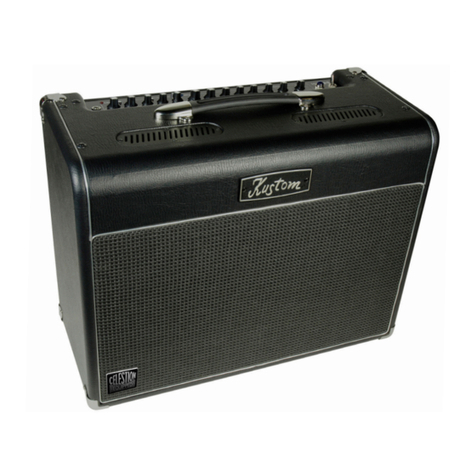
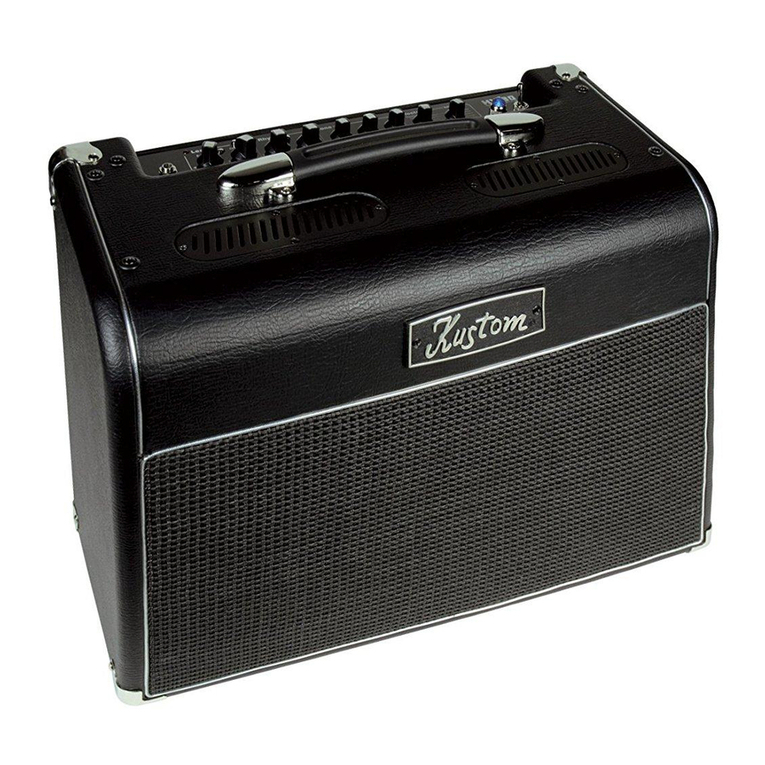
Kustom High Voltage HV 65T User manual
Kustom
Kustom HV 30T User manual

Kustom
Kustom KPM4080 User manual
Kustom
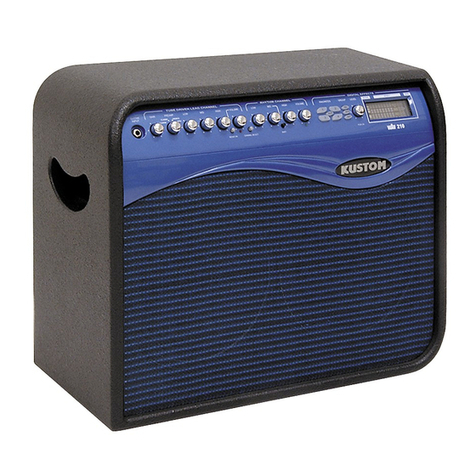
Kustom WAV 210 User manual

Kustom
Kustom KBA35XDFX User manual

Kustom
Kustom III User manual
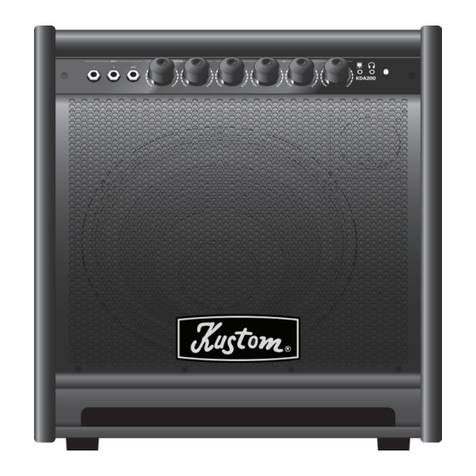
Kustom
Kustom KDA200 User manual

Kustom
Kustom 36 coupe User manual

Kustom
Kustom Sienna 65 User manual
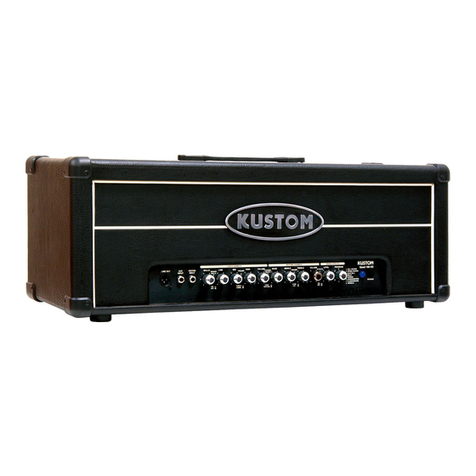
Kustom
Kustom Quad 100 HEAD User manual
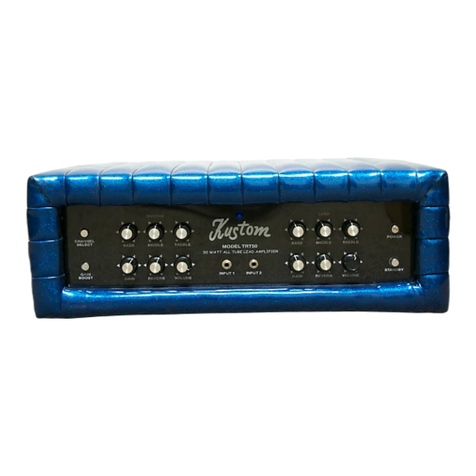
Kustom
Kustom TRT100 User manual
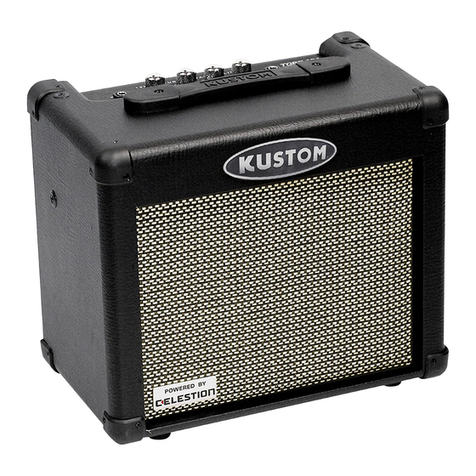
Kustom
Kustom Tube12A User manual