Radio Frequency Energy, Certifications
Shielded cables must be used with this equipment to maintain
compliance with radio frequency energy emission regulations and
ensure a suitably high level of immunity to electromagnetic
disturbances.
FCC Compliance Statement (United States)
This equipment has been tested and found to comply with part 15 of
FCC rules.
Operation is subject to the following two conditions:
(1) This device may not cause harmful interference.
(2) This device must accept any interference received.
Including interference that may cause undesired
operation.
Canadian Department of Communications RFI statement
This equipment does not exceed the class B limits for radio noise
emissions from digital apparatus set out in the radio interference
regulations of the Canadian Department of Communications.
Le présent appareil numérique n’émet pas
de bruits radioélectriques dépassant les
limites applicables aux appareils numériques
de la classe A prescrites dans le règlement
sur le brouillage radioélectriques publié par
le ministère des Communications du Canada
European EMC directive 89/336/EE CE statement
This equipment complies with the require-
ment for CE mentioned in the European
Directive and Standards EN55022 and
EN55024.
This equipment has been tested and found
to comply with the limits (for a class B
computing device) in accordance with the specifications in the
European Standard EN55022. These limits are designed to provide
reasonable protection against harmful interference. This equipment
generates, uses and can radiate radio frequency energy and if not
installed and used in accordance with the instructions may cause
harmful interference to radio or television reception. However, there
is no guarantee that harmful interference will not occur in a
particular installation. If this equipment does cause interference to
radio or television reception, which can be determined by turning the
equipment on and off, the user is encouraged to correct the
interference with one or more of the following measures: (a)
Reorient or relocate the receiving antenna. (b) Increase the
separation between the equipment and the receiver. (c) Connect the
equipment to an outlet on a circuit different from that to which the
receiver is connected. (d) Consult the supplier or an experienced
radio / TV technician for help.
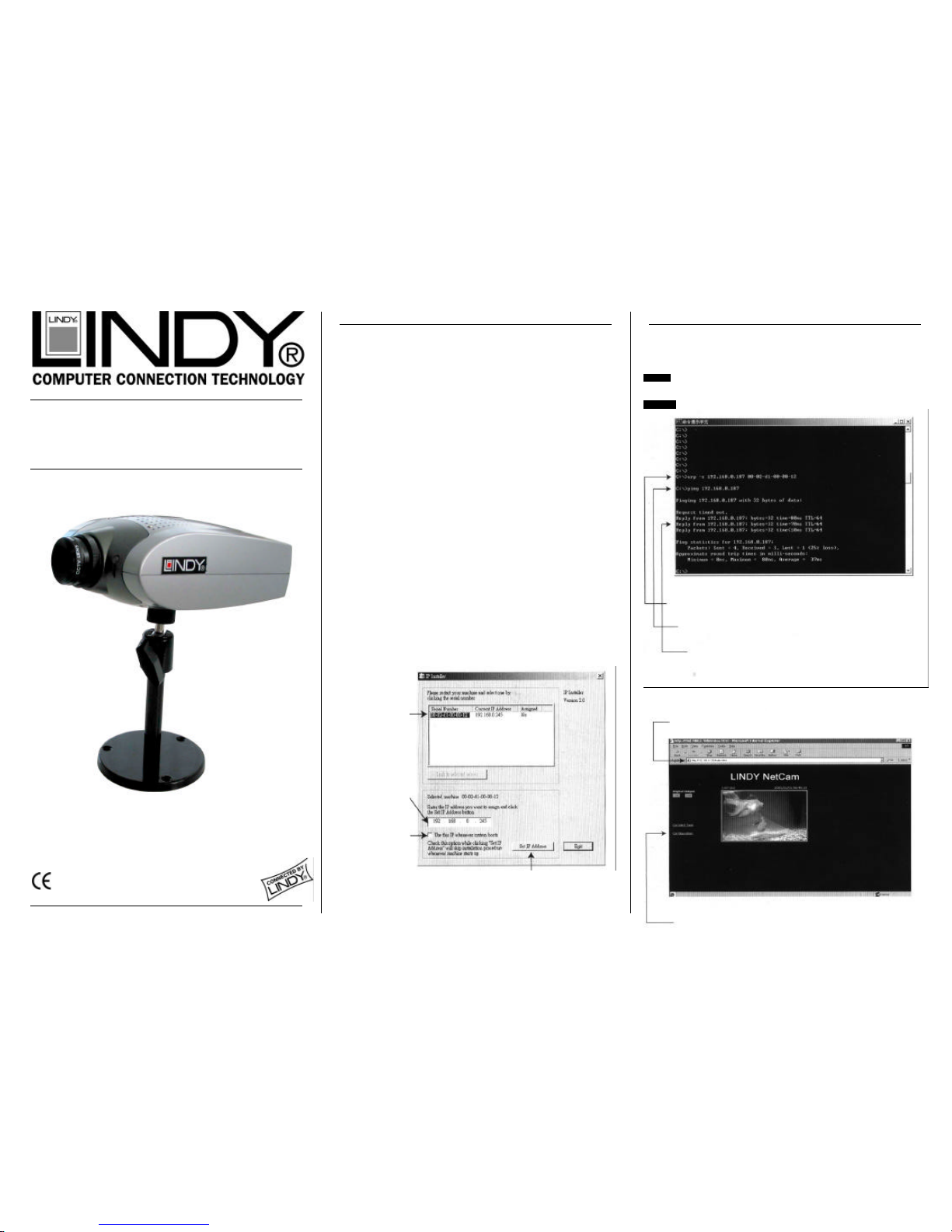
LINDY No. 32444
© LINDY ELECTRONICS LIMITED & LINDY-ELEKTRONIK GMBH -FIRST EDITION (Feb-2003)
Deutsches Benutzerhandbuch
Deutsches Benutzerhandbuch